
Gold Table Clock
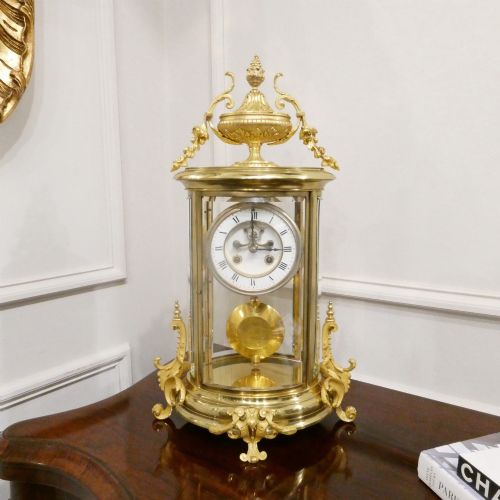
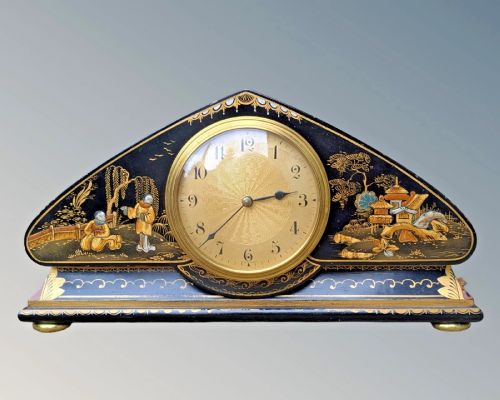
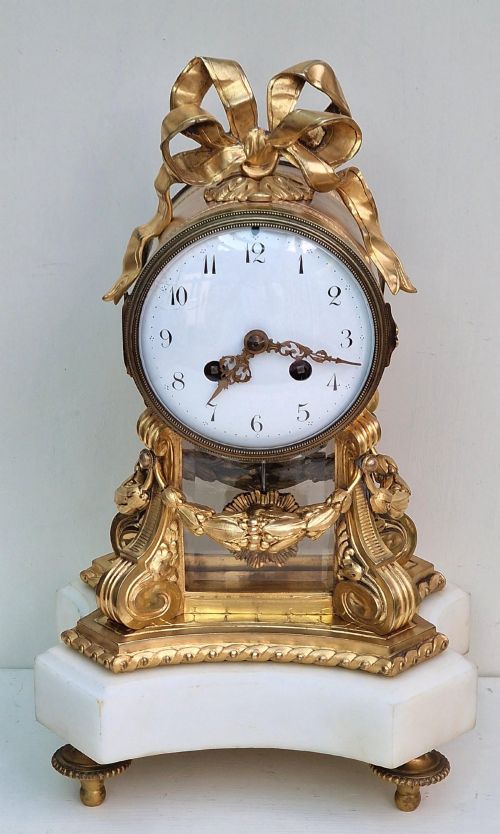
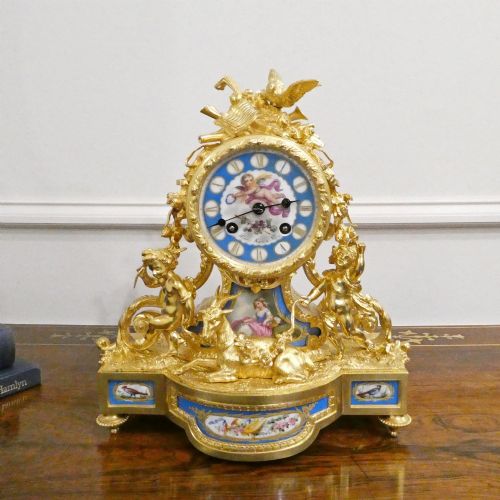
A gold table clock brings nineteenth-century French and Victorian weight and brass or ormolu shine to a mantelpiece or desk.

Gold Table Clock
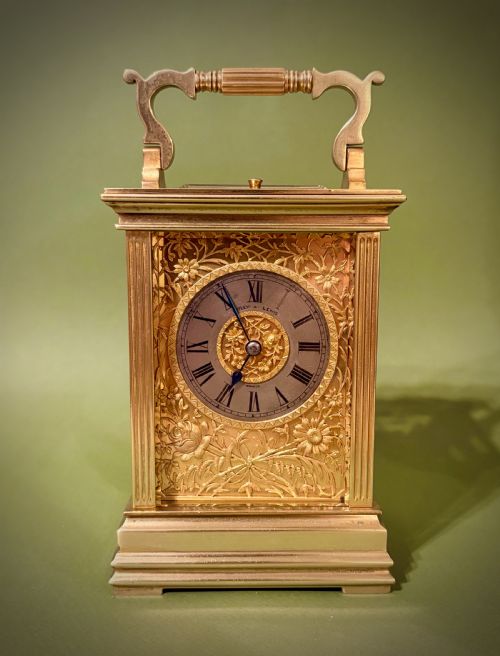
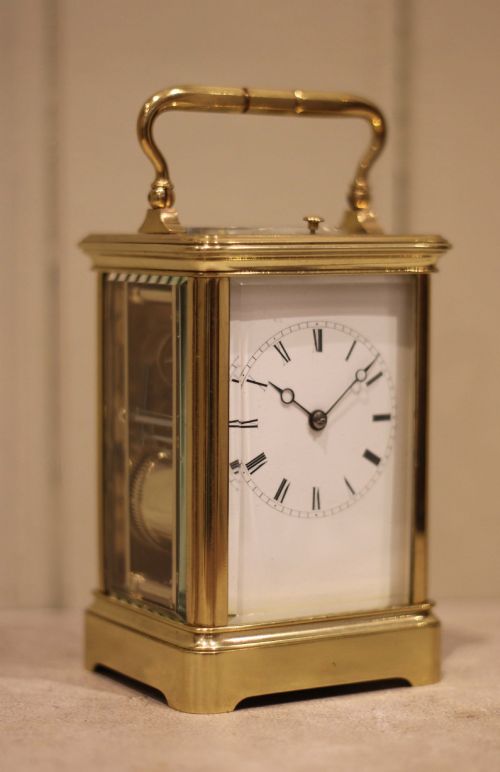
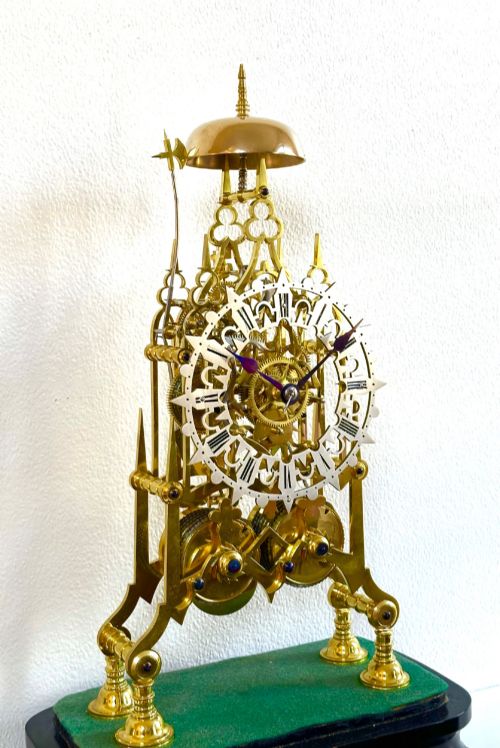
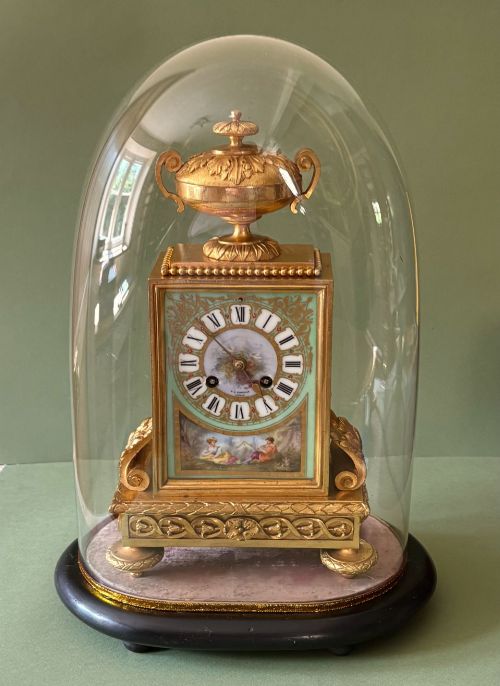
When you search for a gold table clock, you encounter nineteenth-century timepieces spanning the Victorian period through to nineteen-ten. The selection includes carriage clocks, desk clocks, and mantel clocks in various revival styles.
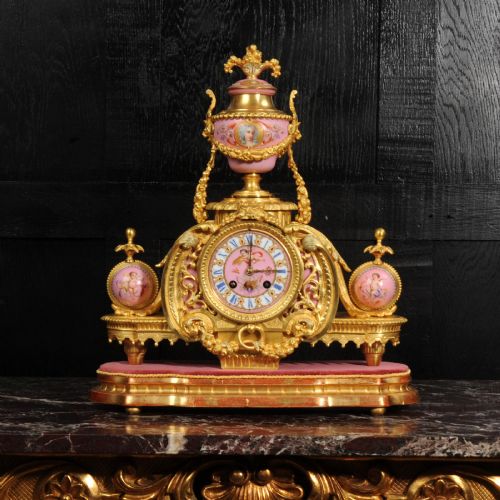
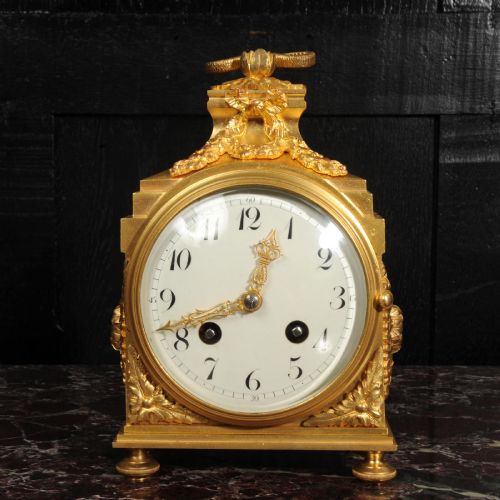
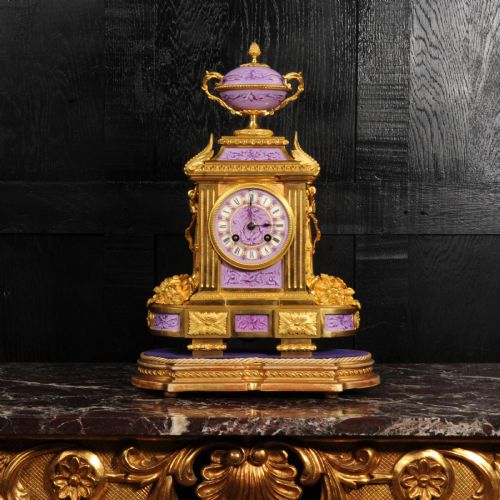
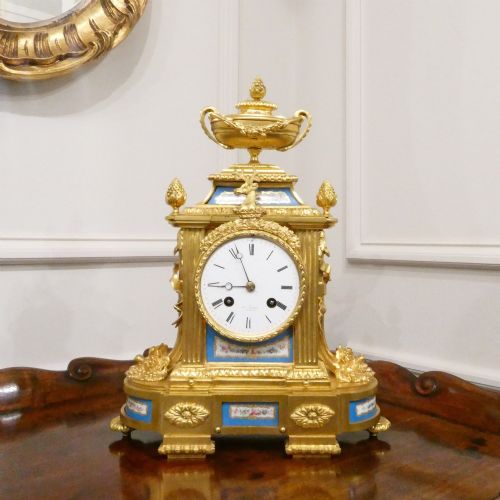
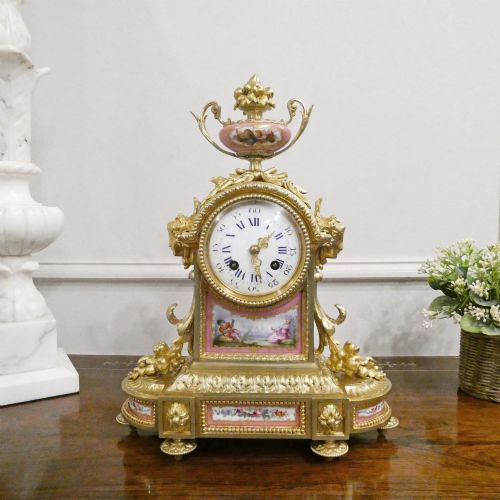
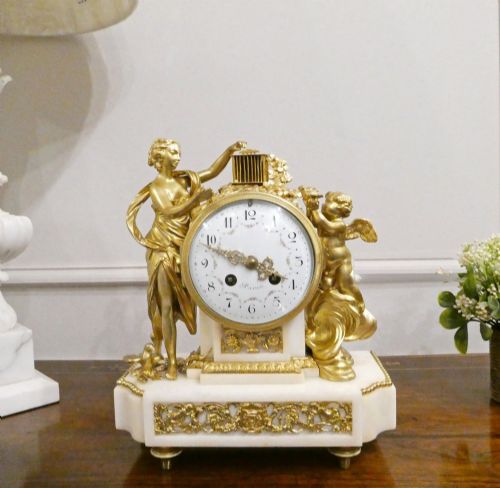
French workshops produced the majority of these pieces, employing gilt bronze, ormolu, brass, and porcelain. Forms range from strict architectural cases to figural subjects involving love, astronomy, and exotic animals.
Carriage clocks and four-glass mantel clocks appear frequently alongside porcelain-mounted garnitures and drumhead clocks. Most examples date from eighteen-fifty to nineteen-hundred, capturing revival movements from Louis XVI to Second Empire.
How they were made
Makers shaped cases from cast ormolu, gilt bronze, and solid brass, often mounting panels of Sèvres-style porcelain or white marble. Glass panels enclose four-glass mantel clocks and delicate carriage clock movements.
Dials incorporate enamel chapters, sometimes accented with painted miniatures or set with diamontes. Movements rely on brass gear trains, strike and repeat mechanisms, and platform escapements.
Gold Table Clock Retail Price Guide 2026
Typical asking prices for gold table clock among the pieces listed under this phrase on Sellingantiques today, from the lower quarter to the upper quarter. They describe what is for sale here now, not the wider market.
What varies in quality
Casting depth separates standard production from finer work, particularly in the crispness of ormolu foliate scrolls and figural bronzes. Signed movements by established makers indicate higher workshop standards.
The integration of hand-painted porcelain panels and finely engraved brass cases distinguishes the upper tier of nineteenth-century pieces from simpler commercial items.
Achille Brocot·Henry Marc·Japy Freres·Samuel Marti·Mappin and Web·Ansonia New York·Henry Dasson·Etienne Lenoir
The Gold Table Clock Glossary
- Ormolu
- Gilt bronze produced by applying a finely ground high-carat gold mercury amalgam to a bronze base. This technique creates a durable golden surface seen on nineteenth-century French mantel clocks.
- Carriage clock
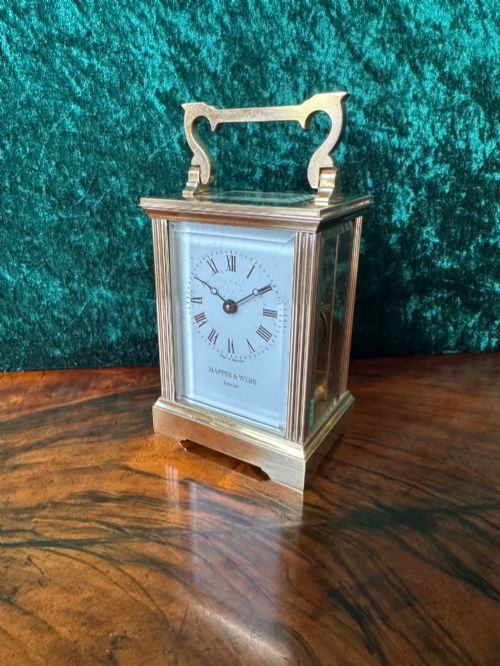
- A portable spring-driven timepiece designed for travel during the nineteenth century. These clocks usually feature a glass-panelled brass case and a folding handle.
- Four-glass clock
- A mantel clock housed in a rectangular brass frame with bevelled glass panels on all four sides. This design exposes the pendulum and movement to view.
- Double fusee
- A mechanical movement using two fusee cones and chains to equalise the force of the mainspring as it unwinds. This mechanism improves timekeeping accuracy across the power reserve.
- Garniture
- A set comprising a central clock and matching ornamental side pieces such as vases or candelabra. These sets were designed to sit together on a mantelpiece.
Gold Table Clock: Frequently Asked Questions
What is a carriage clock?
A carriage clock is a portable timepiece housed in a brass case with glass panels and a handle on top. Nineteenth-century travellers used them on journeys.
They run on spring power rather than a hanging weight, allowing them to keep time while moved from room to room.
How do I wind an antique clock?
Use the correct matching key to turn the winding square clockwise until you feel firm resistance. Do not force the spring past its stop.
Most nineteenth-century striking and repeating movements require winding once a week or every eight days.
Where should I place a mantel clock?
Position the clock on a stable, level surface away from direct sunlight, draughts, and damp walls. A sturdy mantelpiece or heavy sideboard works best.
Level placement ensures the pendulum swings evenly and the escapement ticks with a regular beat.
How do I identify French revival styles?
Louis XVI style pieces feature symmetrical neoclassical motifs, urns, ribbons, and fluted columns in gilt bronze or marble. Rococo revival clocks show asymmetric scrolls and naturalistic shell forms.
Examining the cast ornamentation and dial style reveals whether a piece follows eighteenth-century models or Victorian tastes.