


French Ormolu Architectural Clock
These French ormolu architectural clocks bring monumental classical presence and precise movement into a room, offering the structured dignity of portico and mantel forms.
French Ormolu Architectural Clock
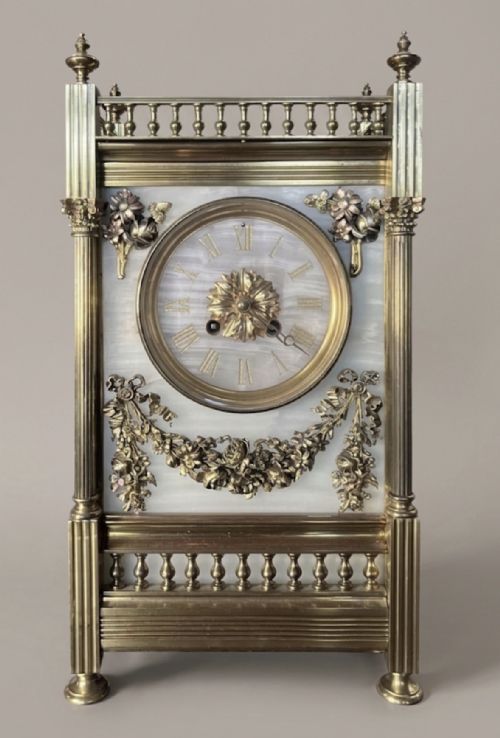
A french ormolu architectural clock takes its design cues from classical building forms, presenting columns, pediments, and symmetrical portico structures that house the dial. These impressive objects draw the eye through their grand proportions and structured arrangement, serving as both timekeepers and sculptural centrepieces on a mantel.
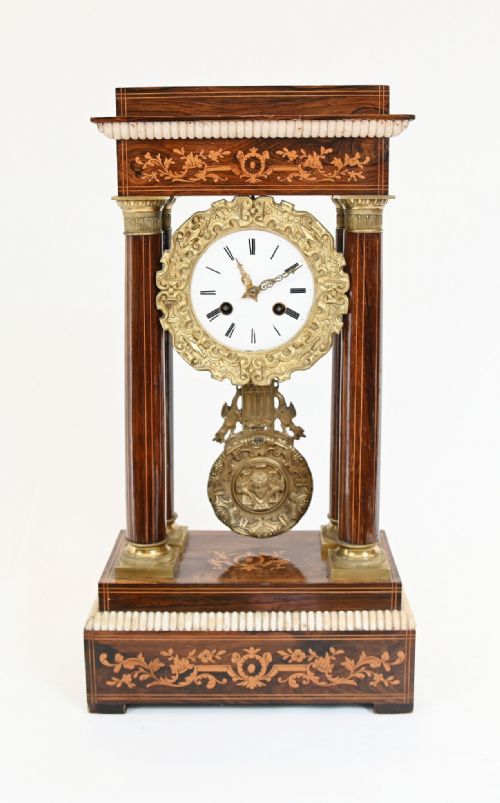
The pieces appearing here span the eighteenth and nineteenth centuries, taking in periods such as Charles X, French Empire, Neoclassical, and Napoleon III. Buyers frequently encounter portico clocks featuring upright columns flanking the central pendulum bob, alongside substantial marble and mahogany mantel designs.
Materials and construction methods
Casting and fire-gilding formed the foundation of ormolu work, applying a mercury and gold amalgam to bronze or brass to produce a rich, lasting lustre. Artisans then chased the cooled metal surfaces by hand to sharpen architectural details and contrast matte areas with bright highlights.
Cabinetmakers constructed the wooden housings using mahogany and rosewood veneers, often incorporating marquetry and intricate inlay work around the central dial columns. Stonemasons shaped white marble and alabaster to create solid bases and pediments that supported the heavy metal mounts and glass bezels.
Materials recorded across the selection include enamel, mahogany, brass, and patinated bronze alongside Neoclassical and Charles X styles.
Distinctions in quality
The precision and depth of the hand-chasing on the ormolu mounts separate superior examples from standard production, as crisp foliate scrolls and clean architectural lines demand advanced metalworking skill. Heavier cast bronze frames with original fire-gilding retain a warmer, deeper glow than later electroplated substitutes.
The integration of materials also defines the upper tier, where matched cuts of rosewood, flawless marble, and hand-painted enamel dials work together without structural awkwardness. Movement sophistication, such as single fusee systems or named makers inscribed on silvered dials, adds another layer of distinction to the construction.
Benson Ludgate Hill
The French Ormolu Architectural Clock Glossary
- Ormolu
- Gilt bronze produced by applying a mercury-gold amalgam to a base metal and heating it until the mercury vaporised. This historic technique leaves a distinctively rich, golden surface that resists tarnish.
- Portico clock
- A clock style featuring a rectangular case supported by four or more columns resembling a classical portico. The pendulum typically swings visibly in the open central space between the pillars.
- Fusee
- A conical pulley connected to the mainspring by a chain or cord that equalises the driving force as the spring unwinds. This mechanism improves the timekeeping accuracy of the clock throughout its running period.
- Patinated bronze
- Metal treated with chemical solutions or heat to produce a controlled surface colour ranging from deep brown to dark green. It provides a deliberate contrast against bright gilt ormolu mounts.
- Marquetry
- The art of applying pieces of veneer to a structure to form decorative patterns and pictures. Makers utilised varied wood grains to create geometric and floral designs on clock bases.
French Ormolu Architectural Clock: Frequently Asked Questions
What is a French portico clock?
A French portico clock is an architectural timekeeper built with upright columns that support a top pediment, leaving an open central space for the pendulum.
These pieces reflect classical building styles and often feature gilt bronze or ormolu mounts alongside wood or marble framing.
How do I wind an antique clock?
Winding involves inserting a matching key into the winding holes on the enamel or silvered dial and turning it gently until resistance is felt.
Care must be taken not to overwind the mainspring, ensuring the movement operates smoothly and maintains accurate time.
What materials make up these clocks?
The housings combine cast brass and bronze with fire-gilt ormolu surfaces, supported by marble, alabaster, mahogany, or rosewood.
Dials feature white enamel or silvered brass, frequently protected behind bevelled glass bezels.
How do I identify a Charles X clock?
Charles X clocks typically display balanced neoclassical proportions, clean architectural lines, and contrasting dark wood veneers paired with gilt bronze mounts.
They bridge the transition between heavy Empire styling and later nineteenth-century ornamentation.