
Antique Gilt Table Clock
An antique gilt table clock brings sculptural presence and precise timekeeping to a room, drawing the eye with polished metal and classical detail.
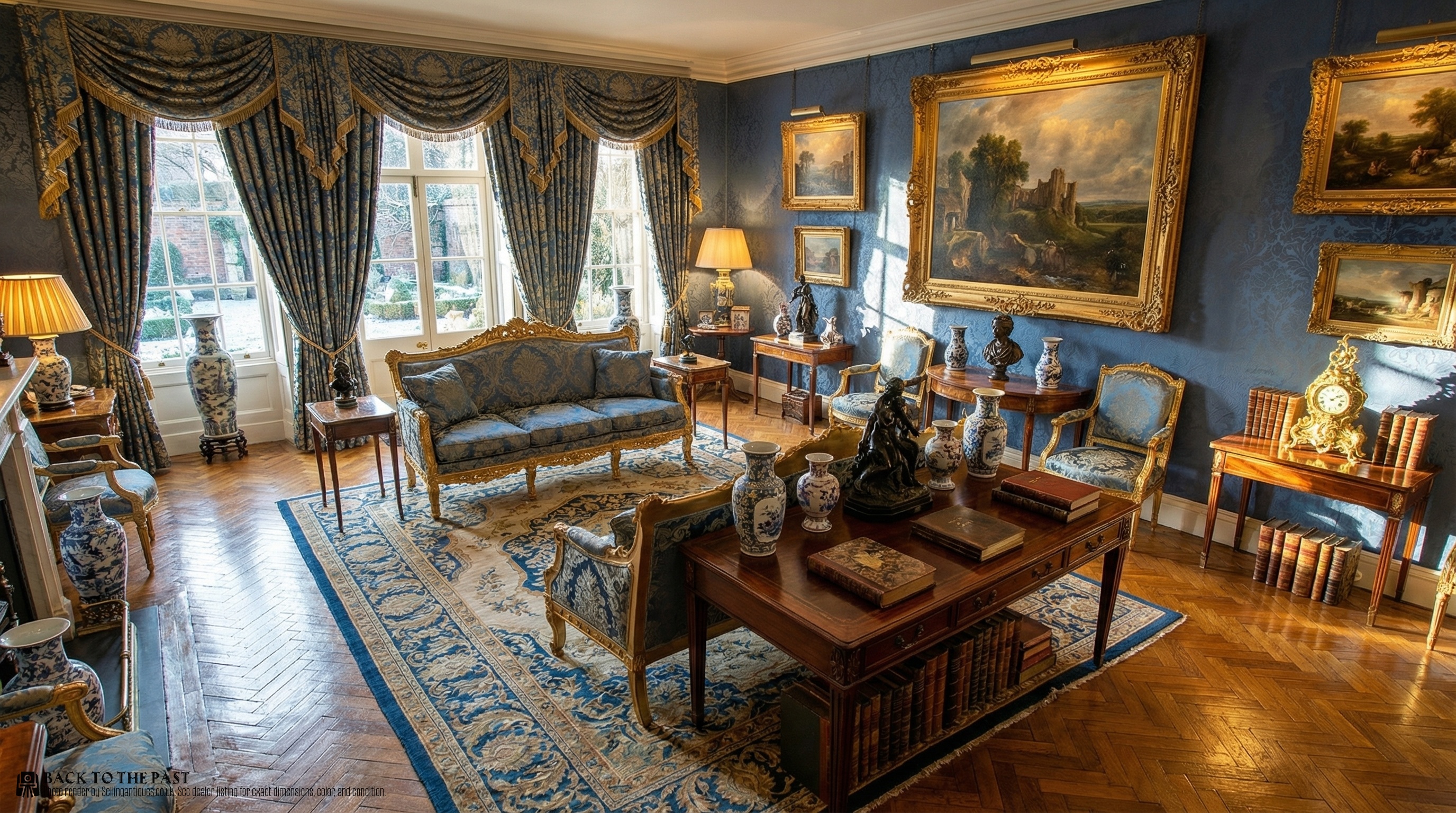
Antique Gilt Table Clock
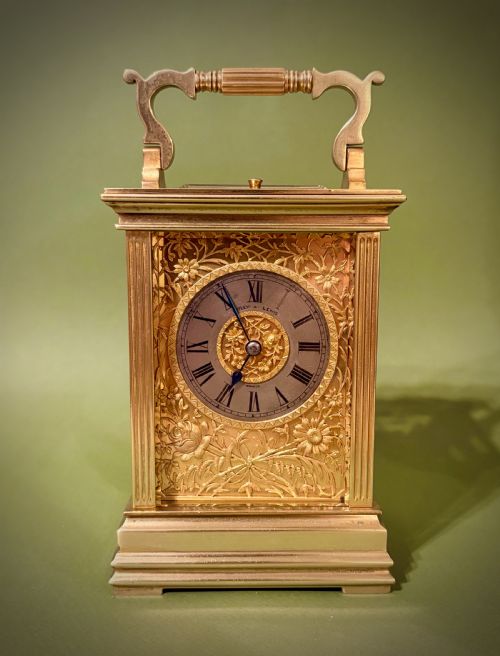
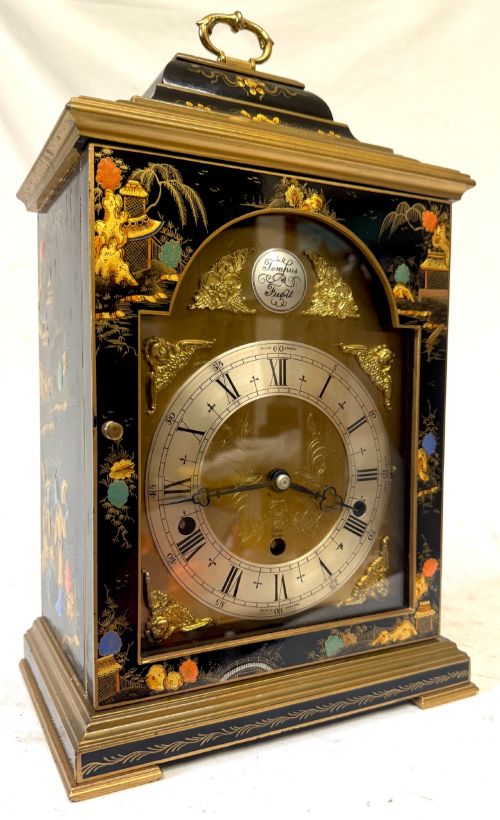
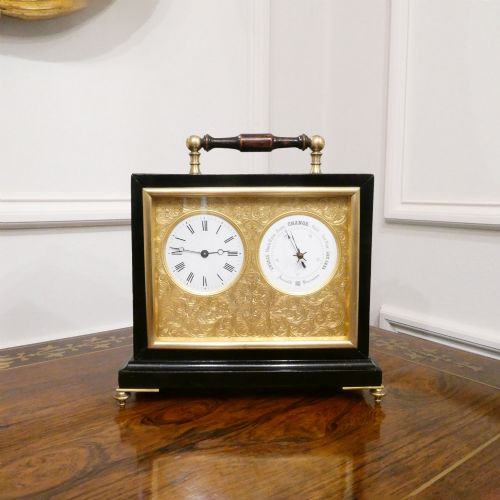
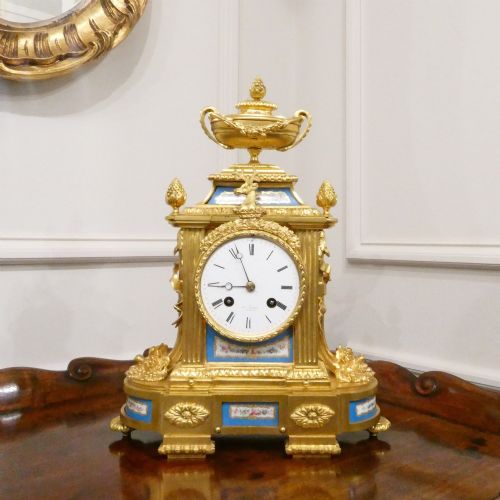
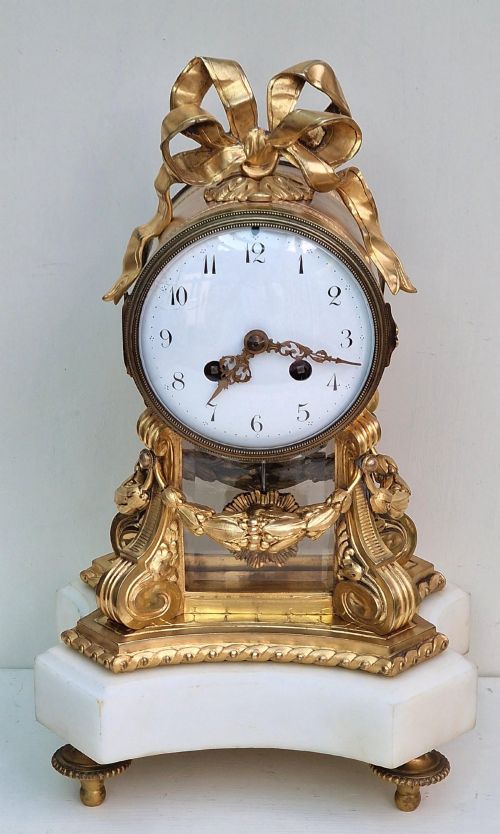
An antique gilt table clock encompasses mantel clocks, carriage clocks, and desk timepieces produced primarily across the nineteenth century. These pieces originate predominantly from French workshops and makers, drawing upon Empire, Louis XVI, and Rococo Revival styles.
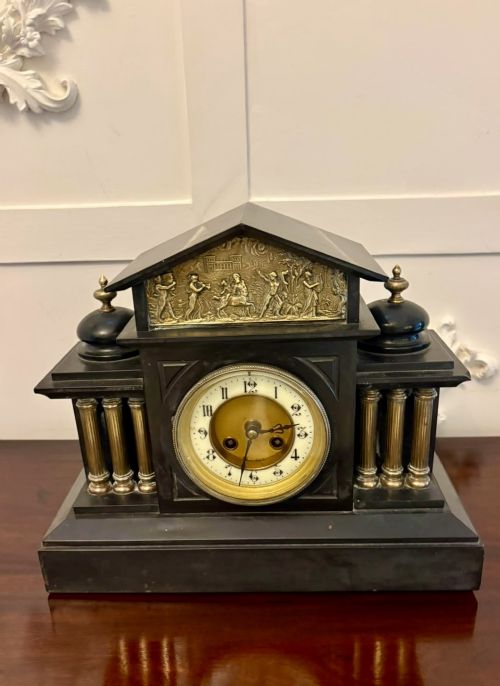
The domestic interior gains a focal point through mantel clocks housed in architectural marble, gilt bronze, or ormolu cases. Carriage clocks and smaller boudoir timepieces offer portable elegance with visible glass panels and enamel dials.
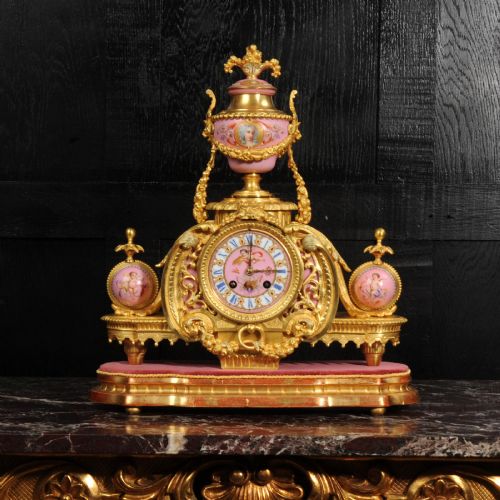
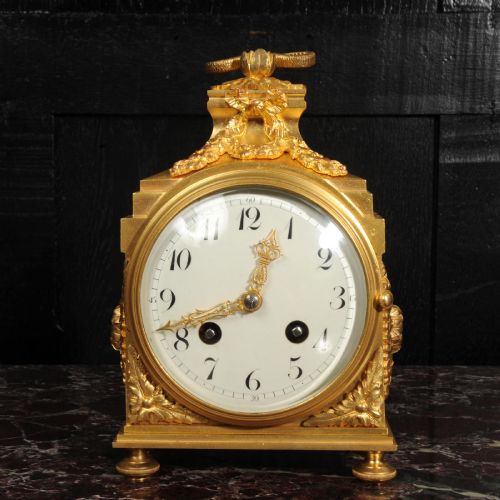
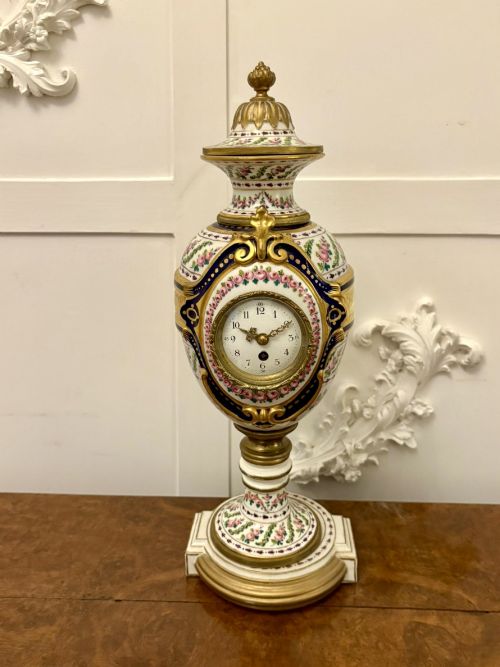
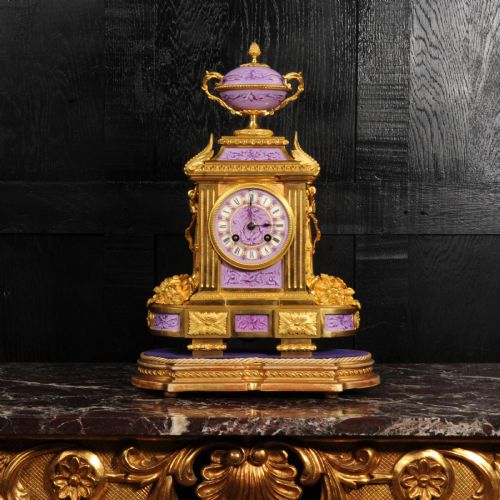
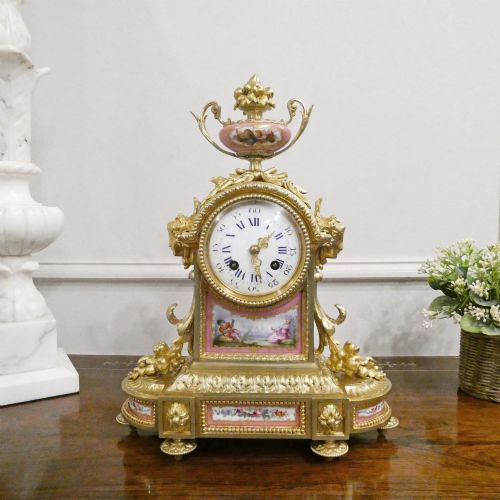
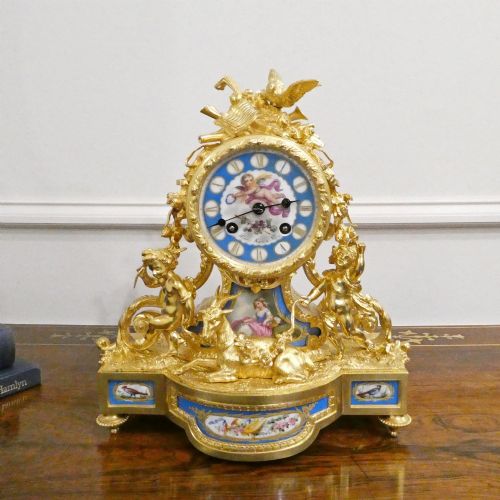
Evidence shows forms ranging from simple drumhead timepieces to elaborate garniture sets flanked by porcelain urns or candelabra. Makers integrate mythological figures, military trophies, and floral motifs directly into the gilt metalwork.
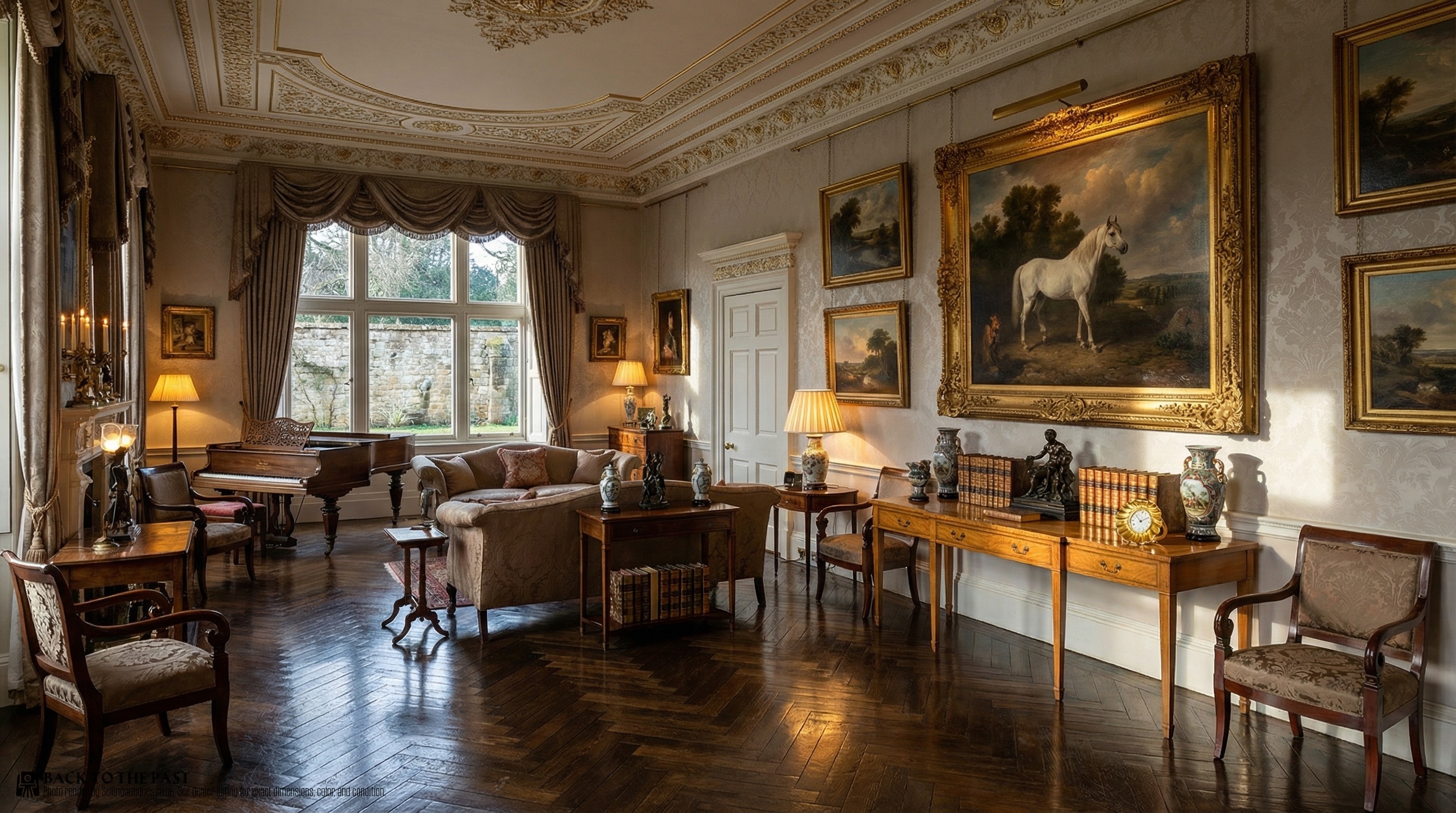
Materials and construction
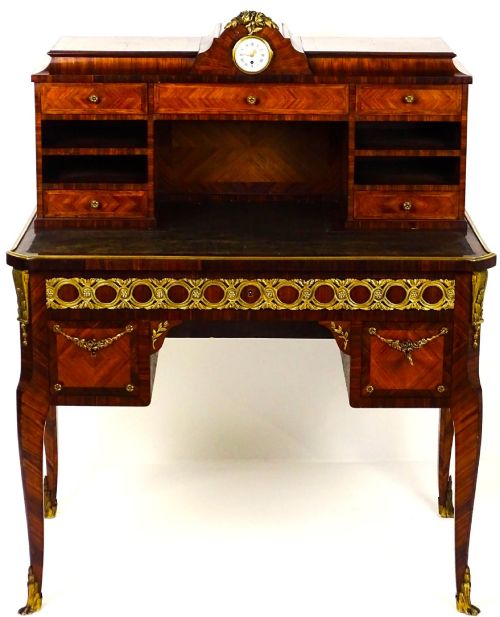
Foundries cast cases in bronze, brass, or ormolu, applying mercury gilt or electrogilding to achieve a bright golden finish. Cabinetmakers also combined kingwood and mahogany with gilt metal mounts for larger desk items and architectural clock cases.
Dials frequently feature hand-painted porcelain or enamel numerals behind protective glass bezels, sometimes supplied by specialist factories such as Sèvres. Mechanics rely on brass gear trains, spring-driven or weight-driven movements, and silk-suspension or pendulum regulation.
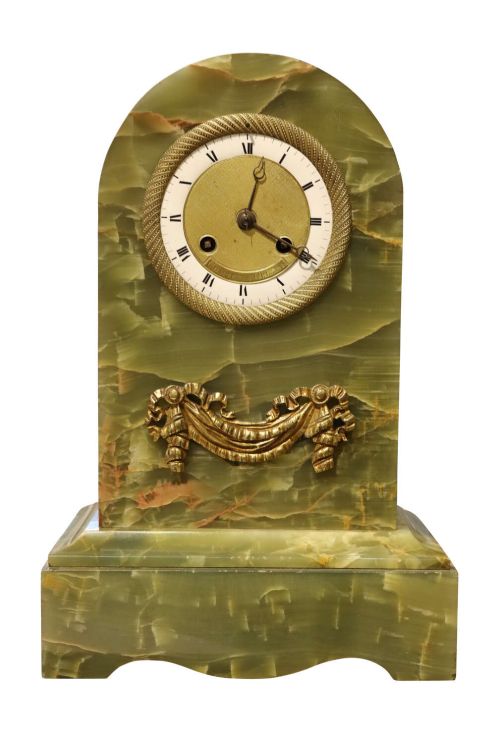
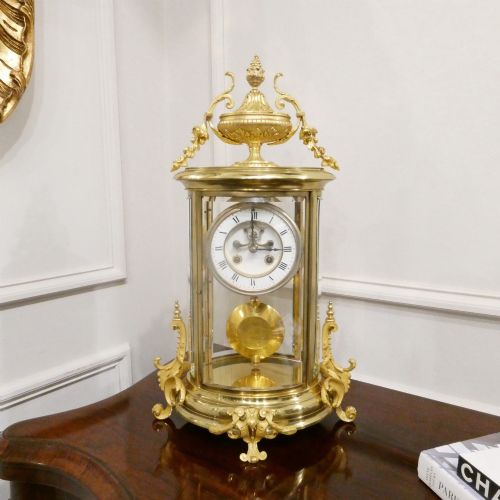
Carriage clocks utilise bevelled glass panels to expose the escapement, while architectural and figural models integrate contrasting white or green marble bases to support the heavy metal frames.
Antique Gilt Table Clock Retail Price Guide 2026
Typical asking prices for gilt table clock among the pieces listed under this phrase on Sellingantiques today, from the lower quarter to the upper quarter. They describe what is for sale here now, not the wider market.
Several clocks enlist bronze elephants and soaring eagles to tell the time.
Distinctions in quality
Signed movements by renowned makers such as Achille Brocot, Japy Freres, or Samuel Marti indicate higher grade internal engineering and reliability. The integration of hand-painted porcelain plaques and uncompromised marble or onyx housing further elevates a piece within the historical range.
Achille Brocot·Henry Marc·Japy Freres·Samuel Marti·Paul Sormani·Vincenti·Fritz Marti
The Antique Gilt Table Clock Glossary
- Ormolu
- Finely chopped high-karat gold amalgamated with mercury, applied to a bronze base and heated until the mercury vapourises. This technique produces a durable golden sheen characteristic of French decorative arts.
- Garniture
- A set of matching decorative objects designed to be displayed together on a mantelpiece or sideboard. Typically comprises a central clock flanked by matching urns, vases, or candelabra.
- Champlevé
- An enamelling technique where troughs or cells are hollowed out of the metal surface and filled with vitreous paste before firing. This produces colourful geometric or floral patterns across the brass or bronze case.
- Carriage clock
- A small, portable spring-driven timepiece developed for travel, fitted with a carrying handle and glass panels. The escapement is often visible through the top or front glass.
- Pendule d'Officier
- A French military-style table clock featuring a distinctive square or architectural brass case, often equipped with a striking train and alarm.
Antique Gilt Table Clock: Frequently Asked Questions
Where should I place a heavy marble clock?
Select a sturdy, level surface such as a mantelpiece, sideboard, or heavy desk capable of supporting substantial weight. Avoid placing the clock near direct heat sources or in damp environments.
Level placement ensures the pendulum swings evenly and the movement keeps accurate time without stopping.
How do I identify a French Empire style clock?
Look for classical motifs inspired by antiquity, including military trophies, sphinxes, eagles, and geometrical architectural forms. The metalwork often combines matte and polished gilt bronze to create contrast.
These pieces typically date from the nineteenth century and reflect classical symmetry and grandeur.
What is a four glass clock?
A four glass clock is a mantel timepiece enclosed in glass panels on the front, back, and both sides. This construction allows light to pass through and exposes the mechanical movement from multiple angles.
Mercury pendulums and ornate brocot escapements are frequently paired with this style to showcase the interior mechanics.