


Marquetry Shelf Clock
A marquetry shelf clock brings patterned wood and precise timekeeping together on a mantelpiece.
Marquetry Shelf Clock
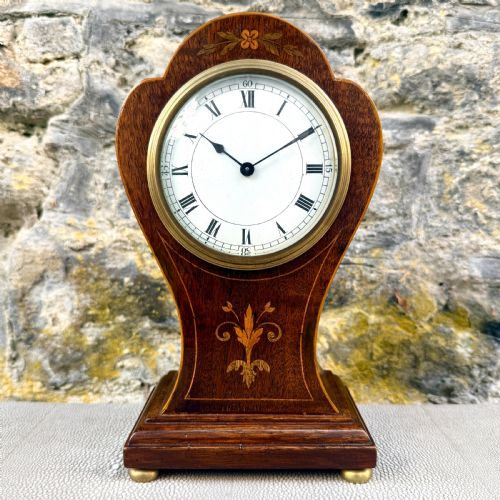
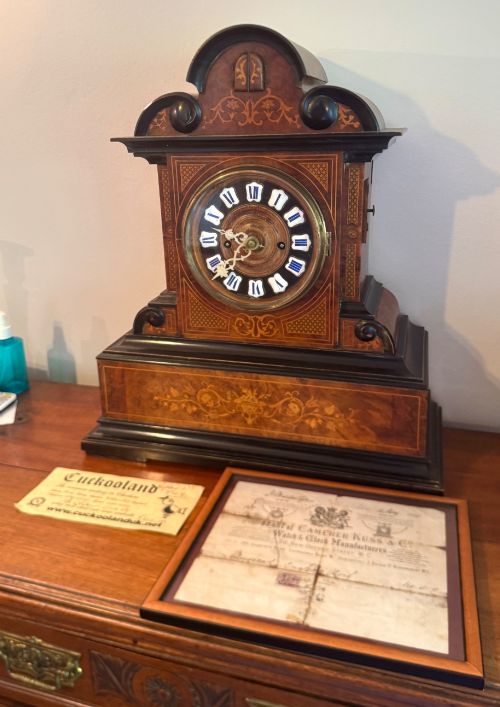
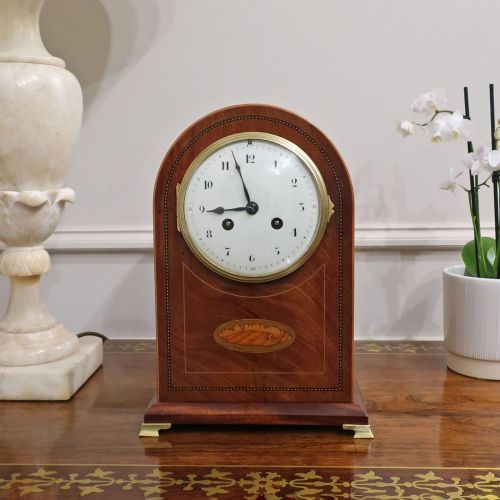
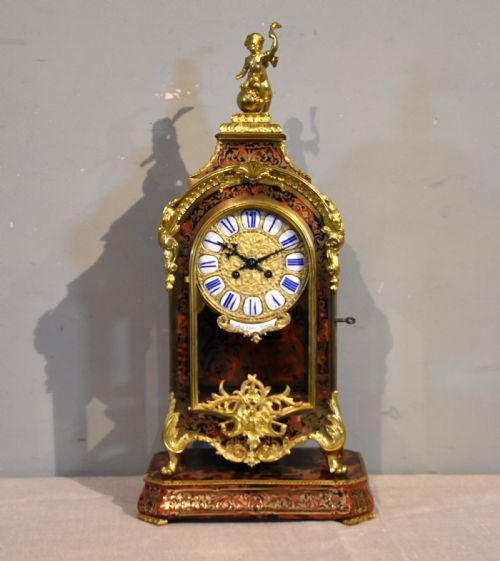
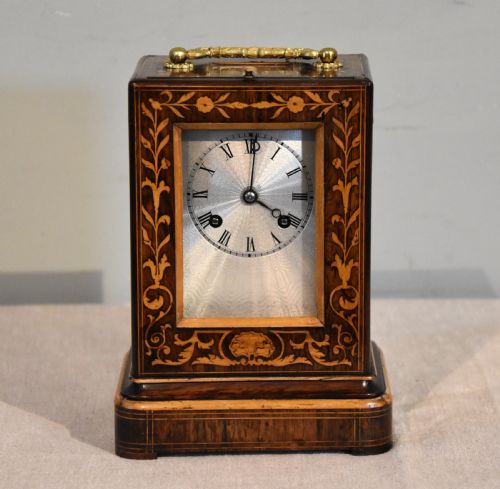
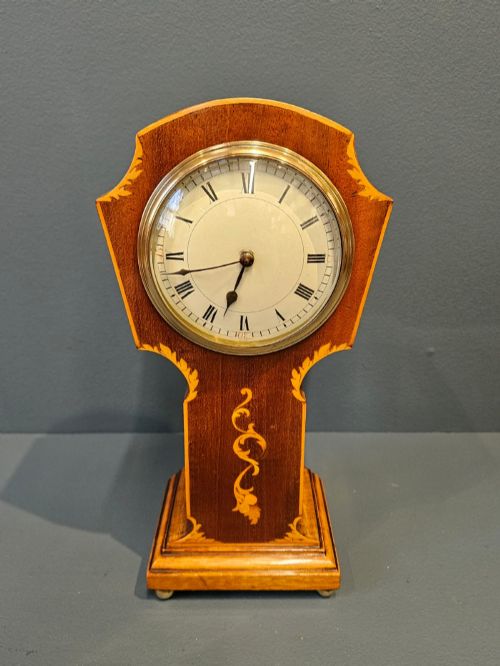
A marquetry shelf clock is a small timekeeper designed to sit upon a mantelpiece, shelf, or bracket rather than stand on the floor. The examples seen here include mantel clocks, bracket clocks, and balloon clocks from periods spanning the nineteenth and early twentieth centuries. Edwardian mahogany pieces and French nineteenth-century rosewood designs form the majority of the selection.
Makers working in France and Britain produced these clocks in varied regional styles such as Regency, Louis Philippe, and Arts and Crafts. Certain pieces incorporate specific decorative motifs like inlaid poppies or figures, while others rely purely on geometric or floral wood patterns.
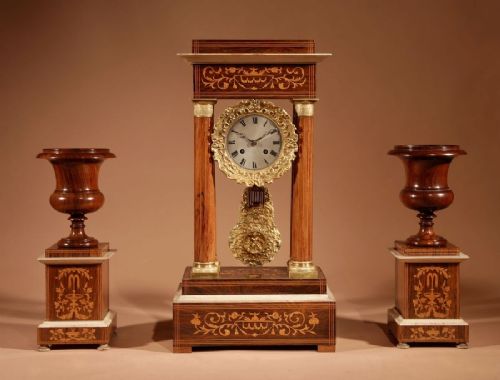
The format ranges from traditional lancet and dome tops to balloon shapes and architectural portico garnitures. These items functioned as both practical timekeepers and decorative ornaments for domestic interiors.
Materials and construction
Cabinetmakers constructed the main bodies of these clocks from timbers such as mahogany, rosewood, walnut, and oak. They embellished these surfaces with delicate contrasting inlays of boxwood, satinwood, and various exotic woods to create floral or geometric marquetry.
Metal components played a structural and decorative role, featuring brass bezels, ormolu mounts, and glass faces protecting enamel dials. Movements typically ran on an eight-day striking mechanism, requiring periodic winding via a key.
The selection includes specialised variants such as thermometer clocks, officer clocks, and portico garnitures alongside standard timepieces.
Qualities of craftsmanship
The refinement of the timber marquetry largely distinguishes one clock from another, with intricate multi-wood floral arrangements demonstrating greater artisan skill than simple linear stringing. The choice of primary wood, whether rich figured rosewood or dense polished mahogany, sets the baseline character of the piece.
Movement origin and maker reputation also separate standard production models from finer works. Signed French movements and specialised makers add a layer of horological accomplishment to the exterior cabinet work.
Henry Marc·Thomas A Paris·Savory And Fils A Paris·Dumont·Malecot of Paris·Seikosha Seiko
The Marquetry Shelf Clock Glossary
- Marquetry
- The art of applying pieces of veneer to a structure to form decorative patterns and pictures. Craftsmen cut contrasting woods like boxwood and satinwood to fit precisely into the primary carcase.
- Balloon clock
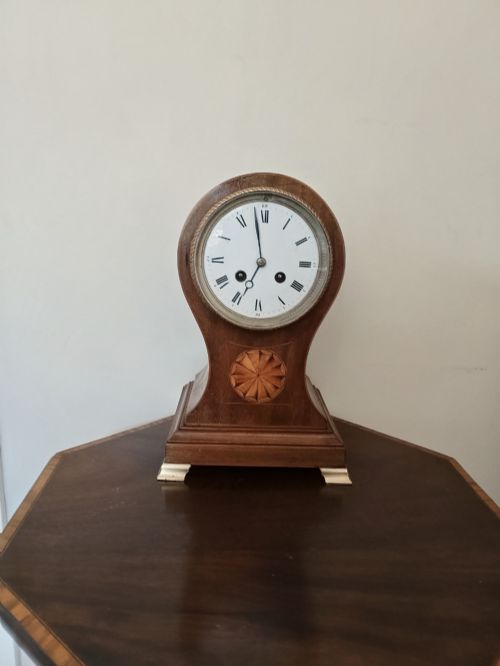
- A mantel clock featuring a curved, bulbous top resembling the shape of a hot air balloon. This form became particularly popular during the Edwardian period.
- Ormolu
- Gilded bronze used for decorative mounts and feet on French clocks. The technique involves applying a mercury and gold amalgam to cast bronze.
- Bracket clock
- A portable timekeeper originally designed to sit upon a wall bracket. Later examples like these simply retain the name while resting on shelves or mantelpieces.
- Portico clock
- A monumental clock style structured like a classical temple with columns. These often appear as part of a garniture set flanked by matching ornaments.
Marquetry Shelf Clock: Frequently Asked Questions
How do I wind my marquetry shelf clock?
Most of these clocks utilise an eight-day movement requiring a winding key inserted into the dial face. Turn the key gently until you feel resistance, taking care not to overwind the mainspring.
Allow the pendulum to settle into a level beat after moving the clock to ensure accurate timekeeping. If the clock gains or loses time, locate the small regulation square on the dial to adjust the pendulum speed.
Where should I place a mantel clock?
Position your clock on a stable, level surface away from direct sunlight and damp environments. Mantelpieces, shelves, and wooden brackets provide the traditional setting for these decorative timepieces.
Ensure the room temperature remains relatively stable to prevent wood movement in the rosewood or mahogany case. Avoid placing them near exterior doors where vibrations might disturb the delicate mechanical movement.
How do I identify an Edwardian clock?
Edwardian clocks often feature light mahogany cases decorated with delicate inlaid satinwood or boxwood marquetry. The designs frequently lean towards balloon shapes or lancet tops with clean, restrained proportions.
Examine the interior woodwork and dial construction for clues, as Edwardian pieces typically date from the early twentieth century. The presence of softer floral motifs like poppies further points toward this specific era of production.
What is the difference between a French and English clock?
French mantel clocks from the nineteenth century frequently employ exotic timbers like rosewood alongside elaborate brass inlay, boullework, or ormolu mounts. Makers such as Henry Marc often signed the movements or dials directly.
English bracket and mantel clocks tend to focus on rich mahogany cases with understated inlay work and robust mechanical movements. Regional styling and cabinetmaking traditions help distinguish the origin of each piece.