
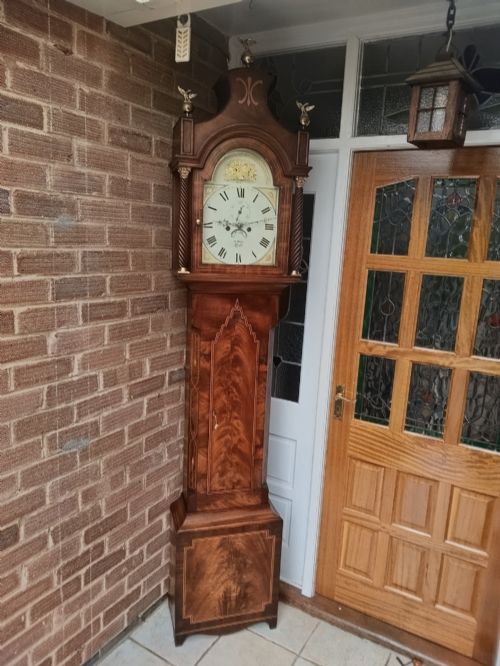


Inlaid Grandfather Clock
An inlaid grandfather clock brings centuries of fine cabinet-making and precise mechanical timekeeping into the home.

What They Are
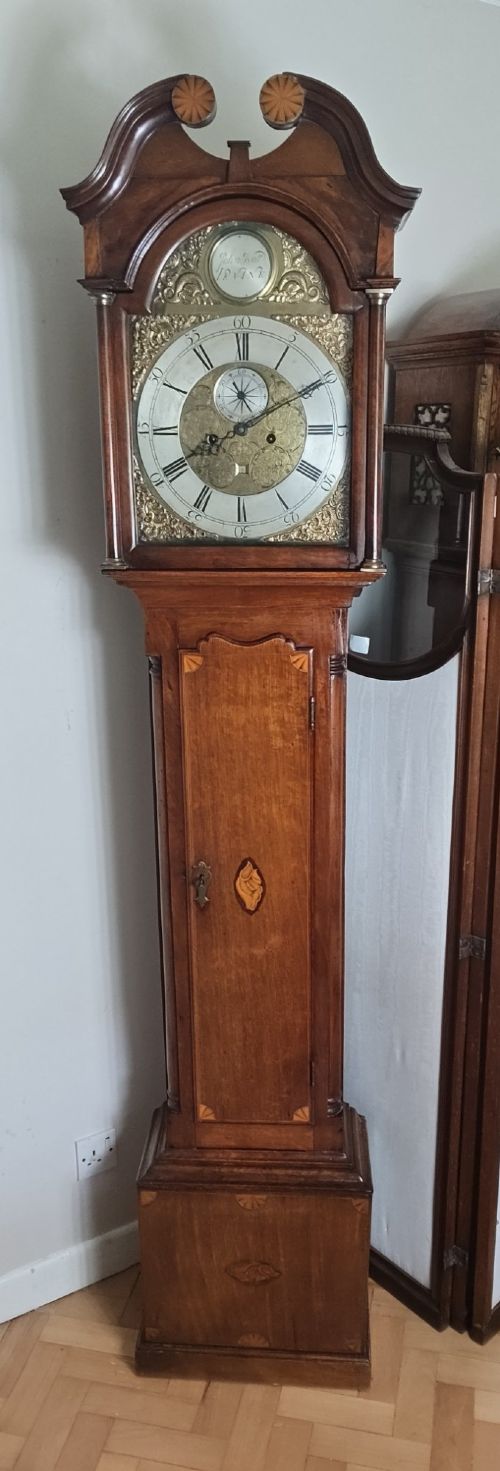
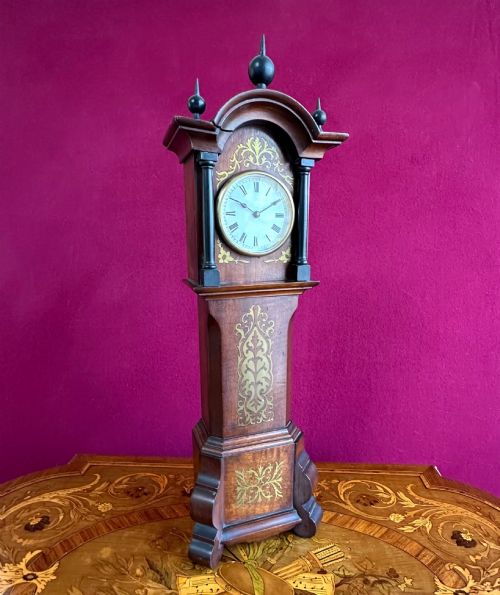
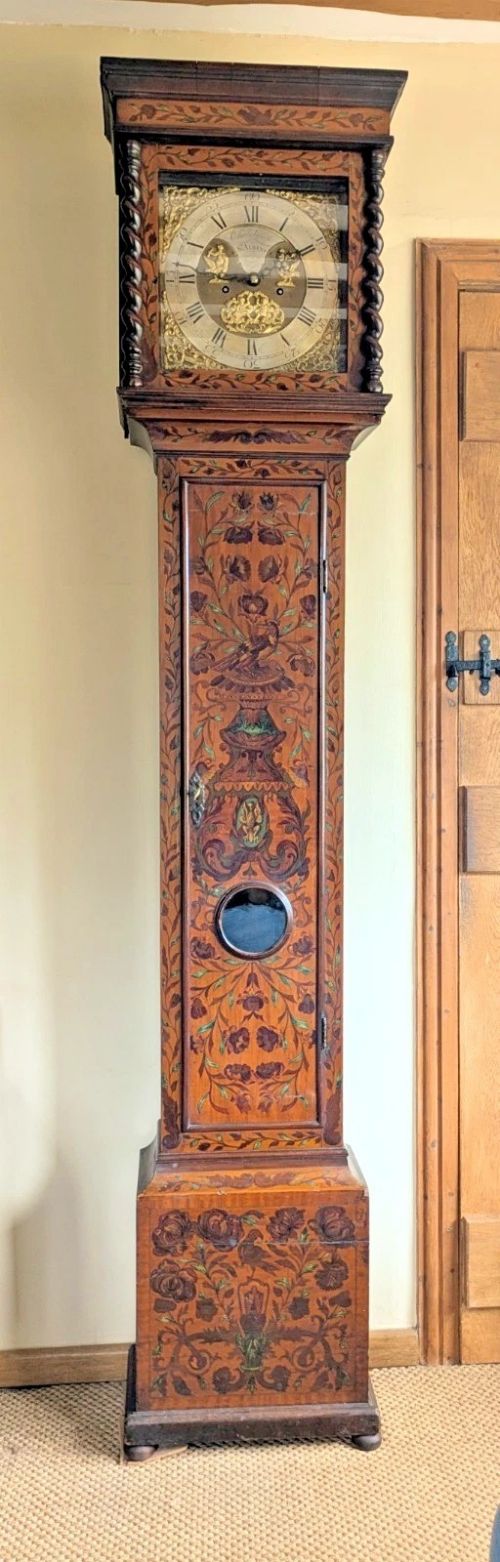
An inlaid grandfather clock is a tall floor-standing timepiece housed in a wooden case decorated with contrasting wood veneers or banding. These tall instruments measure time through descending weights or springs, enclosed within a protective timber trunk.
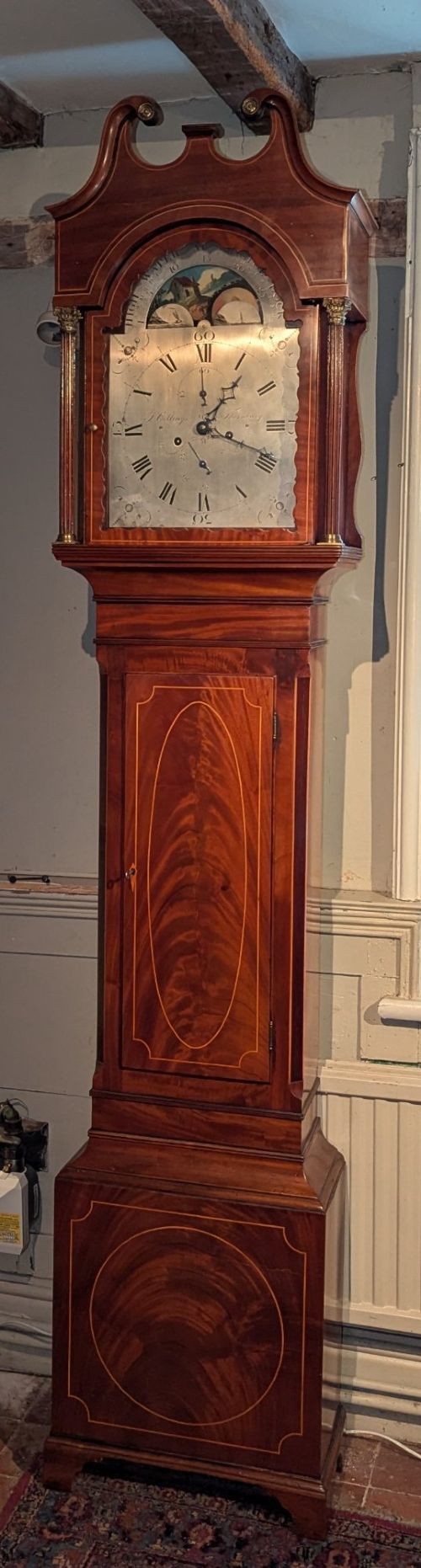
The version most commonly encountered on this page is the mahogany longcase clock dating from the Georgian period onward. Such examples combine structural cabinet timbers with decorative marquetry, satinwood, or walnut details on the door and plinth.
Originating in domestic and civic spaces across Britain and Europe, these clocks range from early regional examples in oak to refined London-made pieces in exotic woods. Each surviving specimen reflects the prevailing interior tastes of its specific era of construction.
How They Were Made
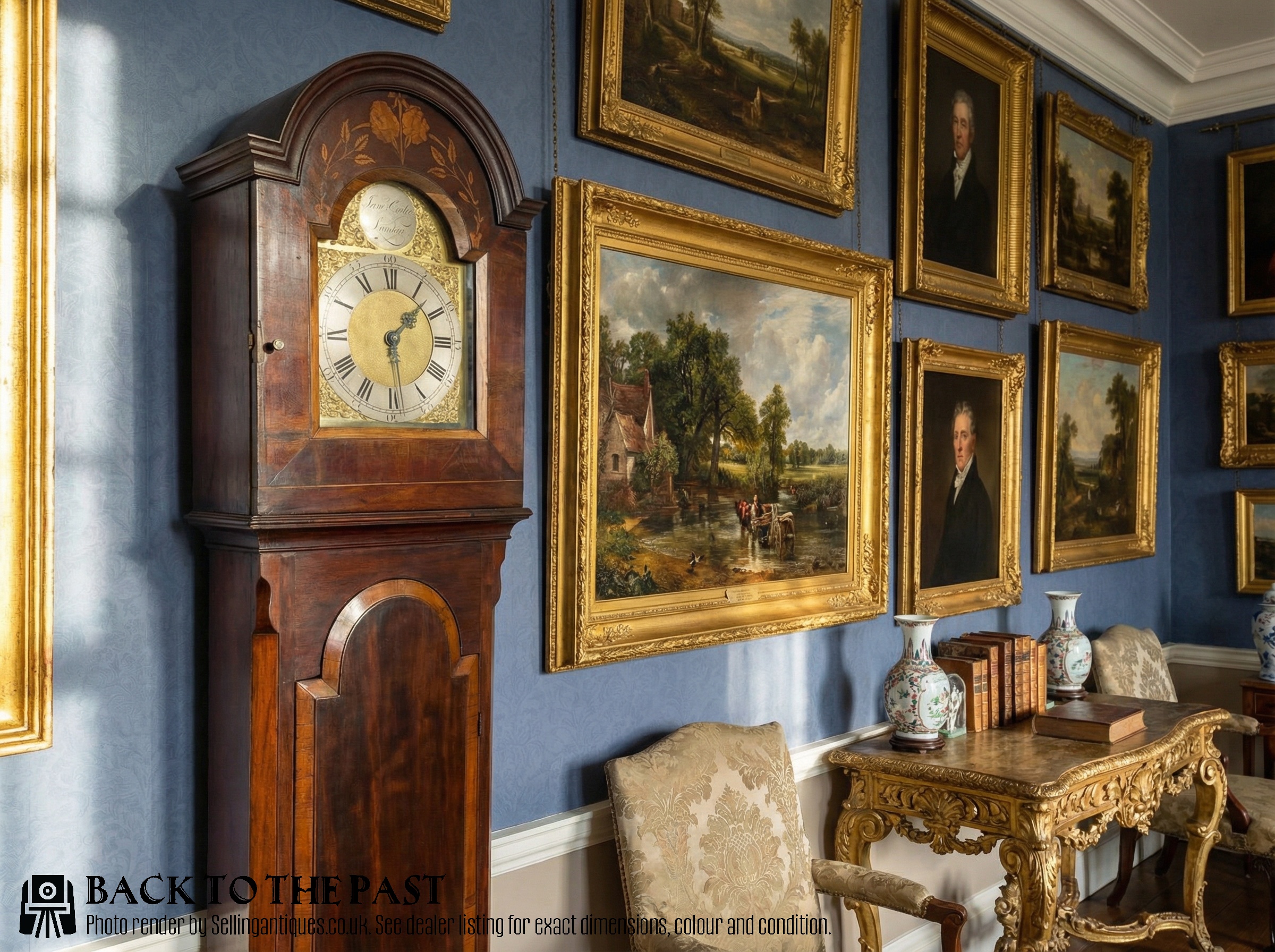
Cabinet-makers constructed the tall cases using solid timbers and veneers of mahogany, walnut, oak, and satinwood, applying marquetry inlay and brass fittings for surface detail. Glass panels protected the dial while brass dials or painted dials recorded the hours, minutes, and seconds.
Movement makers fashioned gears, springs, and escapements from brass and steel, housing them in the hood above the trunk. These mechanisms were adjusted to drive hands and, in many instances, striking trains or musical chimes.
Retail Price Guide 2026
Typical UK retail prices for inlaid grandfather clock, calculated from the Sellingantiques database of over a million retail prices indexed since 2003. This retail price guide relies exclusively on Sellingantiques data; no external sources or auction records are used, so the figures do not describe the wider market.
Regional English, Scottish, and French origins appear across the archive, alongside movements by notable makers from London to Edinburgh.
What Varies in Quality
The sophistication of the timber work and the intricacy of the marquetry inlay determine the visual distinction of the case. Richly figured mahogany, burr walnut, and delicate satinwood detailing elevate a cabinet from standard utility to exceptional craftsmanship.
Mechanical refinement separates basic timekeepers from sophisticated multi-train movements that include moon phases or quarter-chimes. The reputation of the maker and the legibility of the brass or painted dial further influence the standing of the piece.
Peter Wise·Richard Baker·Thomas Reynolds·John Douglas·Harford Bristol·Darling Edinburgh·Gustav Becker·Griffiths of Denbigh
The Inlaid Grandfather Clock Glossary
- Longcase clock
- The formal term for a grandfather clock, describing a tall floor-standing timekeeper enclosed in a wooden case. These pieces typically stand over six feet tall to allow the driving weights sufficient drop.
- Marquetry inlay
- The art of applying pieces of veneer to a structure to form decorative patterns and pictorial designs. Cabinet-makers used contrasting woods such as satinwood and walnut to create rich surface decoration.
- Brass dial
- A metal face plate, often engraved and silvered, displaying the hours and minutes before the widespread adoption of painted iron dials. These metal faces frequently feature decorative spandrels in the corners.
- Arch hood
- The curved upper section of the clock case that lifts or opens to reveal the dial and movement. This architectural feature often houses moon phase mechanisms or striking bells.
- Moon phase
- A dial complication that tracks the lunar cycle through a rotating painted disc. It appears behind a curved aperture on the upper portion of the clock face.
Frequently Asked Questions
How do I wind a grandfather clock?
Winding involves using a specialised key to raise the internal weights or wind the spring barrels via the winding holes on the dial face. Care must be taken not to over-wind the mechanism.
Most eight-day movements require attention weekly, while thirty-hour models need daily or more frequent winding depending on the train configuration.
What is the difference between a grandfather and grandmother clock?
The primary distinction lies in the overall height and proportions of the wooden case. Grandfather clocks are full-sized tallcase timekeepers.
Grandmother clocks are smaller, more slender scaled versions produced in later periods, designed to fit rooms with lower ceilings.
How do I date an inlaid longcase clock?
Dating relies on stylistic clues found in the cabinet wood, the shape of the hood, and the execution of the marquetry inlay. Walnut and marquetry details often point to earlier periods, while mahogany and painted dials became standard later.
The signature of the maker or clockmaker inscribed on the dial or movement backplate provides the most direct historical evidence.
Where should I place my longcase clock?
These clocks require a stable, dry interior location against a solid wall to prevent vibrations from disturbing the pendulum. Direct sunlight and dramatic temperature fluctuations should be avoided to protect the wood veneers.
Sufficient clearance must be maintained around the case to allow the pendulum and weights to move without obstruction.