
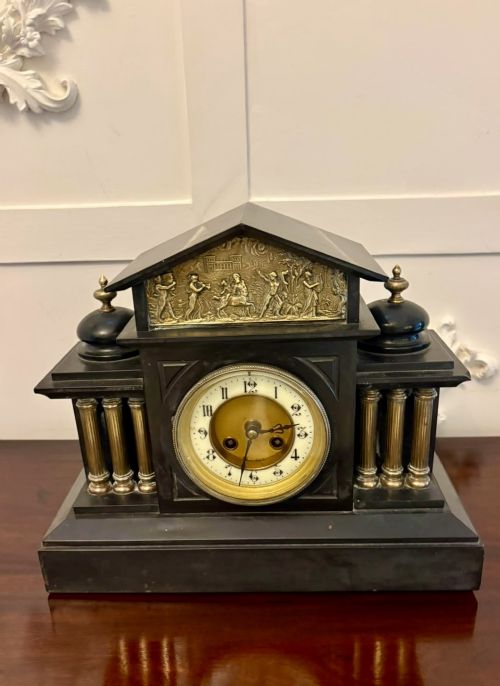


Classical Revival Mantel Clock
These classical revival mantel clock pieces bring architectural dignity and precision timekeeping into a room, fashioned from heavy stone and polished metal.
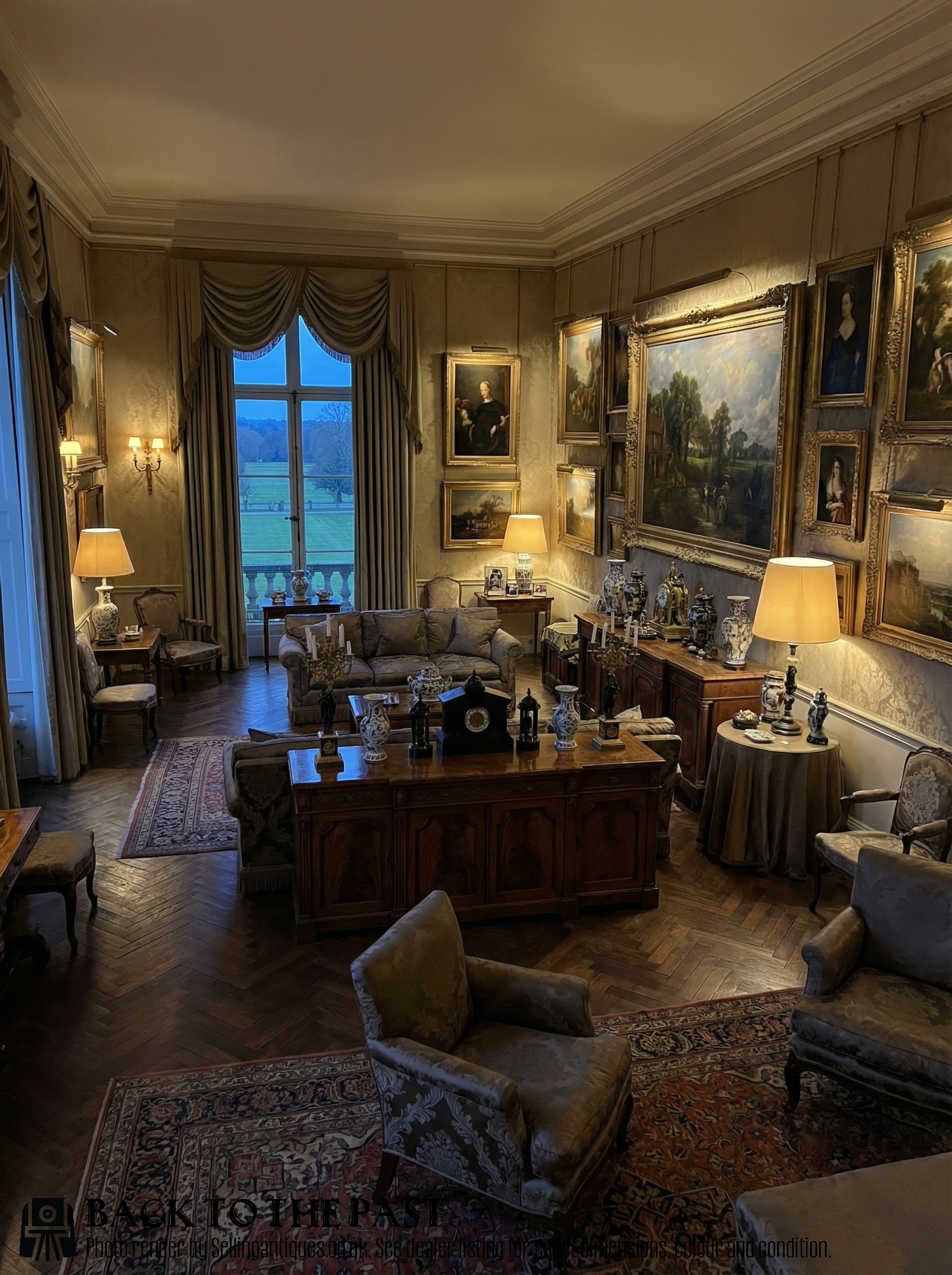
Classical Revival Mantel Clock
A classical revival mantel clock combines architectural forms with mechanical timekeeping, drawing upon Neoclassical, Louis XVI Revival, and Renaissance Revival design vocabularies. The pieces seen on this page span the Victorian era and the latter half of the nineteenth century, ranging from the eighteen sixties to the eighteen nineties.
The most frequent versions encountered here are substantial architectural mantel clocks executed in black marble, slate, and ormolu, alongside French bracket and crystal regulator formats. These items often incorporate gilt brass mounts, visible enamel dials, and eight day movements housed within robust stone cases.
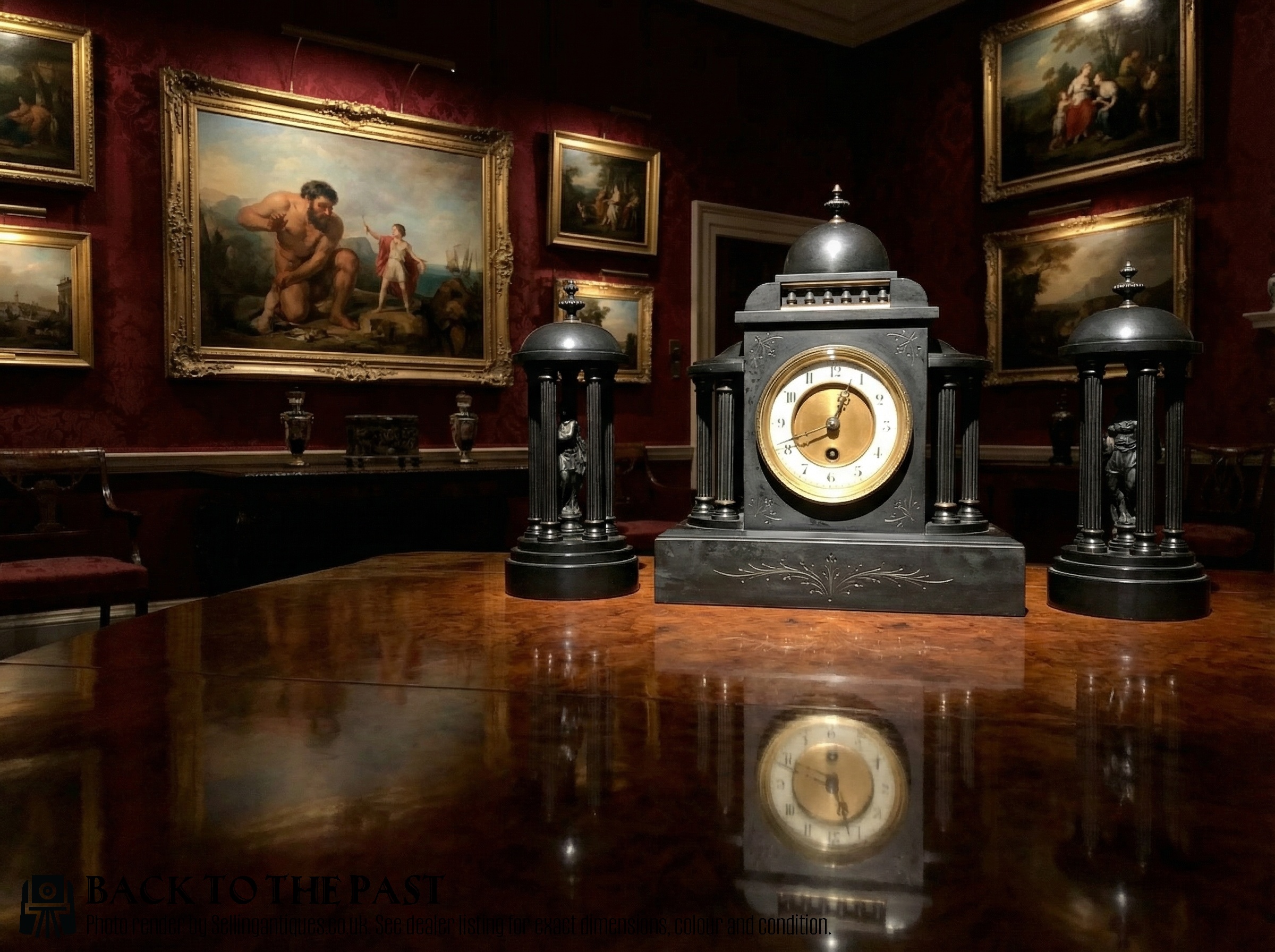
How they were made
Maker workshops utilised heavy natural materials such as black marble, black slate, and glass to construct durable architectural cases, often pairing them with cast ormolu, gilt brass, and bronze mounts. These dense stones required precise cutting and polishing to achieve smooth geometric surfaces and temple-like facades.
The internal mechanics rely upon eight day movements, frequently produced by notable continental clockmakers and housed behind protective glass panels and enamel dials. Artisans combined foundry casting for the metal ornaments with meticulous stone masonry for the primary body.
Classical Revival Mantel Clock Retail Price Guide 2026
Typical asking prices for classical revival mantel clock among the pieces listed under this phrase on Sellingantiques today, from the lower quarter to the upper quarter. They describe what is for sale here now, not the wider market.
What varies in quality
Quality differences lie in the ambition of the architectural design and the crispness of the cast metal ornamentation, distinguishing standard production from exceptional signed examples. Heavier stone cases paired with finely chased ormolu and documented maker movements represent the higher tier of execution.
The refinement of the enamel dial lettering, the weight of the bronze or gilt brass mounts, and the overall architectural proportion dictate the distinction between simpler regional items and grander Parisian workshop productions.
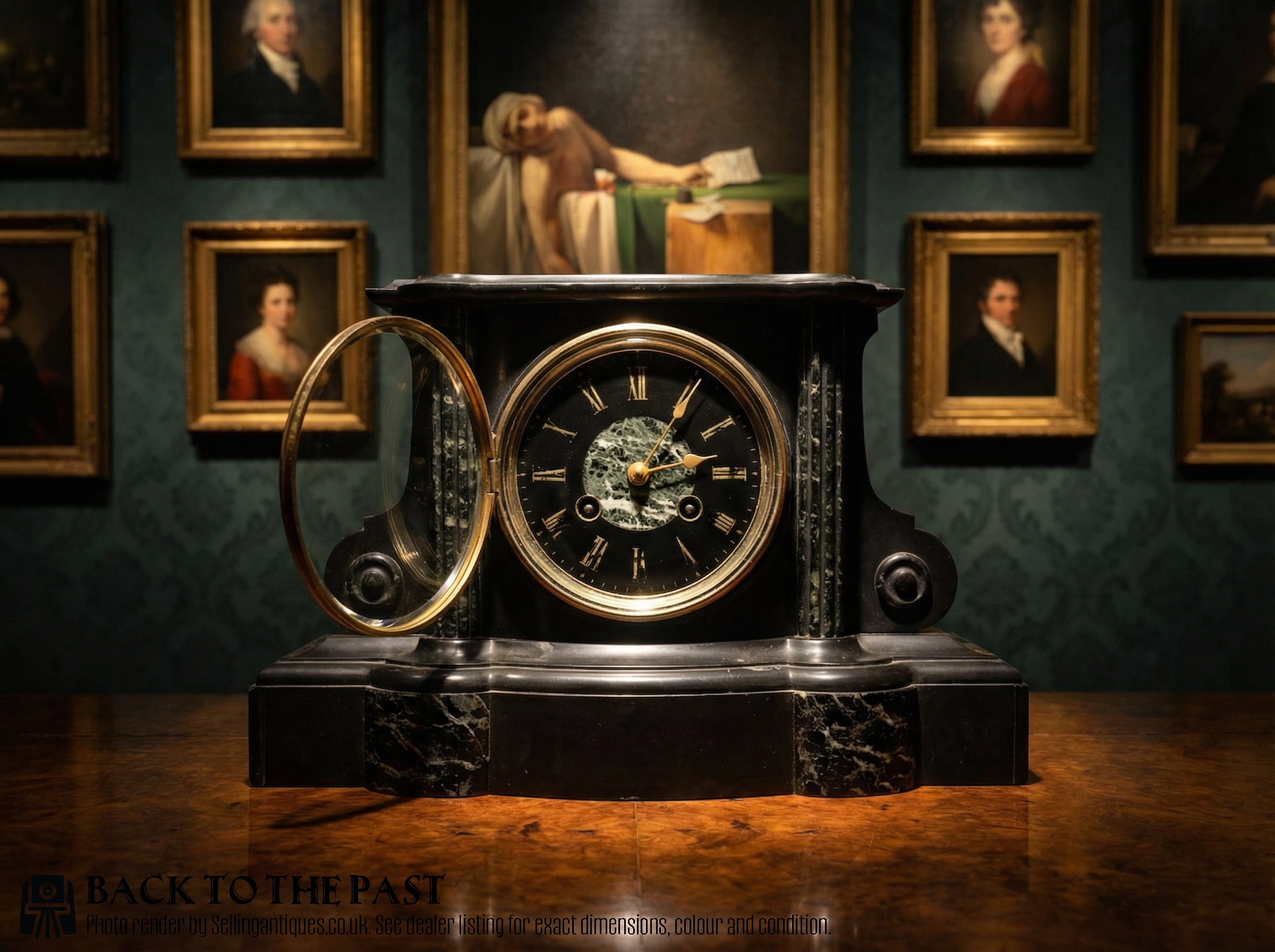
Philippes Paris·Samuel Marti·Barraud and Lunds·P H Mourey
The Classical Revival Mantel Clock Glossary
- Ormolu
- Gilt bronze produced by applying a finely ground high-carat gold mercury amalgam to a bronze casting. This technique creates a rich, durable golden surface finish.
- Black Slate
- A fine-grained metamorphic rock utilised extensively for nineteenth century clock cases due to its uniform dark colour and ability to take a high polish. It mimics the appearance of black marble.
- Crystal Regulator
- A clock featuring heavy bevelled glass panels on all sides within a brass or gilt metal framework, allowing the movement and pendulum to remain visible from multiple angles.
- Bracket Clock
- A portable mechanical clock originally designed to be placed upon a wall bracket or table. Nineteenth century versions frequently feature ebonised wood or architectural stone housings.
- Enamel Dial
- A clock face created by fusing powdered glass to a metal substrate at high temperatures. This produces a smooth, glossy, and permanent white surface for painted numerals.
Classical Revival Mantel Clock: Frequently Asked Questions
What is a classical revival mantel clock?
A classical revival mantel clock is a nineteenth century timekeeper styled after ancient Greek, Roman, or Renaissance architectural forms. These items utilise stone cases and gilt metal ornaments.
They serve both as functional eight day timepieces and as decorative sculptural centrepieces for a mantelpiece or sideboard.
How do I wind an eight day clock?
An eight day movement requires winding approximately once a week using a matching key inserted into the winding holes on the enamel dial. Care must be taken not to overwind the mainspring.
Most surviving nineteenth century examples operate with a pendulum that regulates the mechanical beat of the escapement.
Are these clocks French or English?
The evidence shows a strong French influence alongside Victorian English production, with many movements and ormolu mounts originating from Paris workshops. Makers like Samuel Marti and P H Mourey represent continental manufacturing.
English firms such as Barraud and Lunds also contributed high quality bracket clock variations during the same period.
What materials make up the cases?
The primary case materials are black marble, black slate, and bronze, frequently accented with cast ormolu, gilt brass, and glass components. These dense stones provide structural stability for the heavy metal movements.
Enamel is standard for the circular dials, protected behind hinged glass bezels.