




Ormolu Mounted Bracket Clock
An ormolu mounted bracket clock brings architectural presence and precision engineering to a room, combining rich cabinetwork with gilt bronze enrichment.
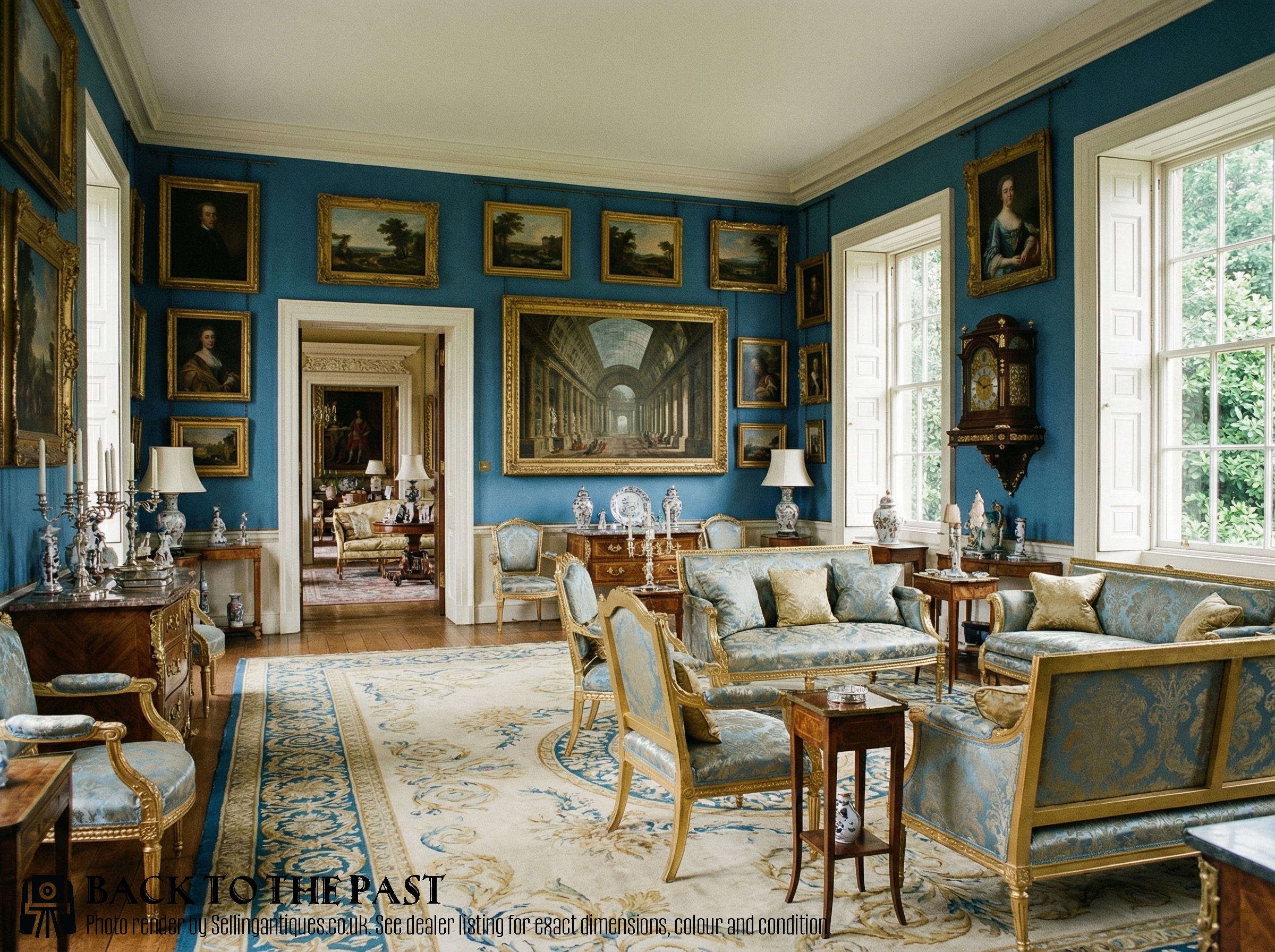
What they are
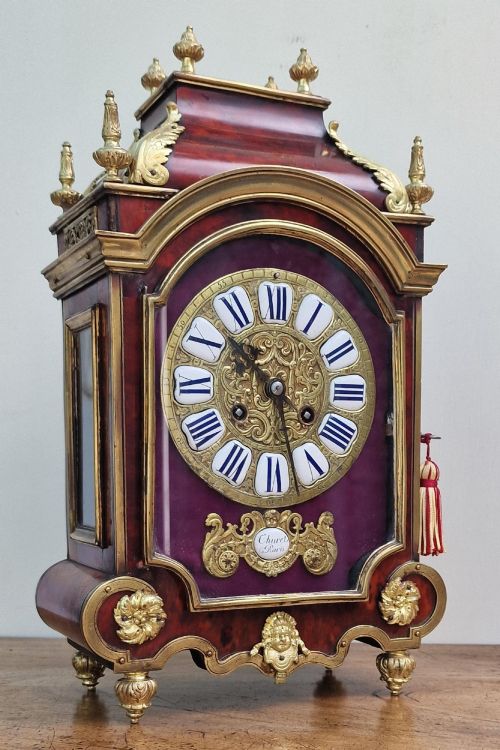
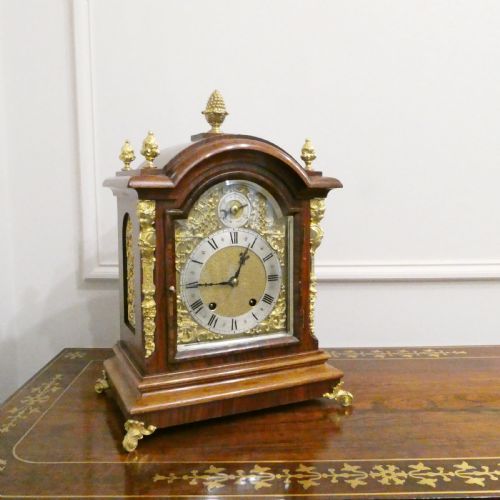
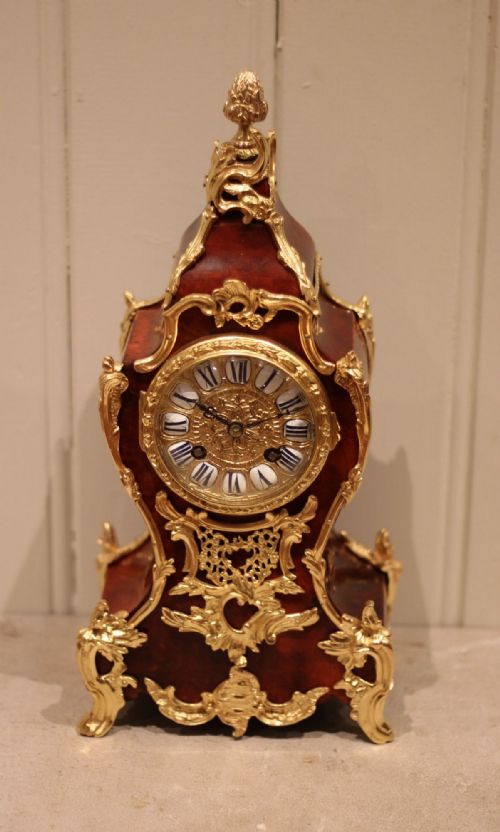
An ormolu mounted bracket clock combines a substantial tabletop timekeeper with gilt bronze ornamentation, often accompanied by a matching wall bracket or pedestal to elevate its display. The selection spans the nineteenth century, including Victorian examples alongside French Rococo Revival and Louis XV Revival pieces.
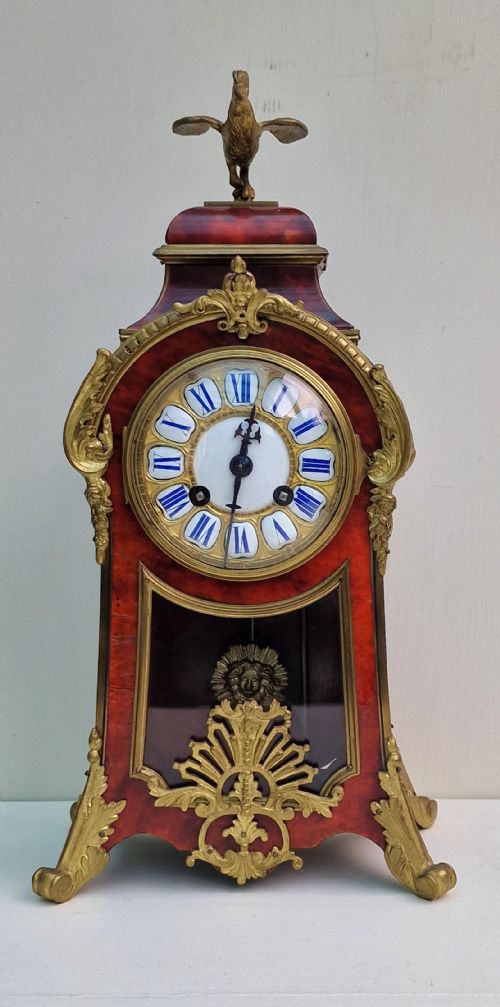
Most entries on this page showcase decorative mantel and bracket forms utilising burr walnut, ebonised wood, and tortoiseshell inlaid with brass. These pieces reflect diverse European workshops from the eighteen-sixties through to nineteen-hundred, incorporating classical architectural shapes and scrolling foliage.
Makers such as Lenzkirch and Barraud & Lunds appear alongside unsigned French Boulle work, demonstrating both regional cabinet-making traditions and specialised horological skill. Buyers find variations ranging from small lyre-shaped designs to large chiming clocks housed in oak or mahogany.

How they were made
Cabinetmakers constructed the wooden carcases using dense timbers like walnut and oak, frequently applying ebonised finishes or elaborate Boulle marquetry involving cut brass and tortoiseshell. Glass panels protected the dial while allowing visibility of the movement within.
Mounts and embellishments consist of cast ormolu and gilt bronze, chased and finished by hand to impart crisp detail to the scrolling acanthus and figurative motifs. Enamel dials carrying Roman or Arabic numerals were fitted alongside precision mechanical movements.
Retail Price Guide 2026
Typical UK retail prices for ormolu mounted bracket clock, calculated from the Sellingantiques database of over a million retail prices indexed since 2003. This retail price guide relies exclusively on Sellingantiques data; no external sources or auction records are used, so the figures do not describe the wider market.
Some clocks resemble stringed instruments, proving that timekeeping can literally strike a harmonious chord in the parlour.
What varies in quality
The sophistication of the brass and tortoiseshell inlay dictates visual impact, with finer examples displaying precise hand-cut lines and deep polychrome shell. The crispness of the ormolu chasing separates standard production mounts from those with sharp, hand-finished relief.
Movement pedigree influences standing, as signed mechanisms by known makers demonstrate superior horological standards compared to anonymous workshop output. The harmony between the clock body and its supporting bracket or pedestal completes the architectural integrity of the piece.
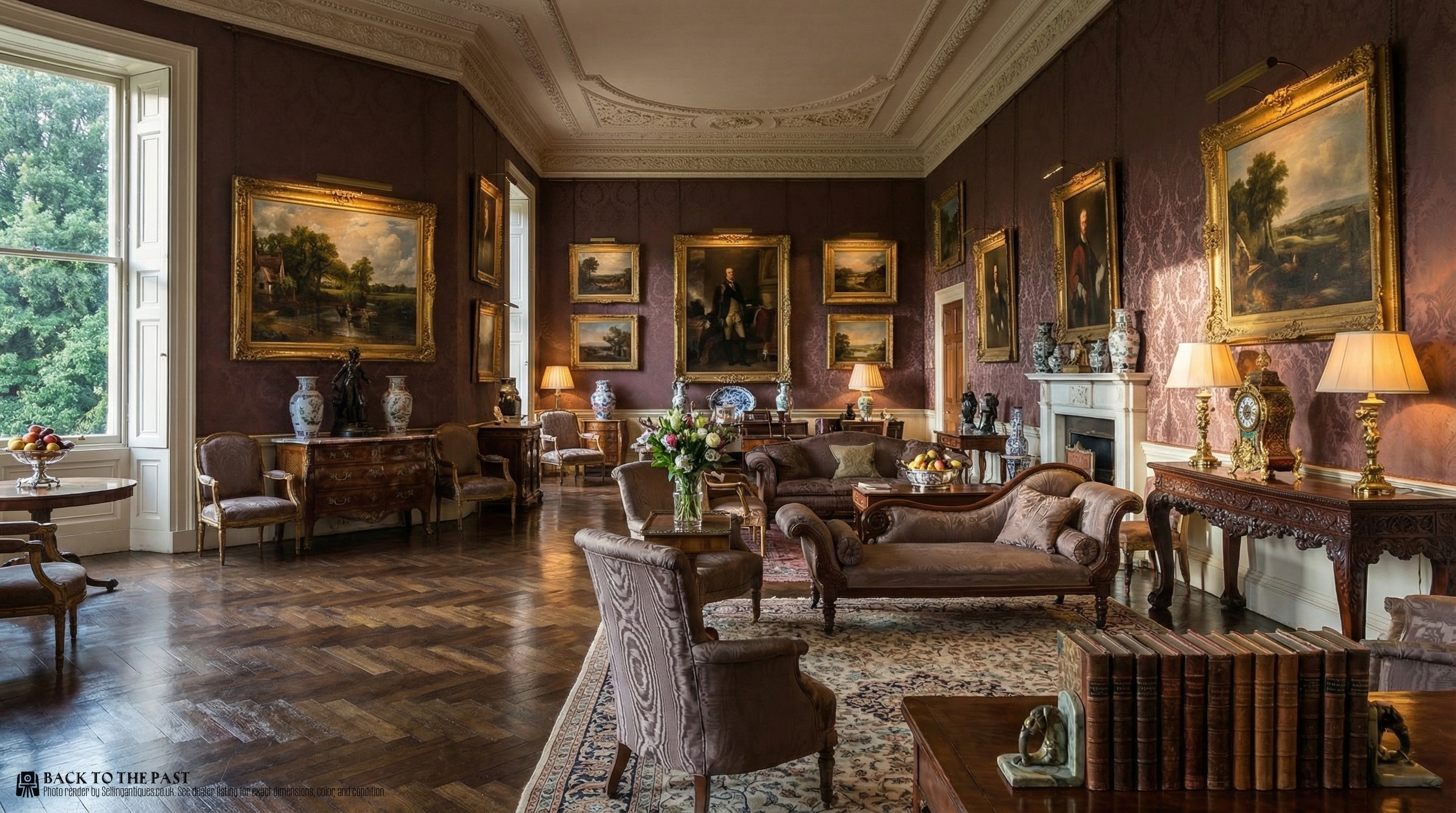
Lenzkirch·Barraud & Lunds
The Ormolu Mounted Bracket Clock Glossary
- Ormolu
- Gilded bronze used for decorative mounts on furniture and clocks. The technique involves applying a mercury and gold amalgam to bronze before heating.
- Boulle work
- A style of marquetry employing tortoiseshell and cut brass inlay developed in France. It creates a rich contrast of dark shell and gleaming metallic pattern.
- Bracket clock
- A portable spring-driven clock originally designed to sit on a wall bracket. Many survive with their original matching wall supports or pedestals.
- Ebonised wood
- Timber treated to resemble ebony through staining and polishing. This dark finish provides a stark background for bright ormolu mounts and enamel dials.
Frequently Asked Questions
What is an ormolu mounted bracket clock?
These timepieces are sophisticated mechanical clocks housed in wooden cases enriched with gilded bronze mounts. They were designed to serve as both functional instruments and grand decorative centrepieces for nineteenth-century interiors.
Cabinetmakers utilised exotic timbers like burr walnut and applied intricate Boulle marquetry to elevate the visual appeal of the housing. The resulting objects combine horological precision with sculptural metalwork.
How were these clocks used originally?
Owners placed them on prominent surfaces or matching wall brackets in principal rooms to tell the time and demonstrate social standing. Their striking mechanisms also regulated daily household routines by chiming the hours.
The accompanying wall brackets and pedestals served to elevate the clock, ensuring the dial remained at an optimal viewing height while protecting the timber from damp floors.
How do I care for tortoiseshell and brass inlay?
Keep the clock in a stable environment with minimal humidity fluctuations to prevent the tortoiseshell from warping or lifting away from the wooden carcase. Dust the surface gently with a soft, dry cloth.
Avoid using harsh chemical polishes on the ormolu mounts and delicate inlay work. Professional conservation ensures the shell and metal elements remain secure over time.
How do I distinguish French and English styles?
French examples often embrace exuberant Rococo Revival curves and elaborate Boulle marquetry using tortoiseshell and cut brass. They frequently incorporate cast ormolu figures and ornamental foliate mounts.
English bracket clocks tend to favour architectural restraint, utilising ebonised wood or mahogany with clean lines. Their emphasis rests upon mechanical reliability and understated cabinet-making traditions.