
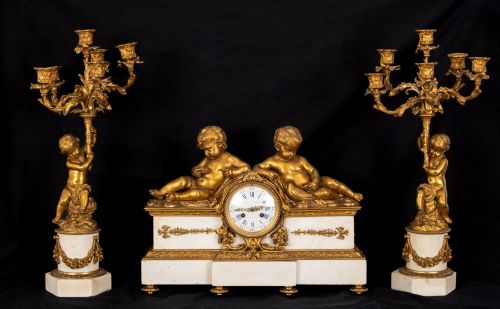
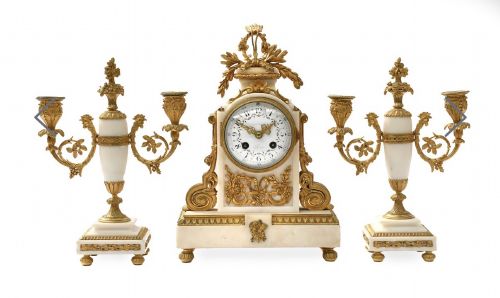


Louis XVI Marble Clock
These pieces combine classical stone and gilt metal to anchor a room, capturing the enduring appeal of a louis xvi marble clock.
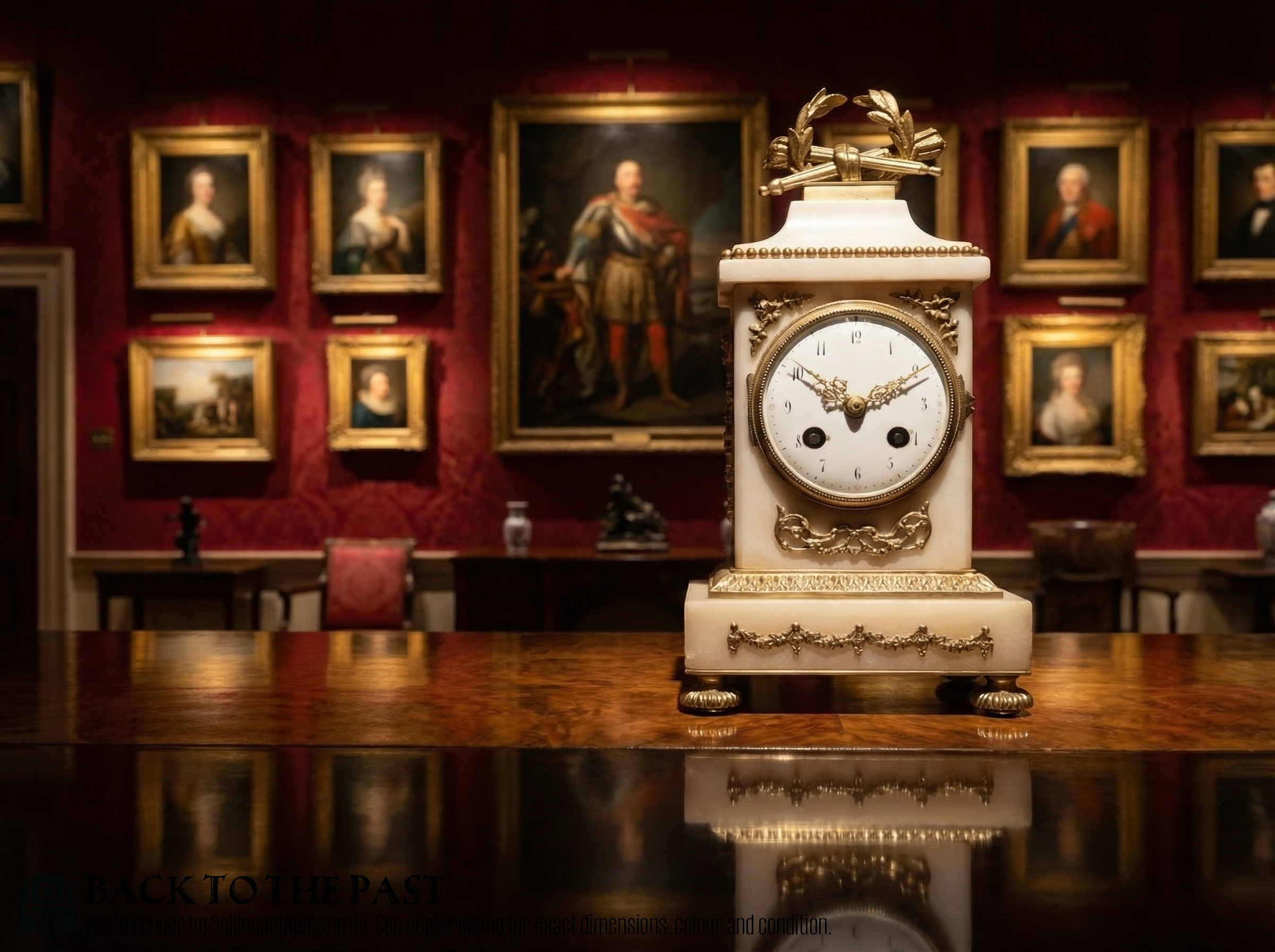
Louis XVI Marble Clock
A louis xvi marble clock brings together substantial carved stone bodies and polished metal mounts, often appearing alongside matching side garnitures or urn sets. These pieces range from upright mantel clocks to portico designs and elaborate lyre shapes.
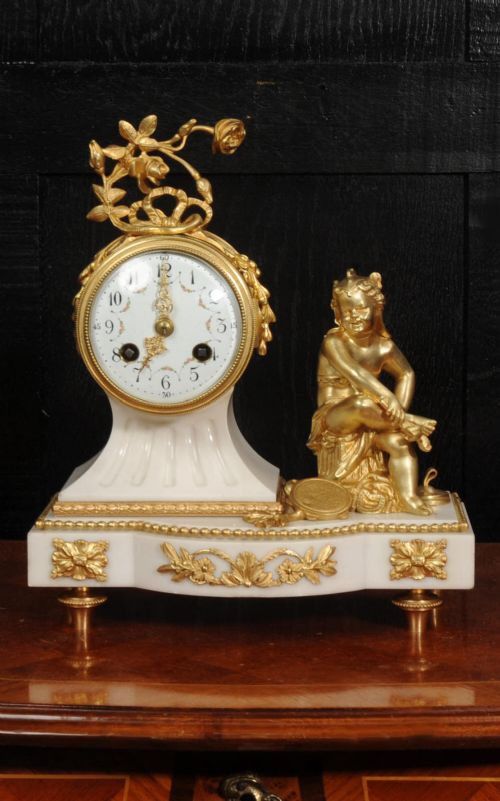
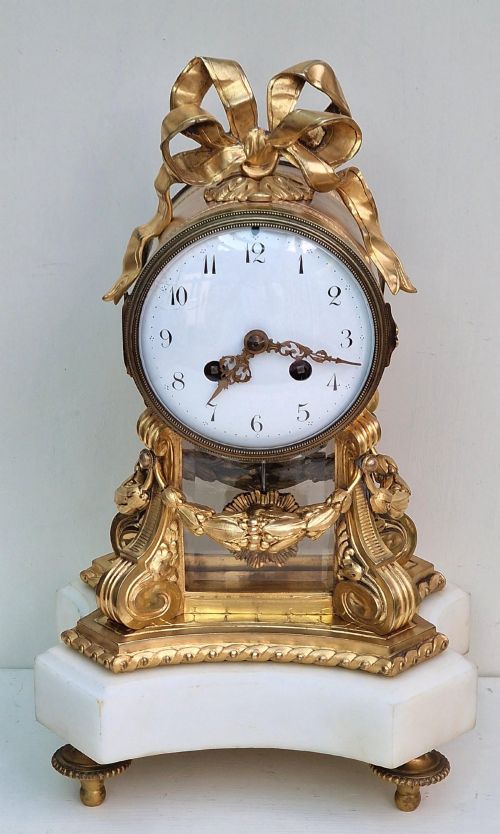
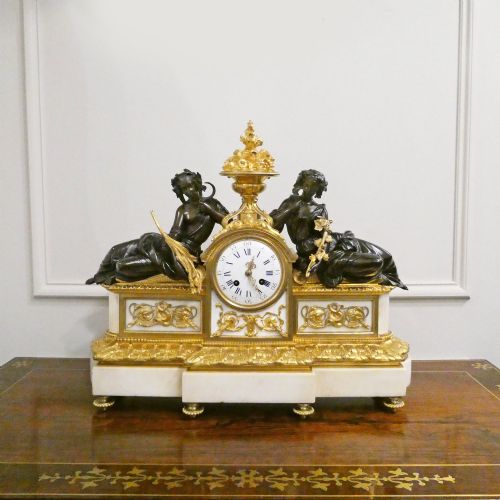
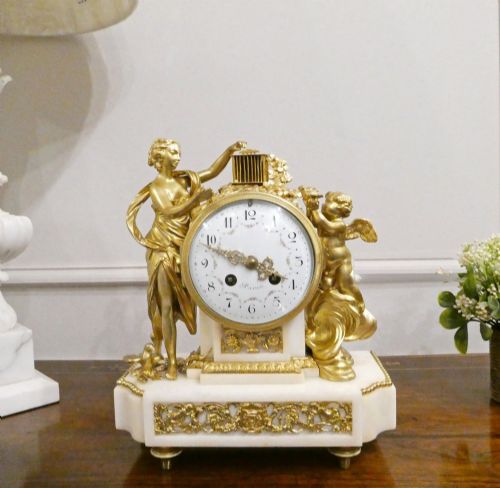
The versions most common here stem from nineteenth-century revivals of earlier French aesthetics, alongside eighteenth-century originals. Makers combined white, red, or pink marble with gilt bronze and ormolu.
Makers housed circular enamel dials inside architectural or figural housings, frequently featuring cherubs, urns, or classical motifs. Such items served both as functional timekeepers and as decorative centerpieces for mantelpieces.
Materials and construction
Craftsmen shaped natural stone into columns, plinths, and urn bodies, utilising white, red, and pink varieties of marble. They paired these dense mineral housings with cast brass, bronze, and ormolu mounts.
Foundries cast decorative bronze elements before applying mercury gilding or modern ormolu finishes to create a bright metallic contrast against the polished stone. Enamel dials received delicate painted numerals, protected behind glass bezels.
Clockmakers fitted mechanical brass movements inside these mixed-media cases, allowing weights or springs to drive pendulum regulation.
Listings feature marble varieties including white, red, and pink stone, paired with ormolu mounts across the nineteenth century and earlier.
Distinctions in quality
The refinement of the cast bronze mounts separates standard production from exceptional examples, as seen in the sharpness of chased details on foliage and figural elements. Finer pieces display crisp definition in cherubs, drapery, and floral garlands.
The choice and preparation of the marble itself dictate the visual weight of the object, with uniform veining and precise stone-cutting marking superior work. Matching sets demonstrate greater cohesion between the central clock and its accompanying side garnitures.
Signed movements from known French makers or retailers indicate higher standards of mechanical execution and housing construction.
Japy Freres·Vincenti·Louis Goret·Sacre·Remond·Lemerle Charpentier Cie·Samuel Marti·Raingo Fres·Henri Picard·Marshall·H Luppens Paris
The Louis XVI Marble Clock Glossary
- Ormolu
- Gilded bronze produced through the application of a mercury-gold amalgam to cast metal. This historical technique creates a durable, warm metallic finish common on eighteenth and nineteenth-century mounts.
- Garniture
- A set of matched decorative objects, typically comprising a central clock flanked by two matching vases, urns, or candelabra. These sets were designed to display symmetrically on a mantelpiece.
- Portico clock
- A clock featuring an architectural case supported by four or more columns, often housing a suspended pendulum within the central opening. The style gained popularity during the late eighteenth and early nineteenth centuries.
- Lyre clock
- A timepiece shaped like the ancient musical instrument, featuring an open-frame body constructed from marble or bronze. The pendulum often swings within the looped base of the lyre shape.
- Enamel dial
- A clock face made by fusing powdered glass to a metal substrate at high temperatures. These smooth, glossy surfaces typically feature painted Arabic or Roman numerals.
Louis XVI Marble Clock: Frequently Asked Questions
Can these antique clocks be kept running accurately?
Regular servicing by a professional horologist allows these nineteenth and eighteenth-century movements to keep reliable time. Cleaning and oiling the brass gears prevents excessive wear on the pivots.
Placement also matters, as these heavy stone and bronze bodies need a level surface to maintain an even beat. Minor adjustments to the pendulum suspension spring correct gains or losses.
How do I distinguish eighteenth-century pieces from nineteenth-century revivals?
Eighteenth-century examples often exhibit hand-chased bronze mounts and specific maker signatures associated with the reign of Louis XVI. These original pieces reflect the exact stylistic purity of the period.
Nineteenth-century revival pieces, produced during Victorian times and later, frequently utilise heavier cast components and machine-finished details. Examining the movement stamps and the wear patterns on the bronze helps clarify the production era.
How should I clean marble and ormolu safely?
Dust marble surfaces regularly with a soft, dry cloth to prevent grime accumulation in the stone pores. Avoid harsh chemical cleaners that can etch the polished finish or strip the gilding from bronze mounts.
Ormolu elements require gentle dusting with a dry brush. Moisture should be kept away from both the stone and the exposed mechanical parts inside the case.