
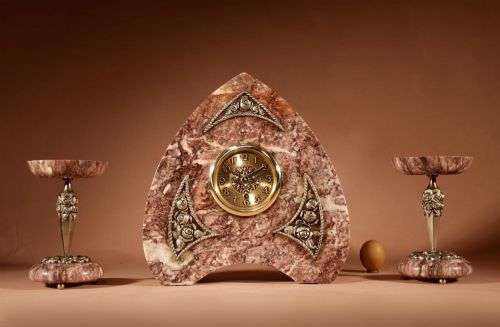


Pink Marble Clock
A pink marble clock brings sculptural presence and rich mineral colour to a mantelpiece, combining dense stone with polished bronze mounts.
Understanding Pink Marble Clocks
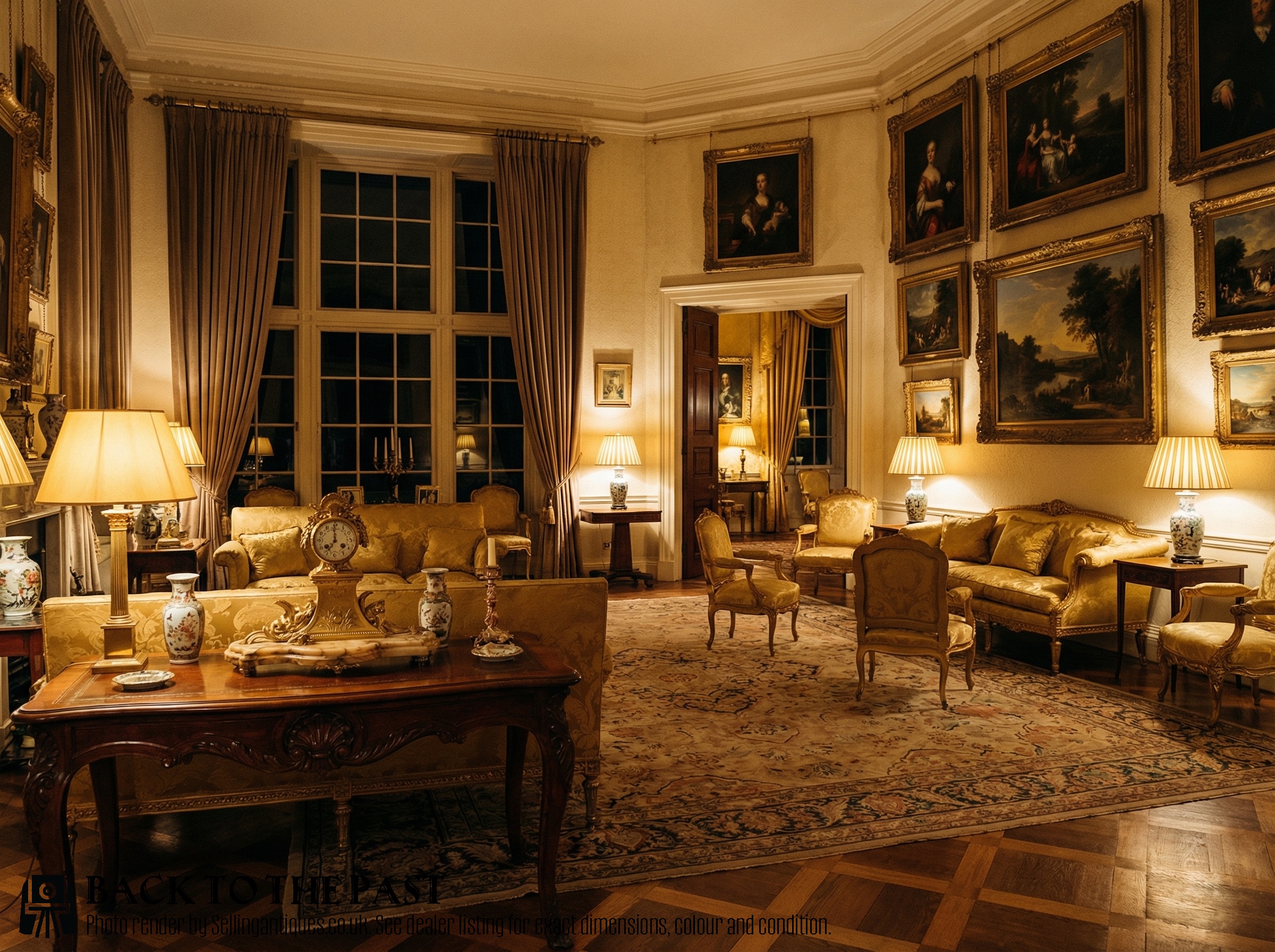
When you search for pink marble clock, you are looking at substantial mantel timepieces created across the late nineteenth and early twentieth centuries. These objects typically take the form of architectural portico designs, lyre shapes, or figural compositions resting upon swept bases.
The versions you are most likely to meet on this page hail from French workshops of the Victorian and Art Deco eras. They frequently incorporate garniture sets, pairing the central timepiece with matching side ornaments to create a balanced decorative display.
Makers utilised the distinctive veining and rosy tones of the stone to anchor heavy, classical silhouettes. These domestic instruments served both to tell the time and to anchor the decorative scheme of a period interior.
Materials and Construction
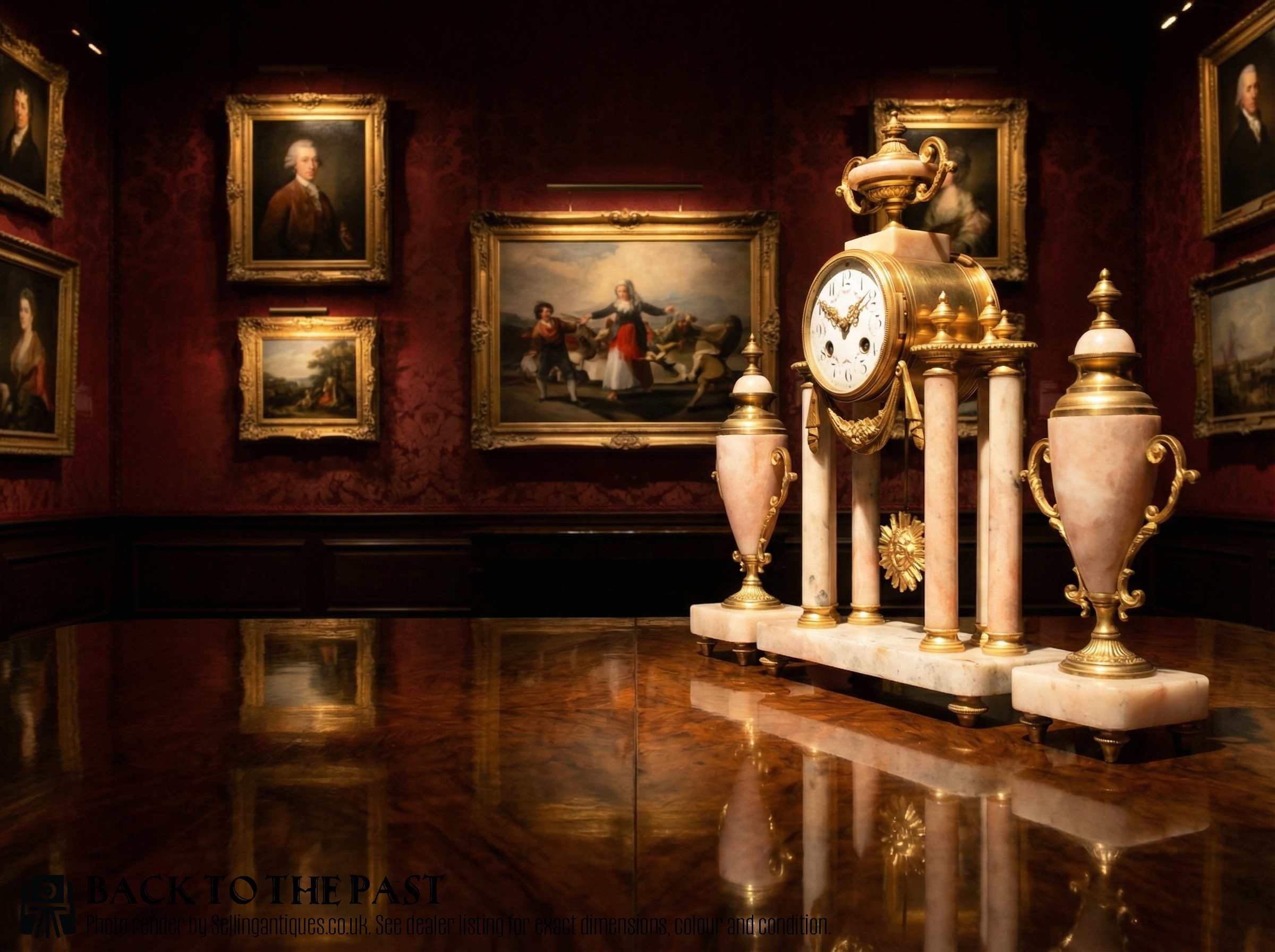
Masons shaped solid pink marble into architectural blocks, portico columns, and curved bases, polishing the stone to reveal its natural crystalline structure. These heavy stone housings were then fitted with cast ormolu, gilt metal, and brass mounts, securing decorative bezels and feet.
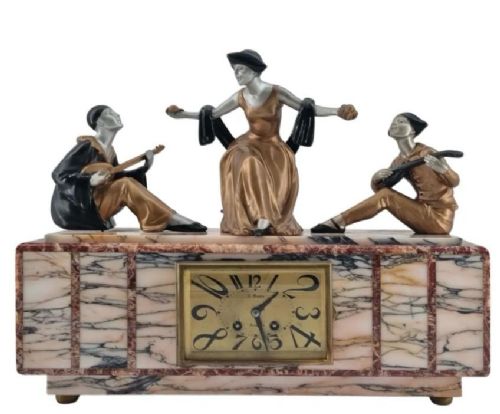
Clockmakers integrated brass and bronze movements behind white enamel dials protected by bevelled glass doors. Some elaborate models also featured spelter figural components, such as pierrots or classical bronzes, mounted directly onto the marble chassis.
Retail Price Guide 2026
Typical UK retail prices for pink marble clock, calculated from the Sellingantiques database of over a million retail prices indexed since 2003. This retail price guide relies exclusively on Sellingantiques data; no external sources or auction records are used, so the figures do not describe the wider market.
Pierrot and Columbine once shared a mantelpiece, frozen in zinc and marble while time ticked on.
Distinctions in Quality
Quality rests upon the architectural ambition of the stone housing and the crispness of the bronze or ormolu mounts. Finer examples display deeply chased gilt mounts and carefully matched marble sections rather than simple, unadorned blocks.
The integration of sculptural elements, such as cast figural groups or complex lyre frames, separates standard timepieces from exceptional decorative garnitures. The precision of the enamel dial and the presence of signed movements further elevate the standing of a piece.
Mougin·Sega
The Pink Marble Clock Glossary
- Garniture
- A set of matching decorative objects designed to be displayed together on a mantelpiece, usually consisting of a central clock flanked by two matching side pieces.
- Ormolu
- Gilt bronze mounts applied to furniture and clocks, created through a mercury gilding process that imparts a rich golden finish.
- Portico clock
- A mantel clock featuring an architectural frame supported by columns, often housing a suspended pendulum within the central void.
- Spelter
- A zinc alloy frequently used as a cost-effective alternative to bronze for casting decorative figures and mounts, often painted to resemble bronze.
- Enamel dial
- A metal dial face coated with fused glass powder and fired at high temperatures, providing a durable, glossy white background for painted numerals.
Frequently Asked Questions
What is a pink marble clock?
A pink marble clock is a heavy mantel timepiece constructed primarily from polished rosy-toned stone, often paired with metal mounts and enamel dials.
These pieces date predominantly from the late Victorian and early twentieth-century periods, originating largely from French workshops.
How do I date a pink marble clock?
Dating relies on stylistic clues, ranging from the classical revival details of Victorian portico designs to the distinct character of later Art Deco figural pieces.
The materials used for the mounts, such as ormolu or cast spelter, along with the typography on the enamel dial, help narrow down the period of manufacture.
Are these clocks heavy?
Yes, these timepieces are exceptionally heavy due to the solid blocks of natural marble used to form their architectural bodies and bases.
Collectors should ensure the supporting mantelpiece or shelf is sturdy enough to bear the substantial weight safely.
What styles are available?
Available styles span French Louis XVI revivals, ornate Victorian portico designs, and twentieth-century figural Art Deco compositions.
These diverse aesthetic approaches incorporate different combinations of gilt bronze, brass, glass, and sculpted stone.