



Antique Marble Timepiece
An antique marble timepiece brings heavy stone, gleaming ormolu, and measured ticking together as a centrepiece.
Antique Marble Timepiece
When you search for an antique marble timepiece, you encounter heavy stone cases designed to sit upon a mantelpiece, sideboard, or desk. These objects function primarily as domestic timekeepers while serving as architectural ornaments for the room.
The versions most frequently met on this page span the nineteenth century and the Victorian era, alongside later Art Deco examples. They take the form of mantel clocks, clock garnitures, desk clocks, and occasional drumhead or skeleton clocks.
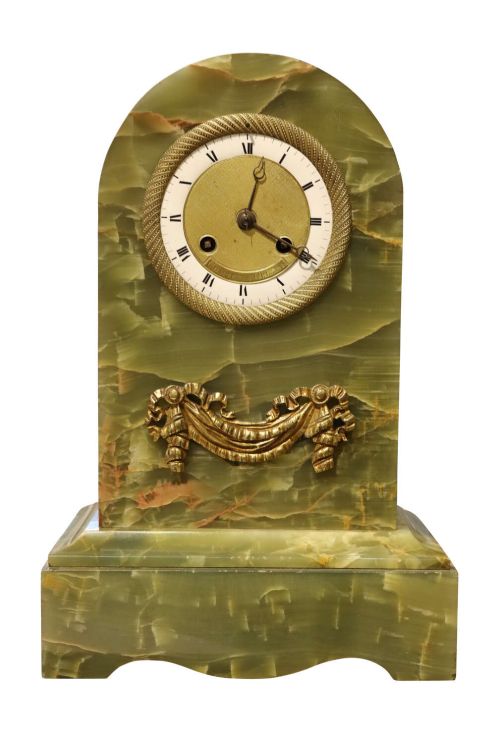
Makers and makers' names appear across French and English workshops, incorporating styles from French Empire and Louis XVI to Neoclassical and Egyptian Revival. The materials range from deep red or green marble and sienna marble to black slate, brass, and bronze.
How they were made
The construction of an antique marble timepiece relies on heavy blocks of marble, onyx, or slate shaped into architectural cases, drums, or lyre forms. Stonemasons cut and polished these dense materials to house precision mechanical movements.
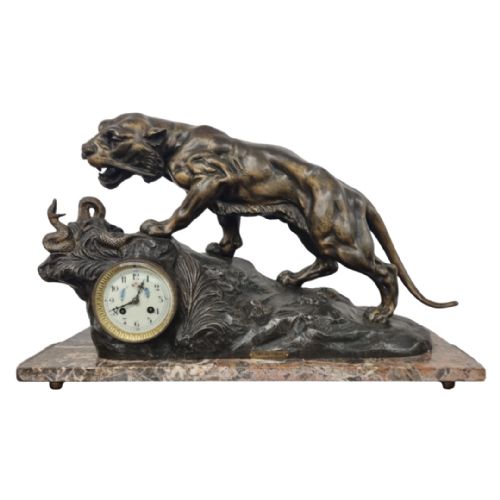
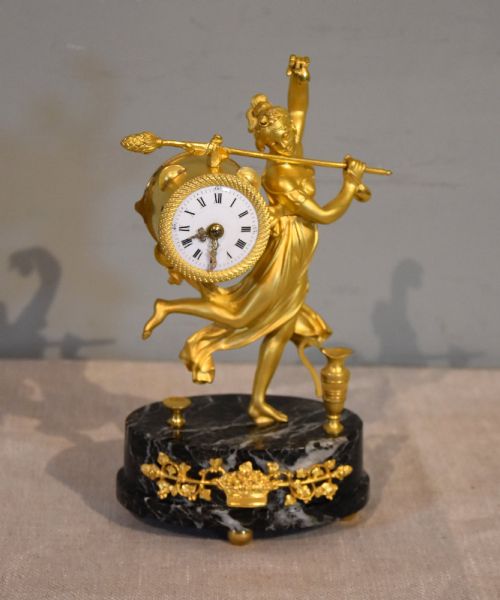
Gilt bronze, ormolu mounts, and brass details are frequently applied to the stone cases, often alongside cast bronze figures of animals, humans, or classical motifs. Enamel dials and glass bezels protect the clock face, completing the assembly of stone and metal.
Antique Marble Timepiece Retail Price Guide 2026
Typical asking prices for marble timepiece among the pieces listed under this phrase on Sellingantiques today, from the lower quarter to the upper quarter. They describe what is for sale here now, not the wider market.
Listings for this phrase include nineteenth-century, Victorian, and Art Deco periods, employing marble, brass, enamel, ormolu, bronze, and black slate.
What varies in quality
Quality in these timepieces rests upon the precision of the stone cutting and the crispness of the cast bronze or ormolu mounts. Finer examples display deeply detailed figural sculptures and heavier, more substantial marble housings rather than simple geometric slabs.
The sophistication of the internal movement further separates the tiers, with calendar functions, striking mechanisms, and eight-day movements representing higher workmanship. The harmony between the bronze decorations and the natural veining of the marble dictates the visual success of the piece.
Charles à Orléans·R Varnier·Philippes Paris·Louis Goret·William Hardy London·Achille Brocot·Michel Decoux
The Antique Marble Timepiece Glossary
- Ormolu
- Gilded bronze produced by applying a mercury and gold amalgam to cast bronze. This technique creates a rich golden surface that adorns many French marble clock cases.
- Garniture
- A set consisting of a central clock flanked by matching decorative ornaments such as vases or candelabra. These matched groupings were designed to sit together on a mantelpiece.
- Sienna marble
- A distinctive yellow-brown or ochre marble featuring dark veining, quarried originally in Italy. It provides a warm, colourful alternative to standard black slate or white marble.
- Fusee
- A conical pulley used in clock movements to maintain even tension on the chain or cord as the mainspring unwinds. This mechanical device improves the timekeeping accuracy of the clock.
- Skeleton clock
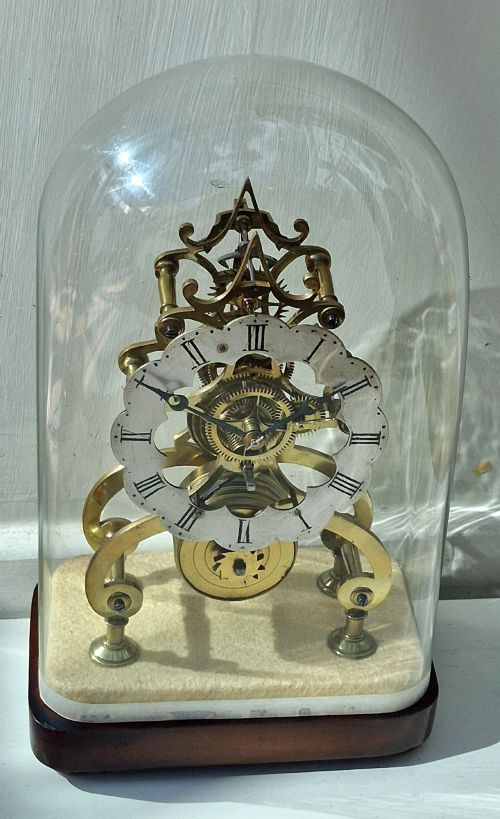
- A timepiece with an exposed movement held between open metal plates, allowing the gears and escapement to be viewed from the side. These clocks are typically housed under a glass dome.
Antique Marble Timepiece: Frequently Asked Questions
How do I wind an antique marble timepiece?
Most of these clocks utilise a key inserted into winding holes on the enamel dial to tension the mainspring. Care must be taken not to overwind the movement.
Mechanical clocks require a steady, level surface to ensure the pendulum swings evenly and keeps accurate time. Consulting a professional horologist for initial setup is recommended for older movements.
Where should I place a heavy marble clock?
Due to the substantial weight of stone and bronze cases, these timepieces need robust furniture such as a strong mantelpiece, heavy sideboard, or sturdy desk. The supporting surface must be completely flat to prevent strain on the marble base and the internal mechanism.
Direct sunlight and damp environments should be avoided to protect the enamel dial and the polished finish of the stone.
How do I identify a French Empire style clock?
French Empire clocks from the nineteenth century display classical motifs, military trophies, and architectural symmetry influenced by ancient Rome and Greece. They frequently combine deep green or red marble with fire-gilded ormolu mounts and figural bronzes.
Maker signatures on the enamel dial or backplate often point to Parisian workshops of the period.