


Art Deco Garniture Clock
An art deco garniture clock brings undeniable period symmetry to a mantelpiece, pairing a central timepiece with matching decorative side pieces.
Art Deco Garniture Clock
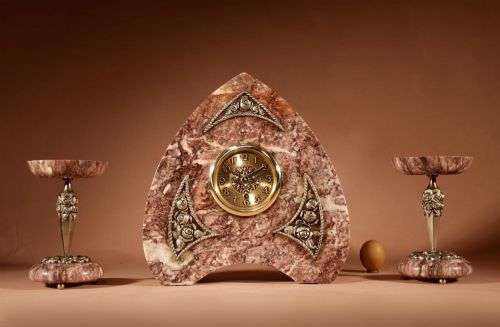
An art deco garniture clock consists of a central mantel clock accompanied by a matching pair of side ornaments, often designed as matching vases or figural sculptures. These three-piece sets dominate the selection, bringing balanced geometric or figurative arrangements to a room.
The objects originate primarily from the 1920s and 1930s, reflecting the sleek, modern aesthetic of the era. French makers feature prominently in the record, producing sophisticated clock sets that integrate timekeeping with sculptural art.
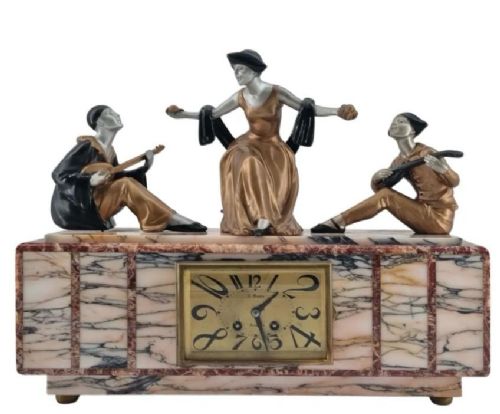
Many examples incorporate figurative elements into the design, ranging from Pierrot and Columbine to greyhounds, German shepherds, elephants, and dancers. Alongside these figurative centrepieces, simpler architectural marble and brass combinations provide a streamlined look.
What varies in quality
Quality rests heavily on the artistic ambition and execution of the sculptural components, especially when individual artists or named workshops produce the figures. Standard architectural marble cases sit at one end, while dynamic figural bronzes by known modellers represent the other.
The selection of materials creates further distinction, moving from plain stone bases to complex multi-material compositions involving breccia marble, silver plating, and intricate metalwork. Cohesion between the clock and its matching garnitures defines the overall architectural success of the set.
Listings demonstrate a strong presence of 1920s and 1930s French manufacture, frequently combining marble, brass, and bronze.
Sega·Michel Decoux·P Sega·Suzanne Bizard·Odyv
The Art Deco Garniture Clock Glossary
- Garniture
- A set of ornamental objects designed to match and display together on a mantelpiece or sideboard. In this context, it refers to the pair of side pieces accompanying the central clock.
- Spelter
- An alloy of zinc and lead used widely as a cheaper alternative to bronze for decorative sculptures. It takes patination well and was commonly painted or plated.
- Breccia marble
- A composite stone made of broken fragments embedded in a fine-grained matrix. It offers striking, variegated patterns across the clock and garniture bodies.
- Bezel
- The metal ring that holds the glass protecting the clock face. It is often finished in brass or chrome to match the surrounding case details.
Art Deco Garniture Clock: Frequently Asked Questions
What is an art deco garniture clock?
An art deco garniture clock is a matched three-piece set featuring a central mantel clock flanked by two symmetrical decorative ornaments, such as vases or matching sculptures.
These sets were designed to sit on a mantelpiece as a unified decorative arrangement, reflecting the distinctive geometric and figurative style of the interwar period.
How do I date an art deco garniture clock?
Dating relies on the materials, styling, and period signatures recorded on the pieces, which typically date from the 1910s through to the 1930s.
Closer inspection of the marble types, metal finishes, and sculptural motifs helps align the clock with its specific decade of manufacture.
Were these clock sets made in France?
A large proportion of these clock sets originate from France, as evidenced by numerous French-attributed pieces in the historical record.
French makers frequently combined fine marble cases with bronze or spelter animal and human figures.
What figures appear on these clocks?
Common figurative subjects include dancers, pierrots, and Columbines, alongside animals such as greyhounds, German shepherds, and elephants.
These sculptures typically surmount the marble or metal clock body, matching the accompanying side pieces.