

Gilt Bronze Pendulum Clock
A gilt bronze pendulum clock brings substantial weight and intricate metalwork to a mantelpiece, offering both reliable timekeeping and ornate period design.
Gilt Bronze Pendulum Clock
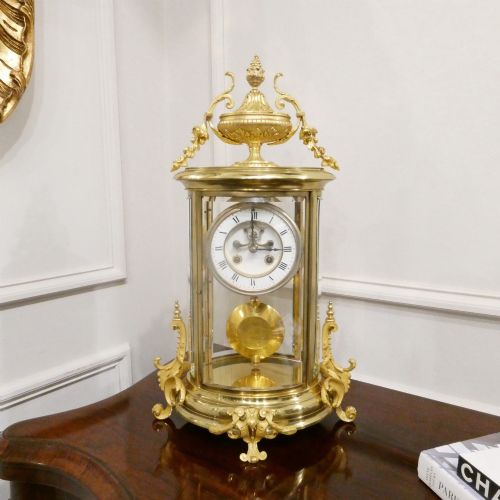
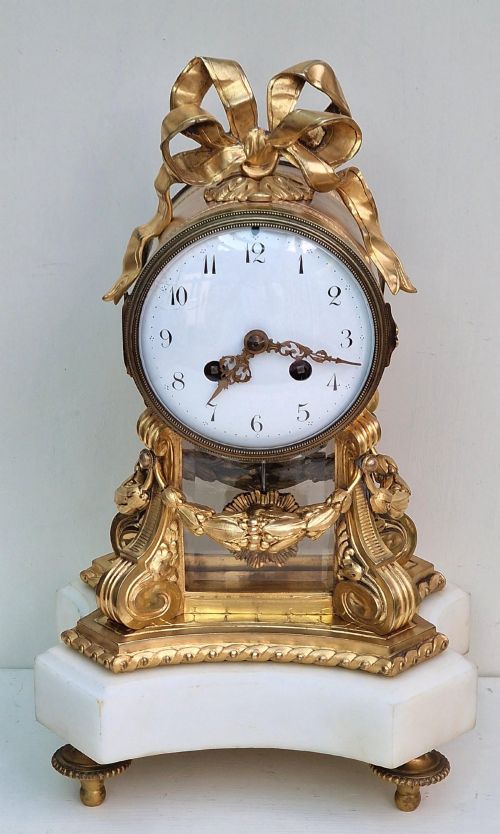
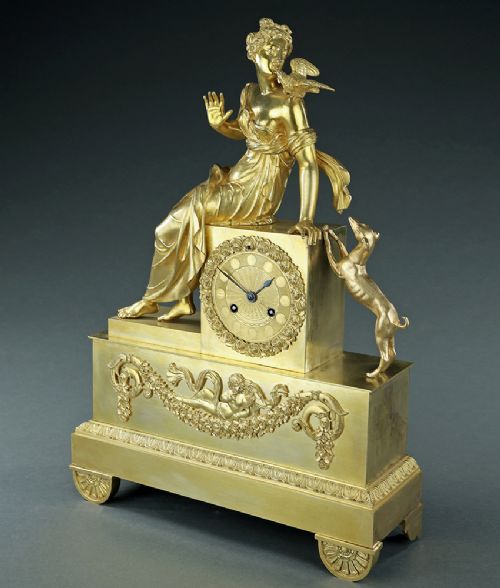
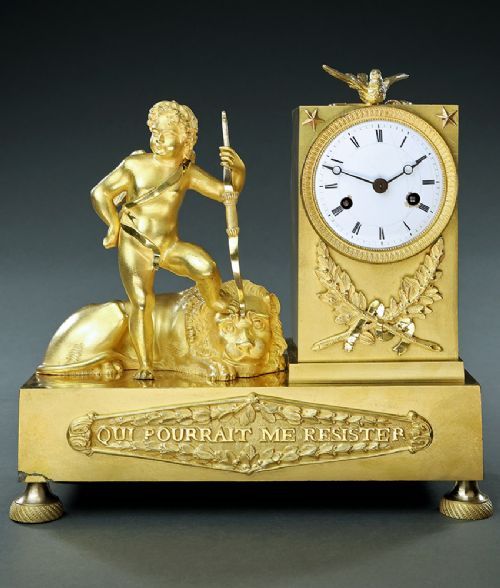
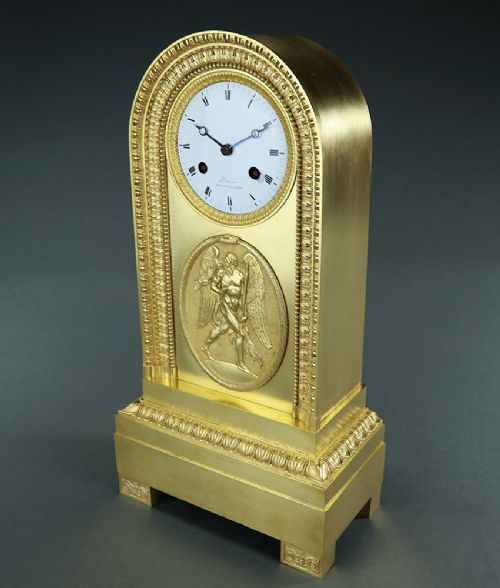
A gilt bronze pendulum clock stands as a prominent form of decorative horology, appearing frequently in French styles such as Louis XVI, Empire, and Rococo Revival. These pieces combine heavy cast metal cases with functional clockwork, designed primarily for placement on drawing room mantelpieces.
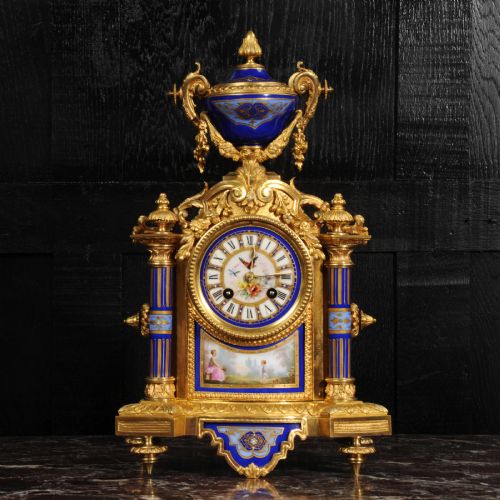
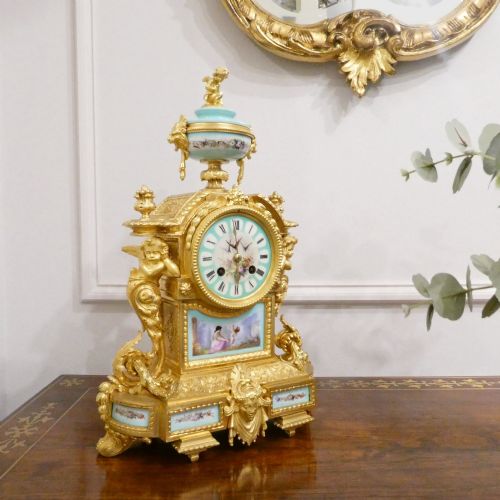
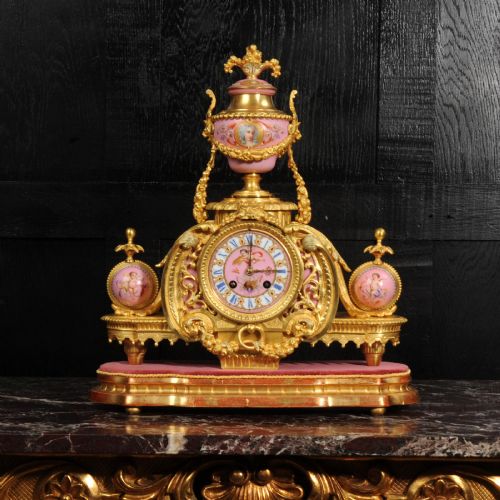
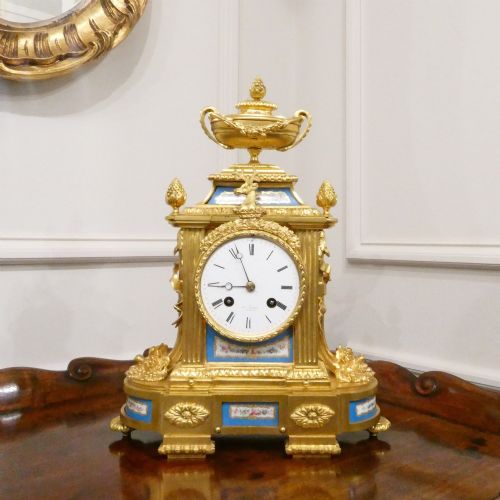
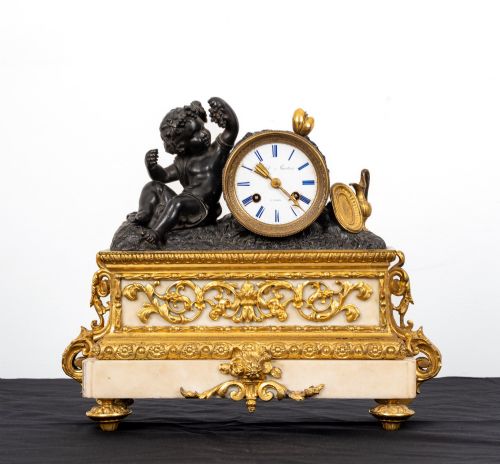
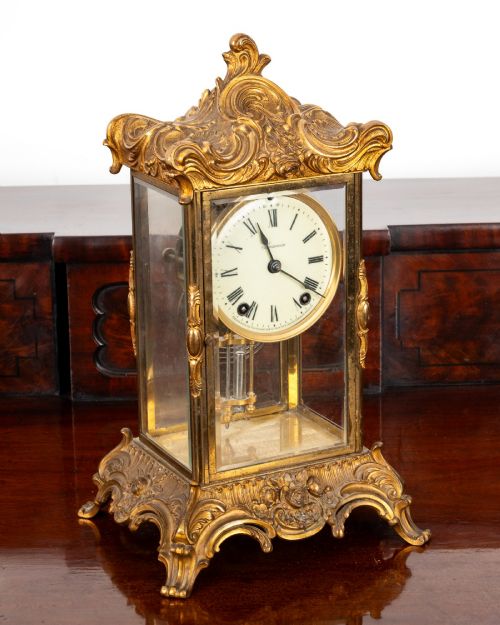
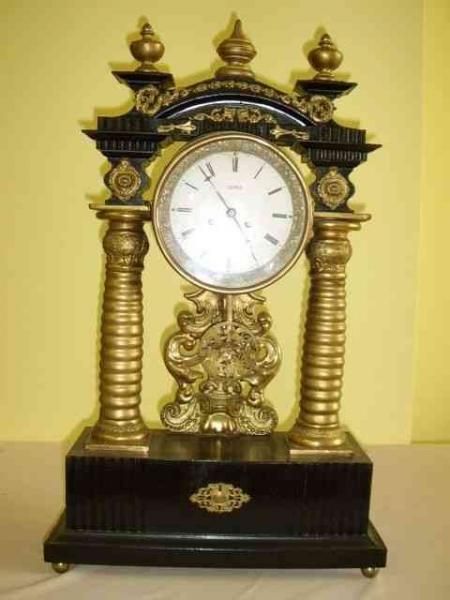
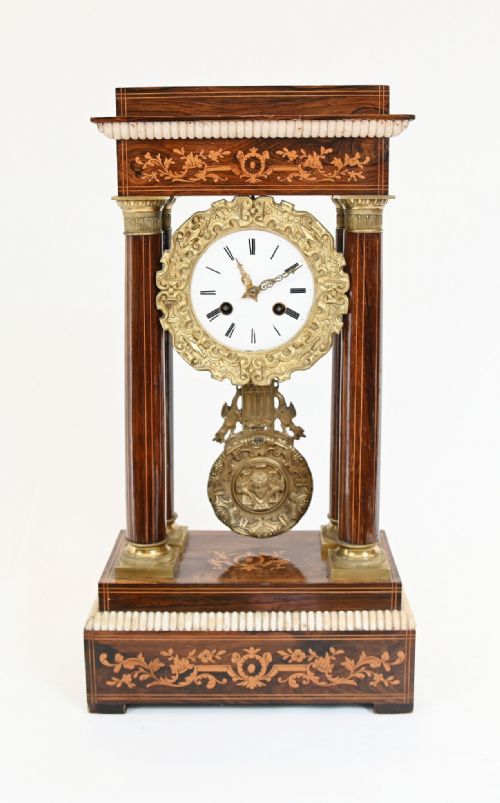
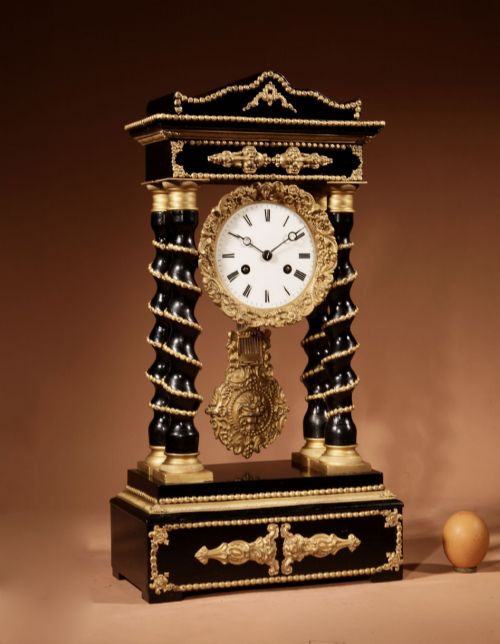
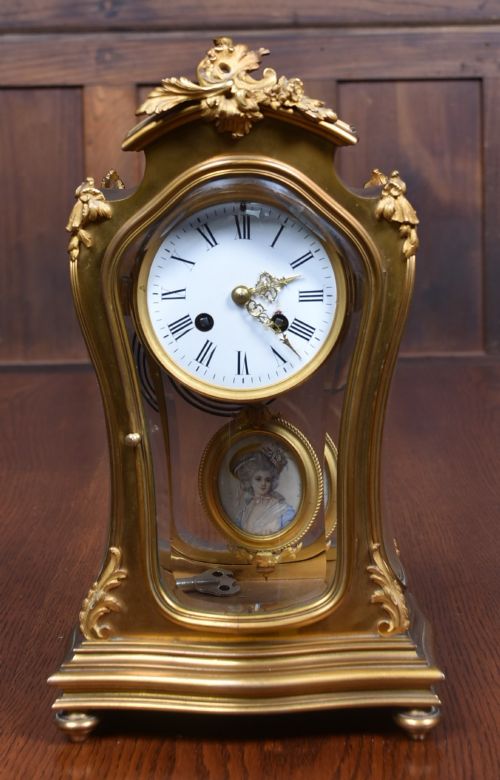
Most examples found on this page date from the nineteenth century, spanning Victorian periods down to nineteen hundred. The selection ranges from architectural portico clocks and crystal regulators to elaborate figural mantel clocks incorporating porcelain panels and marble bases.
Makers and horologists of the period housed movements within heavy ormolu and patinated bronze, often drawing on classical mythology or courtly aesthetics. Buyers encounter everything from simple drum head clocks to complex musical and astronomical timepieces.
Materials and construction methods
Casings were produced using bronze or brass that received a heavy layer of gold leaf or mercury gilding, known as ormolu, which provided a bright, enduring metallic finish. Founders cast these components in sections before chasing the surfaces by hand to sharpen details such as acanthus leaves and scrolls.
Clockmakers integrated enamelled dials, often painted with Roman numerals, alongside specialist glass panels for four glass or crystal regulator models. Secondary materials like white marble, red marble, porcelain plaques from Sèvres, and tortoiseshell veneer provided structural contrast and colourful visual accents.
Movements were mechanically engineered by specialised French workshops, utilising brass gears and steel springs alongside suspended pendulums. These internal mechanisms were frequently stamped by notable makers and fitted into the heavy metal housings.
Listings feature nineteen-century periods alongside eighteenth-century works, utilising materials such as ormolu, Sevres porcelain, marble, and cut crystal.
Distinctions in quality and execution
The degree of hand-chasing on the gilt bronze surfaces separates standard production from superior work. Crisp undercuts, deep relief, and cleanly defined ornamental motifs indicate skilled craftsmanship during the casting process.
The integration of materials determines the overall caliber of the object, particularly where hand-painted porcelain panels, cut crystal, or fine marble bases align precisely with the metal mountings. Signed movements by recognised horologists add tangible weight to the provenance.
Proportion and architectural balance dictate the visual success of the piece, as higher grade clocks maintain harmonious scaling between the figural or architectural case, the dial, and the visible pendulum swing.
Japy Freres·Achille Brocot·Henry Marc·Samuel Marti·Delettrez·Breguet
The Gilt Bronze Pendulum Clock Glossary
- Ormolu
- Gilded bronze produced by applying a mercury and gold amalgam to a bronze base and heating it. This technique creates a durable golden surface common in French decorative arts.
- Portico clock
- A mantel clock built with an architectural frame resembling a classical portico, supported by columns. These tall designs often feature a visible pendulum swinging between the pillars.
- Crystal regulator
- A clock encased in glass panels set within a brass or gilt bronze frame. This style allows light to pass through the housing and exposes the movement and pendulum.
- Chasing
- The manual finishing of cast metal using small punches and hammers. Artisans use this technique to refine textures and sharpen details on bronze cases.
- Japy Frères
- A prominent French manufacturing family and movement maker active through the nineteenth century. Their stamped brass mechanisms appear in numerous mantel clocks.
Gilt Bronze Pendulum Clock: Frequently Asked Questions
How do I wind a pendulum clock?
Most antique mechanical clocks require a specialised key inserted into the dial holes to tension the mainsprings or lift the driving weights.
Care should be taken not to over-wind the movement, stopping as soon as resistance is felt against the key.
Why does my clock run fast or slow?
The speed of the swing is regulated by a small nut located beneath the pendulum bob, which raises or lowers the weight.
Adjusting this nut up or down alters the effective length of the pendulum and corrects the timekeeping accuracy over a twenty-four hour period.
How do I identify a nineteenth-century French clock?
Nineteenth-century pieces typically exhibit cast ormolu mounts, hand-painted enamel dials, and stamped brass movement backplates bearing maker initials or serial numbers.
Stylistic cues draw heavily on revived Louis XVI, Empire, and Rococo forms popular during the Victorian era.
Where should I place a heavy marble and bronze clock?
These clocks require a deep, sturdy mantelpiece, shelf, or table capable of supporting significant weight without shifting or vibrating.
A level surface is essential to ensure the pendulum swings symmetrically and the clock continues to run reliably.