


French Porcelain Dial Clock
A french porcelain dial clock brings together precision brass mechanics and delicate painted ceramic faces, making a striking centrepiece for any mantelpiece.

French Porcelain Dial Clock
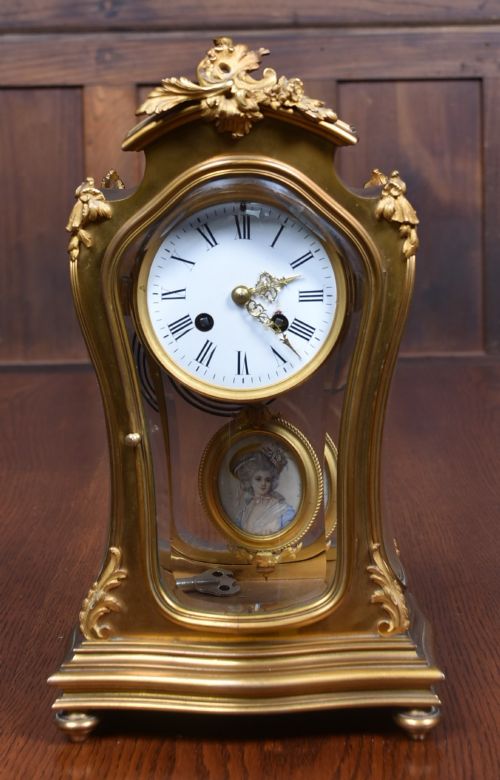
When you search for a french porcelain dial clock, you are looking at domestic timepieces produced across the nineteenth century, spanning periods from Victorian and Napoleon III to the Belle Epoque. These pieces range from substantial mantel clocks housed in ormolu, gilt bronze, marble, and wood to portable carriage clocks and delicate crystal regulators.
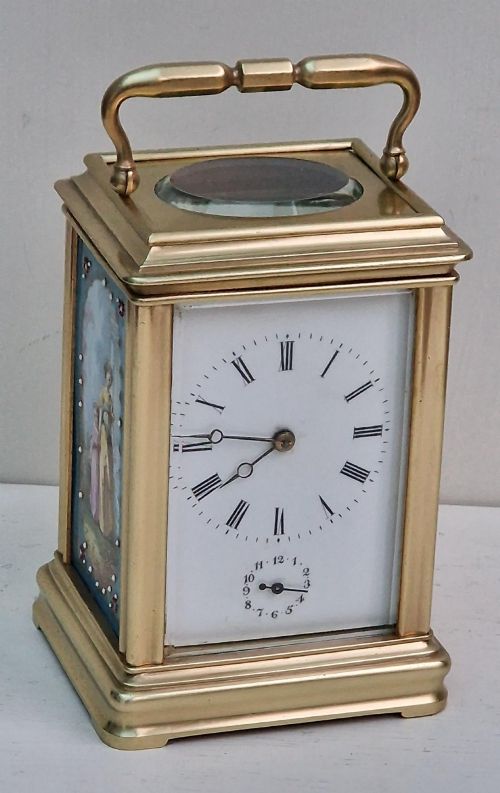
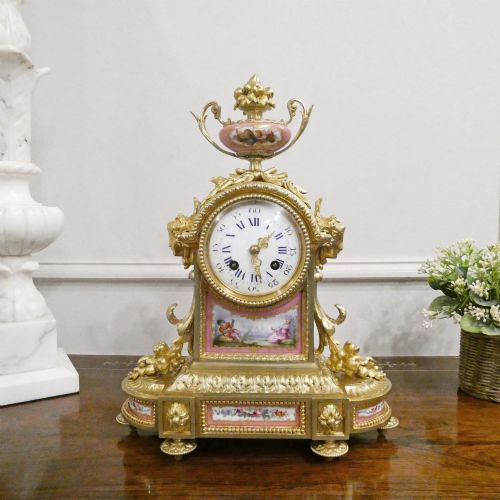
The most common versions met on this page include mantel clocks featuring painted porcelain panels alongside the dial, as well as carriage clocks with enamel or porcelain dial faces. Many pieces exhibit distinct revival aesthetics, notably French Rococo Revival and Louis XVI style, reflecting the design preferences of nineteenth-century makers.
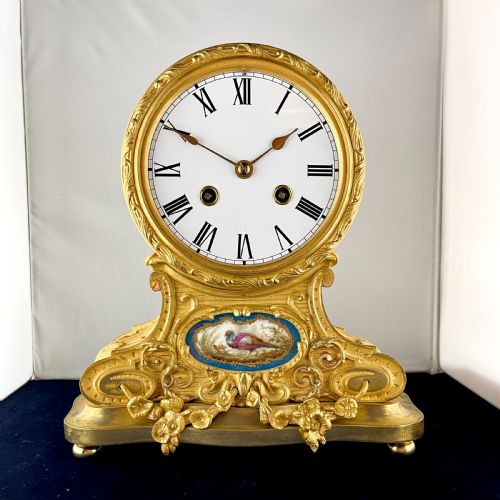
Origins are rooted firmly in French workshops and makers of the era, combining heavy cast metal housings with intricate ceramic dials and panels. Collectors encounter diverse formats, from drumhead mantel clocks and three-piece sets to miniature skeleton clocks and glass regulators.
Materials and Construction
Dials and decorative panels are constructed from porcelain or enamel, painted with numerals and often detailed with miniature scenes or floral motifs. Specialised components like porcelain cartouches for the hours demonstrate the careful assembly of ceramic and metal elements by period artisans.
French Porcelain Dial Clock Retail Price Guide 2026
Typical asking prices for french porcelain dial clock among the pieces listed under this phrase on Sellingantiques today, from the lower quarter to the upper quarter. They describe what is for sale here now, not the wider market.
Object forms range from traditional mantel clocks and garniture sets to portable carriage clocks and crystal regulators.
Assessing Quality and Execution
The standard of a french porcelain dial clock is defined by the crispness of the bronze or ormolu casting and the refinement of the hand-painted porcelain dial or panels. Finer examples display deeply chased ornamentation and high-grade movement construction signed by notable makers.
Simpler models rely on standard brass frameworks and mass-produced ceramic components, whereas superior pieces integrate elaborate architectural details like columns, frets, and matching side ornaments within a cohesive decorative scheme.
Japy Freres·DROCOURT·P.H MOUREY·Rodier
The French Porcelain Dial Clock Glossary
- Ormolu
- A gilded bronze technique used extensively on nineteenth-century French clock cases to provide a rich, enduring metallic finish. It involves applying finely ground high-carat gold to a bronze base.
- Carriage Clock
- A small, portable spring-driven timepiece designed for travel, typically featuring a brass frame glazed on all sides. These often include a porcelain or enamel dial and a carrying handle.
- Crystal Regulator
- A mantel clock housed in a glass-panelled brass or gilt frame that exposes the mechanical movement from multiple angles. Enamel or porcelain dials are standard in this form.
- Cartouche
- A separate curved plaque of porcelain or enamel bearing a single hour numeral, pinned individually to the dial plate. These are found on segmented dials of the period.
- Skeleton Clock
- A timepiece with an openwork brass movement designed to show the gear trains and escapement directly. They are often displayed beneath a protective glass dome.
French Porcelain Dial Clock: Frequently Asked Questions
How do I wind my clock?
Most nineteenth-century mechanical clocks require a matching key inserted into the winding arbors on the dial face. Turn the key gently until you feel resistance, taking care not to over-wind the mainspring.
For striking clocks, ensure you do not force the mechanism past its natural stop point. If the clock has a pendulum, secure it properly before attempting any relocation.
Are these clocks suitable for daily use?
While these timepieces were built for domestic utility, their age requires a measured approach to continuous operation. Regular servicing by a qualified horologist keeps the brass gears and escapements functioning smoothly.
Placing the clock on a stable, level surface prevents uneven wear on the pivot holes and suspension springs. Many owners run them intermittently or enjoy them primarily as decorative objects.
How do I identify the period?
Dating relies on stylistic clues, such as the heavy ornamentation of Napoleon III pieces or the restrained symmetry of Louis XVI style revivals. Movement stamps and maker signatures often provide specific production windows.
Materials also offer guidance, as onyx and multi-piece garnitures frequently point towards the later decades of the nineteenth century. Comparing dial typography and case construction helps narrow down the decade of manufacture.
What is a Sevres style panel?
This term refers to porcelain panels decorated in the manner of the famous Sevres factory, typically featuring hand-painted floral subjects or figures against a rich coloured ground. They are mounted into the metal case of the clock for visual contrast.
Such panels are characteristic of nineteenth-century French revival pieces inspired by earlier royal porcelain productions. The quality of the enamel painting on these inserts often indicates the overall grade of the clock.
How should I clean the brass and glass?
Dust the exterior surfaces gently with a soft, dry microfibre cloth to remove everyday accumulation. Avoid liquid polishes, as chemical cleaners can strip historical gilding from ormolu and damage painted porcelain.
Glass panels can be cleaned with a small amount of glass cleaner applied to a cloth rather than sprayed directly onto the case. Professional maintenance is recommended for cleaning internal clock movements.