




Black Marble Shelf Clock
These heavy black marble shelf clock examples bring architectural presence and reliable timekeeping from the Victorian era straight onto your mantelpiece.
Black Marble Shelf Clock
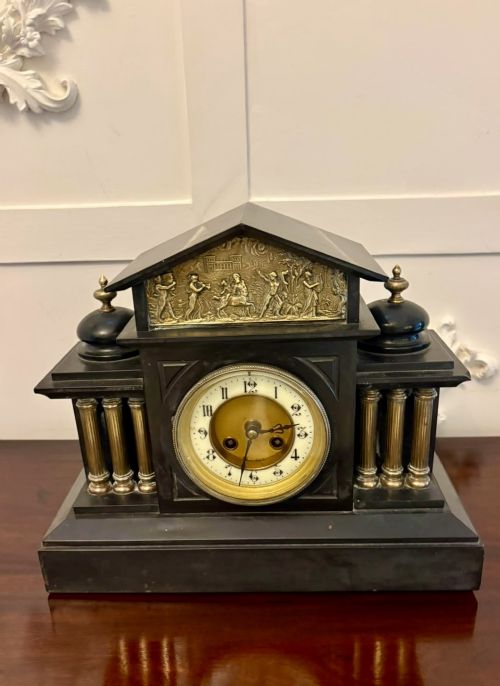
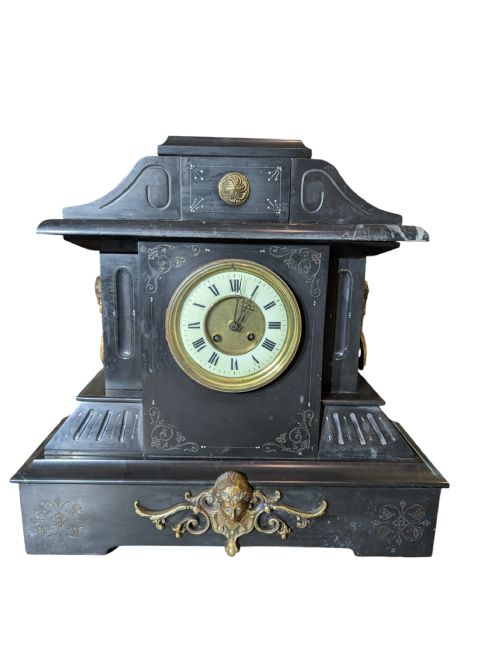
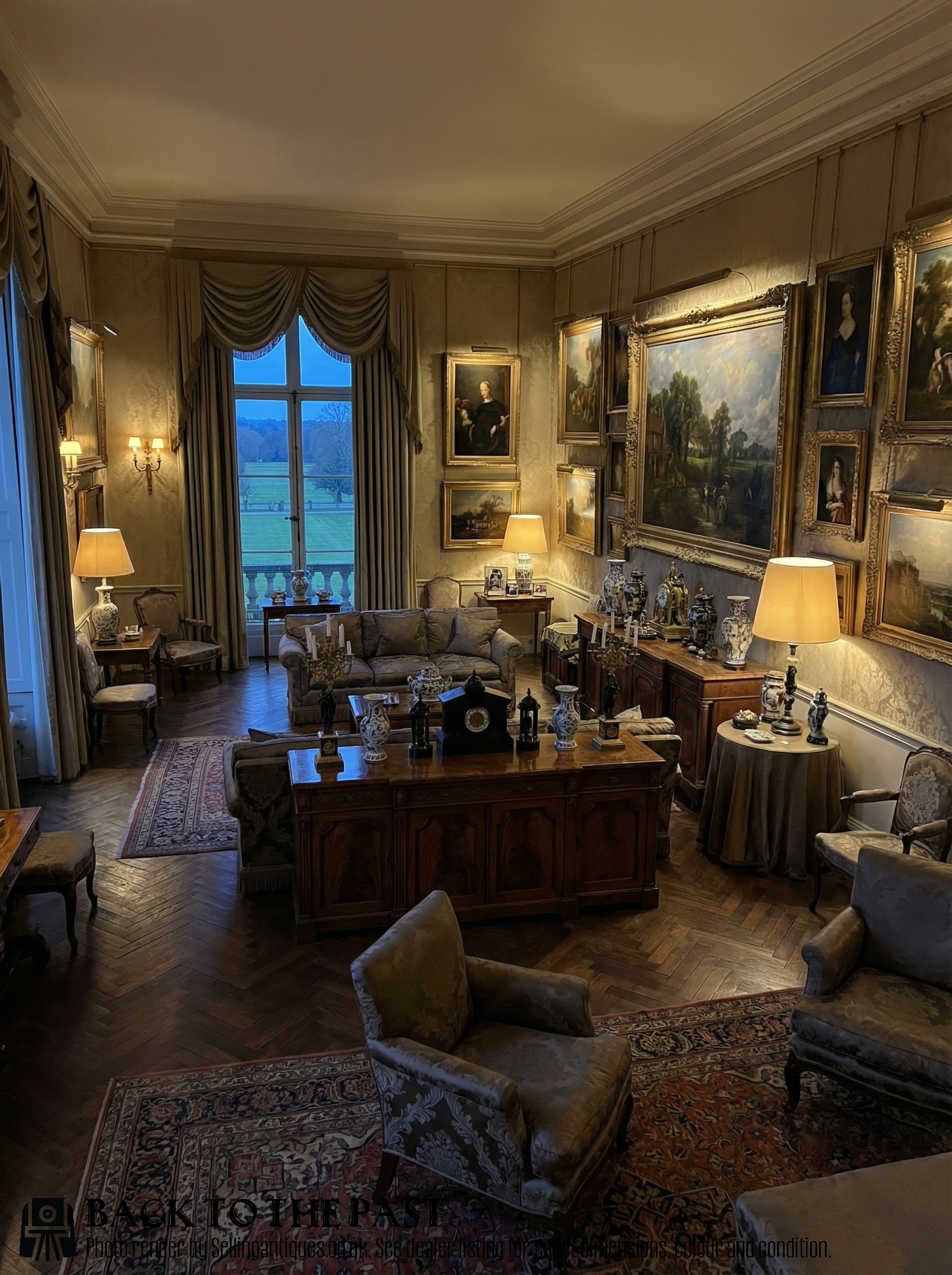
When you examine a black marble shelf clock on this page, you are looking at heavy, substantial timepieces produced predominantly during the Victorian period, alongside occasional examples from the later nineteenth century and the art deco period. These objects were designed to sit securely on mantels and shelves, often forming part of a garniture set with matching side ornaments.
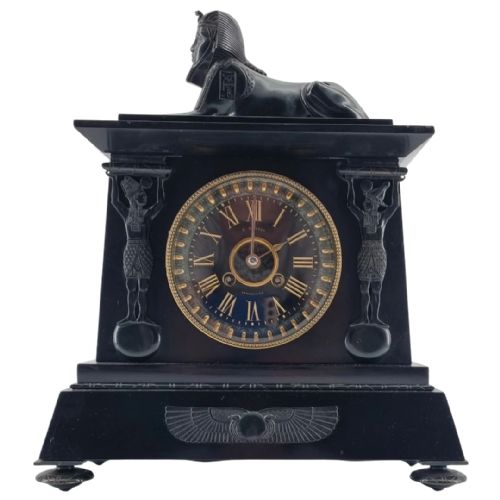
The most common version you will meet here is the Victorian architectural mantel clock, frequently constructed from black slate or marble and decorated with brass, bronze, or inlaid details. Styles range from classical revival and neoclassical forms to striking Egyptian revival designs featuring bronze mounts and distinct geometric influences.
Makers and retailers such as Philippes Paris, Baby and Jannings, and Achille Brocot contributed to the variety of movements and cases found within these listings. Enamel dials and glass bezels protect the clock faces, while eight-day movements provide the mechanical drive for these substantial nineteenth-century items.
How they were made
The primary structural material for a black marble shelf clock is dense black slate or marble, shaped into robust architectural cases that mimic classical buildings or severe geometric forms. Craftsmen utilised brass and bronze for mounts, cast figures, and dial bezels, often contrasting the dark stone with warm metallic tones.
Dials typically feature white enamel with Roman numerals, protected behind glass doors or bezels, while the internal mechanics rely on eight-day movements. Incised marble inlay work, sometimes highlighted with gilt or coloured stone, adds surface pattern to the heavier architectural facades.
Listings feature periods spanning the Victorian era, the nineteenth century, and the nineteen-twenties art deco movement.
What varies in quality
The distinction between standard examples and the finest pieces rests upon the ambition of the architectural design and the crispness of the bronze or brass mounts. Elaborate architectural cases with specialised themes, such as Egyptian revival motifs or bronze figural mounts, demand superior stonecutting and metalwork skills.
Movement sophistication also dictates value, with fully restored eight-day movements and perpetual calendar complications representing higher tiers of craftsmanship. The integration of fine marble inlay and balanced proportions separates ordinary production clocks from the outstanding large examples signed by notable makers.
Philippes Paris·Baby and Jannings·D. Munsey of Cambridge·Achille Brocot
The Black Marble Shelf Clock Glossary
- Garniture
- A set consisting of a clock and matching side ornaments designed to display together on a shelf or mantel.
- Drumhead clock
- A style of timepiece featuring a circular clock case mounted atop a rectangular or stepped stone base.
- Eight day movement
- A mechanical clock movement that requires winding approximately once a week to maintain operation.
- Egyptian revival
- A decorative style incorporating motifs such as sphinxes, obelisks, and hieroglyphs inspired by ancient Egyptian art.
- Enamel dial
- A clock face made by fusing powdered glass onto a metal plate at high temperatures to create a smooth, durable surface.
Black Marble Shelf Clock: Frequently Asked Questions
How do I wind an eight day clock?
Insert the winding key into the appropriate arbour on the dial face and turn it gently clockwise until you feel resistance. Take care not to over-wind the mainspring.
Most Victorian shelf clocks require this action roughly once a week to keep accurate time across the mechanical gear train.
Where should I place a heavy marble clock?
Position your clock on a sturdy, level mantelpiece or shelf capable of supporting significant stone weight safely. Ensure the surface does not wobble to allow the pendulum to beat evenly.
Keep the clock away from direct heat sources and damp walls to protect the internal brass movement and marble case over time.
How do I identify an architectural mantel clock?
Look for case designs that incorporate architectural elements such as columns, pediments, cornices, and stepped plinths reminiscent of classical buildings. These models often use heavy black slate or marble to mimic stone facades.
Many nineteenth-century examples draw directly on neoclassical or Egyptian revival themes for their overall silhouette.
What maintenance do these clocks need?
Dust the marble and glass surfaces regularly with a soft, dry cloth and avoid using harsh chemical polishes on the stone or bronze mounts. Professional cleaning and oiling of the movement every few years will keep the internal gears functioning smoothly.
Ensure the pendulum remains secured when moving the clock to prevent damage to the suspension spring.