


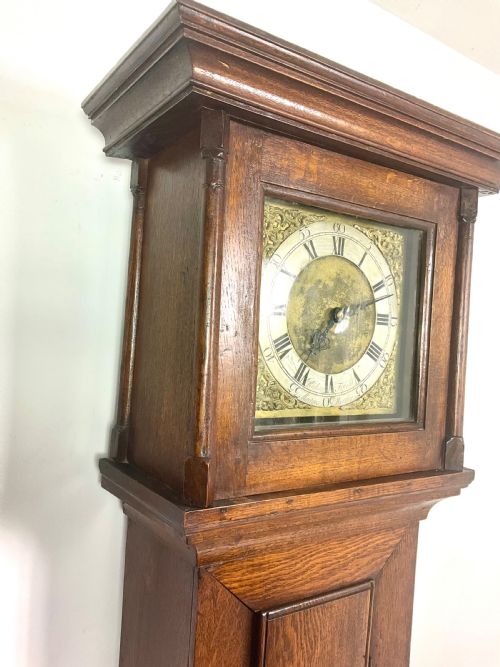


Eighteenth Century Longcase Clock
An eighteenth century longcase clock brings architectural presence and mechanical mastery into a room, offering both traditional timekeeping and striking craftsmanship.

What an eighteenth century longcase clock is
An eighteenth century longcase clock combines tall wooden cabinetry with precise interior brass and iron movements designed to stand upright in domestic halls and living spaces. These pieces emerge from periods spanning the Georgian era and the Regency years, reflecting changing domestic tastes in cabinet making.
The versions most commonly met on this page range from modest oak examples to refined mahogany and dark green japanned wood interpretations. Regional makers and London workshops both contributed to this tradition, producing tall cases that house swinging pendulums and weight-driven mechanisms.
How they were made
Cabinet makers constructed these tall enclosures primarily using solid oak and mahogany, assembling panels and mouldings to protect the delicate internal gear train. Glass doors safeguarded the dial face, while iron and brass components formed the intricate wheels, weights, and escapement systems.
Surface treatments varied from waxed timber finishes to elaborate japanned decoration, as seen on chinoiserie examples featuring painted scenes. Movement plates and dials utilised cast brass, often with engraved chapter rings and subsidiary seconds or calendar displays.
Retail Price Guide 2026
Typical UK retail prices for eighteenth century longcase clock, calculated from the Sellingantiques database of over a million retail prices indexed since 2003. This retail price guide relies exclusively on Sellingantiques data; no external sources or auction records are used, so the figures do not describe the wider market.
Listings feature pieces spanning the Georgian, Regency, and eighteenth-century periods, constructed in oak, mahogany, and japanned wood.
What varies in quality
Quality rests upon the harmony between the cabinet proportions and the sophistication of the internal movement. Finer examples display meticulous timber selection, such as figured mahogany or deep oak patination, paired with signed brass dials from established London makers.
The presence of original surfaces, untouched movement parts, and decorative details like rocking automata elevate certain pieces above standard regional timekeepers. Conversely, later alterations to movements or replacement hood components mark the lower end of the range.
Dwerrihouse & Carter
The Eighteenth Century Longcase Clock Glossary
- Longcase clock
- A tall pendulum clock enclosed in a wooden case, historically standing directly on the floor. These pieces are frequently called grandfather clocks in domestic settings.
- Japanned wood
- European imitation of East Asian lacquerwork, often created using layered varnishes and raised metallic decoration. This technique appears on decorative eighteenth century clock cases.
- Regency
- An architectural and decorative style period spanning the early nineteenth century. Pieces from this era often show clean classical lines and dark dense timbers.
- Georgian
- The predominant design period covering the reigns of the Hanoverian kings of the eighteenth century. Furniture and clock cases from this time display proportions influenced by classical antiquity.
Frequently Asked Questions
What is an eighteenth century longcase clock?
An eighteenth century longcase clock is a tall floor-standing timepiece enclosing weight-driven mechanical movements within a timber cabinet. These pieces served as both functional timekeepers and principal furnishings in period homes.
Cabinets were constructed in materials such as oak, mahogany, and japanned wood, protecting the brass and iron internal gear trains while displaying the dial face behind glass.
How do you wind a longcase clock?
Winding involves using a key or crank to pull the driving weights back up toward the top of the trunk via internal cords or chains. Care must be taken not to over-wind the movement.
Most traditional weight-driven clocks require attention at regular intervals, typically once a week, depending on the gear train configuration.
Where should a longcase clock be placed?
These clocks require a stable, dry location against an interior wall where floor vibrations are minimal to ensure the pendulum swings evenly. Placement away from direct sunlight preserves the timber finish and applied decoration.
Because of their height, tall cases are secured near the top to the wall to prevent accidental tipping.
How do you tell periods apart?
Distinguishing periods relies on observing timber choices, dial construction, and overall architectural detailing of the hood and trunk. Oak examples often point to earlier Georgian or mid-century origins, while mahogany and Regency pieces show later stylistic refinements.
Maker signatures and dial engraving styles also provide concrete evidence for dating individual examples.