
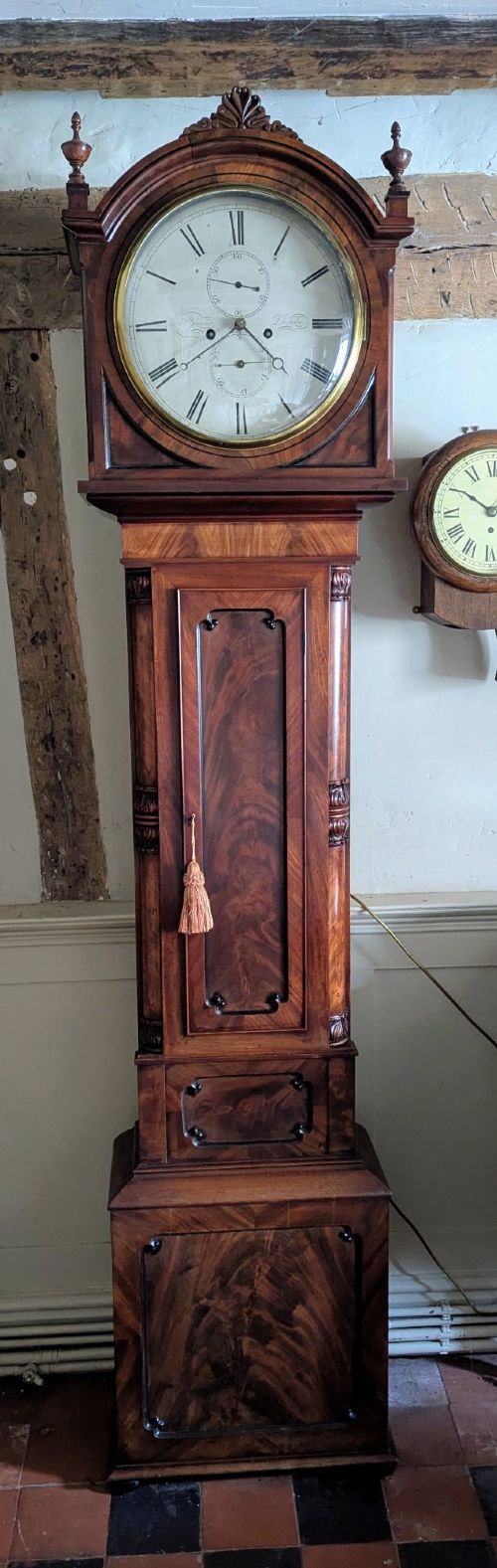
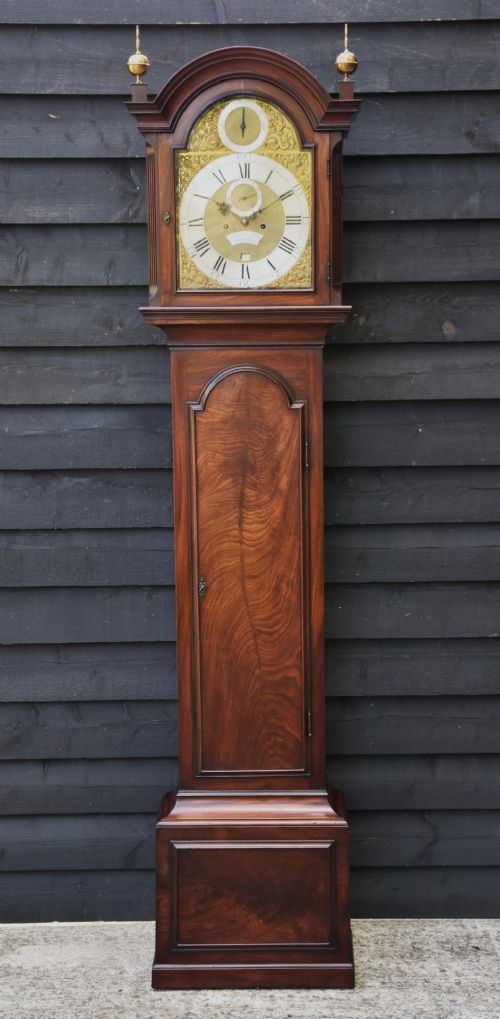
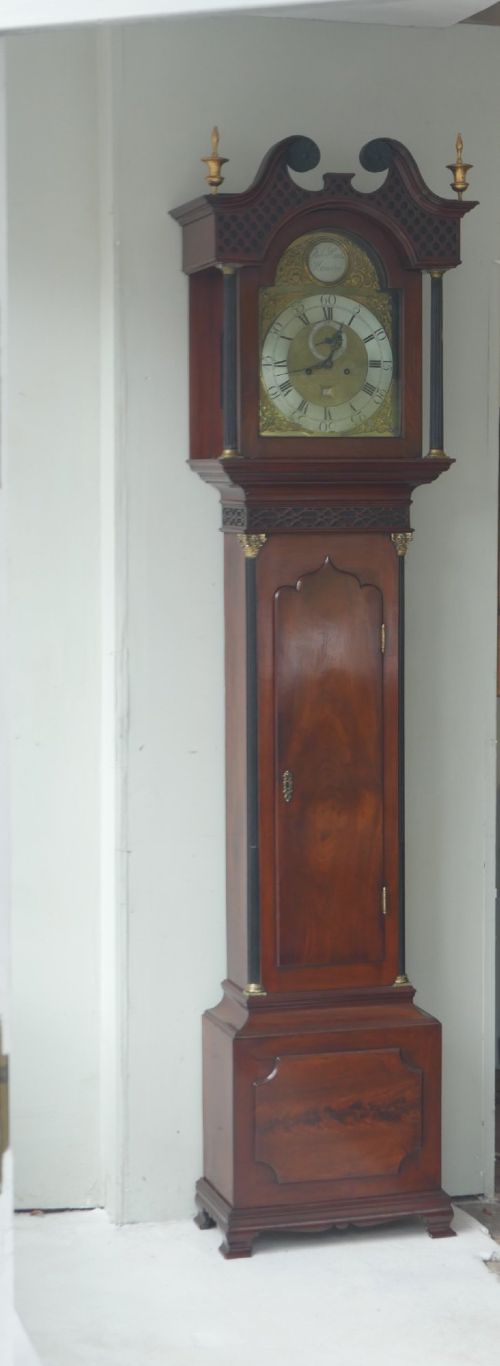
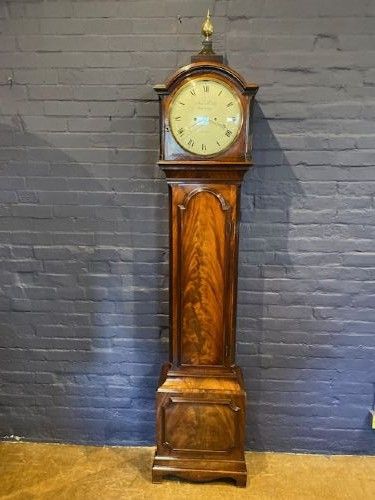
Brown Mahogany Grandfather Clock
These brown mahogany grandfather clock examples bring architectural timber and steady movement into a room.
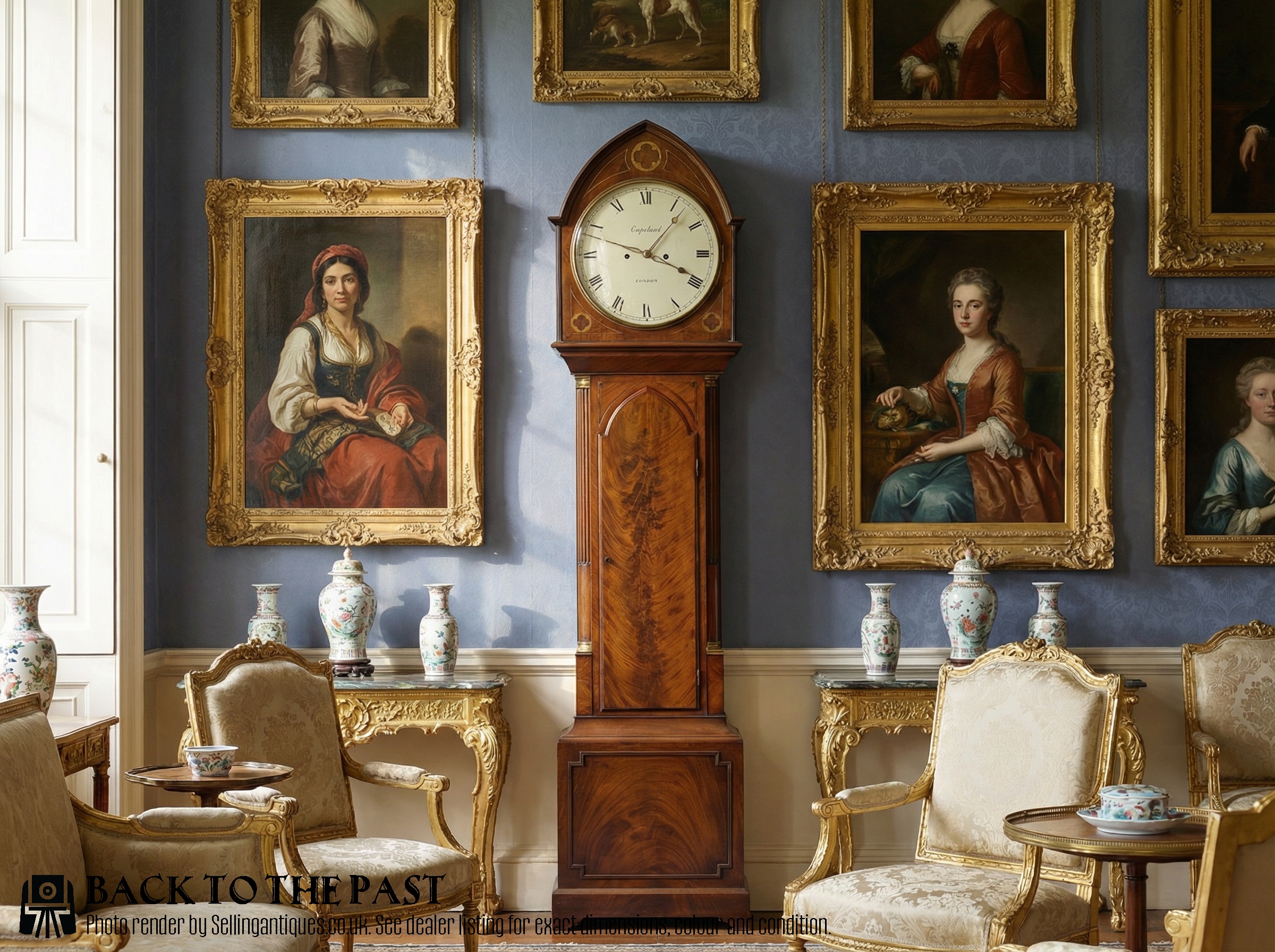
What a brown mahogany grandfather clock is
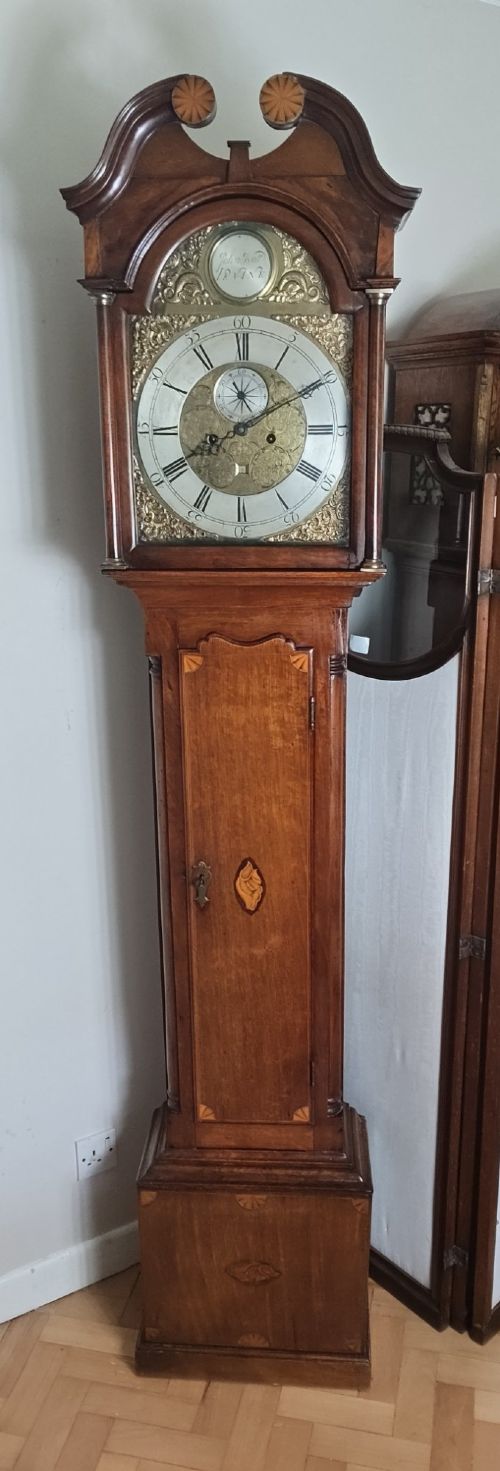
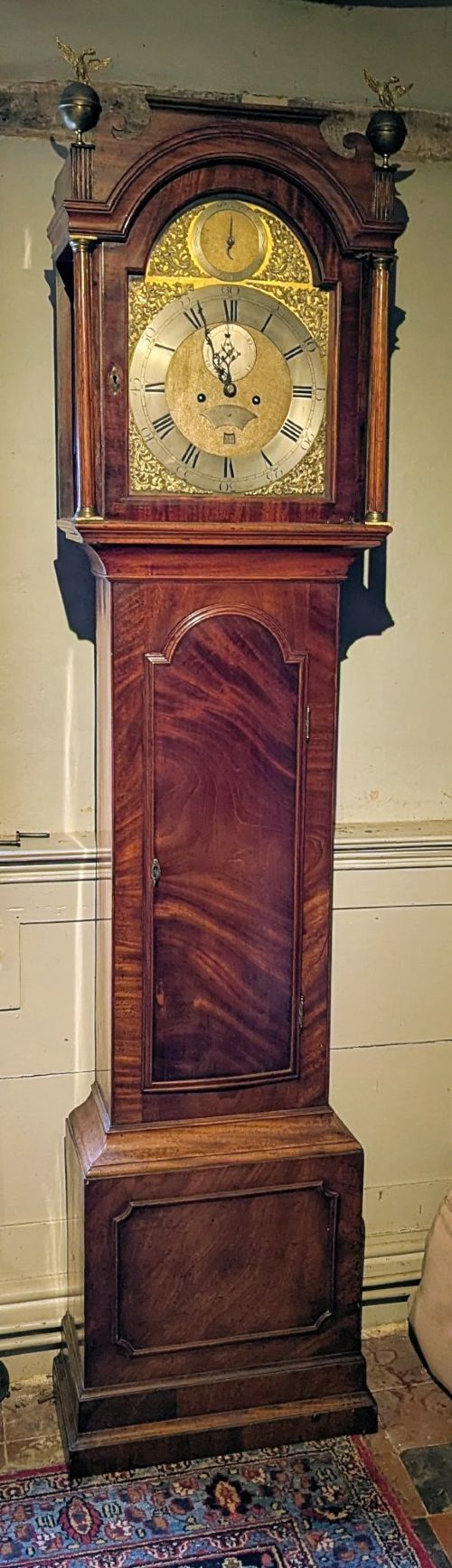
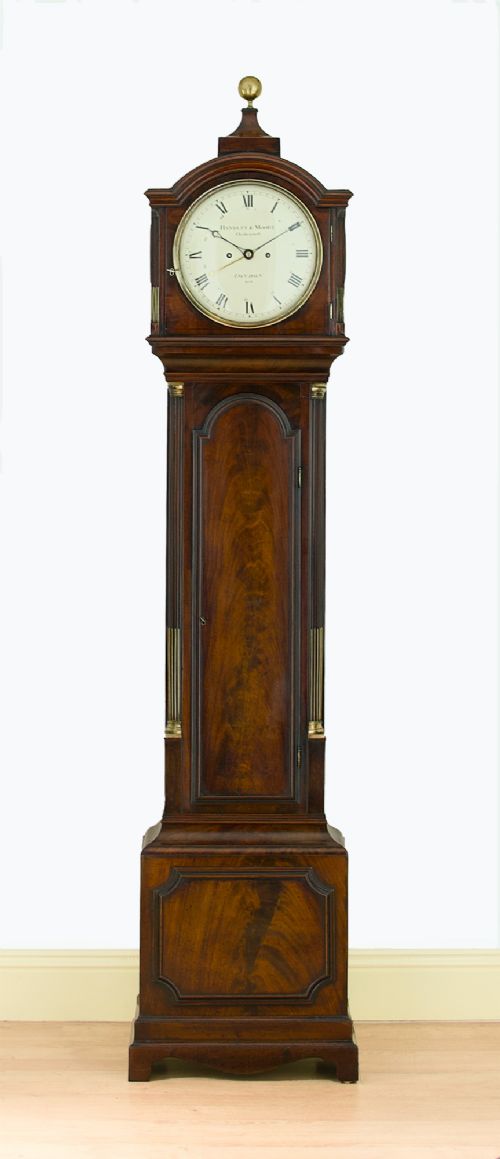
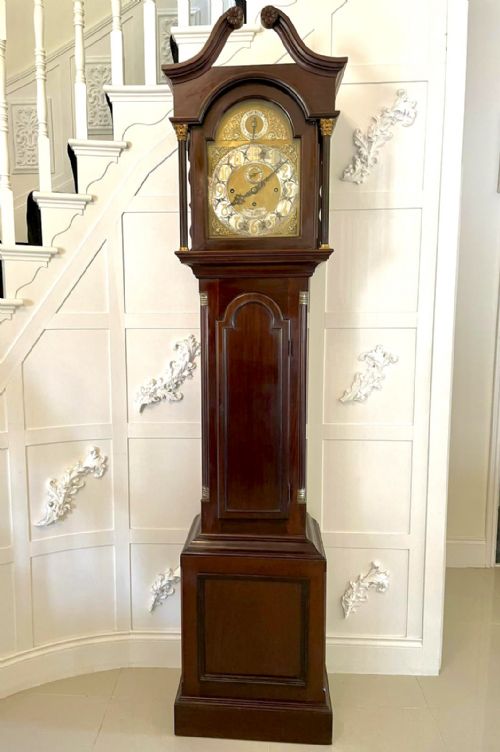
A brown mahogany grandfather clock stands as a tall case timekeeper built across the Georgian, 17th Century, and Regency periods. The majority of these pieces originate from the Georgian era, presenting traditional proportions in timber.
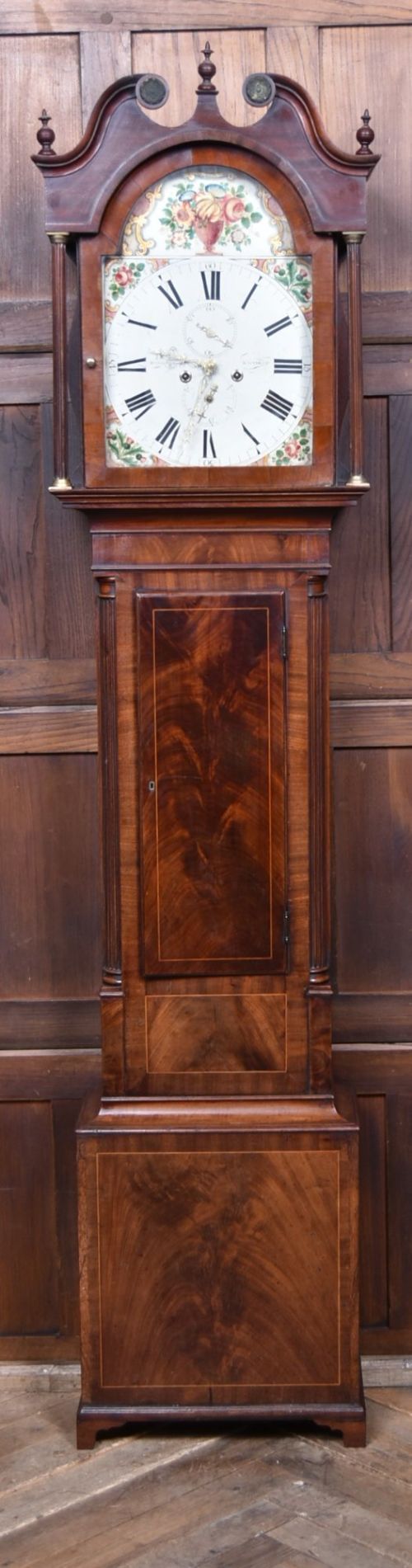
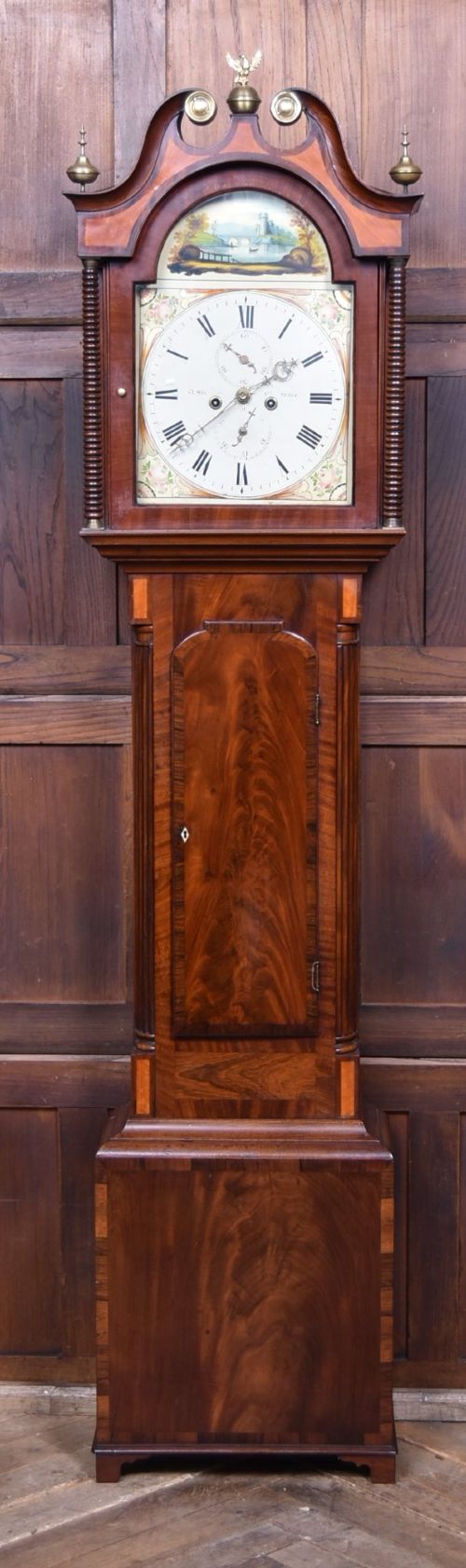
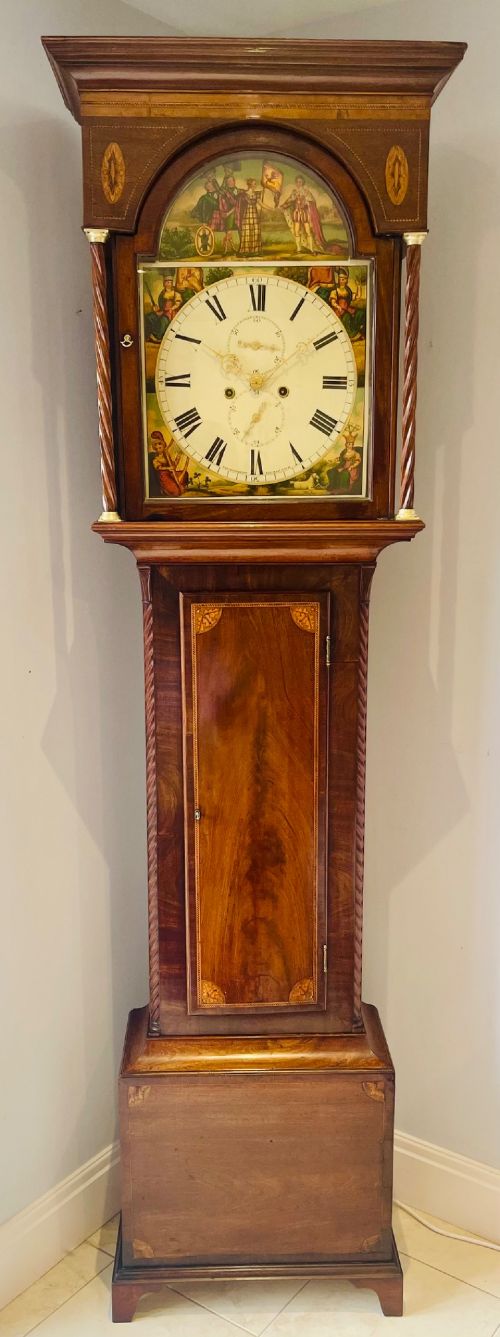
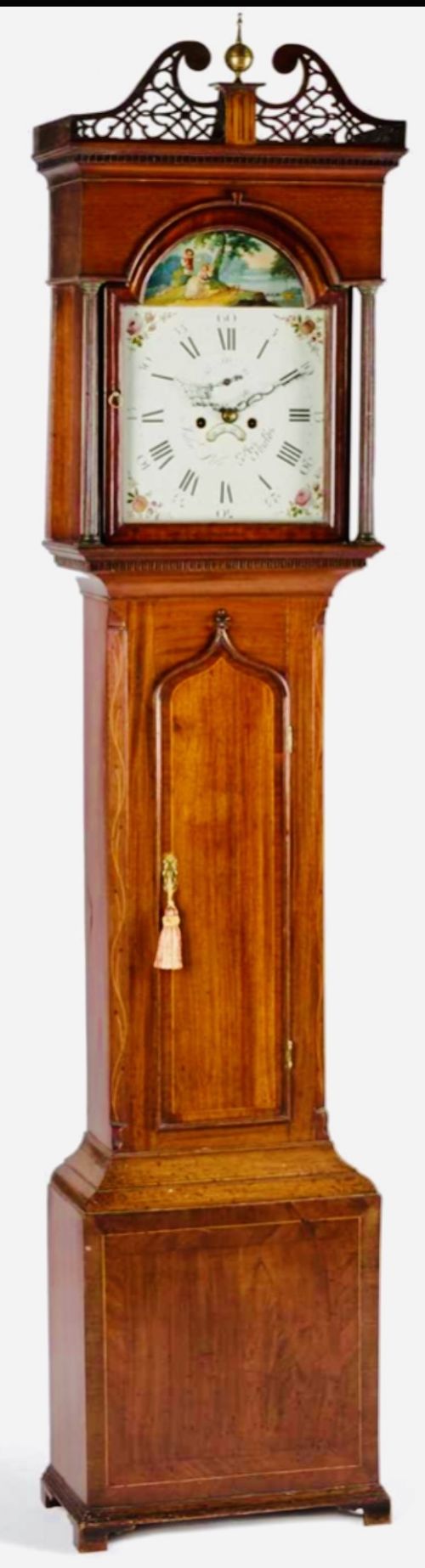
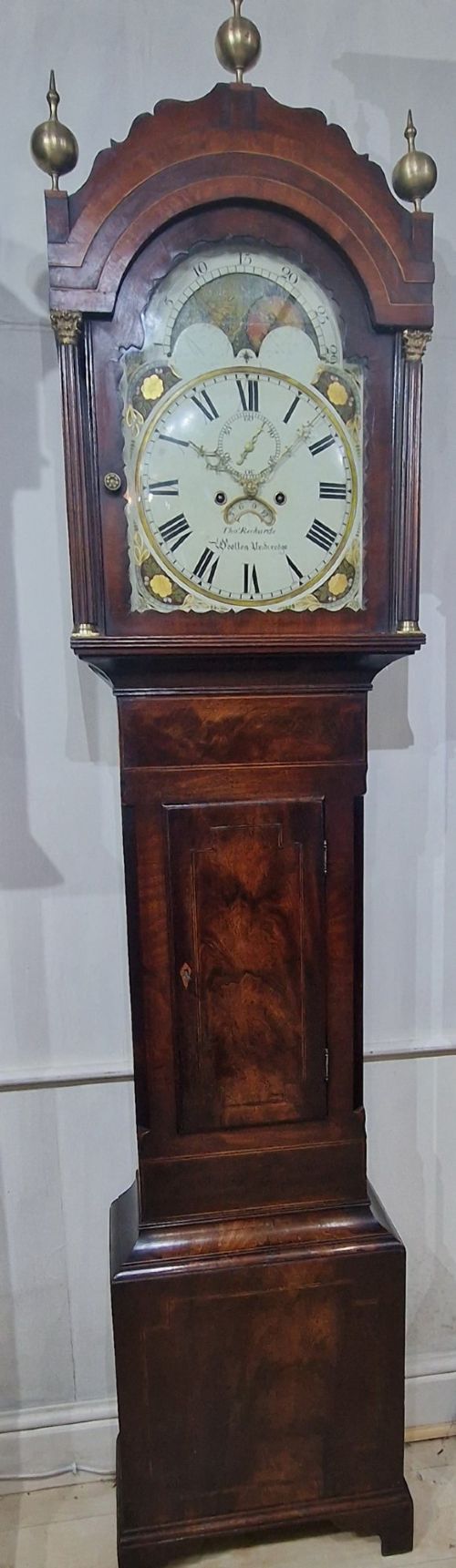
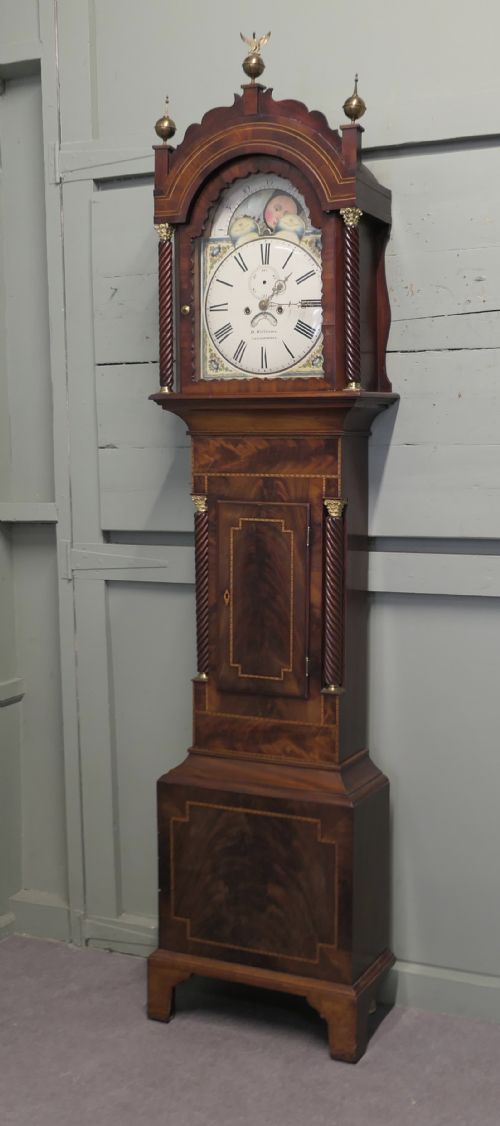
Makers housed these movements in longcase bodies constructed from solid mahogany, flame mahogany, and burr mahogany. Dial faces feature painted iron and brass details, often incorporating moon phase mechanisms.
Regional variations appear across English and Scottish workshops, showinglancet tops or inlaid decoration. Each longcase clock combines cabinetry with mechanical timekeeping.
How they were made
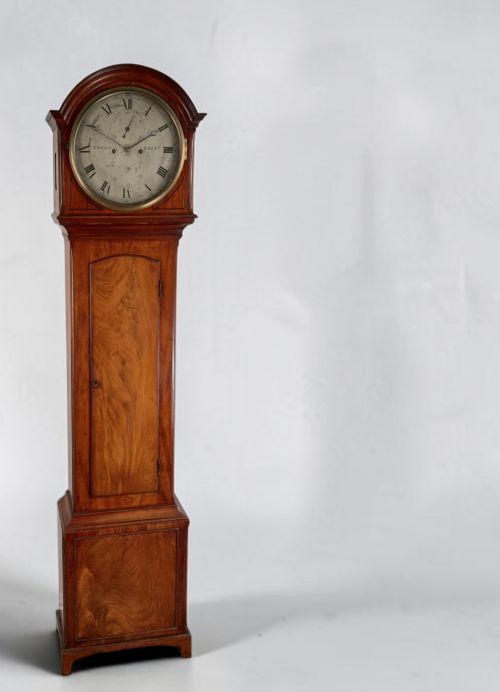
Cabinetmakers selected mahogany, flame mahogany, and burr mahogany for the longcase bodies, utilising figured grain patterns on the trunk doors and bases. These timbers were polished to bring out the natural warmth of the wood.
Faces combined brass and painted iron components, housing mechanical movements designed by regional makers. Glazed hood doors protected the dials while allowing a clear view of the hands.
Retail Price Guide 2026
Typical UK retail prices for brown mahogany grandfather clock, calculated from the Sellingantiques database of over a million retail prices indexed since 2003. This retail price guide relies exclusively on Sellingantiques data; no external sources or auction records are used, so the figures do not describe the wider market.
Listings feature mahogany, burr mahogany, and flame mahogany timber paired with painted iron and brass dials.
What varies in quality
Quality rests in the selection of the timber veneer, where figured flame and burr mahogany display superior grain movement compared to plain boards. The depth of the cabinet proportions and the crispness of any inlay dictate the visual balance of the case.
The sophistication of the dial work, from painted iron scenes to detailed brass fittings, separates standard utility pieces from more ambitious workshop productions. Movement provenance, linking a clock to a recorded provincial maker, further defines the standing of the piece.
Handley Moore·William McEwan·Matt Wylie·Furnival Oldham·Brown of Glasgow
The Brown Mahogany Grandfather Clock Glossary
- Longcase clock
- The formal term for a grandfather clock, describing a tall wooden case that houses the weight-driven movement and pendulum. This format protects the weights while displaying the dial at eye level.
- Flame mahogany
- A veneer figure cut from the branch forks of the mahogany tree, producing a distinctive flickering flame pattern. Cabinetmakers reserved this timber for prominent door panels.
- Moon phase
- A mechanical display on the dial that tracks the lunar cycle through a rotating painted disc. This complication required additional wheelwork behind the face.
- Lancet top
- An architectural hood shape featuring a pointed arch reminiscent of gothic window design. This styling appears on specific Georgian longcase examples.
Frequently Asked Questions
What is a brown mahogany grandfather clock?
A tall floor-standing timekeeper housed in a mahogany wooden case, designed to measure hours using internal weights and a pendulum.
These pieces combine cabinetmaking with mechanical movement, originating mainly from the Georgian and Regency periods.
How do I wind the clock?
Weights suspended inside the trunk power the movement and require periodic raising using a winding key inserted into holes on the dial face.
Different models require weekly or daily attention depending on the gear train configuration.
Where should I place it?
Position the longcase against an interior wall on a level floor to ensure the pendulum swings evenly without catching.
Avoid placing timber cases in direct sunlight or near active heat sources to protect the mahogany polish.
How do I identify a Georgian clock?
Examine the cabinet proportions, dial materials, and construction details to match them against known stylistic periods like the Georgian era.
Signatures on the dial or movement backplate often name the original workshop and location.