


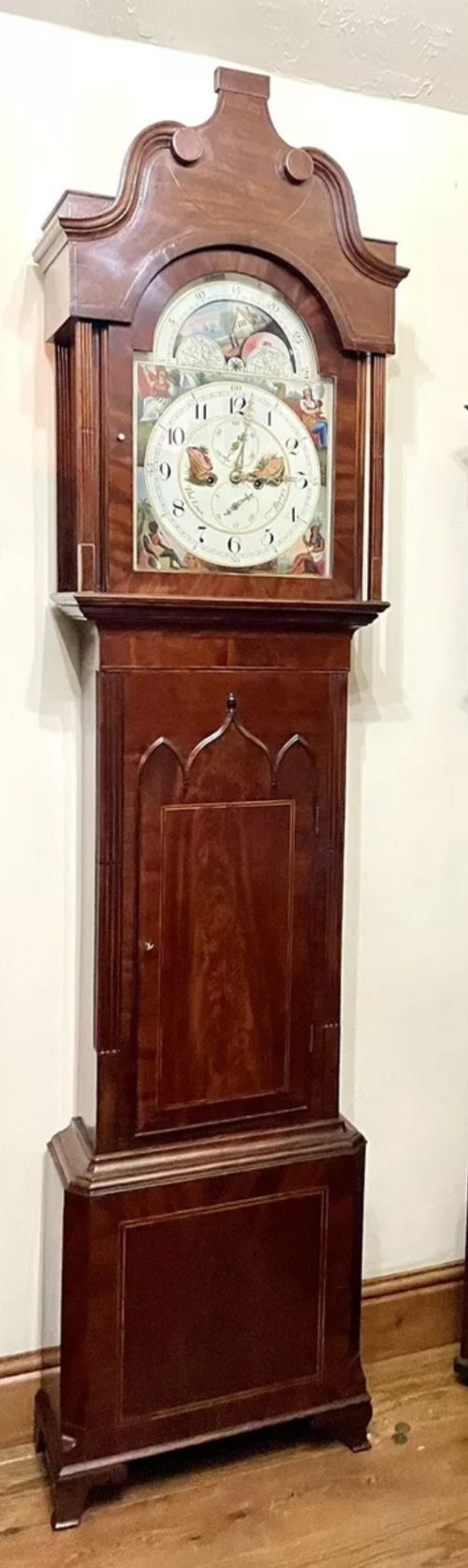


Moon Phase Longcase Clock
A moon phase longcase clock measures time while tracking the lunar cycle on a painted dial.
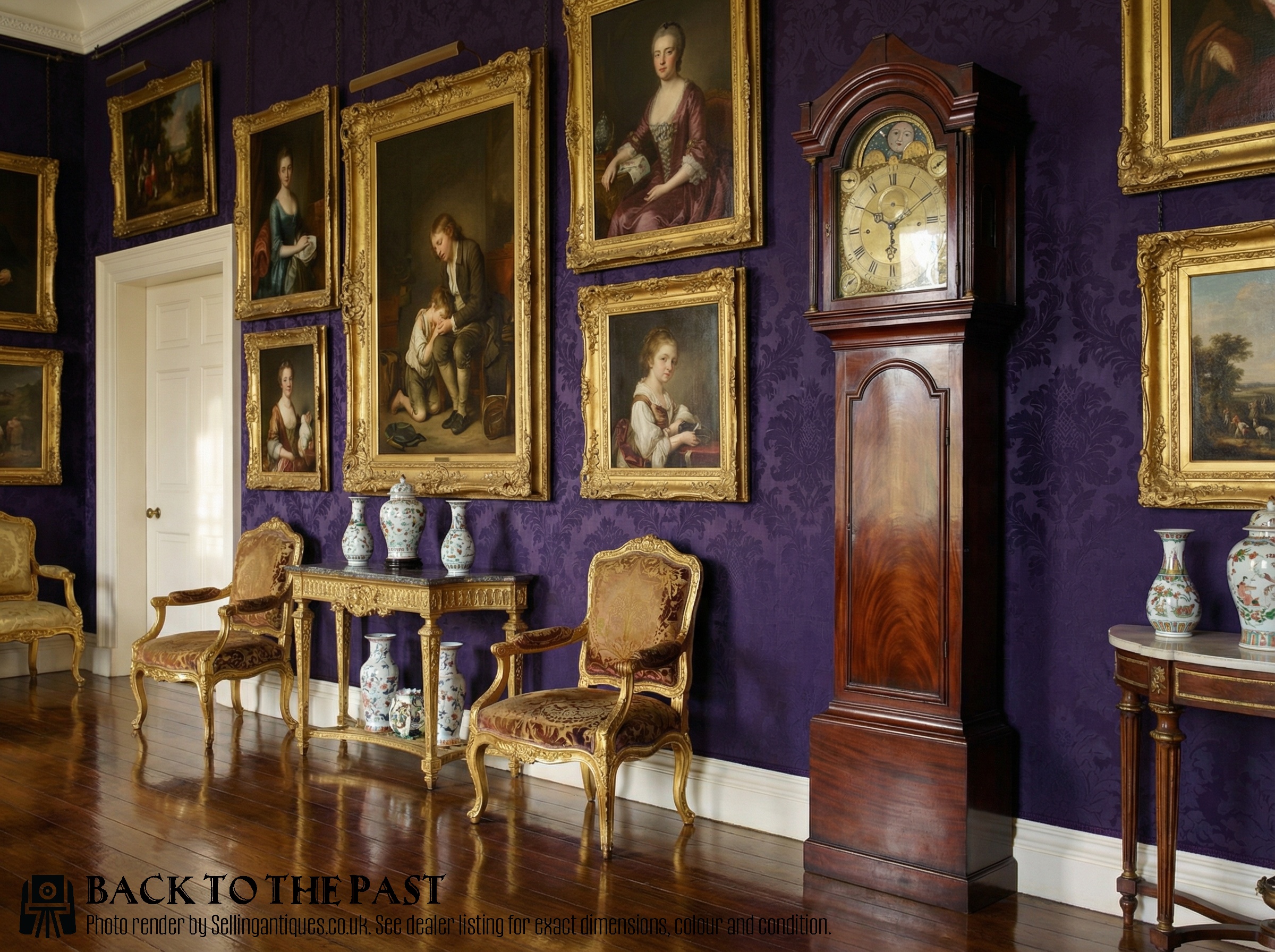
The Form of the Moon Phase Longcase Clock
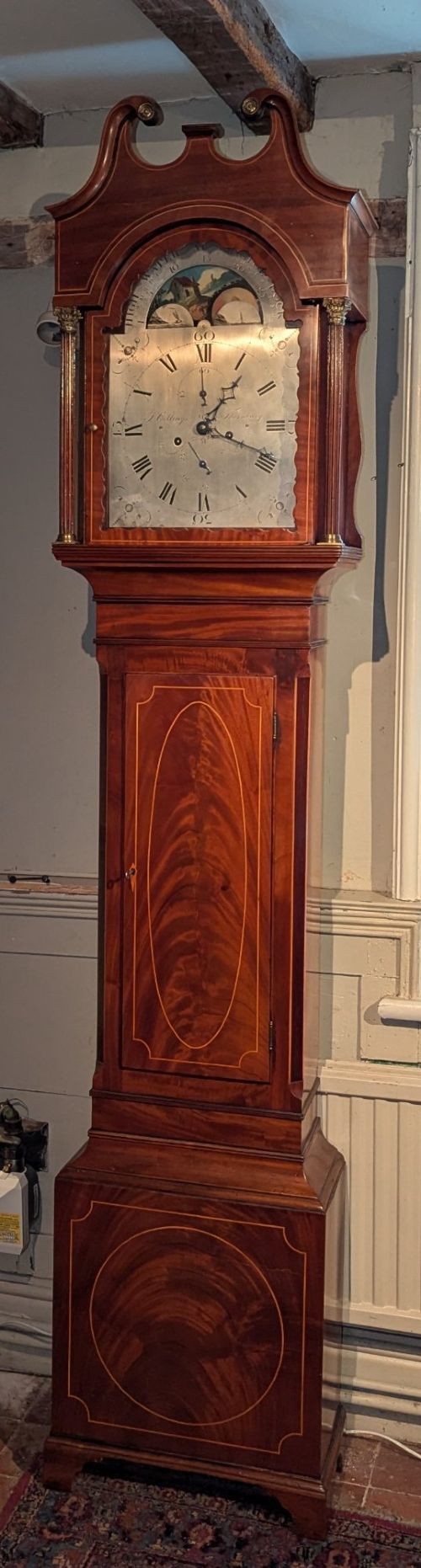
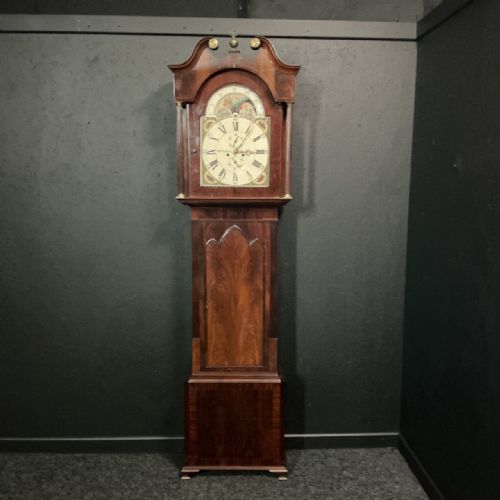
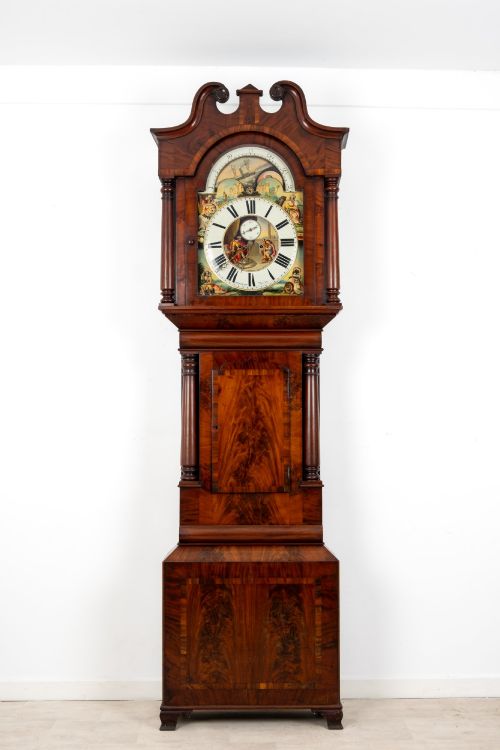
A moon phase longcase clock stands as a traditional tall clock combining a weight-driven movement with an astronomical display. These pieces appear most frequently in mahogany and oak, often showing Georgian, 18th century, or 19th century origins.
The layout centres on a long wooden case enclosing the swinging pendulum and hanging weights. Above the trunk sits the dial face, which incorporates a rotating mechanical disc showing the phases of the moon.
Regional variations span English and Scottish makers, encompassing both standard eight-day movements and thirty-hour mechanisms. Occasional examples include inlaid details, carved woodwork, or compact proportions such as Edwardian miniature regulators.
Materials and Construction
Cabinetmakers constructed the tall cases primarily using solid timber and veneers of mahogany and oak. Selected pieces feature decorative marquetry, crossbanding, or Tunbridgeware style inlay work.
The clock faces rely on painted iron plates, brass bezels, and protective glass panels. Internally, the mechanism combines brass gear wheels, steel arbors, and lead or cast-iron weights.
Retail Price Guide 2026
Typical UK retail prices for moon phase longcase clock, calculated from the Sellingantiques database of over a million retail prices indexed since 2003. This retail price guide relies exclusively on Sellingantiques data; no external sources or auction records are used, so the figures do not describe the wider market.
Listings feature movements housed in both mahogany and oak cabinetry, spanning the eighteenth century through to nineteen hundred.
Determinants of Quality
Distinction across the range rests in the precision of the cabinetwork and the artistic execution of the painted dial. Finer examples display crisp carving, balanced proportions, and sophisticated dial artwork depicting the lunar cycle.
The complexity of the movement also dictates standing, with eight-day gear trains and quarter-striking mechanisms representing more ambitious horological engineering than basic thirty-hour systems.
FURNIVAL OLDHAM·THOMAS DEAN of LEIGH·JOHN WOOD OF GRANTHAM·HARFORD BRISTOL·Edward White Birmingham·Richard Midgley·John Smith Chester·Robert Higgs London·John Uffington London·James Burr
The Moon Phase Longcase Clock Glossary
- Moon phase
- A mechanical display on the clock dial that tracks the lunar month through a rotating painted disc showing two moons. This feature required gearing that completes one full revolution every twenty-nine and a half days.
- Longcase clock
- A tall freestanding weight-driven timekeeper enclosed in a wooden case, commonly called a grandfather clock. The vertical trunk protects the pendulum and weights while keeping them stable.
- Mahogany
- A durable tropical hardwood utilised extensively for high-grade furniture and clock cases from the Georgian period onward. Its rich reddish-brown tone accepts a fine polished finish.
- Dial
- The visible face of the clock where the hours and minutes are read. On these pieces, the dial also accommodates the subsidiary arch for the moon phase mechanism.
Frequently Asked Questions
How do I set the moon phase?
The moon phase disc advances independently through a small aperture on the dial, typically adjusted by hand using the fingers or a small key. Reference a current lunar calendar to align the painted moon accurately with the night sky.
Once set, the internal mechanism automatically rotates the disc forward by one tooth each day to maintain sync with the lunar cycle.
What is the difference between 8 day and 30 hour clocks?
An eight-day movement requires winding once a week using a crank key to lift the internal weights. These setups generally utilise two separate weights hung on cords or chains.
Thirty-hour movements require winding daily and often run on a single weight or simpler gear train. Both systems power the pendulum and drive the hands and moon disc identically.
Where should I place a longcase clock?
Position the tall clock against an interior wall away from direct sunlight, heating vents, and damp zones. Wood and painted iron react to extreme humidity and temperature swings.
Ensure the floor is level so the pendulum swings symmetrically, which keeps the timekeeping steady and prevents the escapement from ticking unevenly.
How do I identify the period of the clock?
Dating relies on stylistic clues in the wooden case, such as Georgian bracket feet, Edwardian proportions, or Regency veneers. Cabinet construction methods and brass dial design also point to specific eras.
Signatures inscribed on the painted iron or brass dial often name the maker and town, allowing reference against historical maker records.