
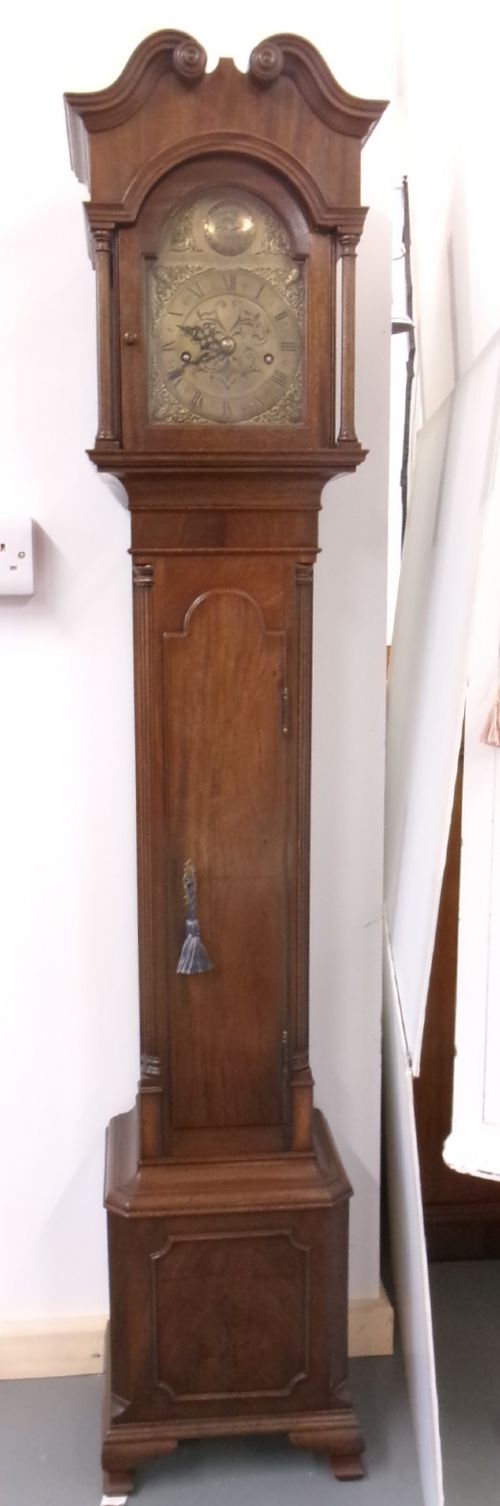

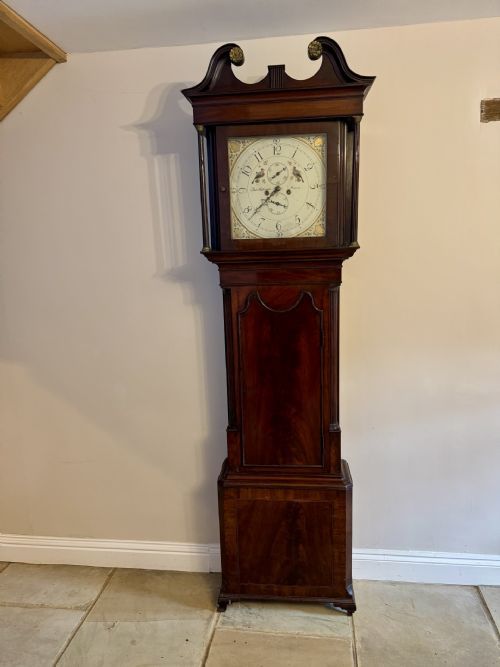
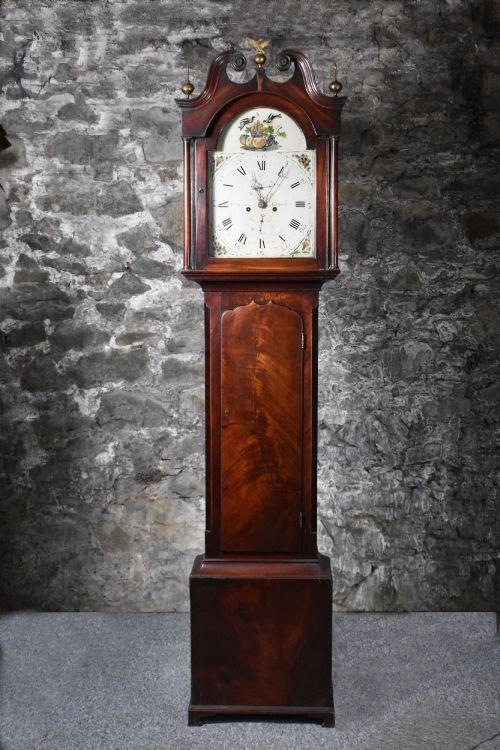
Swan Neck Grandfather Clock
These swan neck grandfather clock examples combine towering timber cases with arched bonnet hoods, bringing time-honoured mechanics and stately presence into a room.

What they are
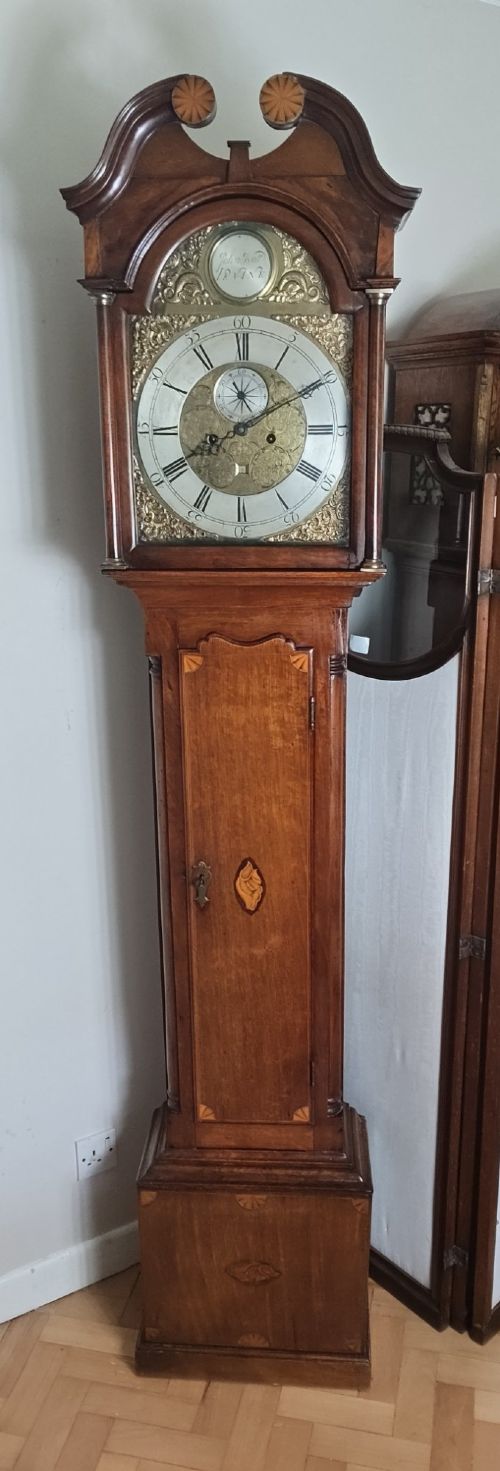
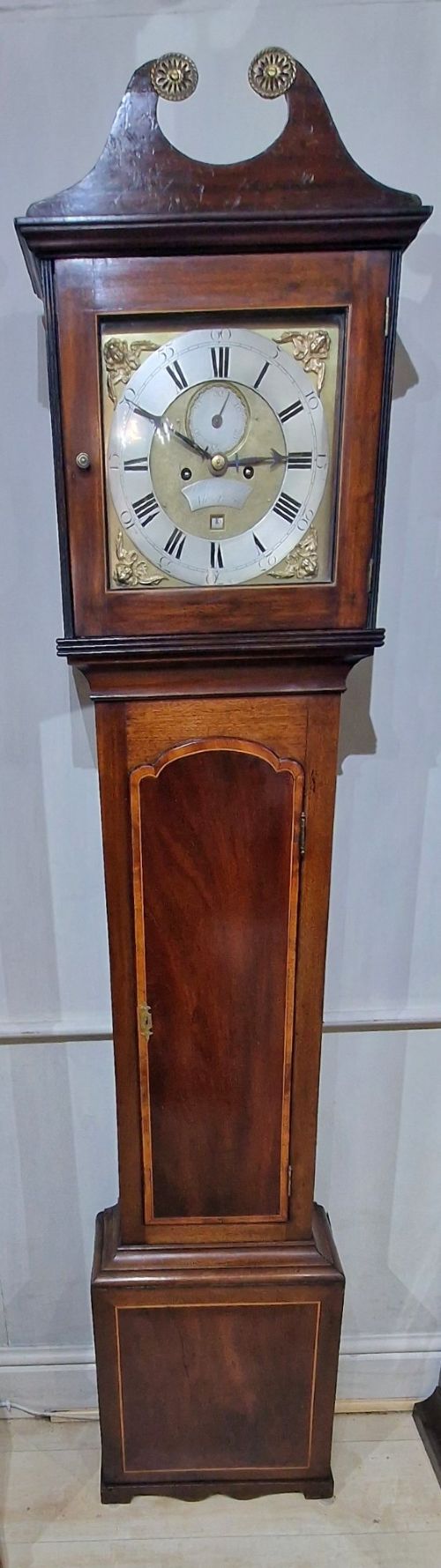
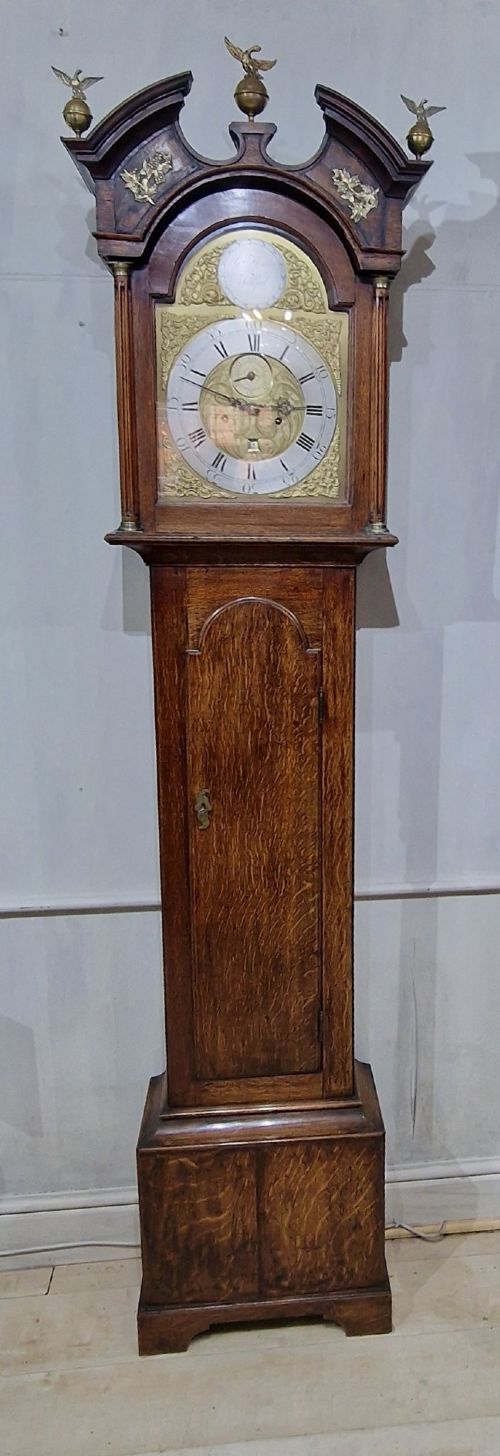
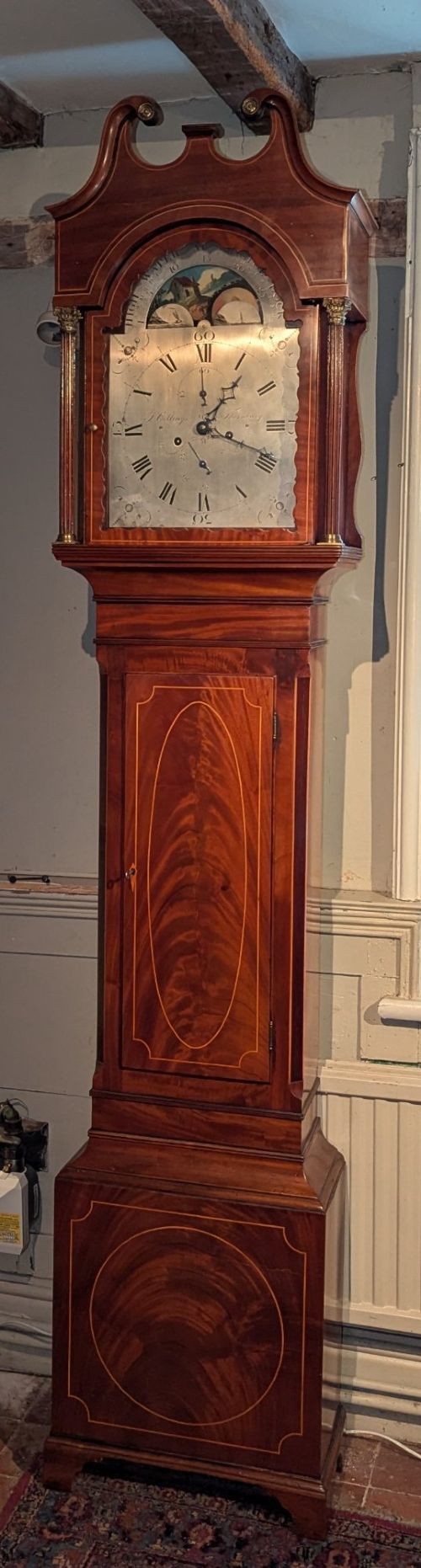
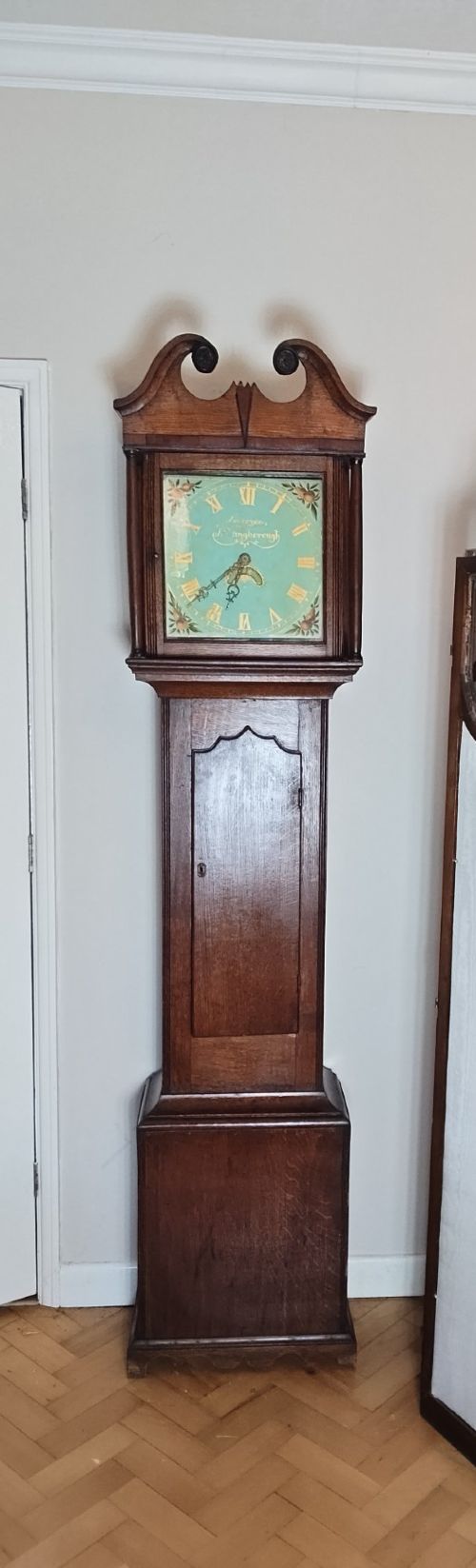
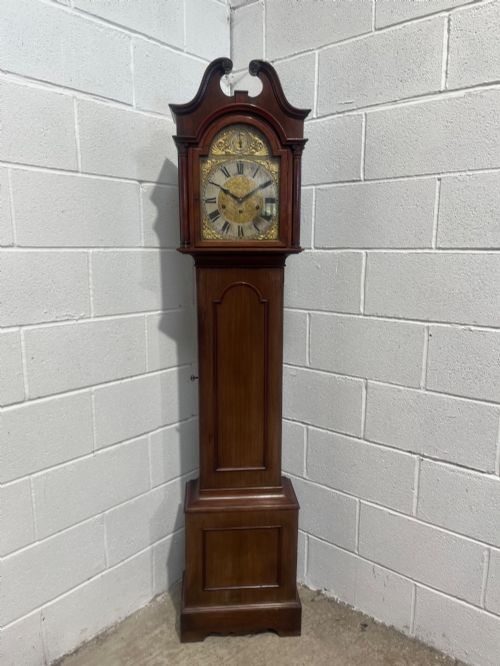
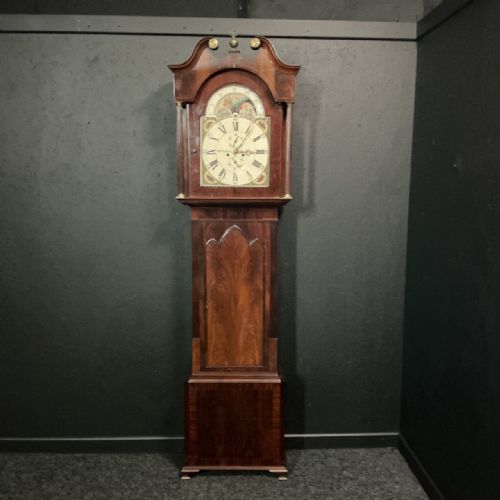
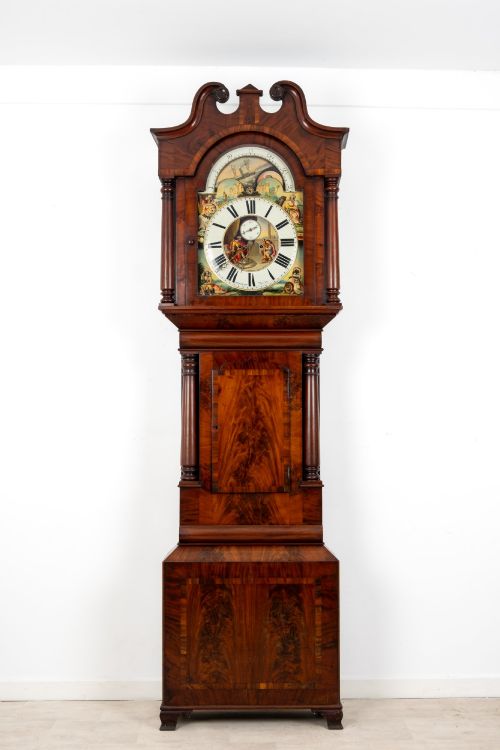
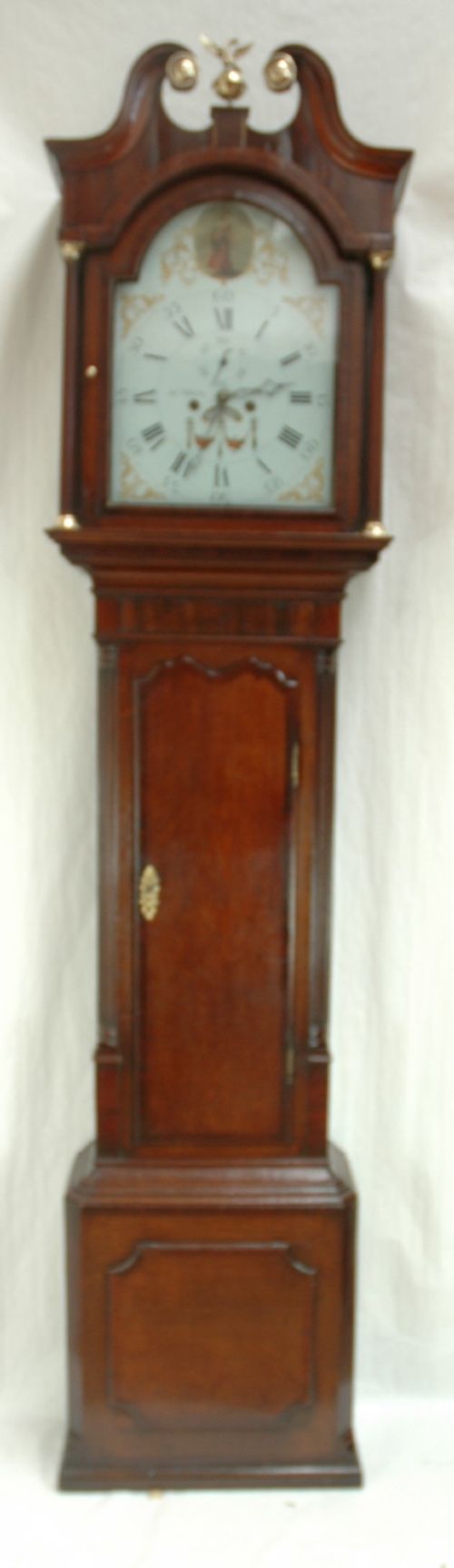
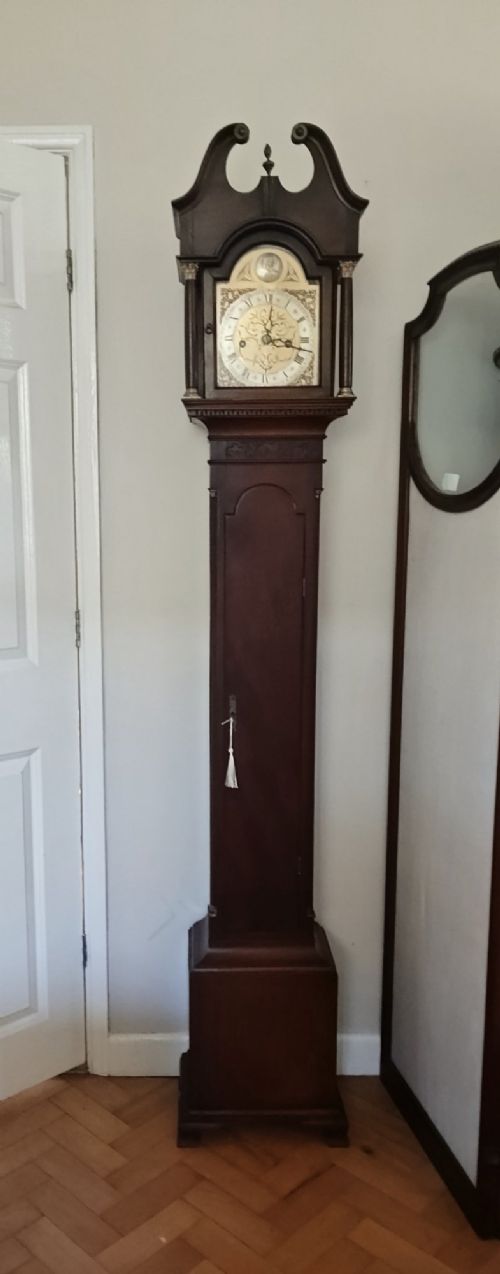
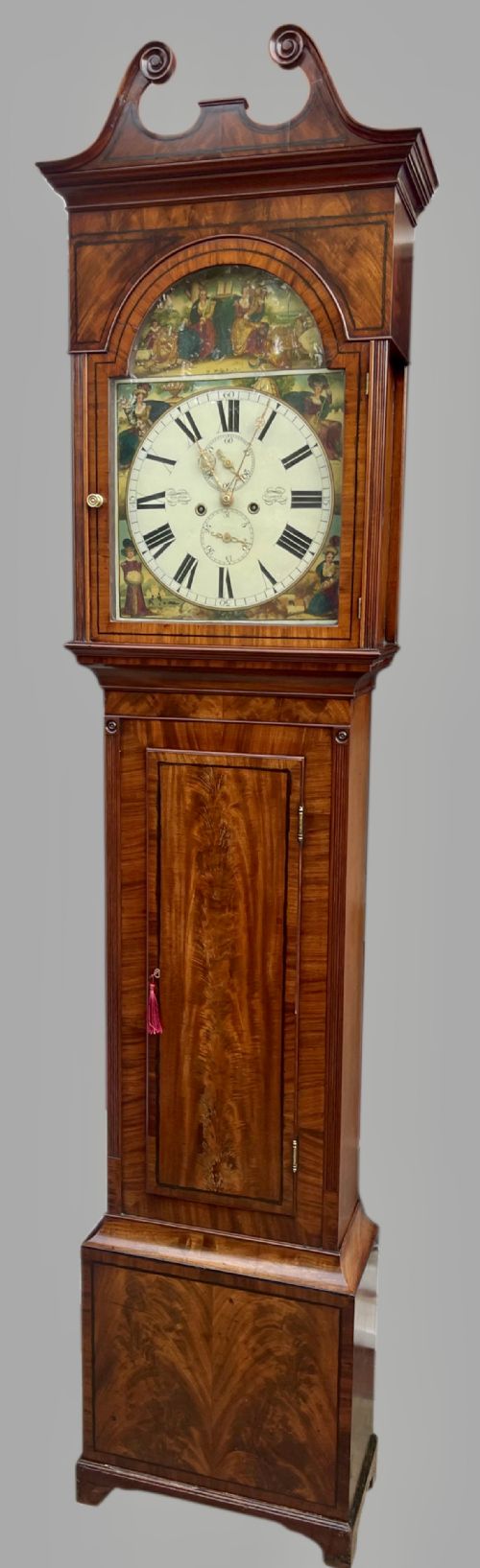
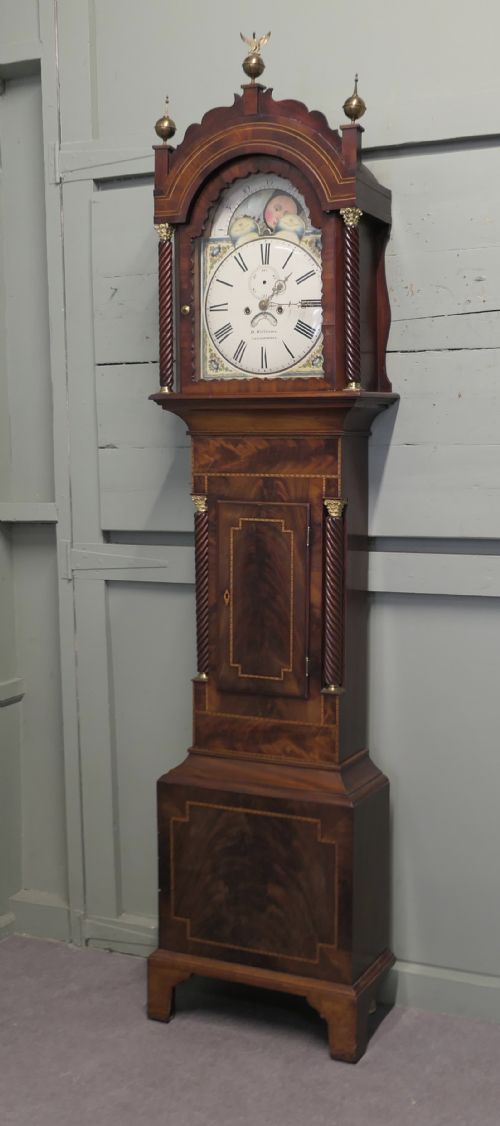
A swan neck grandfather clock is a tall floor-standing timepiece housed in a wooden case with a distinctive broken arch pediment at the head. The listings here present longcase clocks spanning the Georgian, Victorian, Edwardian and Regency periods, alongside pieces dated around eighteen fifty and attributed to the Georgian Revival style.
The dominant material format on this page is mahogany and oak, often paired with brass dials, painted iron or metal faces, and glass panel doors. These tall timekeepers serve both a practical timekeeping function and a striking architectural role within domestic interiors, drawing the eye upwards through their vertical proportions.
Makers and regional clockmakers represented on this platform include Thomas De Gruchy Jersey, Thomas Dean of Leigh, and Camerer Cuss and Co. Forms range from standard timekeepers to musical quarter chiming variations on bells or tubes, incorporating moon rollers and arched painted dials.
How they were made
Cabinetmakers constructed these tall cases using figured mahogany and oak timbers, forming upright trunk bodies and glazed hood doors to protect the movement. The swan neck pediment at the top required precise joinery to curve the wooden mouldings gracefully away from the central finial.
Clockmakers fitted brass movements, painted iron or metal dials, and intricate gear trains driven by weights or springs, sometimes incorporating musical quarter chiming mechanisms on bells or tubes. Dials frequently featured hand-painted moon rollers and regional signatures applied directly to the metal face.
Retail Price Guide 2026
Typical UK retail prices for swan neck grandfather clock, calculated from the Sellingantiques database of over a million retail prices indexed since 2003. This retail price guide relies exclusively on Sellingantiques data; no external sources or auction records are used, so the figures do not describe the wider market.
Materials appearing across these longcases include mahogany, oak, brass, glass, painted iron, and painted metal.
What varies in quality
Quality in these longcase clocks rests in the depth of figure within the mahogany or oak timber and the precision of the carved scrollwork on the swan neck pediment. Finer examples display harmonious proportions across the hood, trunk door, and base plinth without awkward transitions.
The sophistication of the movement elevates certain pieces above others, particularly those featuring musical quarter chiming on bells or tubes alongside intricate painted moon phases. Well-preserved signatures from known makers on the dial further distinguish the upper tier of surviving examples.
Thomas De Gruchy Jersey·Thomas Dean of Leigh·Camerer Cuss and Co
The Swan Neck Grandfather Clock Glossary
- Swan neck
- A broken arch pediment on the hood of a clock featuring two opposing curved wooden scrolls resembling a swan's neck. This architectural top often houses a central brass finial.
- Longcase clock
- A tall pendulum clock enclosed in a wooden case consisting of a long trunk and a base, commonly referred to as a grandfather clock. The heavy weights hang freely inside the main body.
- Moon roller
- A rotating mechanism behind an arched dial that tracks the phases of the lunar cycle. It turns slowly over the course of the month to display the moon's age.
- Quarter chiming
- A mechanical system that sounds the quarter hours using a set of bells or metal tubes. More complex versions play specific tunes at the hour.
Frequently Asked Questions
How do I wind a grandfather clock?
Winding requires using a small crank key inserted into the winding holes on the dial face to draw up the internal weights.
Care must be taken not to overwind the mechanism, stopping as soon as resistance is felt.
Where should I place a longcase clock?
These clocks need a stable, level floor against a solid interior wall away from direct sunlight and fluctuating drafts.
Placing them on a firm surface ensures the pendulum swings evenly and keeps accurate time.
How do I tell Georgian from Victorian clocks?
Georgian examples generally show simpler mahogany or oak veneers with restrained brass dials and eight-day movements.
Victorian pieces frequently introduce heavier figured timbers, more ornate painted arched dials, and complex musical movements.
What is a moon phase dial?
A painted disc behind an arched aperture on the clock face that tracks the lunar month.
It rotates via internal gearing to display whether the moon is new, waxing, full, or waning.