


Mechanical Floor Clock
These mechanical floor clock examples span Georgian, Victorian, and later periods, offering traditional timekeeping alongside substantial architectural presence.
Mechanical Floor Clock
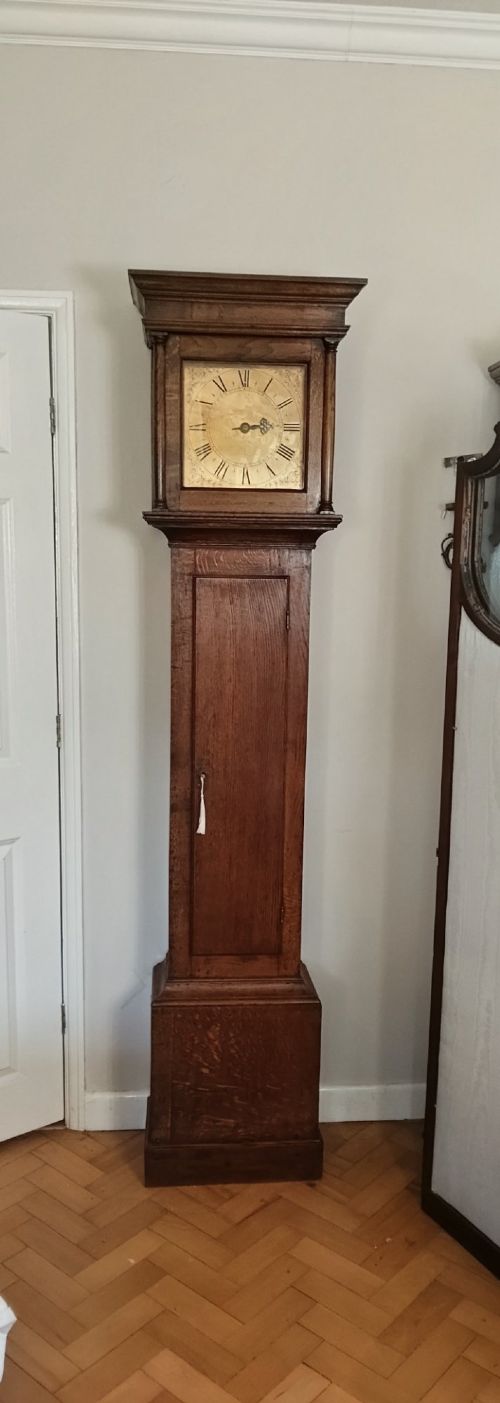
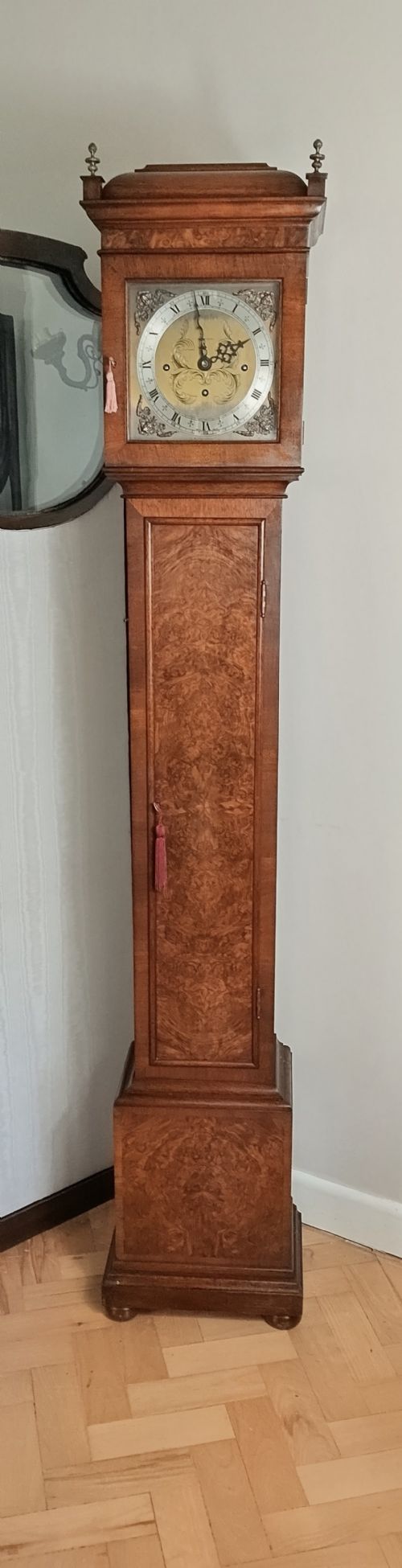
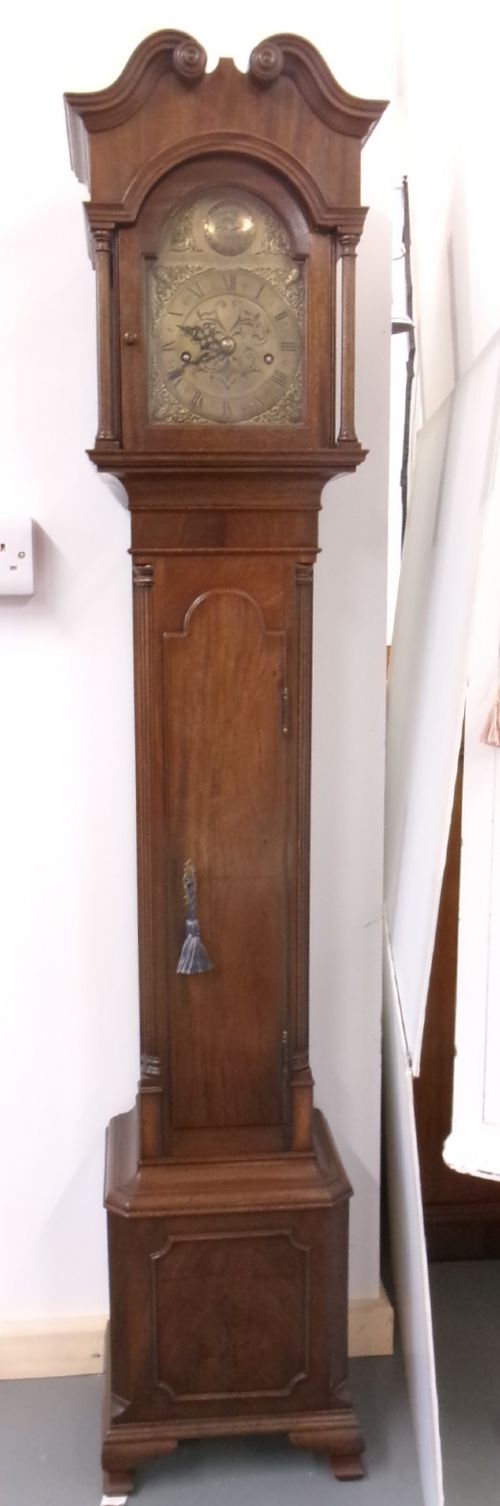
When you search for a mechanical floor clock, you encounter upright timepieces spanning grandfathers, grandmothers, and granddaughters alongside regional longcases. These tall case clocks stand upright in halls or reception rooms, housing weights, springs, and pendulums within timber housings.
The versions most commonly met on this page range from substantial Georgian oak and mahogany longcases to smaller 20th-century walnut and oak grandmother clocks. Pieces appear from various eras including Victorian, Edwardian, and 1930 production, reflecting diverse cabinet-making traditions and mechanical complications.
How they were made
Cabinet makers constructed the tall housings using solid and veneered timbers such as oak, mahogany, walnut, and burr walnut, frequently incorporating flame mahogany veneers and inlaid details. Glass panels protect the dial face, while brass components form the visible chapter rings, bezels, and movement plates.
Internal mechanical systems utilise steel gears, springs, weights, and pendulums to drive timekeeping and chiming functions like tubular bells or carillon melodies. Metal dials feature engraved or painted markings, mounted within protective hoods that often lift or open for access.
Listings feature mechanical floor clocks spanning the Georgian era through the 1950s, utilising oak, mahogany, walnut, and brass.
What varies in quality
The sophistication of the internal movement separates standard timekeeping pieces from complex musical or quarter-chiming examples with tubular bells or automata figures. Sound production and mechanical refinement dictate the standing of a movement within its period.
Cabinet construction quality shows in the selection of timbers, such as figured burr walnut or flame mahogany veneers matched against solid structural oak. The crispness of dial engraving and the proportion of the case architecture complete the distinction between ordinary and accomplished examples.
Elliott·Enfield·John Thompson·Hay Wolverhampton
The Mechanical Floor Clock Glossary
- Longcase clock
- A tall pendulum clock enclosed in a wooden case with a weighted movement, commonly known as a grandfather clock.
- Grandmother clock
- A smaller, scaled-down version of the traditional longcase clock, typically produced during the 20th century.
- Granddaughter clock
- An even more compact variant of the floor-standing clock, generally measuring under standard grandfather proportions.
- Quarter chiming
- A mechanical mechanism that chimes the quarters of the hour using multiple gongs, bells, or tubular rods.
- Automata
- Mechanical figures or moving components integrated into the dial scene that animate during the striking sequence.
Mechanical Floor Clock: Frequently Asked Questions
How do I wind a mechanical floor clock?
Winding involves using a key or crank to draw up the weights or tension the springs via holes in the dial face. Care must be taken not to overwind the mechanism.
Different movements require different intervals, ranging from daily to weekly winding routines depending on whether the clock uses weights or spring barrels.
What is the difference between a grandfather and a grandmother clock?
Grandfather clocks represent the full-size traditional longcase format dating from the 18th and 19th centuries. They possess taller proportions and heavier weight-driven movements.
Grandmother clocks are significantly smaller variants produced primarily in the 20th century, designed to fit modern ceiling heights and tighter spaces.
Where should I place a floor clock in my home?
These clocks require a stable, level floor away from direct sunlight, heating vents, and damp areas to protect the wooden cabinetry and movement. Adequate clearance is necessary for the pendulum swing and weight drops.
Halls and living rooms provide traditional settings where ambient temperature remains relatively constant.
How can I tell the period of a longcase clock?
Dating relies on examining the timber veneers, dial style, casework architecture, and the construction methods of the internal movement. Georgian pieces often feature solid oak or simpler mahogany proportions, while Edwardian and 1930 examples introduce walnut veneers and specialised chiming systems.
Inscribed maker signatures on the dial or backplate also help establish the era of manufacture.