


Chiming Grandmother Clock
Chiming grandmother clock pieces are scaled-down floor-standing timepieces offering musical chimes, sought after for domestic spaces where full-sized longcases do not fit.
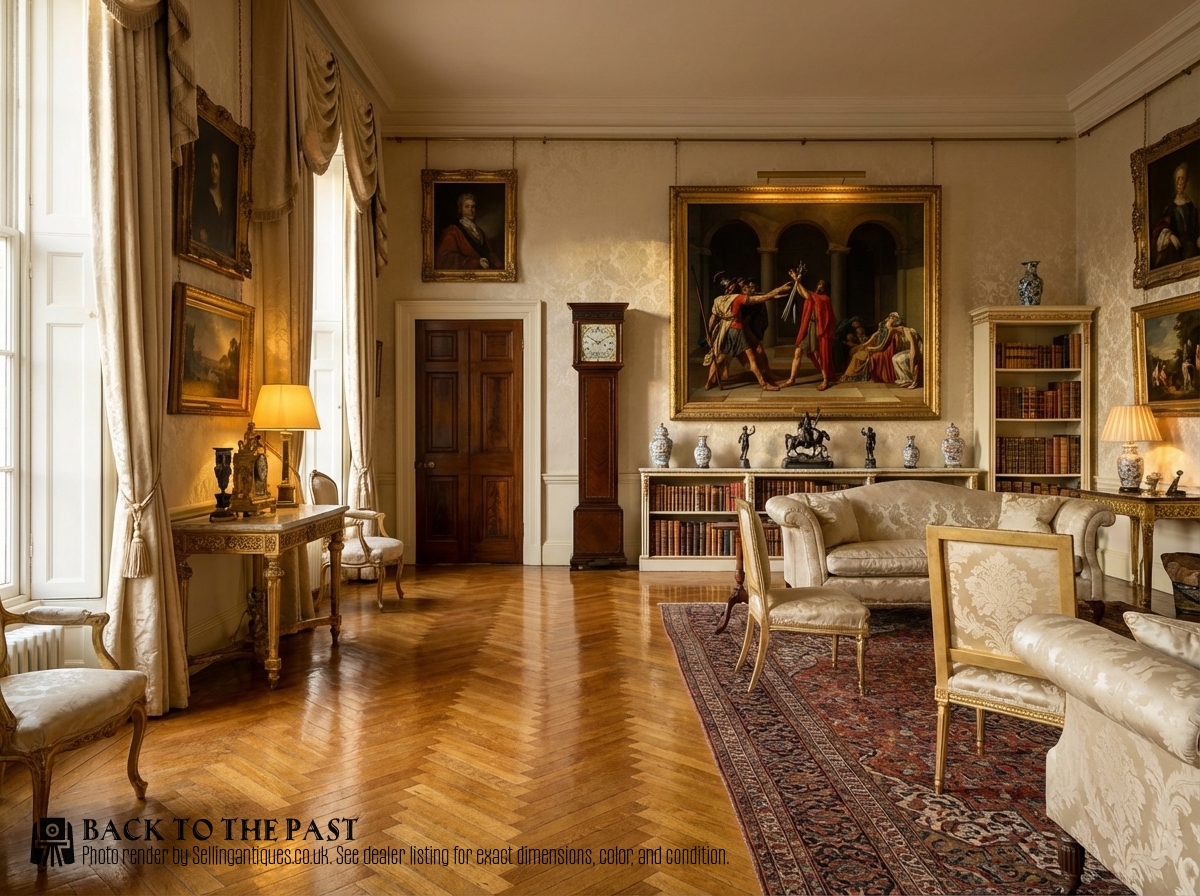
Form and Period
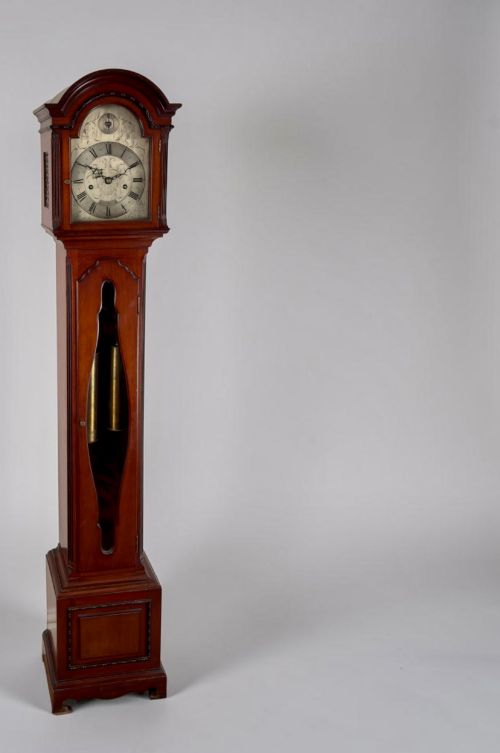
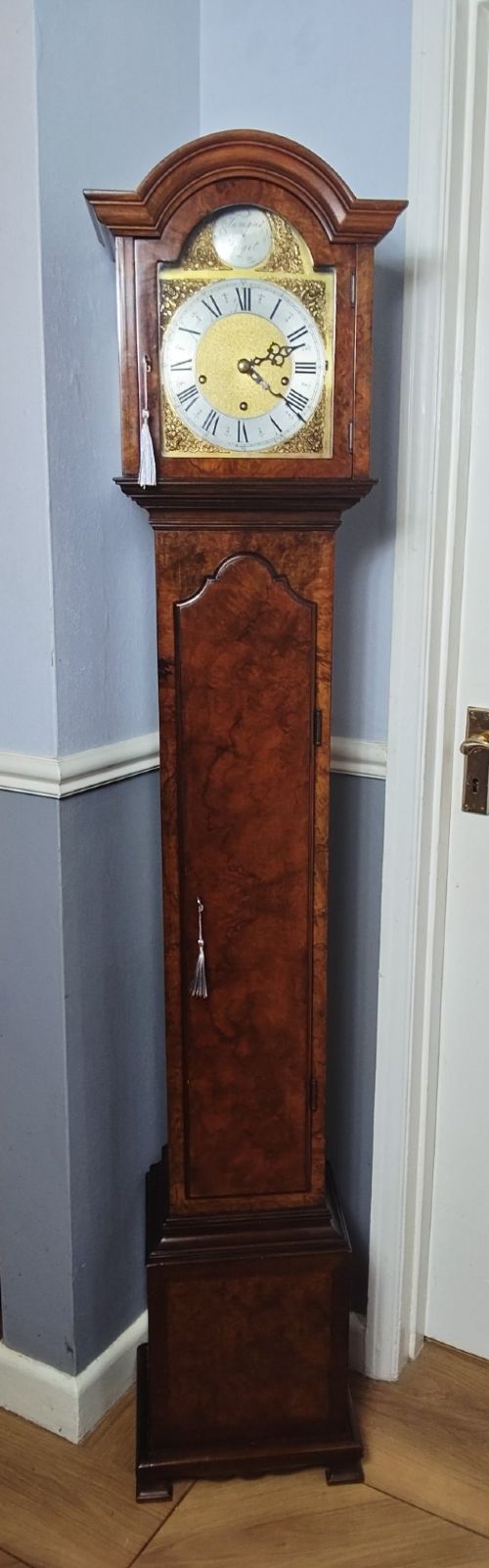
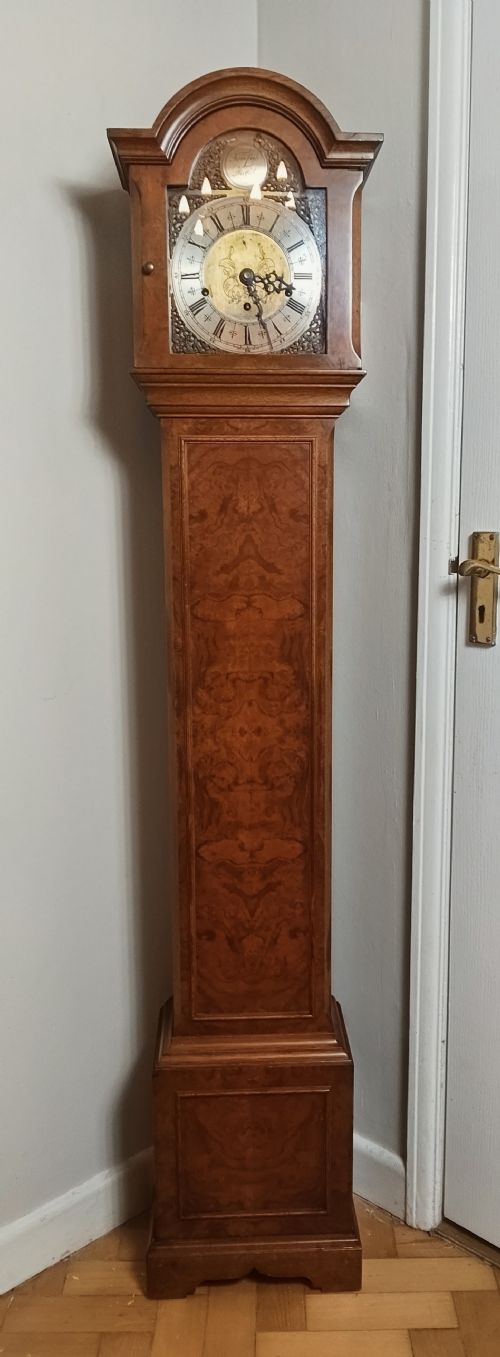
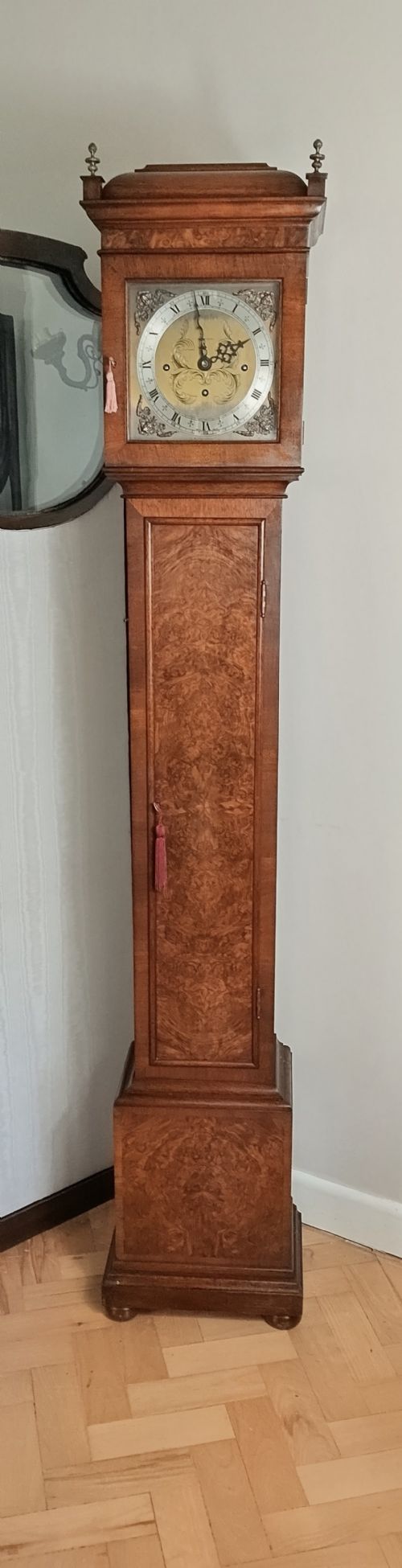
A chiming grandmother clock stands shorter than a traditional longcase, typically measuring between sixty-five and seventy-five inches. You will encounter examples spanning the Edwardian period, the 1920s, and the 1930s.
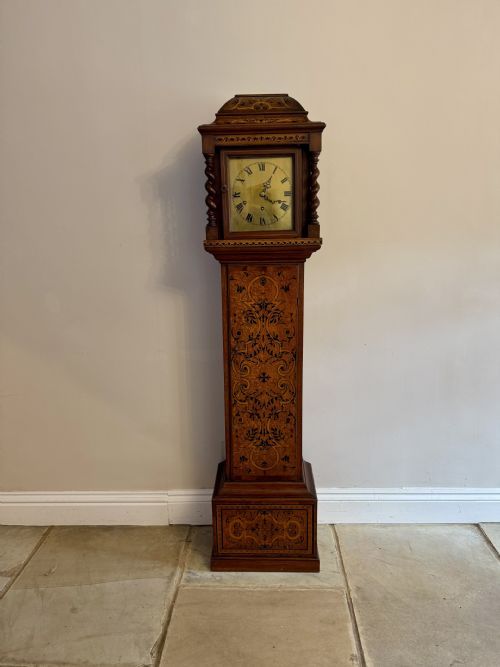
The aesthetic vocabulary draws upon earlier centuries through Georgian Revival, Gothic Revival, Queen Anne, Chippendale, and Chinoiserie styles. These smaller proportioned cases house musical movements designed to play Westminster or multiple tunes.
The form bridges the gap between shelf clocks and tall grandfathers, combining domestic presence with musical capability.
Materials and Movements
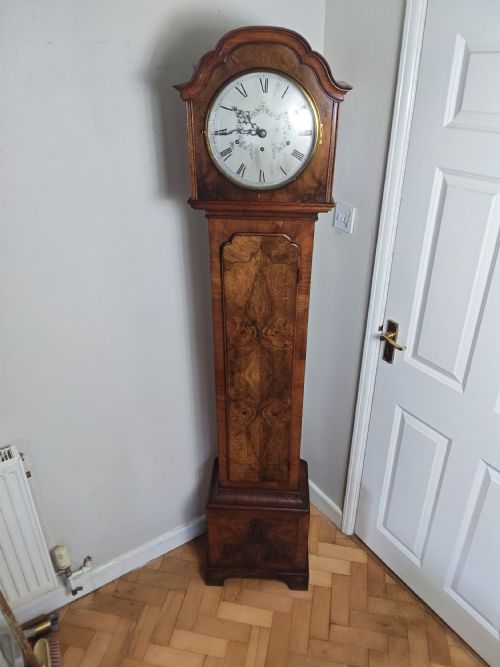
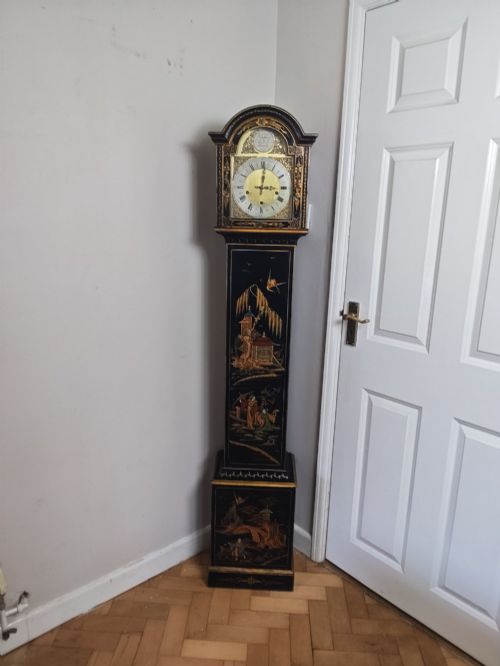
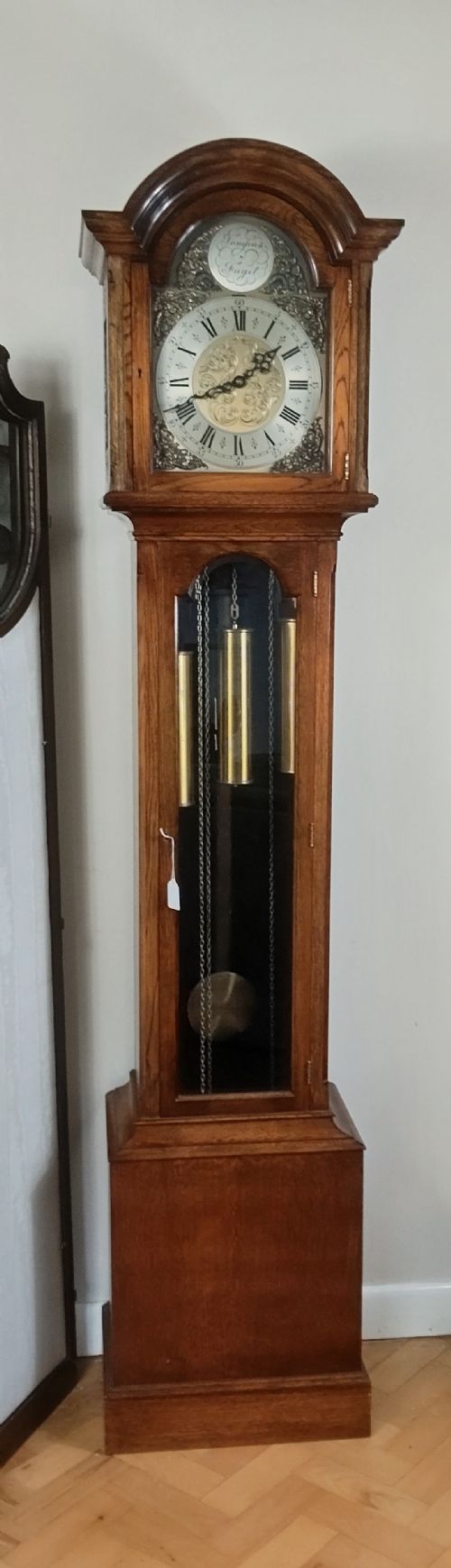
Cabinets utilise timber solids and veneers including mahogany, oak, walnut, and japanned black lacquer, often featuring glass panels such as astragal glazed trunk doors to view the pendulum and weights.
Internal engineering relies upon brass components within weight-driven and spring-driven mechanisms, incorporating specialised chiming apparatus like Rheingold-gongs for acoustic resonance.
Retail Price Guide 2026
Typical UK retail prices for chiming grandmother clock, calculated from the Sellingantiques database of over a million retail prices indexed since 2003. This retail price guide relies exclusively on Sellingantiques data; no external sources or auction records are used, so the figures do not describe the wider market.
Proportion and Mechanism
The distinction between tiers rests upon the harmony of proportions, the crispness of timber carving, and the complexity of the musical movement. Single-tune setups differ significantly from triple-tune and triple-weight variations.
Cabinet finish, from plain oak to detailed Chinoiserie japanning or figured walnut, dictates the visual weight of the piece within an interior.
Gillett and Johnston·JJ Elliot·Maple of London·Peerless·Embee·Enfield
The Chiming Grandmother Clock Glossary
- Grandmother clock
- A scaled-down version of the traditional longcase clock, standing shorter in height while retaining full mechanical complexity. These pieces usually measure under seventy-five inches tall.
- Westminster chime
- A four-note melody played on quarter-hours by the clock movement. This tune is shared with clock towers across Britain.
- Astragal glazed
- A glass door divided by wooden framework strips into smaller panes. This design permits a clear view of the pendulum and weights inside.
- Japanned
- A European imitation of East Asian lacquerwork using dark varnishes and raised metallic decoration. It appears on select decorative cases.
- Triple weight
- A movement driven by three separate suspended weights supplying power for the timekeeping, hour striking, and musical chiming trains respectively.
Frequently Asked Questions
How tall is a grandmother clock?
These clocks generally measure between sixty-five and seventy-five inches in height. This makes them shorter than standard grandfather clocks.
The reduced scale allows them to fit comfortably into rooms with lower ceilings or narrower hallways.
What tunes do they play?
Many examples play the Westminster chime on quarter-hour intervals. Some advanced movements include triple musical tunes.
Heavier weight-driven mechanisms often feature mellow-sounding gongs to produce these traditional melodies.
Are they weight or spring driven?
Both weight-driven and spring-driven mechanical movements exist within these listings. Weight-driven versions use suspended lead or iron weights.
Spring-driven options rely on wound metal coils to power the gear train and chime mechanism.
What woods were used for the cases?
Cabinetmakers utilised timbers such as oak, mahogany, and walnut for the tall wooden housings. Light oak and dark figured walnut are common variants.
Certain decorative pieces display black japanned lacquer finishes with Chinoiserie artwork.