
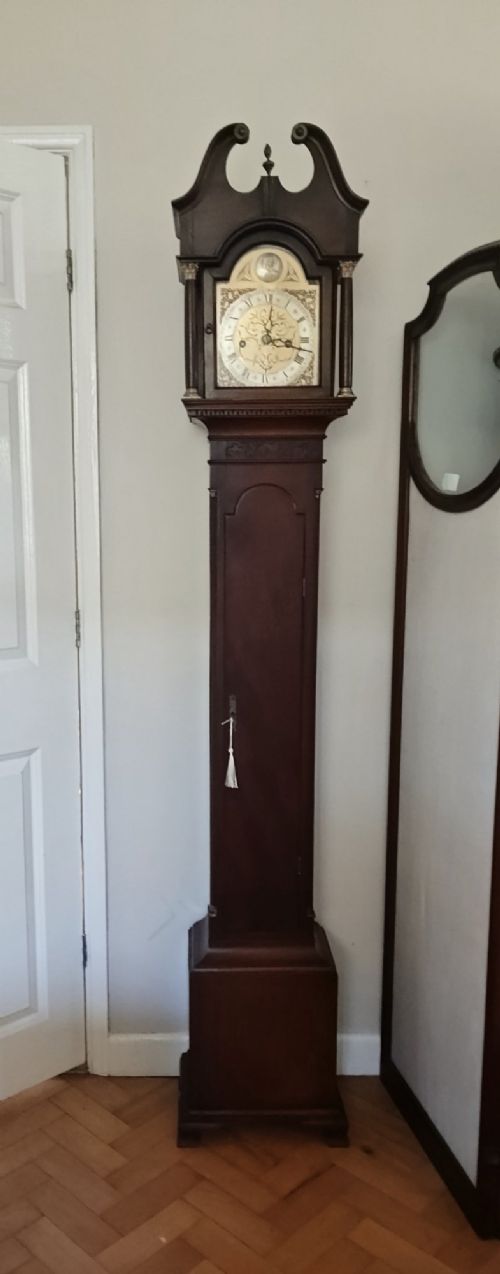
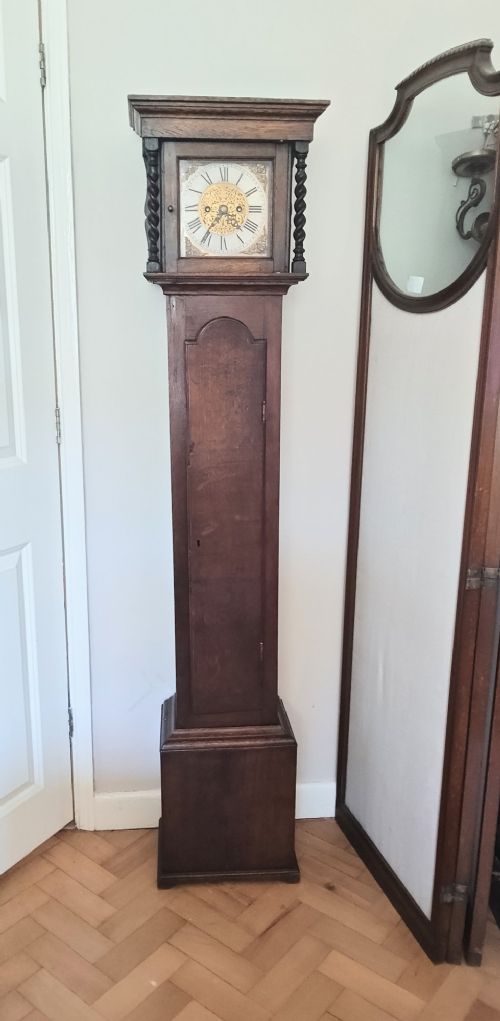
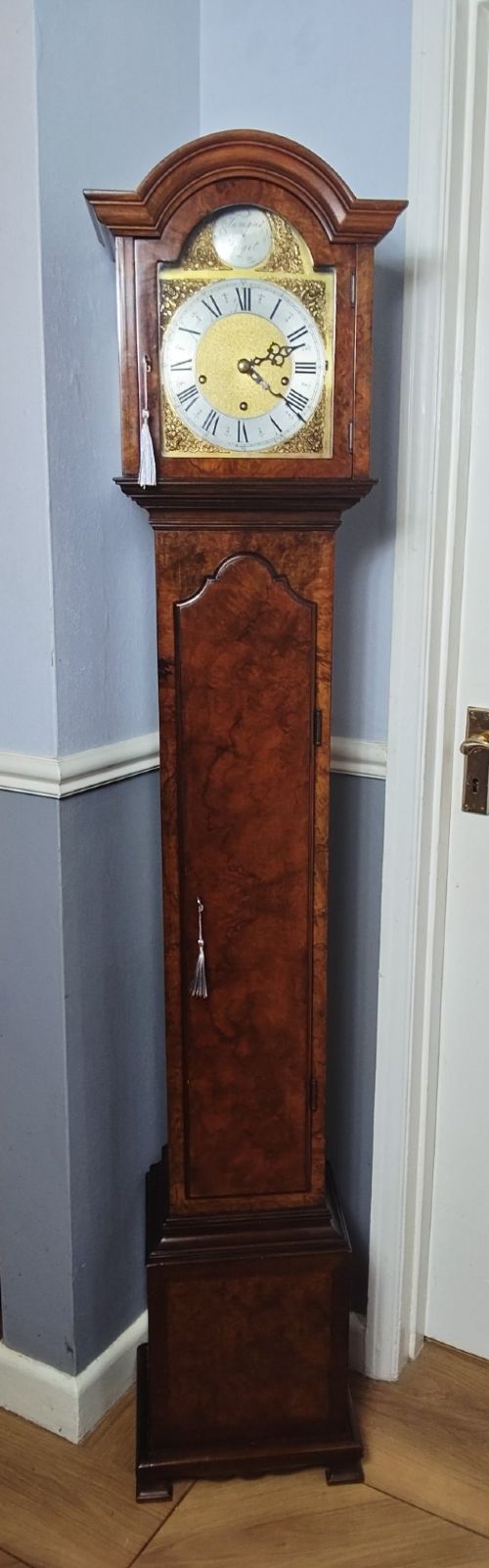

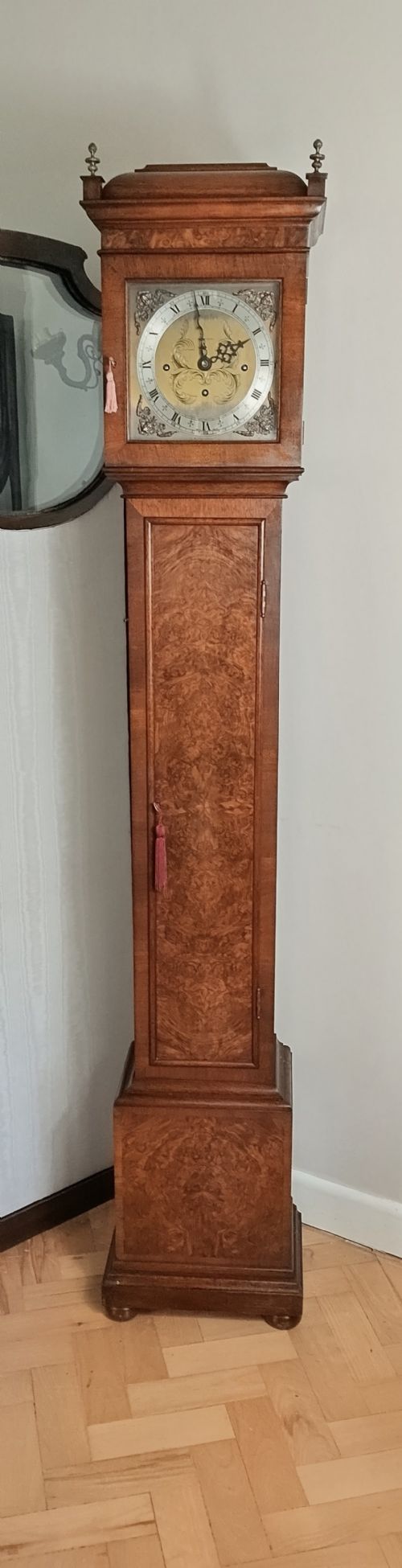
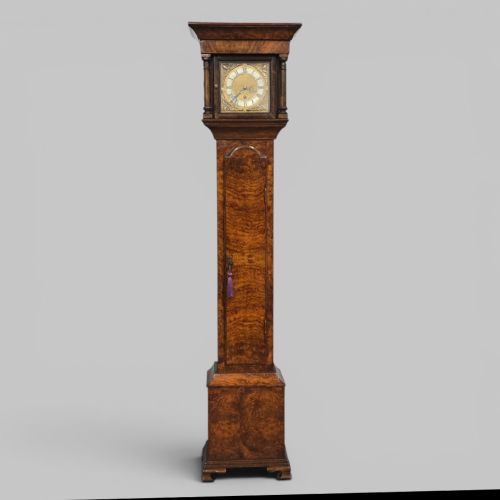


Slim Grandfather Clock
A slim grandfather clock combines vertical presence with modest proportions, fitting neatly where standard longcase clocks overwhelm the room.
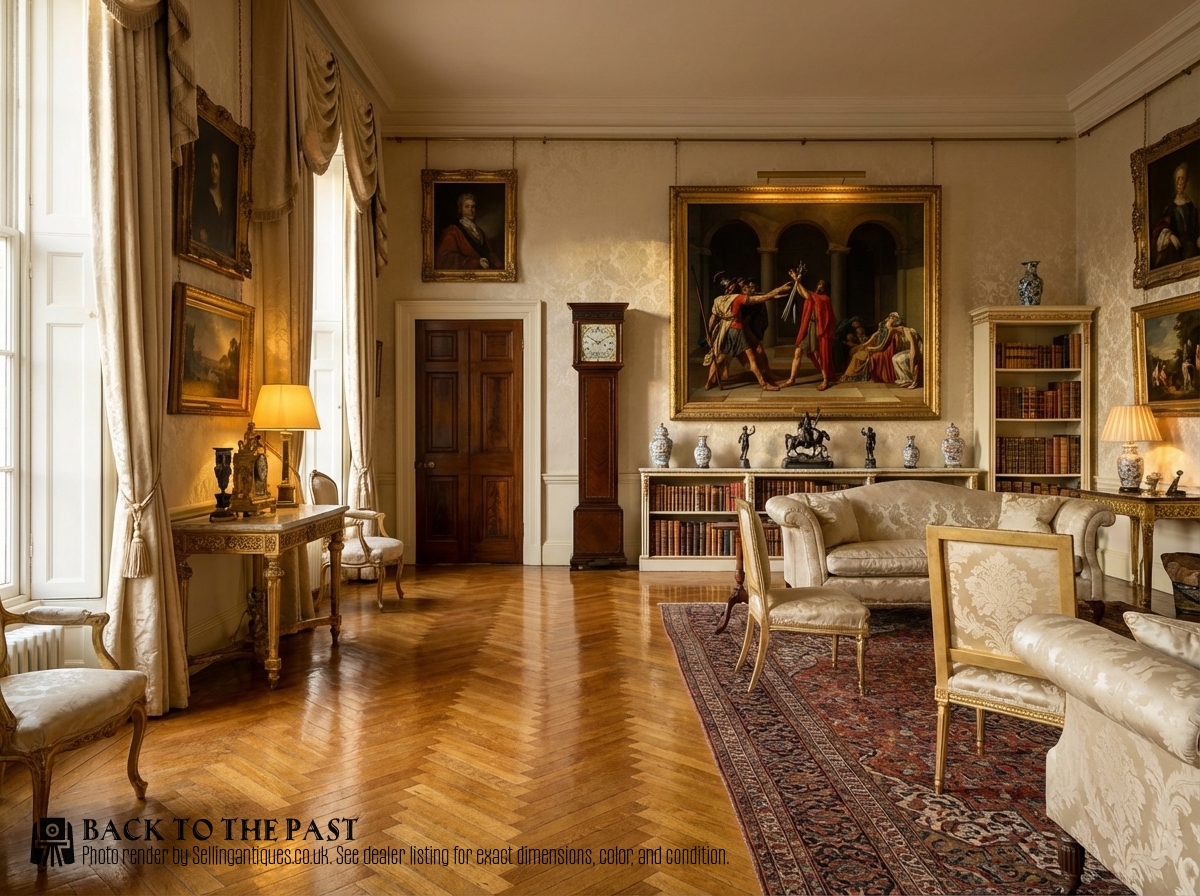
Slim Grandfather Clock
A slim grandfather clock is a tall timekeeper housed within a narrow case, frequently designated in records as a grandmother, granddaughter, or miniature longcase clock. These domestic timepieces span periods from the early eighteenth century through the Georgian era, Victorian times, and the early twentieth century.
The versions most commonly met on this page date from the nineteenth and early twentieth centuries, including Edwardian and revival pieces. They appear in forms such as musical quarter-chiming clocks, eight-day movements, and thirty-hour oak or mahogany designs.
Buyers seek these scaled-down longcase clocks to secure the traditional mechanics and timber richness of a full-size floor clock without requiring expansive floor space or soaring ceiling heights.
How they were made
Cabinetmakers constructed the tall narrow cases using solid timbers and decorative veneers such as mahogany, oak, burr walnut, flame mahogany veneer, and walnut. These woods were selected for their grain pattern and durability, housing movements protected behind glass doors.
Clockmakers fitted brass dials, sometimes accompanied by silvered chapter rings, driven by weights or springs depending on whether the mechanism ran for thirty days or eight days. More complex iterations incorporated musical chimes or tubular bells.
Slim Grandfather Clock Retail Price Guide 2026
Typical asking prices for slim grandfather clock among the pieces listed under this phrase on Sellingantiques today, from the lower quarter to the upper quarter. They describe what is for sale here now, not the wider market.
Some miniature longcases incorporate barley twist columns, offering a delightful Jacobean revival twist to a tall timepiece.
What varies in quality
Quality rests in the harmony between the cabinet proportions and the sophistication of the internal movement, distinguishing simple thirty-hour timepieces from elaborate quarter-chiming musical mechanisms. The selection of timber, such as figured walnut or flame mahogany veneer, defines the visual depth of the case.
Maker reputation and dial execution separate standard production from exceptional pieces. Finely engraved brass dials and signed movements by known makers elevate the standing of a longcase clock.
Henry Smith of Petersfield·Henrry Pottle Winchester·Elliott·Gillett and Johnston
The Slim Grandfather Clock Glossary
- Longcase clock
- A tall pendulum clock enclosed in a wooden case standing directly on the floor. It is frequently referred to as a grandfather clock.
- Grandmother clock
- A smaller, more slender version of the traditional longcase clock, typically produced during the nineteenth and twentieth centuries. It occupies less vertical and horizontal space.
- Quarter chiming
- A mechanical system that sounds notes on bells or gongs at each quarter hour before striking the full hour. This adds acoustic complexity to the movement.
- Dial
- The visible face of the clock displaying the hours and minutes, typically constructed from brass and occasionally featuring engraved spandrels.
Slim Grandfather Clock: Frequently Asked Questions
What is a slim grandfather clock?
A slim grandfather clock is a tall, narrow floor-standing timekeeper scaled down in width and often height compared to standard longcase clocks. These pieces preserve traditional mechanical movements within a compact footprint.
They appear in various forms, including grandmother and miniature longcase clocks, utilising timbers like oak, mahogany, and burr walnut.
How do I know the age of my clock?
Dating relies on examining the timber, the style of the wood case, and the construction of the brass dial and movement. Revival styles of the early twentieth century often mimic earlier Georgian or Victorian aesthetics.
Maker signatures or inscriptions on the dial or movement can also provide specific periods of origin.
What is the difference between a grandfather and grandmother clock?
A grandfather clock is the traditional full-size longcase clock, while a grandmother clock is a smaller, more slender variant developed later. Grandmother clocks generally stand lower and feature narrower trunks.
Both house similar weight-driven or spring-driven mechanisms behind glass-fronted doors.
Where should I place a slim longcase clock?
These clocks suit narrow hallways, landings, or rooms where standard furniture proportions would feel overcrowded. Their reduced width allows them to fit against tighter wall spaces.
Ensure the floor is level so the pendulum swings evenly and the mechanical movement runs reliably.