
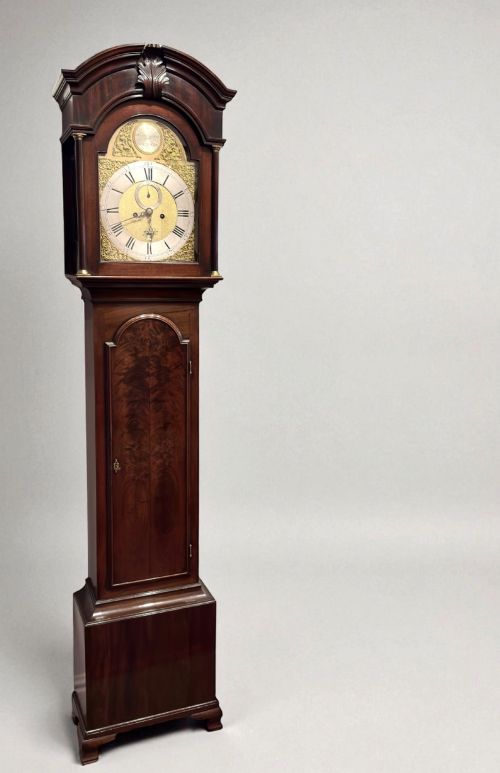
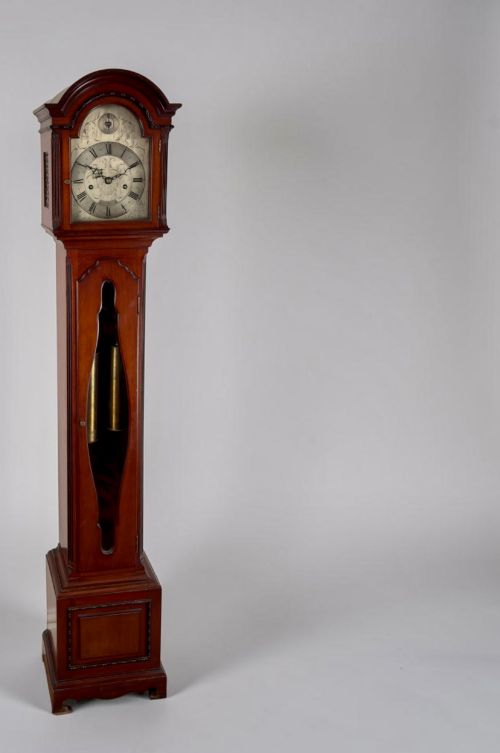

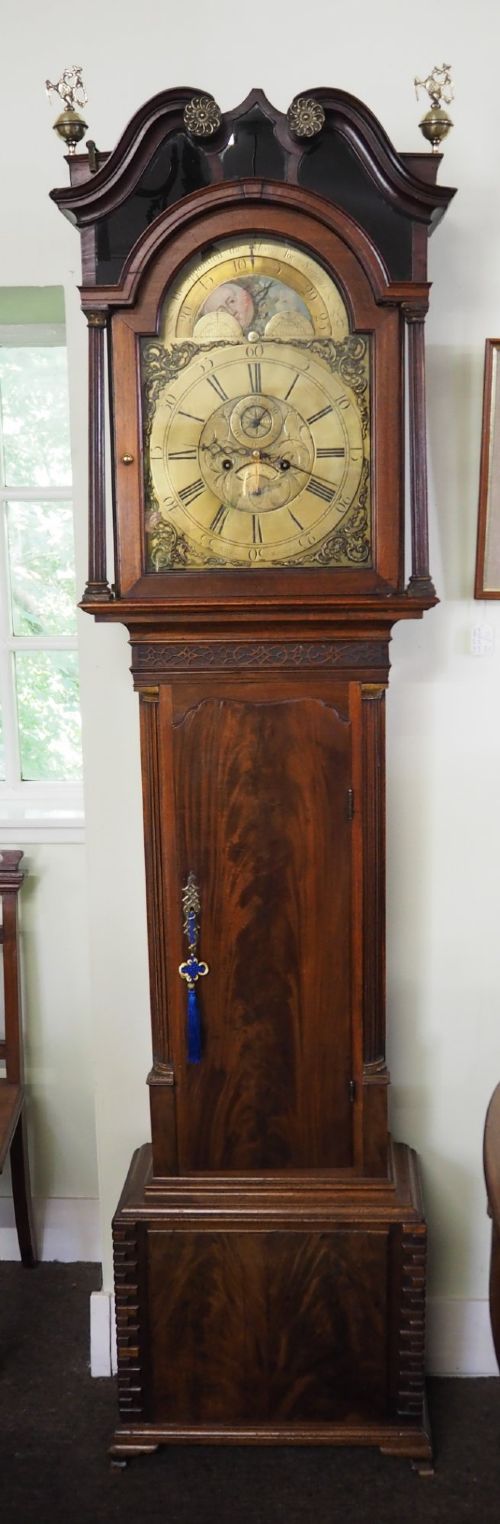
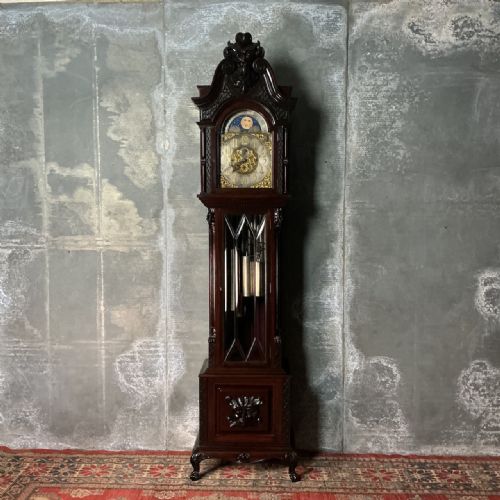
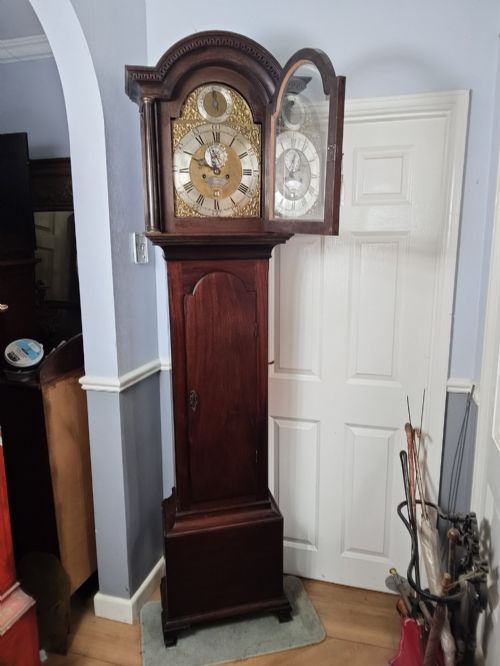
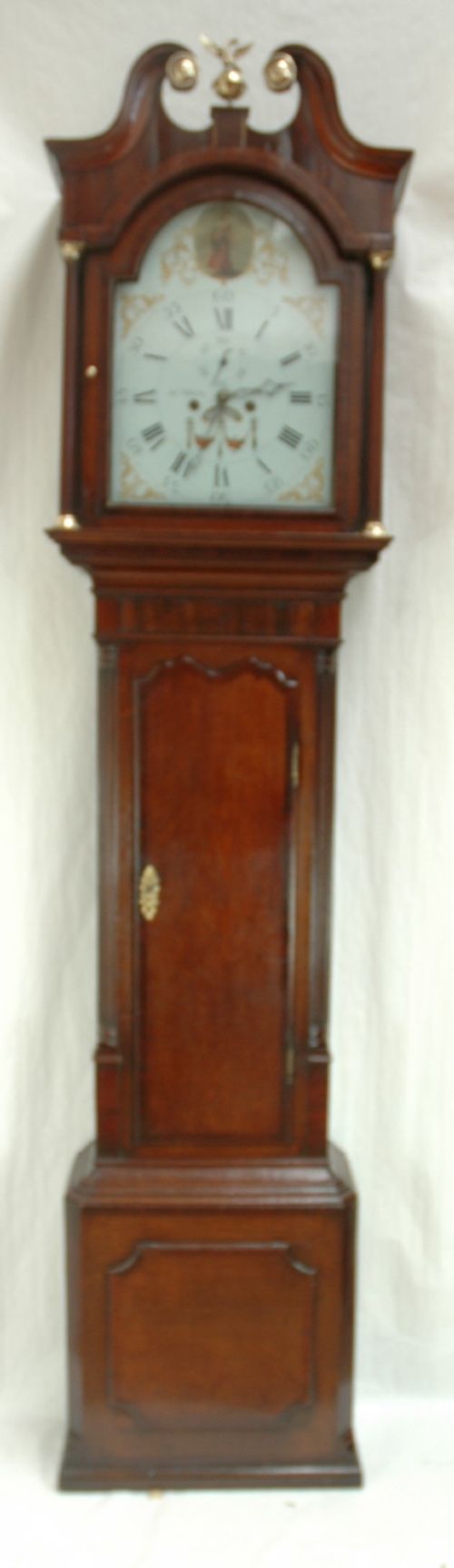
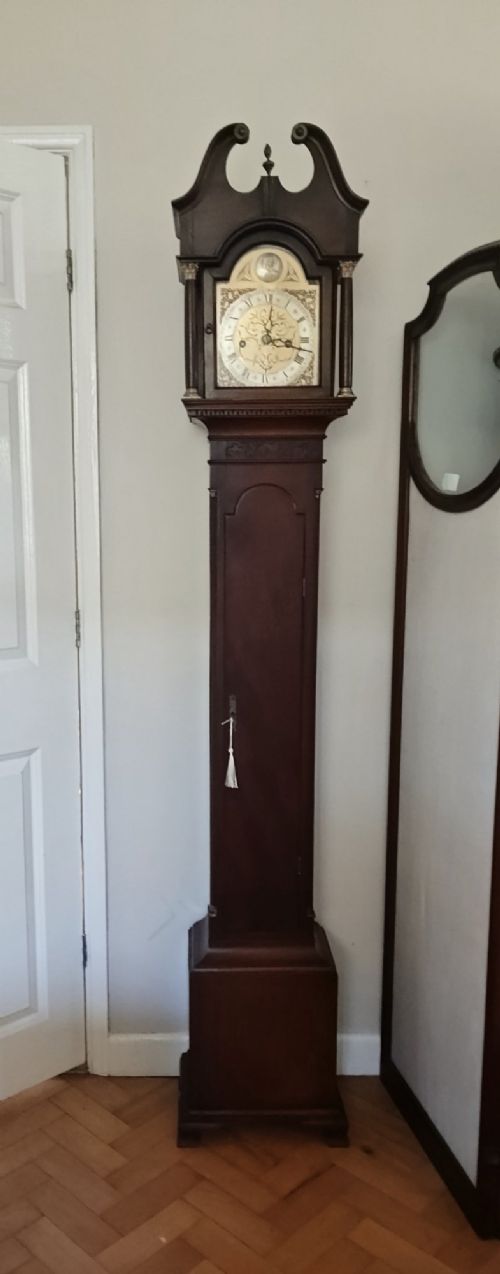
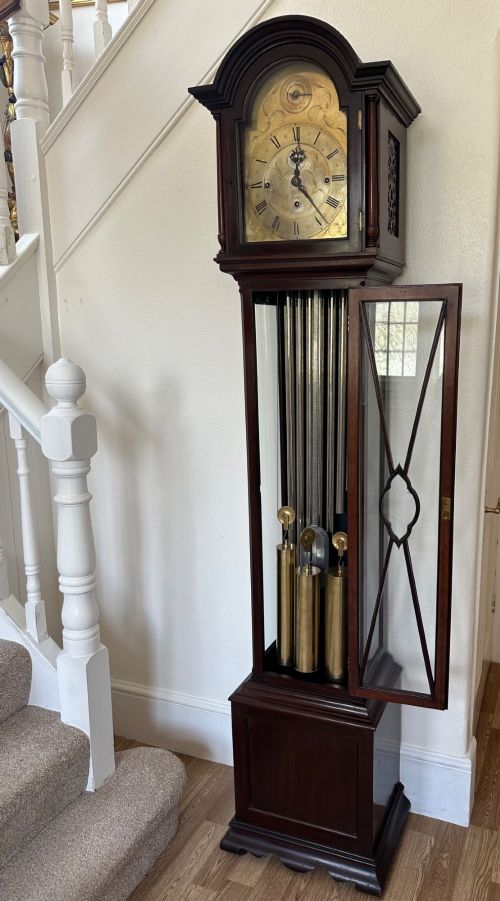
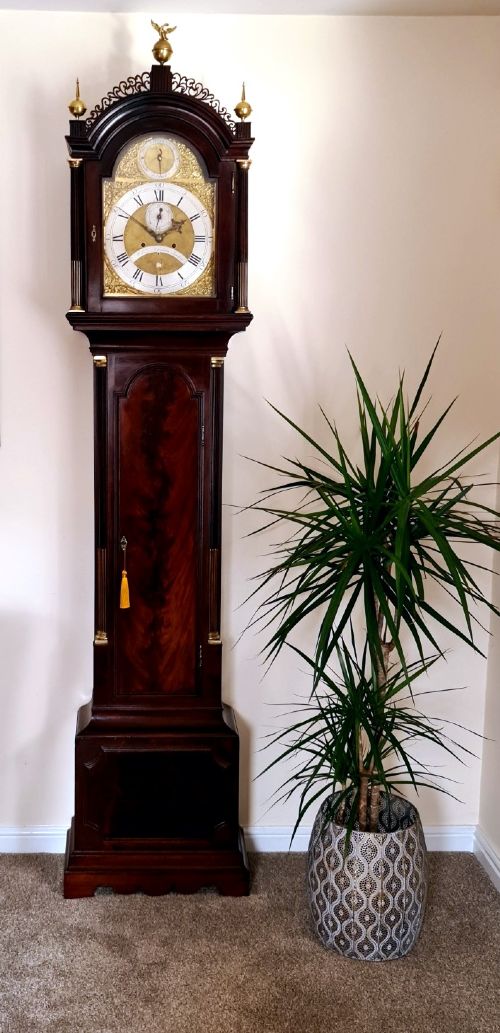

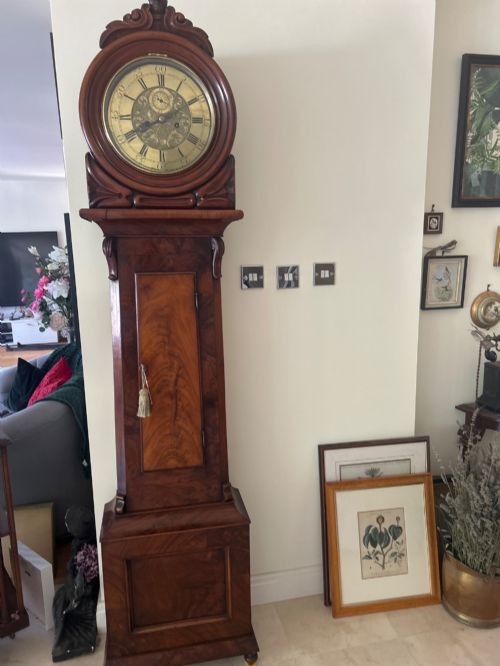
Dark Mahogany Floor Clock
A dark mahogany floor clock anchors a room with steady rhythm, standing tall in polished wood through generations of domestic life.
Dark Mahogany Floor Clock
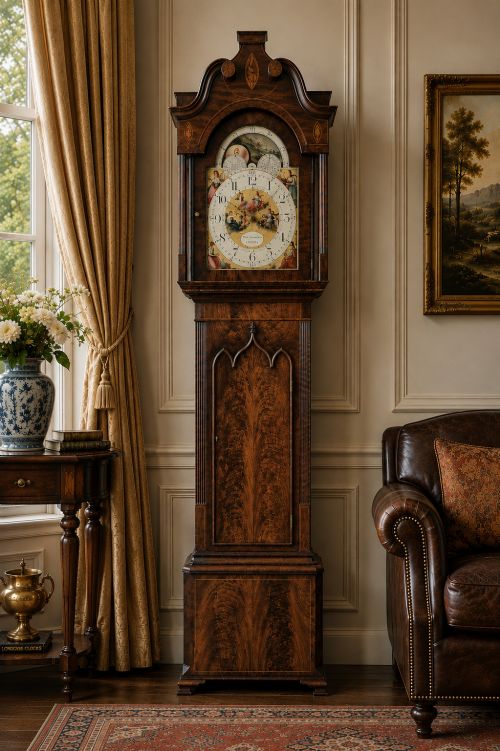
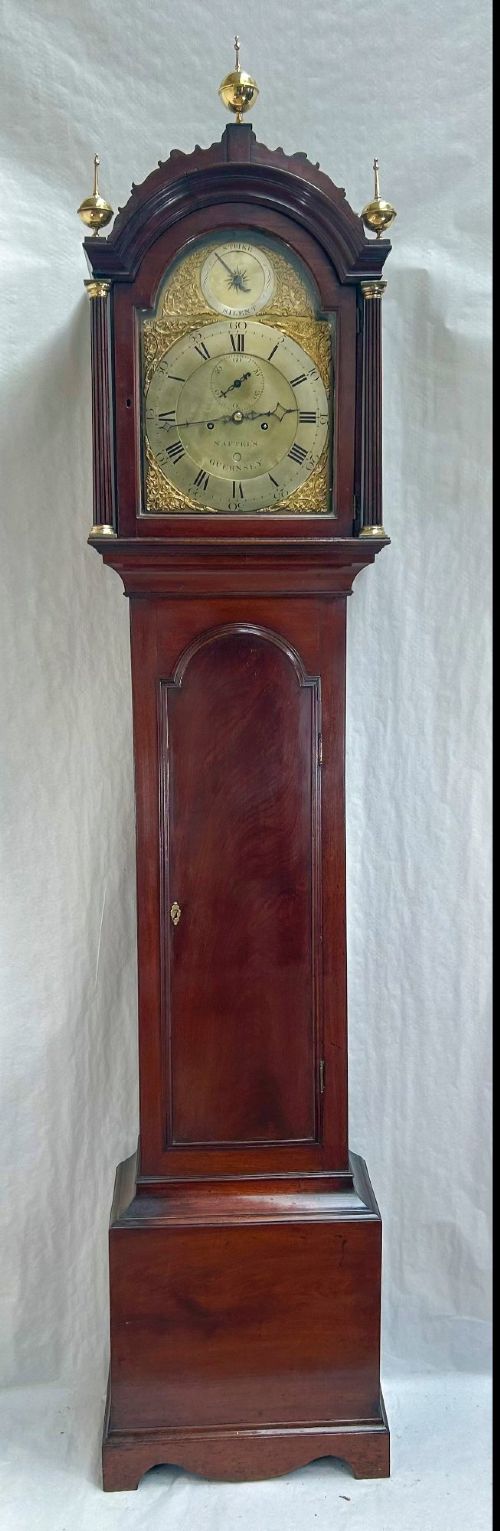
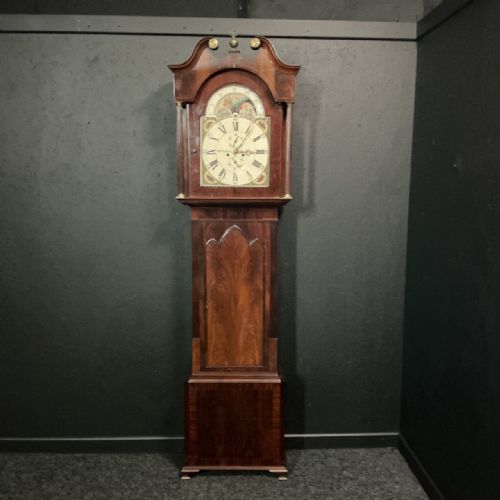
A dark mahogany floor clock encompasses tall standing timepieces commonly known as longcase clocks, grandfather clocks, or smaller grandmother clocks. These upright instruments dominate an interior with their substantial height and architectural presence.
The pieces appearing on this page stem primarily from the Georgian, Victorian, and Edwardian eras, spanning the eighteenth, nineteenth, and early twentieth centuries. Examples range from imposing London models to regional Scottish and provincial workshop productions.
Most items combine timber cabinetry with brass or painted iron dials, housing weight-driven or spring-driven movements. Variations include moon roller mechanisms, strike-silent functions, and musical bell systems.
Materials and construction
Cabinet makers utilised solid mahogany, flame mahogany, and figured mahogany, occasionally paired with secondary woods like oak, to construct the tall wooden cases. Glass panels protect the dial face while brass and steel form the intricate internal gears and escapements.
Dial faces rely on brass or painted iron, often detailed with engraved numerals, subsidiary seconds dials, and arch mechanisms. Movements incorporate iron and brass components, driven by hanging weights or tubular bells depending on the complexity of the train.
Some models hide musical bell movements inside, ready to serenade the hallway every single hour.
Evaluating the craftsmanship
Quality separates through the crispness of the cabinet carving, the depth of the mahogany grain figure, and the precision of the dial engraving. Superior examples display balanced proportions, clean joinery, and well-executed fretwork on the hood.
Internal sophistication dictates the tier of the piece, moving from standard time-and-strike movements to complex mechanisms featuring moon phases, multiple trains, or chiming tubular bells by recognised makers.
Gordon of Aberdeen·Gillett and Johnston·James Field·Samuel Kellett·William Jourdain·George Hallifax·Henry Weedon·Edward Shepley·Matt Wylie·Joseph Gibson·Thwaites London·Charles Dowsett·John Denbigh·Edward White·William Betagh·Handley and Moore
The Dark Mahogany Floor Clock Glossary
- Longcase clock
- A tall pendulum clock enclosed in a wooden case standing directly on the floor. These instruments are frequently referred to as grandfather clocks.
- Moon roller
- A mechanism on the dial that tracks the lunar phases through a rotating disc. It displays the cycle of the moon alongside the standard hours.
- Strike-silent
- A mechanism allowing the clock's striking train to be disengaged at night. This function prevents the hour chimes from sounding during sleeping hours.
- Train
- The series of gears and wheels within a clock movement that performs a specific function, such as timekeeping, striking, or chiming.
Dark Mahogany Floor Clock: Frequently Asked Questions
Where should I place a floor clock?
Position the piece against a sturdy interior wall away from direct sunlight, heating vents, and exterior doors to protect the timber and mechanism.
Ensure the floor surface is entirely level so the pendulum swings evenly and the movement maintains accurate time.
How do I wind the weights?
Insert the winding key into the designated holes on the dial face and turn gently until the internal weights rise near the top of the case.
Support the weight shell with your free hand if necessary, and avoid over-winding to prevent damage to the brass gutlines or chains.
How do I tell the age of a clock?
Examine the dial style, signature format, and wood finish, noting that painted iron dials typically point toward the late eighteenth or nineteenth century.
Maker signatures inscribed on the brass dial face often correspond to recorded working dates in historical horological archives.
What is a grandmother clock?
A grandmother clock is a smaller, more slender version of the traditional longcase clock, usually produced during the Edwardian period.
These compact timepieces fit easily into rooms with lower ceilings while retaining the mechanical complexity of their larger counterparts.