




Traditional Mahogany Hall Clock
A traditional mahogany hall clock anchors a room with its steady chime and tall presence.
Traditional Mahogany Hall Clock
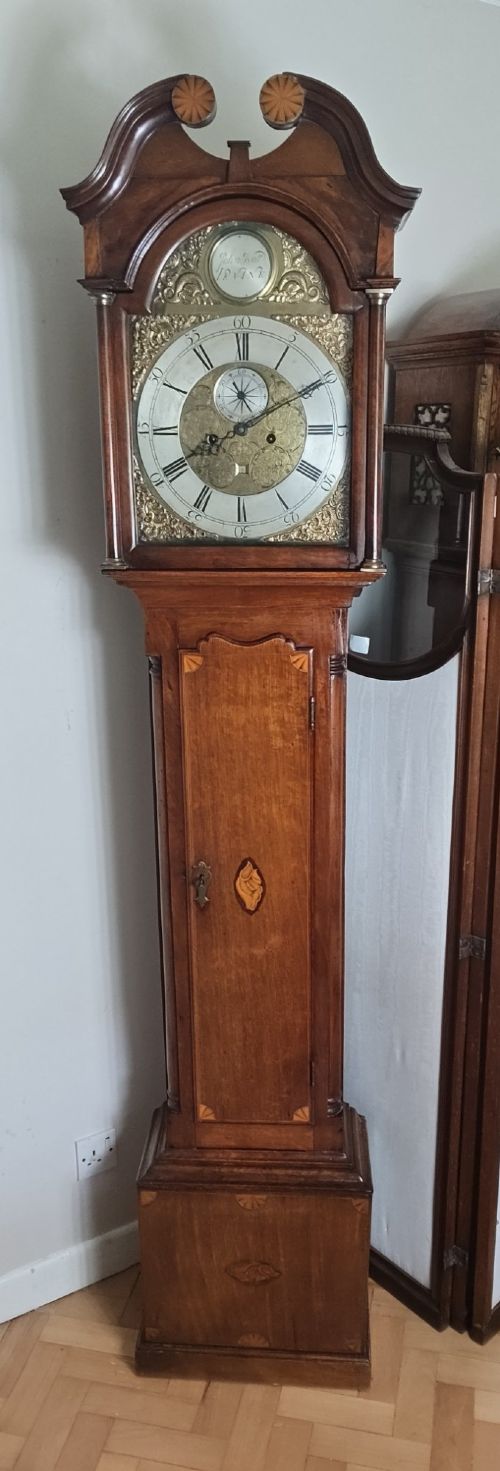
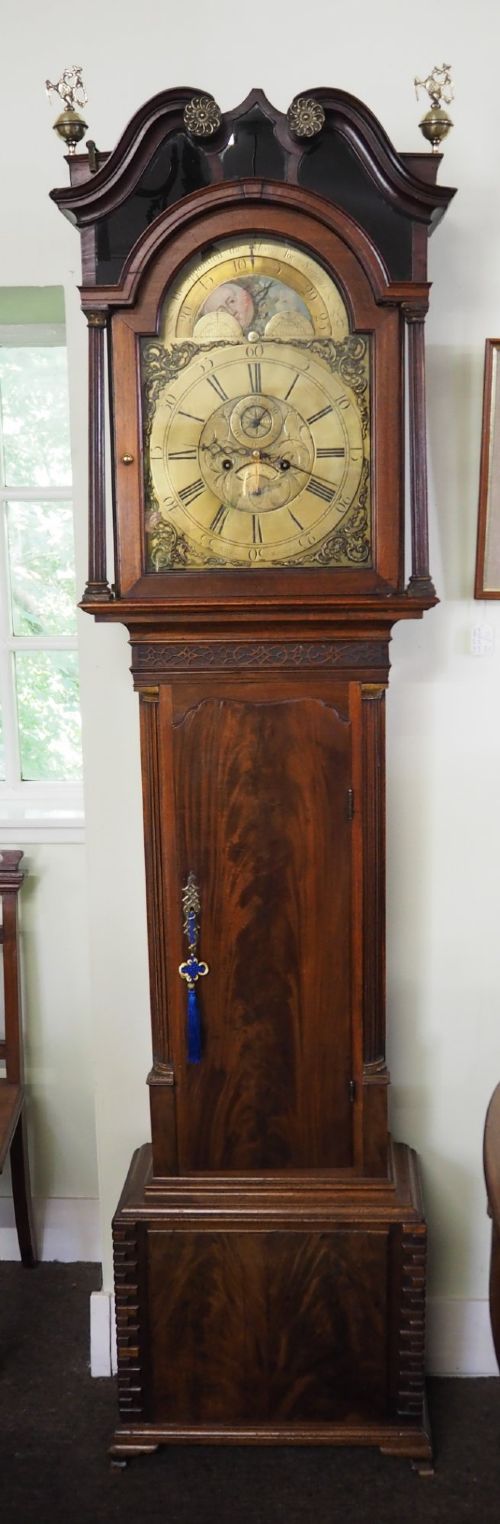
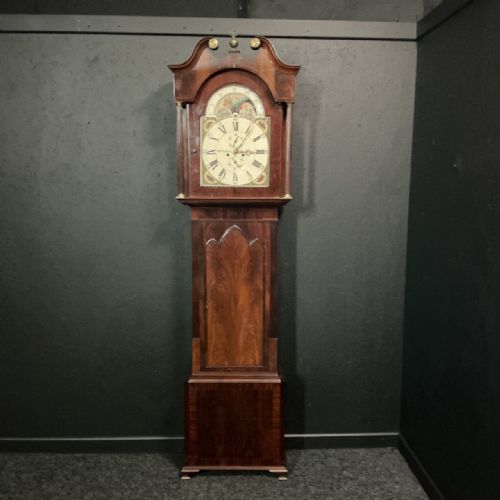
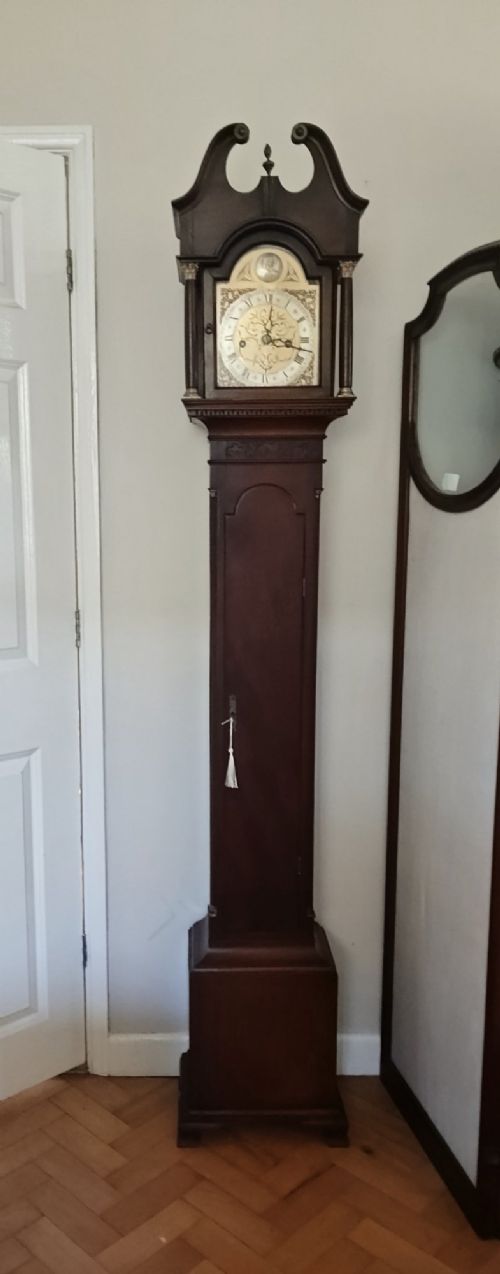
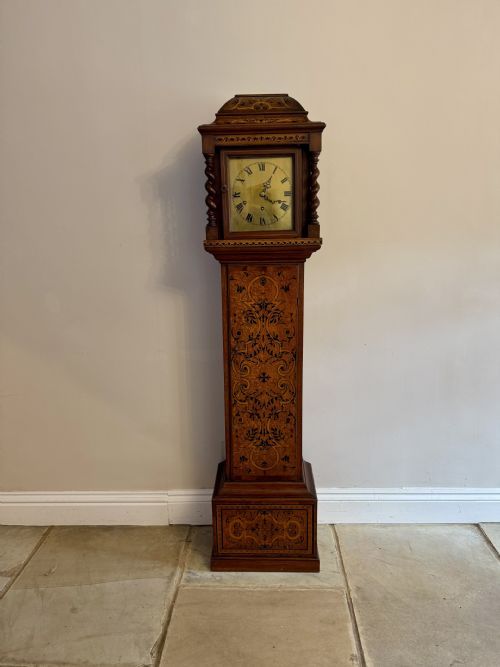
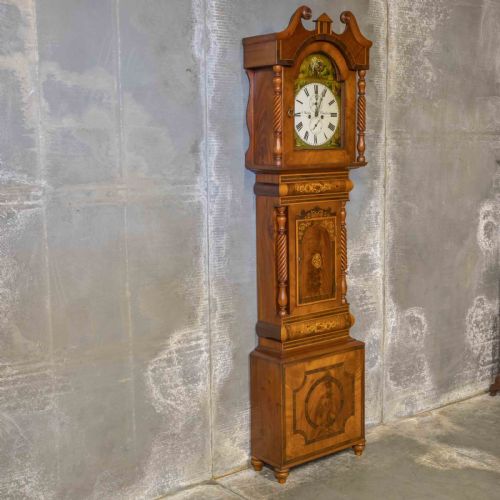
When you search for a traditional mahogany hall clock, you encounter tall case timepieces spanning the eighteenth, nineteenth, and early twentieth centuries. These upright domestic clocks appear primarily as grandfathers or smaller grandmother variants, built to stand in hallways and landings. Georgian and Victorian examples dominate the selection, bringing substantial timber cases and brass or painted dials into view.
How they were made
Cabinetmakers constructed the tall cases using solid mahogany, occasionally incorporating oak or satinwood secondary timbers, alongside glass panels to protect the dial. Brass and steel mechanical movements drove the gear trains, weights, and pendulums housed within the timber trunk. Dial faces combined engraved brass or painted enamel with intricate spandrels and moon rollers.
Decorative techniques relied heavily on fine wood veneers, paterae inlays, and marquetry details set into the mahogany surface. Dial work involved hand-painted arched faces and specialised mechanisms capable of chiming quarters or playing tunes. These combined skills of the cabinetmaker and the horologist produced durable, weight-driven timepieces.
What varies in quality
The refinement of the cabinetwork sets individual pieces apart, seen in the choice of figured mahogany veneers and the precision of inlaid details. Movement complexity also defines the tier of the clock, distinguishing standard time-only dials from those with moon phases, musical chimes, and multiple trains. Maker attribution further elevates an example, as signed dials from recognised horologists indicate superior workshop standards.
Proportion and scale influence desirability, particularly in slim or miniature formats where balanced dimensions require high joinery skill. The preservation of original mechanical parts and authentic brass or painted dials contributes substantially to the integrity of the piece. Minor regional variations in Scottish or provincial longcase clocks display distinct local craftsmanship.
James McCabe·Garman Meonstoke·Edward Glase of Bridgnorth·Thomas Hall Romsey·JJ Elliot
The Traditional Mahogany Hall Clock Glossary
- Longcase clock
- A tall, weight-driven pendulum clock housed in a wooden case standing directly on the floor. Often called a grandfather clock.
- Grandmother clock
- A smaller, more slender version of the traditional longcase clock, typically produced during the Edwardian period or later.
- Moon phase
- A dial mechanism tracking the phases of the lunar cycle through a rotating painted disc. This complication appears on better quality provincial and metropolitan clocks.
- Fusee
- A conical pulley connected to the mainspring by a cord or chain that maintains even power as the spring unwinds. It ensures consistent timekeeping across the running period.
- Paterae
- Small circular or oval decorative motifs carved or inlaid into furniture surfaces, commonly seen on neoclassical and Edwardian mahogany cases.
- Spandrel
- The ornamental corner pieces filling the space between a circular clock dial and its rectangular frame, often cast in brass.
Traditional Mahogany Hall Clock: Frequently Asked Questions
How do I tell a grandfather from a grandmother clock?
Grandfather clocks generally measure over six feet tall and possess substantial proportions suited to grand hallways. Grandmother clocks are scaled down significantly, offering a slimmer and shorter profile.
This reduced height makes grandmother clocks easier to place in modern rooms while retaining the mechanical complexity of full-sized movements.
What does an eight-day movement mean?
An eight-day movement requires winding approximately once a week via key-holes set into the dial face. This system uses hanging weights suspended by cords or chains inside the trunk.
Shorter duration clocks need more frequent attention, while thirty-hour versions utilise simpler gear trains without complex striking mechanisms.
Are mahogany hall clocks difficult to maintain?
Regular maintenance involves professional cleaning and oiling of the brass and steel movement every few years to prevent wear. The wooden case requires basic ambient humidity control to protect the mahogany veneer.
Setting up the pendulum and ensuring the case stands level on the floor are essential steps for accurate daily operation.
How do I identify the period of a longcase clock?
Georgian examples often feature architectural hoods, brass dial faces with cast spandrels, and restrained mahogany or oak construction. Edwardian and later pieces frequently display lighter inlays, painted arched dials, and refined slim proportions.
Signatures on the dial or movement backplate frequently provide precise clues to the decade of manufacture.