



Slim Longcase Clock
A slim longcase clock brings the presence of a tall floor timepiece into a modest room without overwhelming the floor space.
Slim Longcase Clock
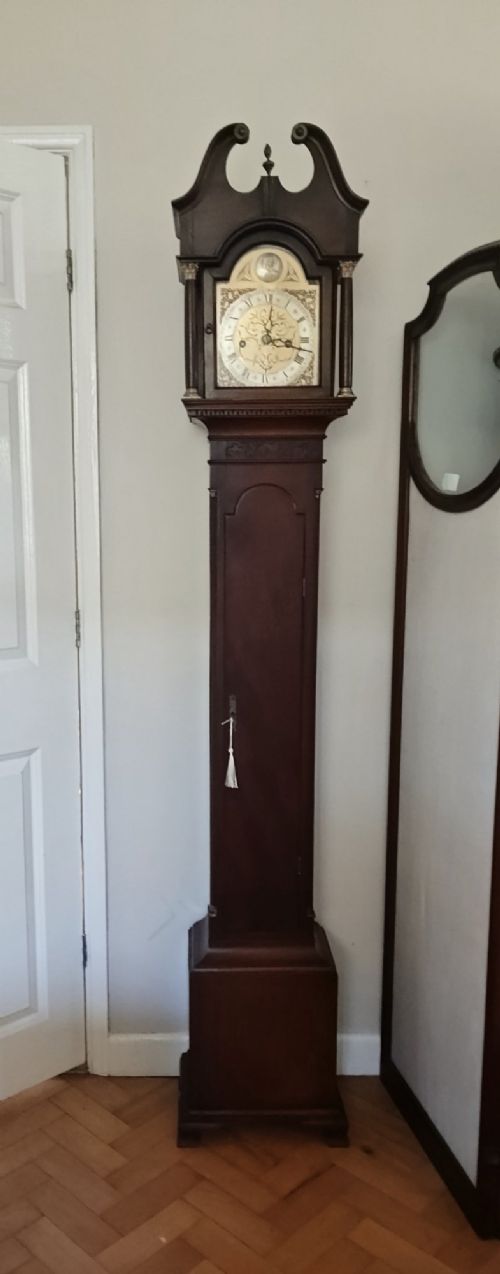
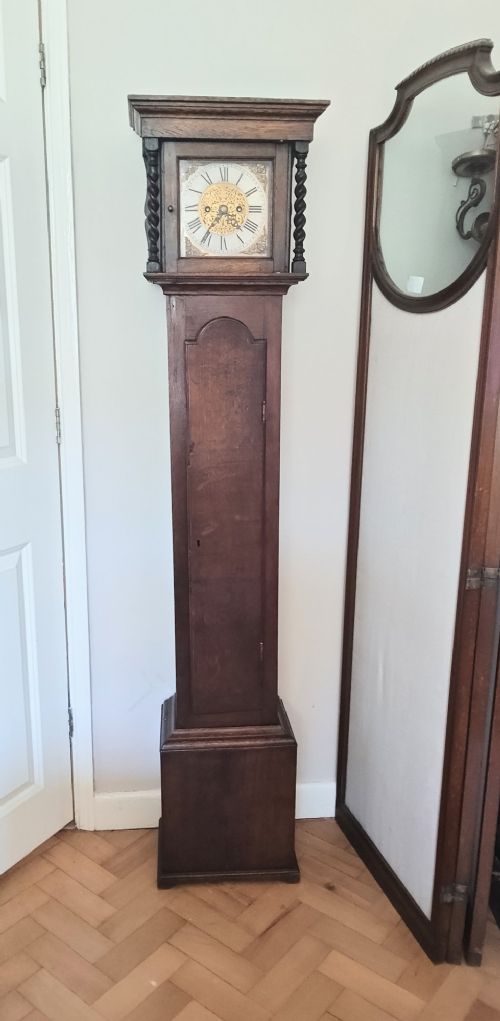
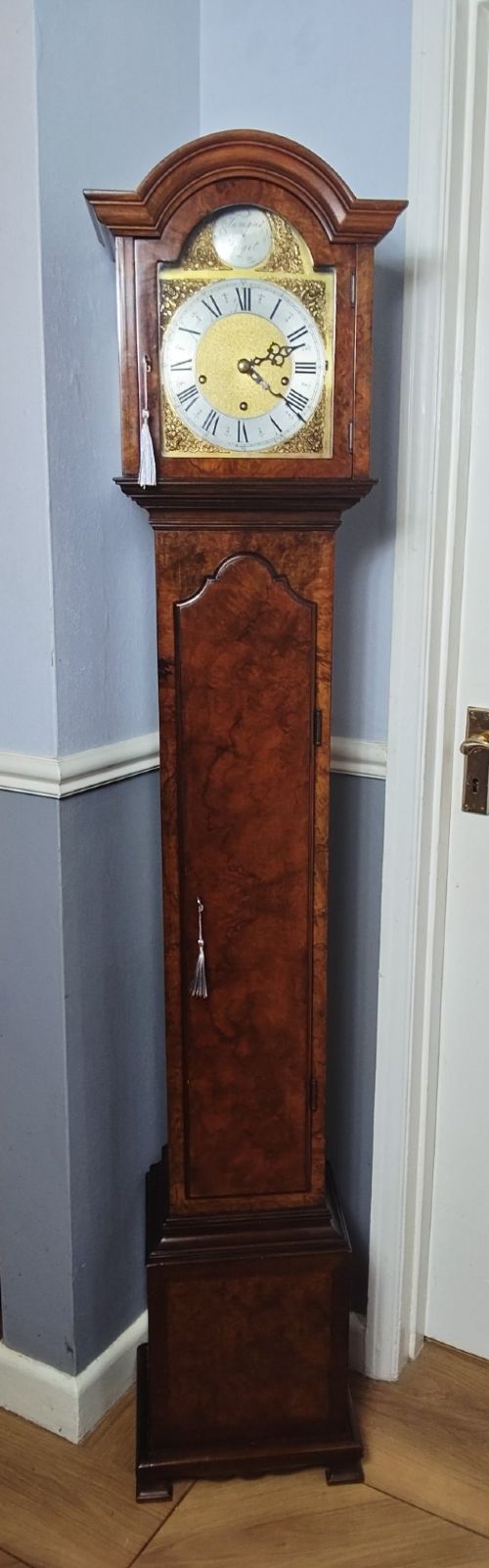
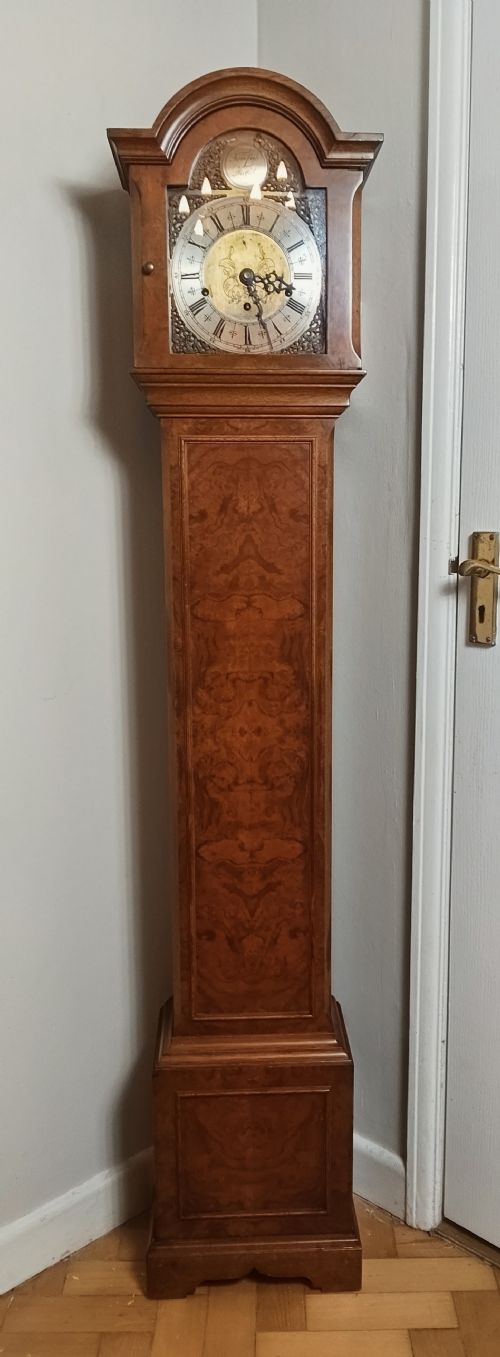
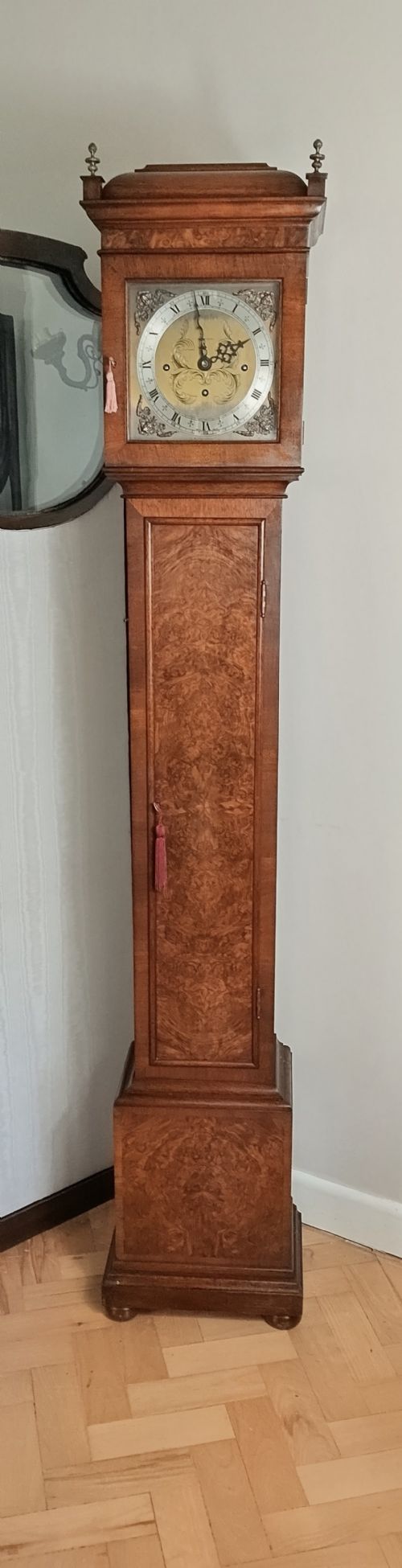
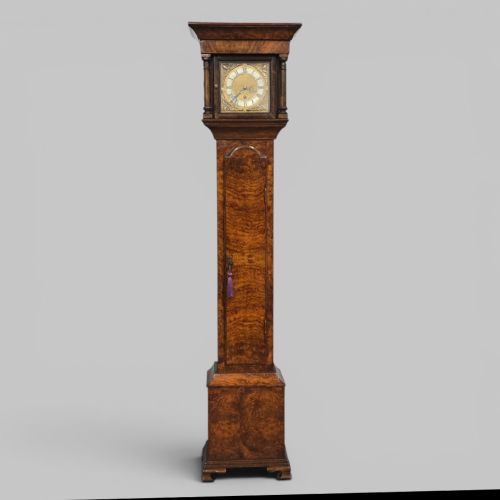
A slim longcase clock is a tall floor-standing timepiece designed with narrower proportions than a standard grandfather clock. These pieces appear in forms such as grandmother clocks, grandaughter clocks, and miniature longcases.
The selection spans periods from the Georgian era through the Edwardian years and into the twentieth century. Common materials include oak, mahogany, walnut, and burr walnut with brass and glass details.
Makers and styles represented range from early Georgian oak examples to Queen Anne revival pieces and mid-century walnut designs. Buyers meet smaller proportioned clocks housing musical or chiming movements.
How They Were Made
Cabinetmakers constructed the slender cases using solid timbers like oak and mahogany, often applying walnut veneers, flame mahogany veneer, or quarter veneered walnut to the door and trunk. These woods were chosen for grain figure and colour.
Clockmakers fitted brass dials and mechanical movements into the hoods, ranging from thirty-hour movements to eight-day systems, quarter chiming mechanisms, and tubular bells.
Listings feature oak, mahogany, walnut, and burr walnut cases across Georgian, Victorian, Edwardian, and mid-century periods.
What Varies in Quality
The quality of a slim longcase clock rests in the crispness of the cabinetwork and the figuring of the timber veneers. Oak and mahogany cases show varying depths of carving and polish.
Movement complexity also sets pieces apart, moving from simple time-only dials to quarter musical chimes and named makers.
Elliott·Gillett & Johnston·Henry Smith of Petersfield·Henrry Pottle Winchester
The Slim Longcase Clock Glossary
- Grandmother clock
- A smaller version of the traditional longcase clock, typically standing lower and possessing slender proportions. These clocks became popular in the twentieth century.
- Quarter veneered
- A method of arranging four matching veneer slices cut from the same log to create a symmetrical pattern on a clock door. This technique highlights the grain of walnut and mahogany.
- Tubular bell
- A set of hanging metal tubes struck by hammers to sound the chimes in a tall clock. They produce a resonant tone distinct from traditional gongs or bells.
Slim Longcase Clock: Frequently Asked Questions
What is a grandmother clock?
A grandmother clock is a smaller, more slender version of the traditional grandfather clock. They were built in smaller proportions to fit modern ceiling heights and tighter rooms.
Most examples date from the late nineteenth and twentieth centuries, using oak, mahogany, or walnut cases.
How tall are slim longcase clocks?
Slim longcase clocks and grandmother clocks generally measure lower than standard grandfather clocks, often staying under eighty inches high. Their narrow trunk and compact hood reduce their visual weight.
Dimensions vary by period, with Georgian oak models and Edwardian revival pieces built to suit modest domestic spaces.
What movements do they have?
These clocks contain mechanical movements ranging from simple thirty-hour timepieces to eight-day systems. Many twentieth-century examples feature quarter musical chimes or tubular bells.
Dials are typically brass, paired with glass hood doors to protect the face and hands.
How do I date a slim longcase clock?
Dating relies on timber choice, case style, and dial characteristics. Georgian pieces show vernacular oak construction, while Edwardian and later clocks utilise mahogany or burr walnut veneers.
Revival styles from the early twentieth century often copy Queen Anne or Chippendale forms, marked by specific veneer patterns and movement types.