
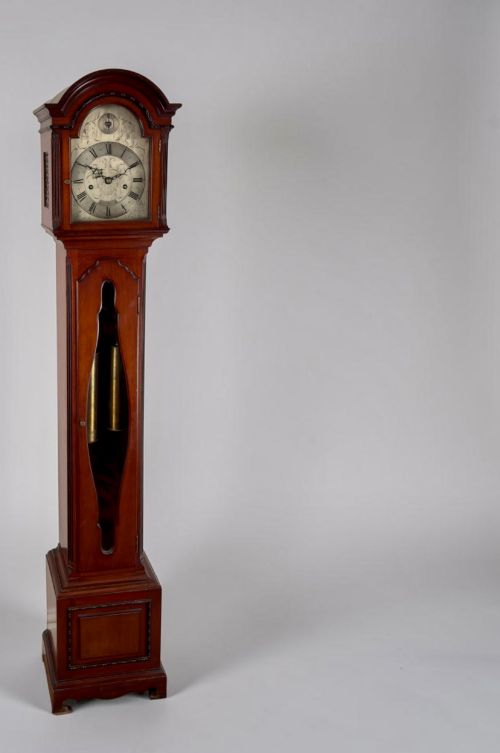
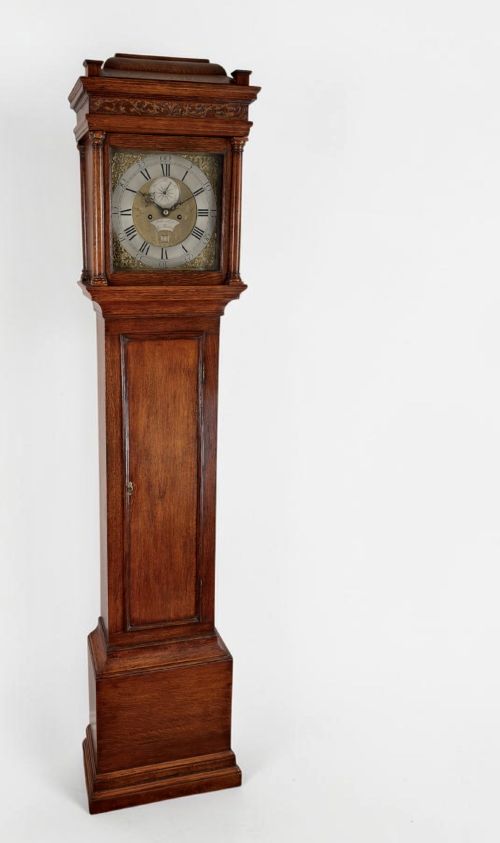
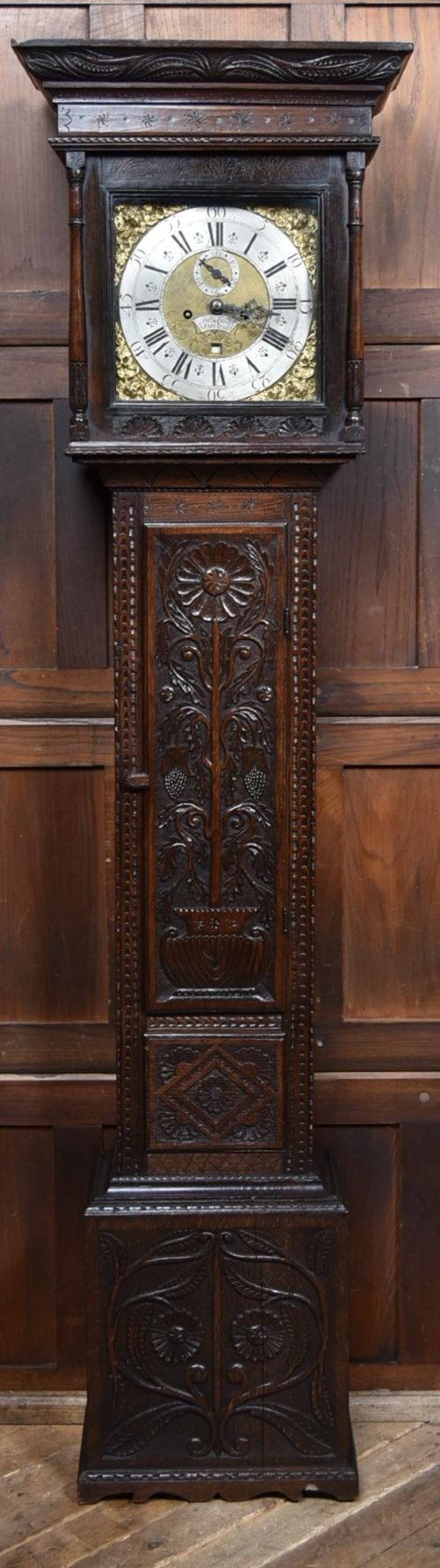


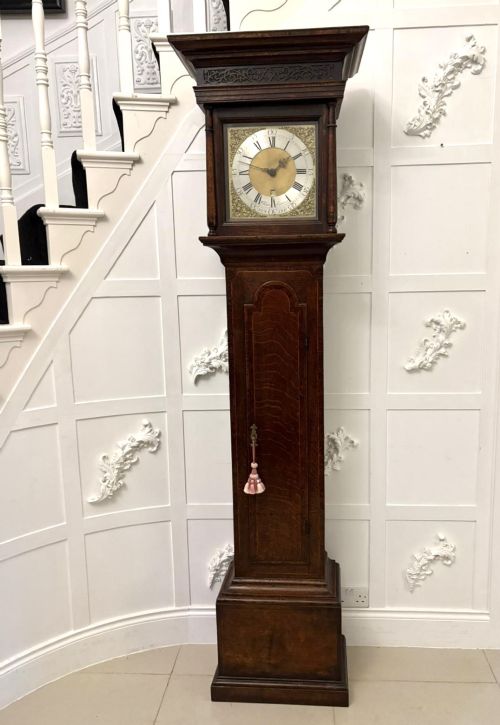
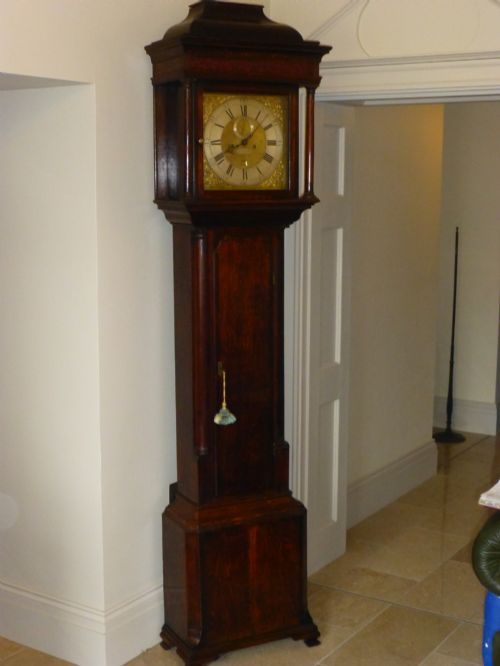
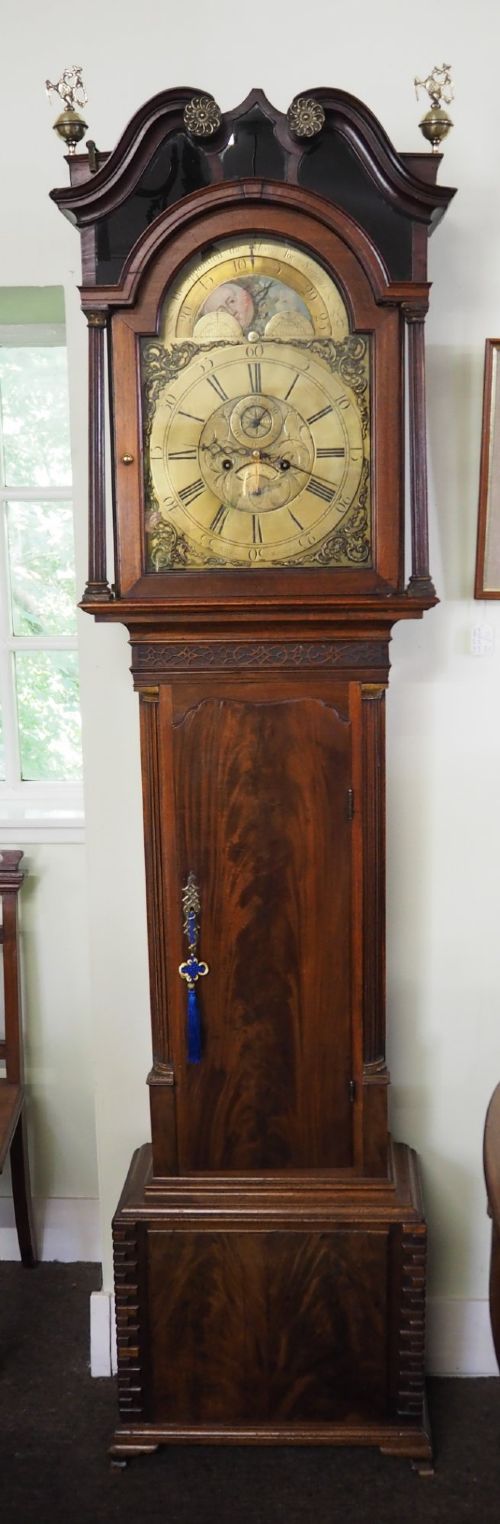
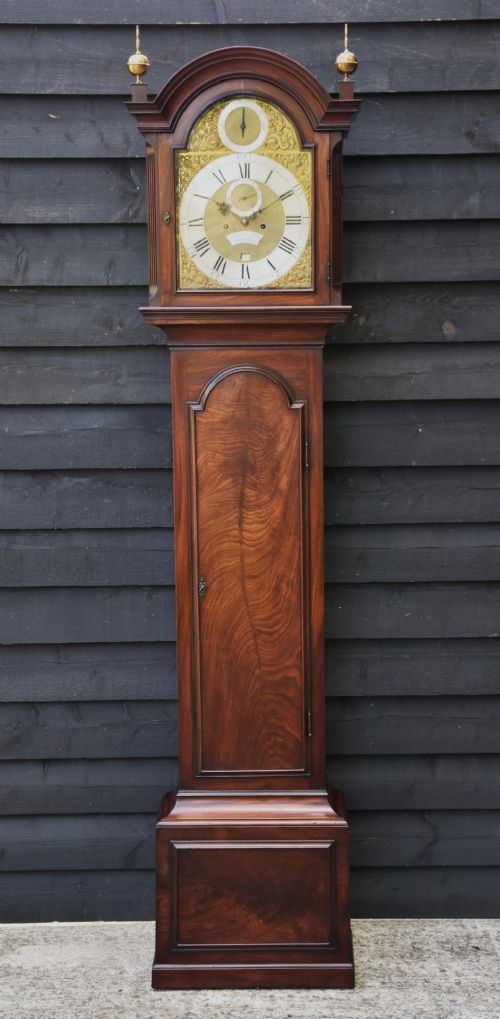
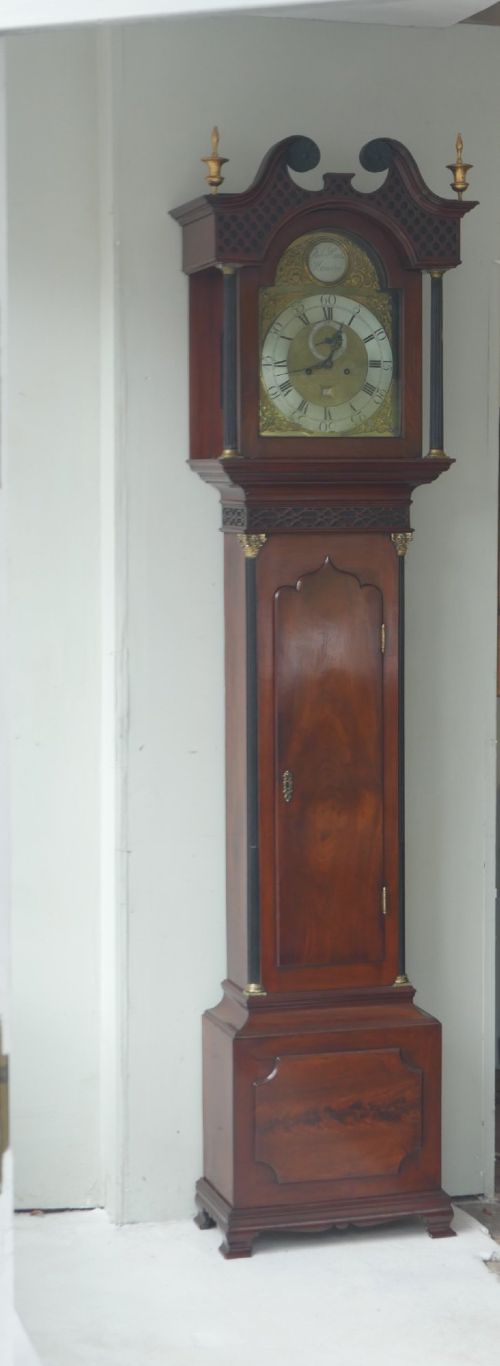
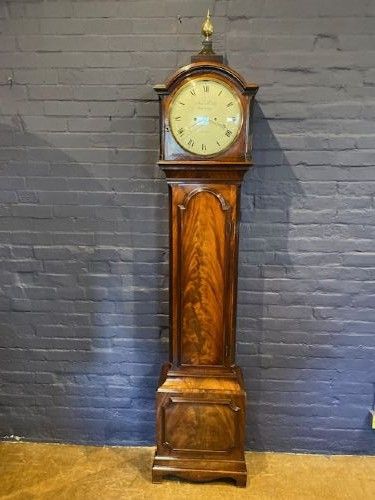
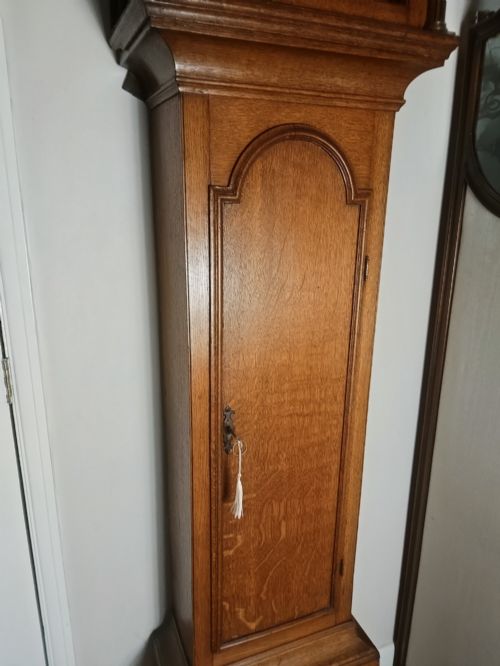
Brass Dial Tall Clock
A brass dial tall clock stands as a towering piece of horological history, marking time in mahogany, oak, and walnut across centuries.
Brass Dial Tall Clock
A brass dial tall clock is a floor-standing timekeeper, frequently referred to in listings as a longcase or grandfather clock, designed to anchor the proportions of a room. These pieces appear predominantly from the eighteenth and nineteenth centuries, spanning Georgian and Victorian periods.
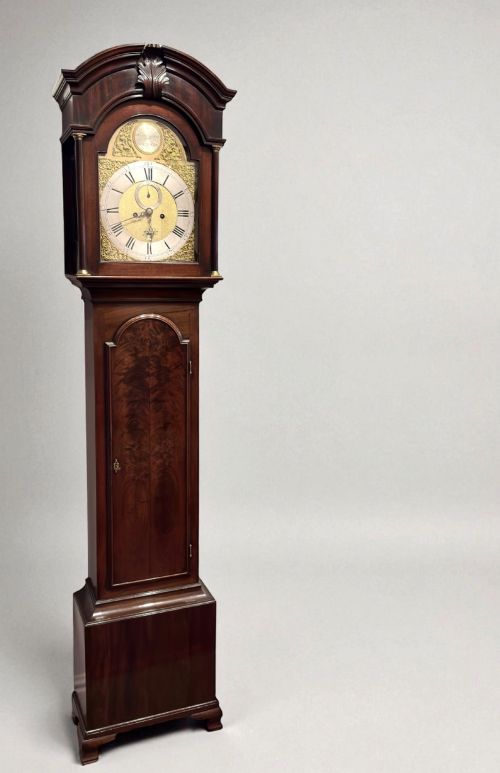
The selections available range from sturdy provincial oak examples to refined London models housed in figured mahogany or burr walnut. Buyers encounter variations including smaller grandmother clocks, musical movements, and striking architectural facades.
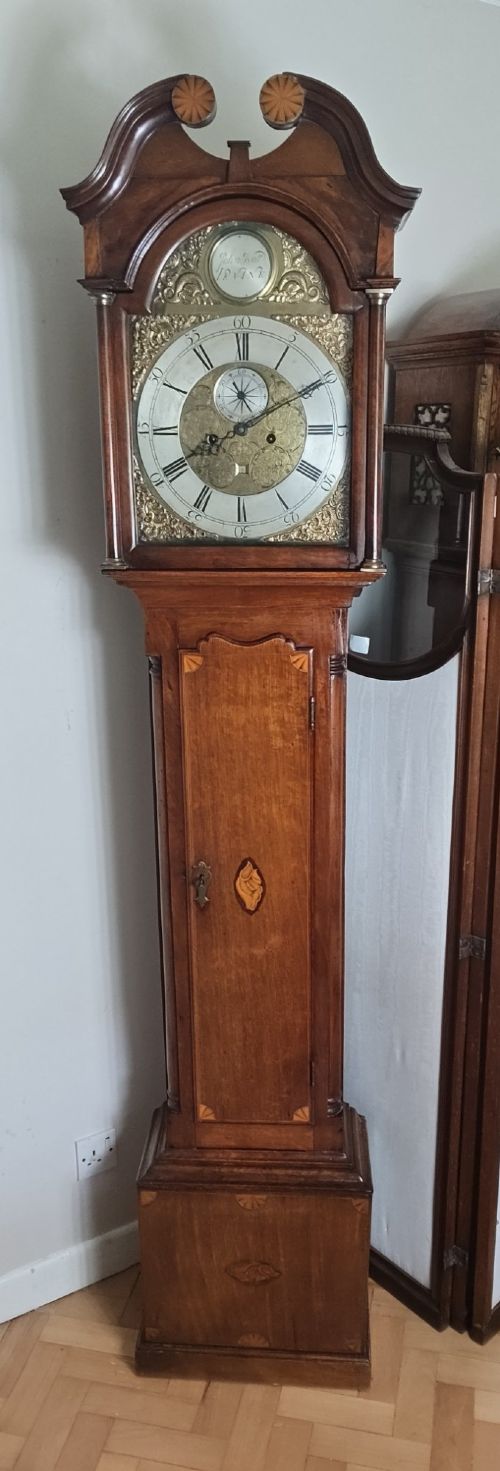
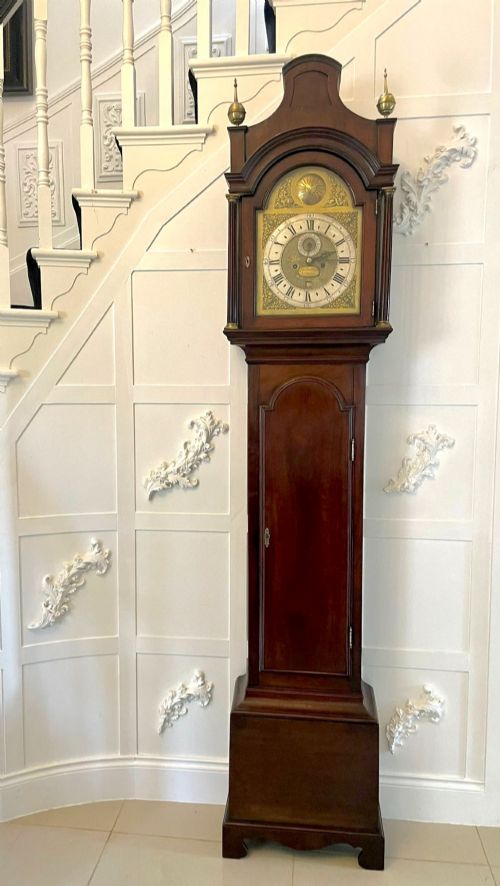
Regional diversity shapes these objects significantly, with Scottish and English provincial makers contributing distinct cabinetwork and dial layouts. The core form remains consistent: a tall trunk protecting the weights and pendulum, surmounted by a hood enclosing the brass dial.
Materials and Construction
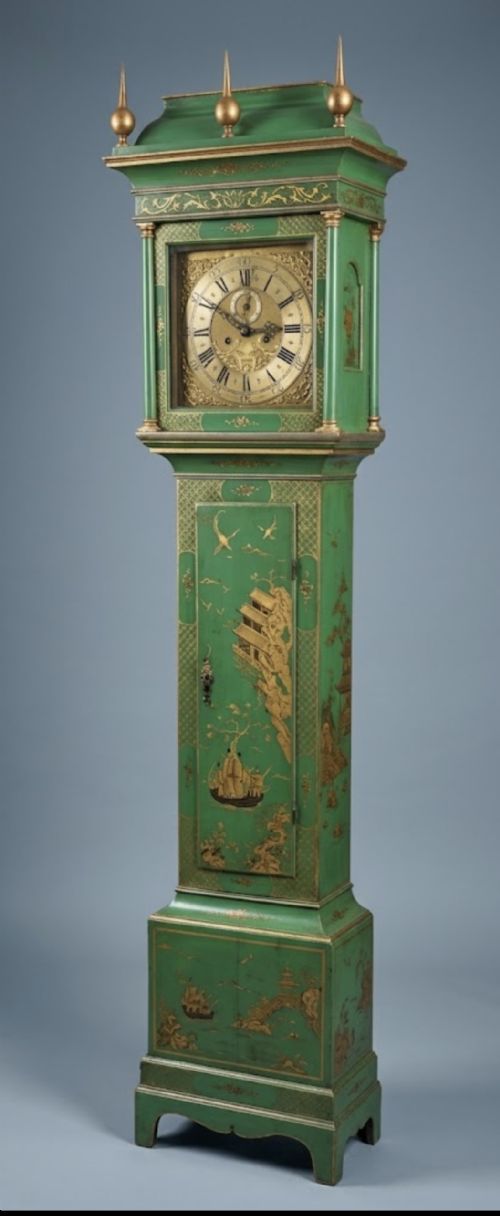
Cabinetmakers utilised dense hardwoods like mahogany, oak, and walnut, frequently selecting burr veneers and applying green or blue lacquer for decorative chinoiserie finishes. Glass panels protect the dial within the hood, while brass forms the foundational plates and dials of the movement alongside steel components.
The construction combines fine cabinet carpentry with intricate brasssmithing, housing weight-driven mechanisms that require stable timber housings. Movement plates and brass dials receive hand-engraved signatures and ornamentation directly from the maker.
Listings feature movements driven by oak, mahogany, and walnut, with periods stretching from the seventeenth century through to Edwardian times.
Markers of Quality
Quality rests in the harmony between the cabinet proportions and the sophistication of the brass movement inside. Superior examples display carefully figured timber grains, crisp dial engraving, and movements signed by accomplished provincial or metropolitan makers.
The integrity of the casework, the depth of the brass chasing on the dial corners, and the inclusion of complications such as moonphase indicators or strike-silent functions separate standard regional clocks from masterworks.
John Fielder of Alton·Charles Shuckburgh London·Gillett and Johnston of Croydon·James Field of Hempstead·Richard Corless of Stockport·Windmills and Wightman London·George Hallifax of Doncaster·Henry Weedon London
The Brass Dial Tall Clock Glossary
- Longcase clock
- A tall, weight-driven timekeeper housed in a wooden case with a pendulum swinging in the trunk. This term is synonymous with the grandfather clock.
- Grandmother clock
- A smaller, more slender version of the tall clock, generally produced in the nineteenth and twentieth centuries.
- Moonphase
- A mechanism beneath the dial that tracks the lunar cycle through a rotating painted disc. It typically appears on higher-grade eighteenth-century examples.
- Chinoiserie
- European decorative lacquerwork imitating East Asian designs, often seen in green or blue on eighteenth-century tall clock cases.
- Strike-silent
- A mechanism allowing the clock's striking train to be disengaged at night. This function indicates a more complex movement construction.
Brass Dial Tall Clock: Frequently Asked Questions
How do I wind a tall clock?
Wind the weights using the provided crank key every week or eight days, depending on the movement's specification.
Take care not to overwind the mechanism, stopping as soon as tension meets the key.
Where should I place a tall clock?
Position the clock against a sturdy interior wall away from direct sunlight, central heating vents, and damp exterior walls.
A stable floor surface prevents vibrations that might interfere with the pendulum beat.
How can I tell the period of a tall clock?
Examine the timber choices, dial architecture, and signature styles, noting that flat-topped oak cases often indicate earlier eighteenth-century provincial work.
Mahogany cases with refined architectural hoods and signed brass dials typically point towards later Georgian London workshops.
What is the difference between a grandfather and grandmother clock?
Grandfather clocks are full-sized tall clocks standing over six feet high, built to accommodate long drops for heavy weights.
Grandmother clocks are significantly shorter and narrower, designed to fit into smaller domestic spaces during later periods.