

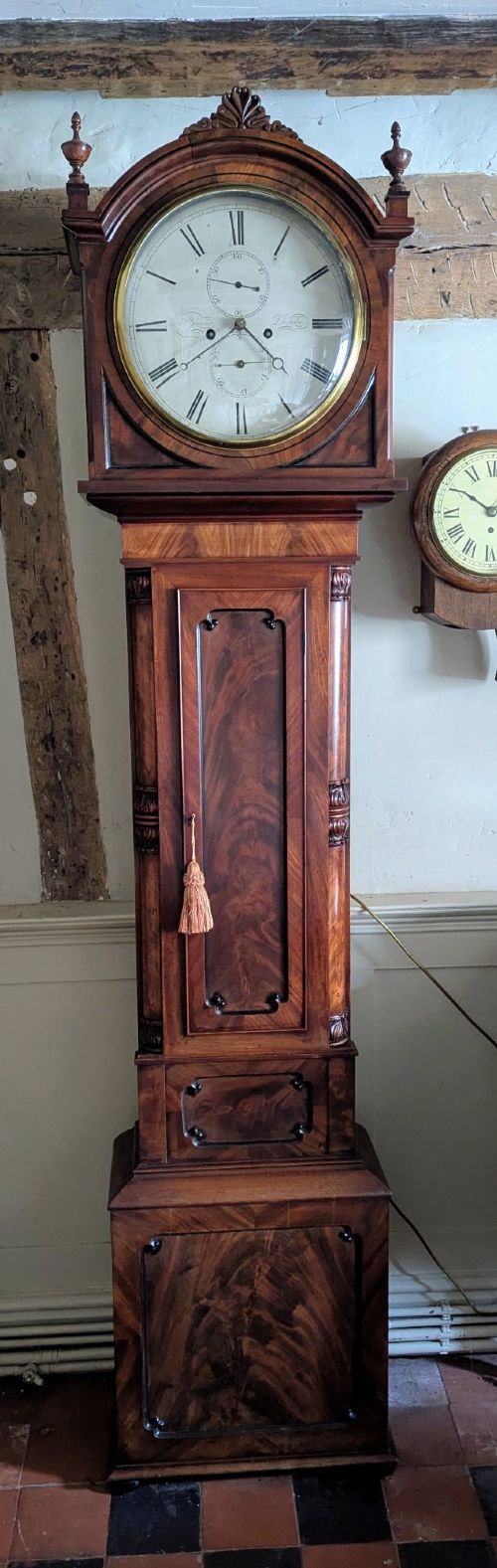

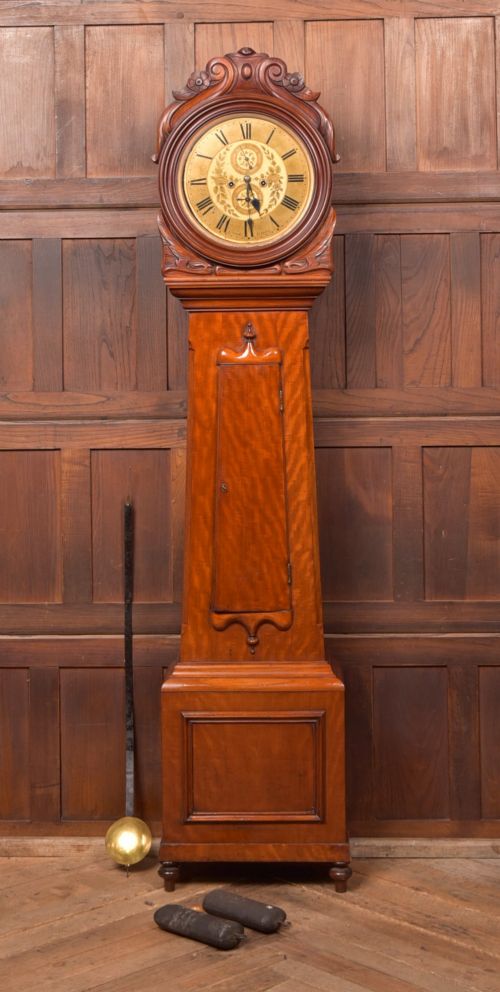


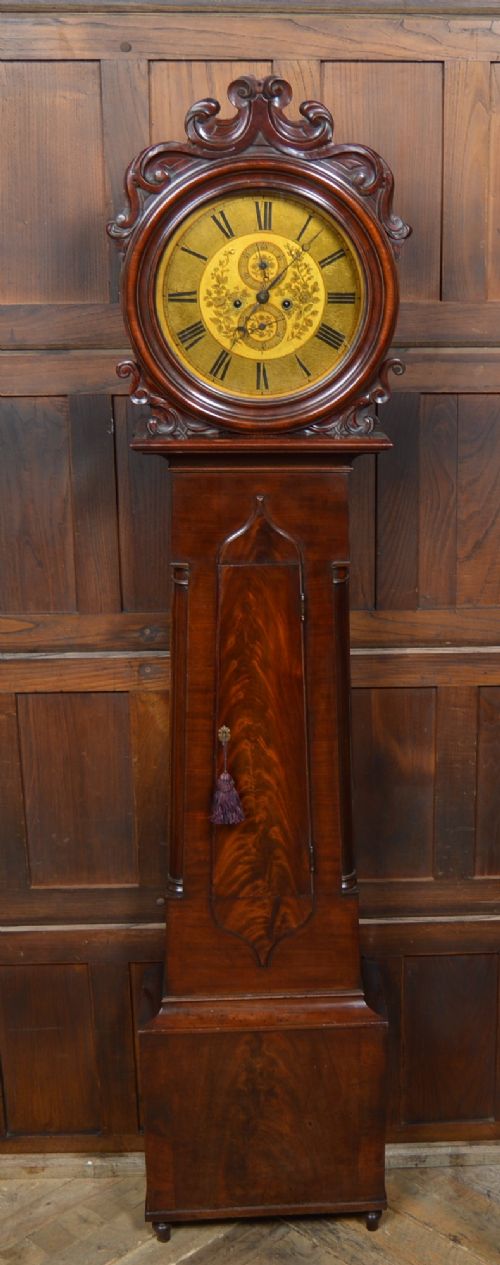


Victorian Mahogany Tall Clock
These victorian mahogany tall clock pieces combine architectural presence with precise domestic timekeeping, offering buyers a stately focal point for a room.
Victorian Mahogany Tall Clock
A victorian mahogany tall clock stands as a commanding floor-standing timepiece, housing a weight-driven movement within a protective wooden case. Buyers searching for a victorian mahogany tall clock encounter substantial floor-standing pieces that range from austere Scottish drumhead models to elaborate chiming and musical variations. These longcase clocks appear across 19th-century styles, including Georgian influences and Chippendale revivals, alongside domestic regulators.
Most examples found on this page reflect Victorian and 19th-century craftsmanship, often showcasing regional Scottish variations alongside English makers. The structural forms include arched mahogany cases, drum head dials, and imposing proportions designed to dominate a hallway or principal room. Regional preferences shape the dial design and hood architecture, creating distinct visual identities between northern and southern workshops.
Evaluating craftsmanship and execution
The refinement of the mahogany case separates standard production from exhibition pieces, particularly where carvers applied crisp detailing and balanced proportions. Superior examples demonstrate meticulous timber selection, ensuring the grain patterns flow naturally across the hood, trunk, and base.
Movement sophistication marks another division, moving from basic time-and-strike mechanisms to complex nine-tube chiming systems and precision regulators. The legibility and artistry of the painted or silvered dial also reflect the maker's skill, with finer hands and detailed chapter rings elevating the piece.
Listings feature 19th-century periods, including Victorian, Georgian, and Edwardian eras, constructed primarily from mahogany with brass and iron movements.
Tait Peebles·Priory of Dundee Scotland·Andrew Thom·James Wood·French Royal Exchange·David Griffith Carnarvon·Geo Tarratt of Leicester·Sam Robson·James Waring Stockport
The Victorian Mahogany Tall Clock Glossary
- Longcase clock
- A tall, floor-standing pendulum clock housed in a protective wooden case consisting of a hood, trunk, and base. These pieces are frequently referred to as grandfather clocks.
- Drumhead
- A circular dial housing set into the upper portion of the clock case, a form frequently seen in Scottish examples. This distinctive shape replaces the traditional square or arched hood.
- Regulator
- A precision pendulum clock designed for extreme accuracy, often utilised to set other timepieces in a household or business. These movements prioritise timekeeping exactness over musical or chiming complications.
- Rolling moon
- A mechanism behind the dial that tracks the lunar cycle through a rotating painted disc showing moon phases. This display moves incrementally with the passage of the days.
- Fusee
- A conical pulley used in clock movements to maintain an even pull on the gear train as the driving weight or spring unwinds. This device ensures consistent power delivery to the escapement.
Victorian Mahogany Tall Clock: Frequently Asked Questions
How do I wind a tall clock?
Wind the clock using the appropriate crank key inserted into the winding holes on the dial face, turning gently until the weights rise to their upper limit.
Take care not to overwind the mechanism, stopping immediately when resistance increases to protect the internal cords and springs.
Where should I place a tall clock?
Position the clock on a stable, level floor against a solid interior wall away from direct sunlight, heating vents, and draughty doorways.
Avoid exterior walls where temperature fluctuations and dampness can affect the wooden mahogany case and delicate internal metalwork.
Why does the clock stop ticking?
Stoppages often occur because the case has settled on an uneven floor, throwing the pendulum beat out of alignment and halting the escapement.
Adjust the leveling feet or floor shims until the ticking sound maintains an even, regular rhythm between the left and right beats.