
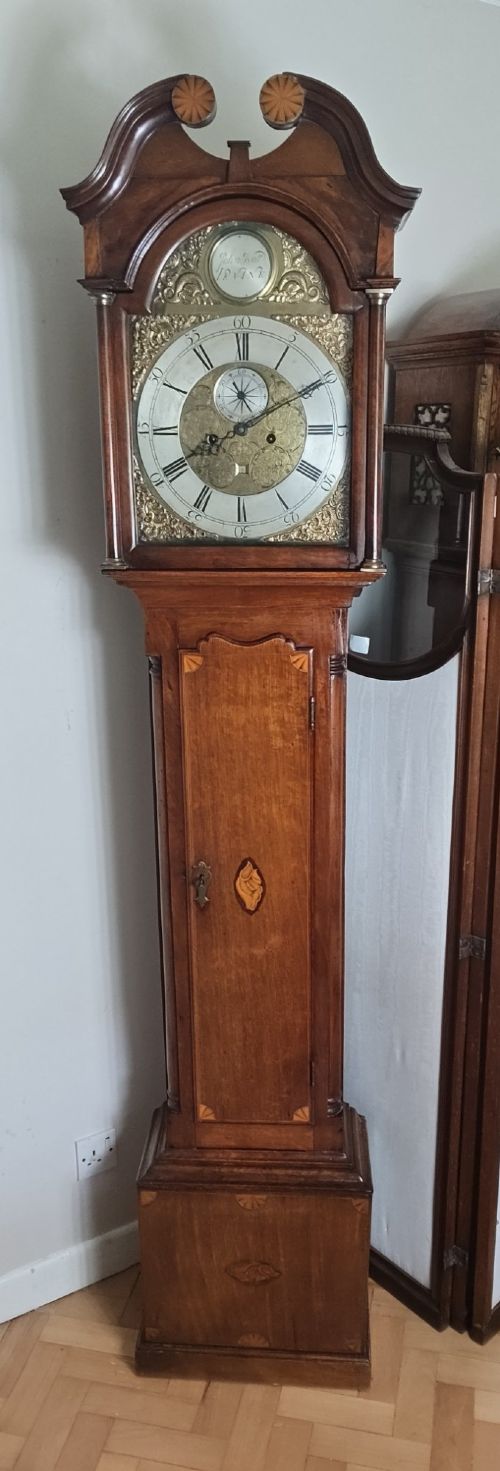


Inlaid Wood Floor Clock
An inlaid wood floor clock brings the steady rhythm of past centuries into a room, offering both craftsmanship and a stately presence.
Inlaid Wood Floor Clock
When you search for an inlaid wood floor clock, you are looking at substantial timepieces often referred to as grandfather or longcase clocks. These tall vertical cases house weight-driven movements and swing pendulums, standing as focal points within domestic interiors. The examples available here span periods from the Georgian era through to the Edwardian and Victorian decades, showing how cabinet makers adapted proportions over time.
Tall case clocks serve both a practical timekeeping function and a decorative role, utilising glass doors to protect the dial and brass or painted metal faces to display the hours. The styles represented range from traditional Georgian and George III formality to French Rococo influences and Edwardian refinement. Selecting one means choosing a specific period aesthetic that anchors the proportions of a hallway or principal room.
Materials and construction methods
The primary construction relies on dense cabinet timbers, predominantly mahogany and occasionally kingwood, shaped by skilled joiners to form the tall trunk and hood. Marquetry inlay and paterae details are meticulously integrated into the wood surface using contrasting veneers to create geometric or floral motifs. This woodworking expertise is paired with glazed upper doors that frame the dial.
Movement mechanics involve brass and steel components, assembled to drive eight day or bell striking operations within the case. Dials are executed in brass or painted metal, often signed by the maker to record the origin of the horological work. Ormolu and glass elements are additionally utilised for decorative mountings and protective face covers where the design dictates.
Listings feature pieces spanning the Georgian, Victorian, and Edwardian periods, utilising mahogany, kingwood, and brass.
Factors of quality and distinction
The distinction between standard examples and superior quality pieces lies in the crispness of the cabinet work and the sophistication of the wood selection. Finer clocks utilise carefully matched flame mahogany veneers and intricate marquetry inlay that demonstrates high precision from the maker. Signatures by notable makers on the dial elevate the historical interest of the mechanism.
Proportion and decorative restraint also separate the tiers of craftsmanship, with better examples maintaining balanced architectural lines on the hood and trunk. The integration of regional styles, such as Scottish Georgian interpretations or French Rococo influences, adds specific character. Overall quality depends on how harmoniously the wood case and the mechanical movement were united.
John Denbigh Merton Park·Sam Robson
The Inlaid Wood Floor Clock Glossary
- Longcase clock
- A tall pendulum clock enclosed in a wooden case that rests directly on the floor. These pieces are frequently called grandfather clocks and measure several feet in height to accommodate the hanging weights.
- Marquetry inlay
- Decorative woodwork where small pieces of coloured or patterned veneer are fitted into a solid background. This technique creates detailed surface designs on the body of the clock.
- Paterae
- Small circular or oval decorative motifs carved or inlaid into furniture. They often feature leaf or rosette patterns typical of Georgian design.
- Ormolu
- Gilded bronze used for decorative mounts and accents on furniture and clock cases. It provides a bright metallic contrast to darker woods like kingwood and mahogany.
Inlaid Wood Floor Clock: Frequently Asked Questions
What is a longcase clock?
A longcase clock is a tall, free-standing pendulum timekeeper housed in a wooden trunk that rests on the floor. These pieces combine intricate cabinet work with mechanical movements.
They were designed to measure time accurately while serving as prominent architectural furnishings in domestic hallways and principal rooms.
How do eight day movements work?
An eight day movement requires winding once a week using weights suspended inside the tall wooden trunk. This mechanism drives the gear train and pendulum to keep precise time.
Clocks with this feature typically include bell striking capabilities to mark the passage of the hours.
What distinguishes Georgian from Edwardian styles?
Georgian clocks tend to exhibit formal architectural proportions, often utilising solid mahogany and precise marquetry inlay. They reflect the classical design principles of the eighteenth century.
Edwardian pieces, by contrast, often display lighter handling of materials and simpler decorative schemes suited to twentieth-century domestic spaces.
Where should I place a floor clock?
Floor clocks require stable, level placement on a solid surface to ensure the pendulum swings evenly and the movement operates correctly. Hallways, landings, and spacious living rooms provide ideal environments.
Avoid positioning them in areas subject to excessive temperature fluctuations or direct sunlight that might affect the wood case.