
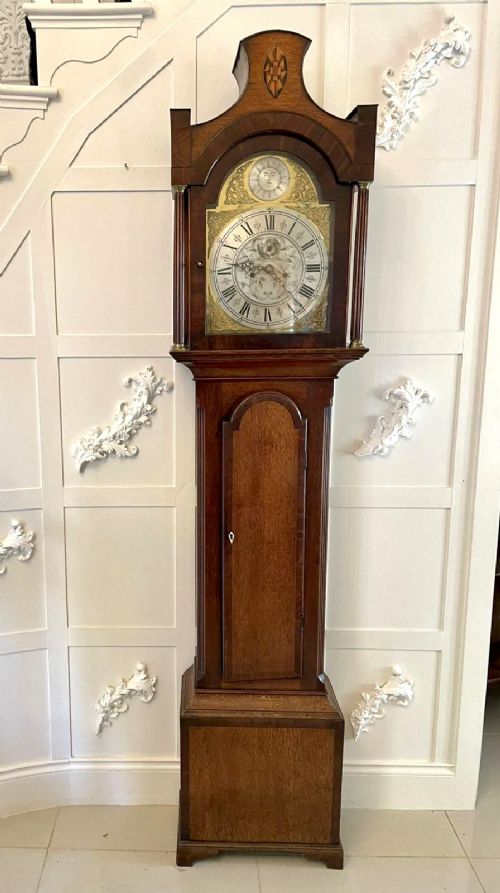
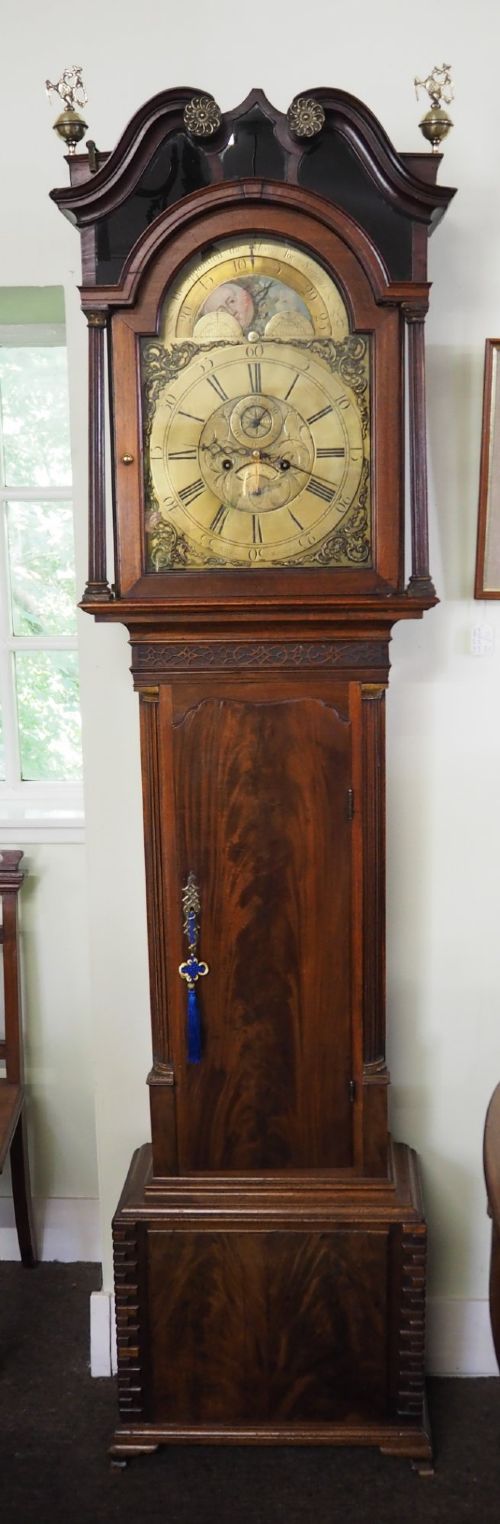
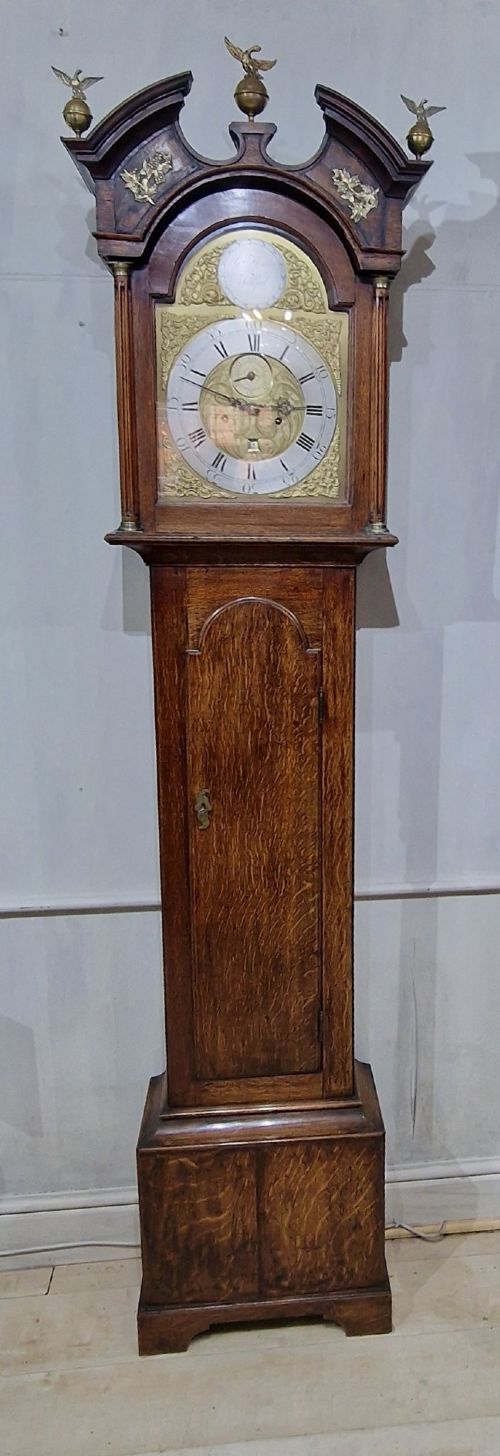
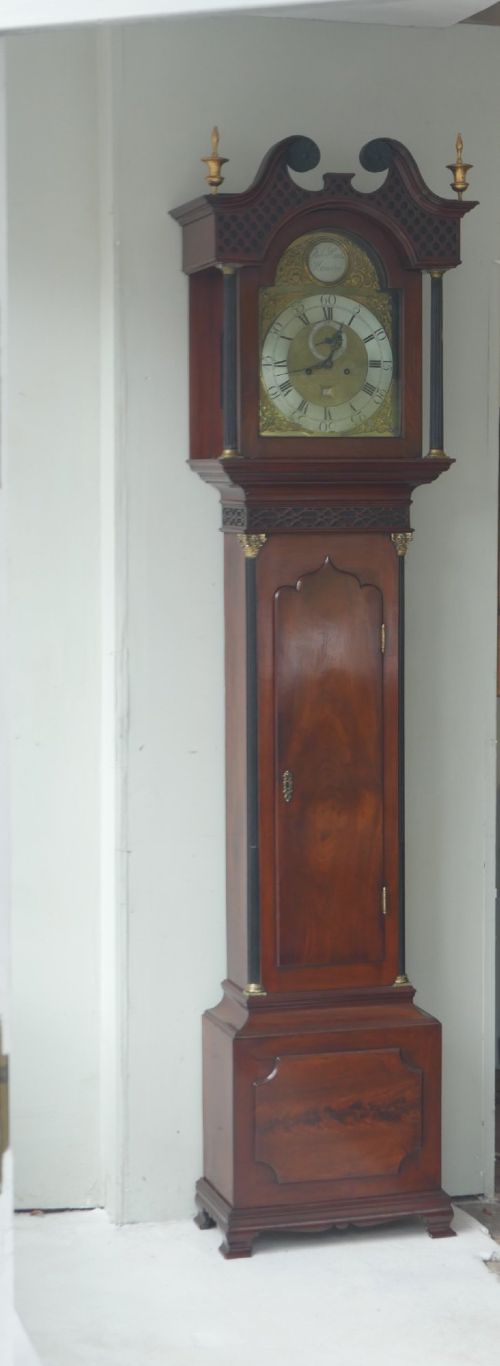

Traditional Eight Day Clock
A traditional eight day clock brings an enduring mechanical presence into a room, measuring time through weights and brass gearing.
Traditional Eight Day Clock
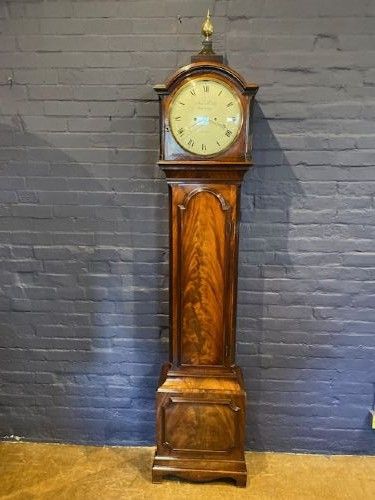
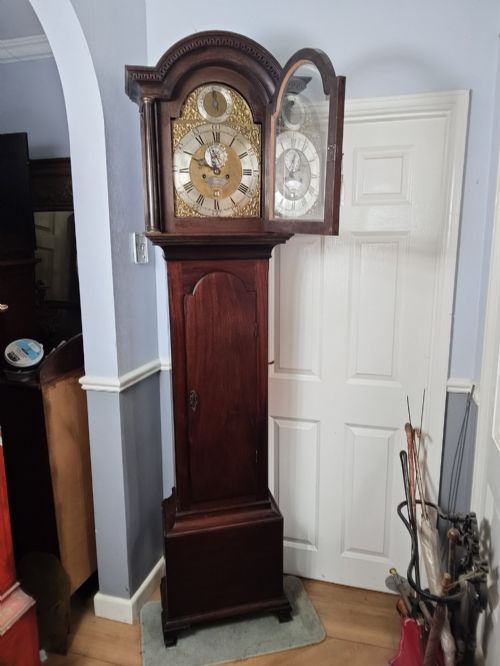
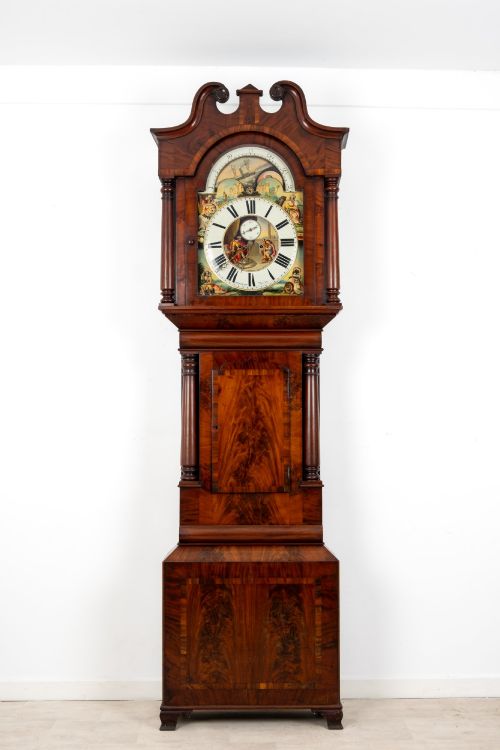
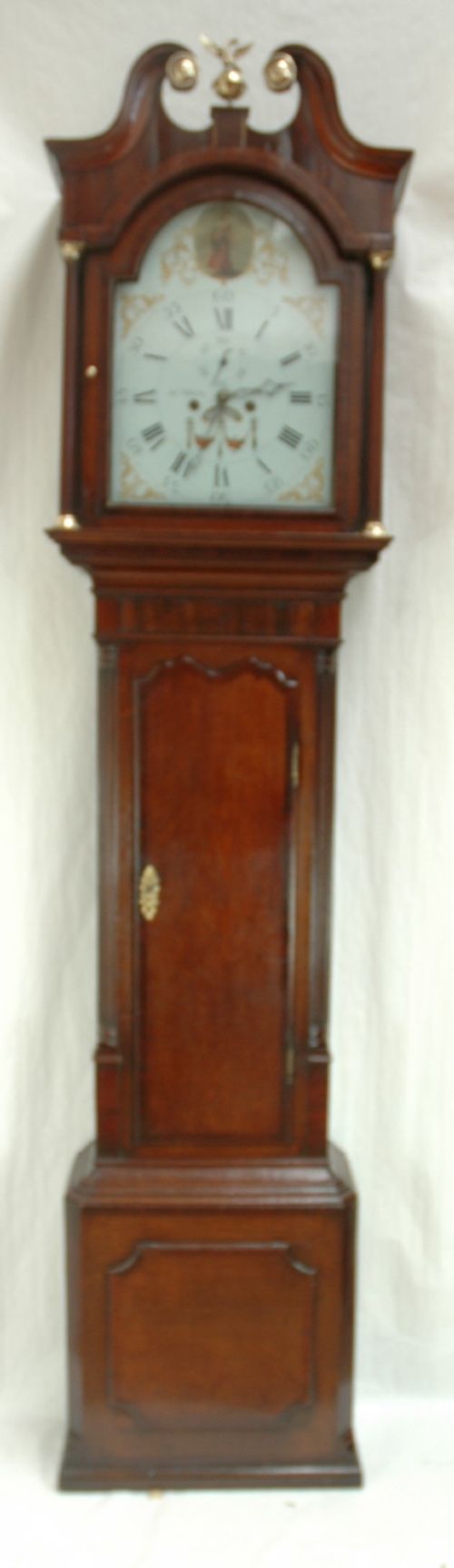
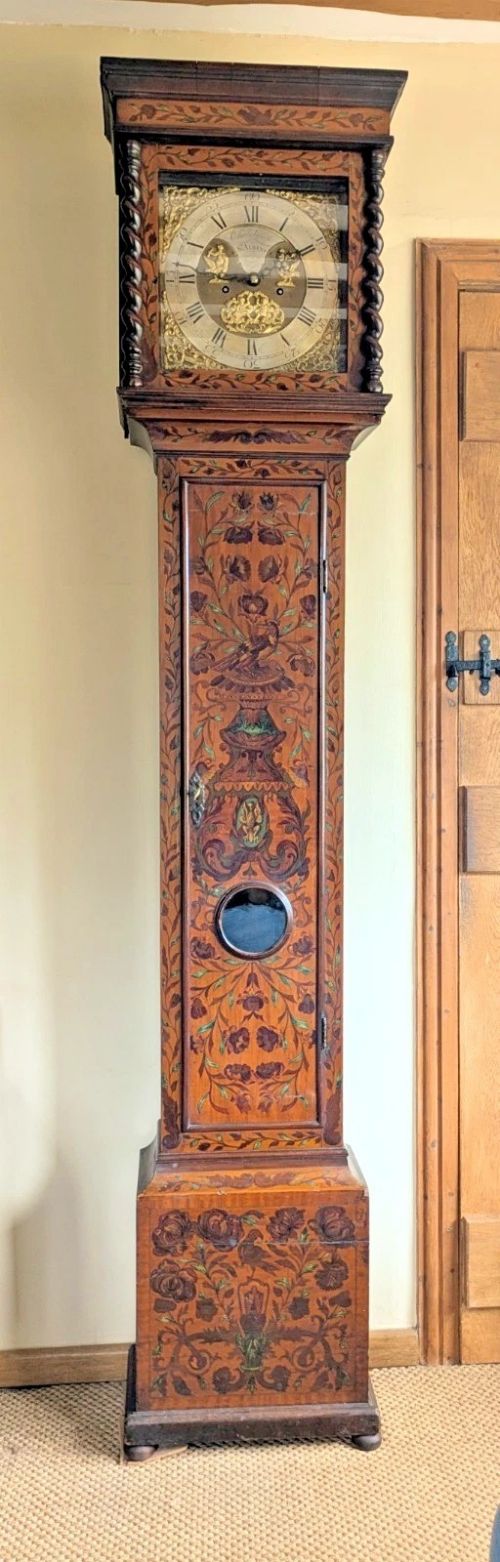
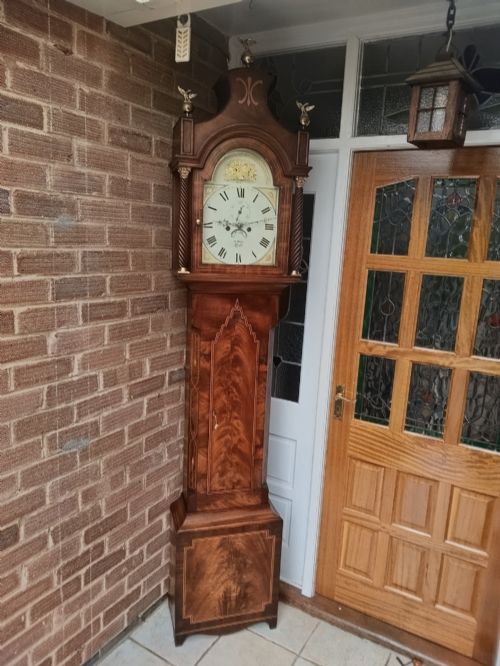
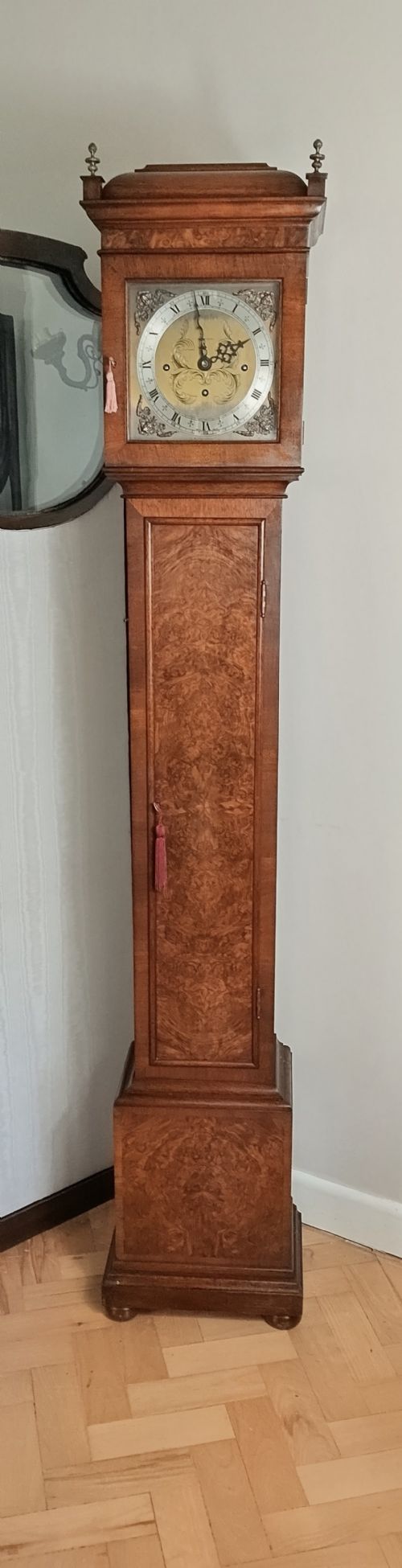
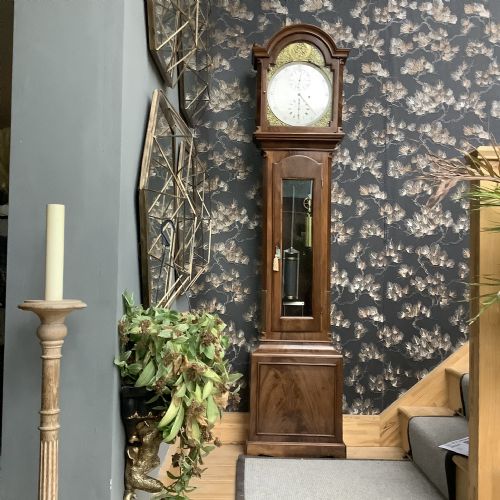
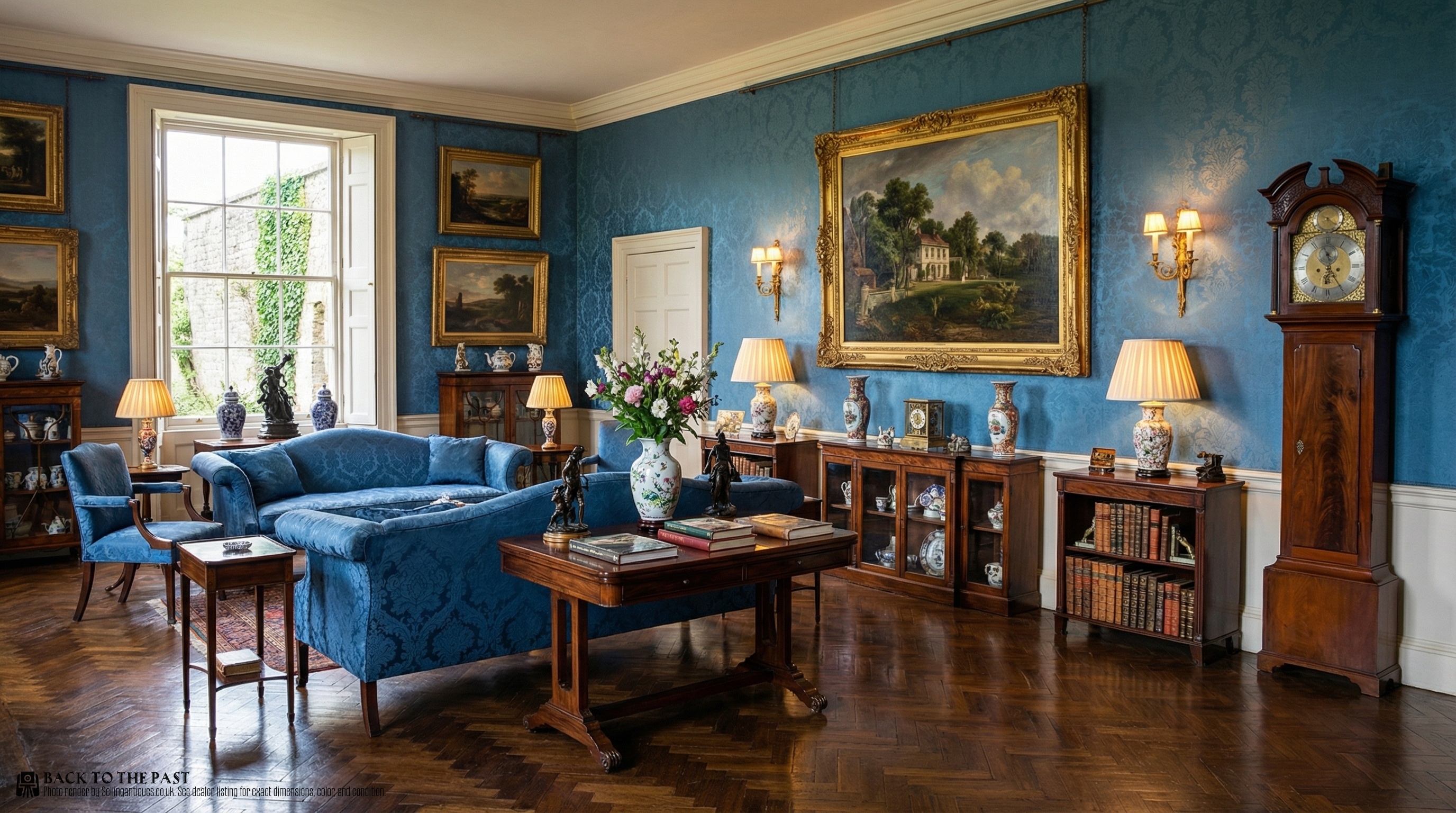
A traditional eight day clock typically takes the form of a longcase or grandfather clock, designed to run for over a week before needing a manual wind. These pieces emerge from periods spanning the eighteenth and nineteenth centuries, alongside later twentieth-century examples.
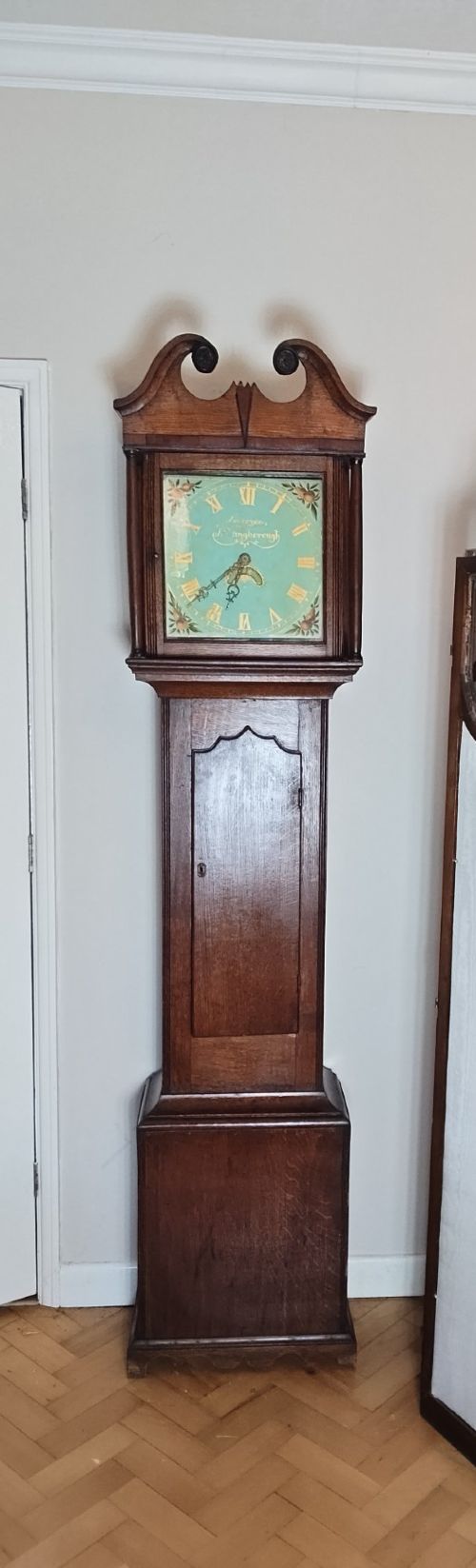
The selection encompasses tall floor-standing models in mahogany, oak, and walnut, as well as smaller bracket clocks and mantel clocks. Regional variations appear alongside London-made pieces, including Scottish longcase clocks and drum head designs.
Materials and construction methods
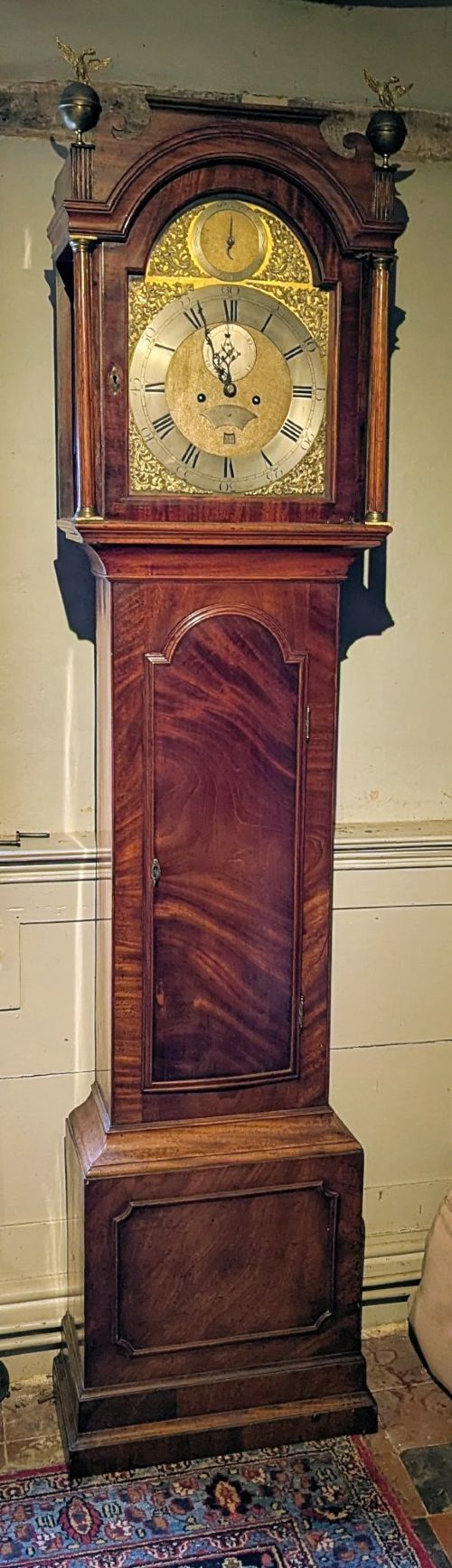
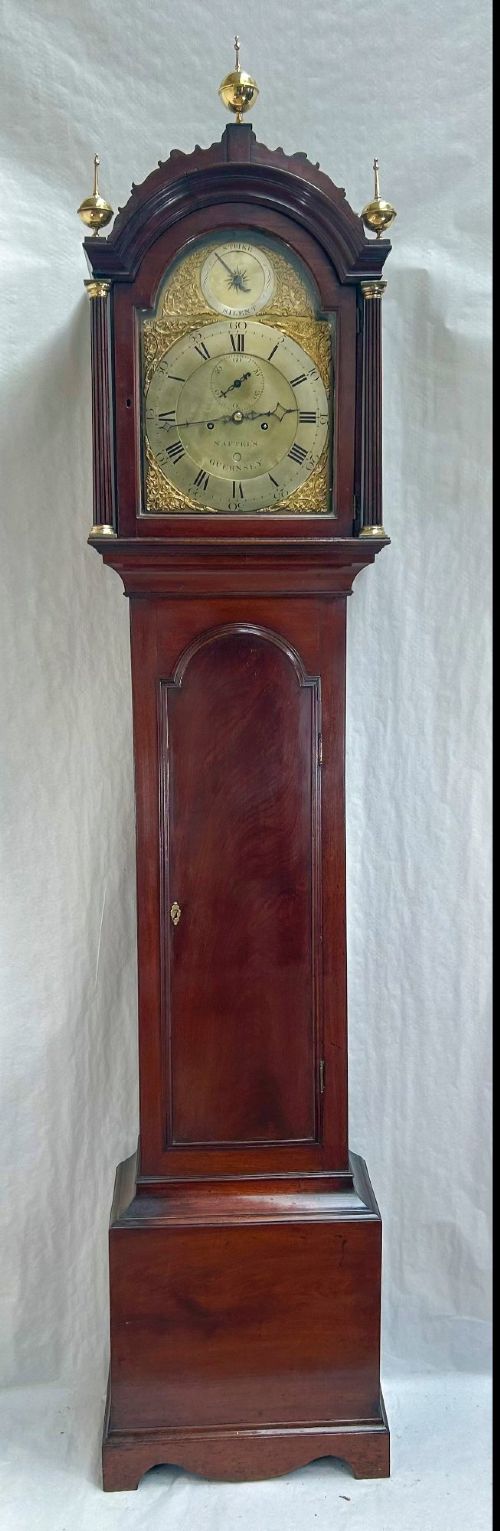
Cabinet makers utilised dense hardwoods including mahogany, oak, and burr walnut, frequently applying crossbanding, marquetry, and flame veneers to case surfaces. Glass protects the dial face while housing internal brass and steel movements.
Dial construction relies on brass and painted iron plates, often featuring engraved spandrels, arch dials, and moon phase mechanisms. Movement assembly involves intricate brass gear trains driven by suspended weights or springs.
One Scottish longcase clock listing delightfully includes a horse in its title alongside the timber and period details.
Distinguishing quality across examples
Quality reveals itself in the crispness of the brass dial engraving and the precision of the cabinet woodwork, such as matched flame mahogany veneers. Higher tier examples incorporate additional complications like strike-silent levers or quarter-chiming gear trains.
The integrity of the original movement matched to its proper case dictates desirability. Finer pieces display careful proportion in the hood and trunk, alongside well-executed carving or inlay rather than heavy restoration.
James Hendrie·James McCabe·Charles Louch·Elliott·Henry Weedon·Henry Massy·Winterhalder W & H·Hampson & Son
The Traditional Eight Day Clock Glossary
- Longcase clock
- A tall floor-standing clock enclosed in a wooden case, commonly known as a grandfather clock.
- Bracket clock
- A portable table or shelf clock, historically designed to sit upon a wall bracket.
- Grandmother clock
- A slender, reduced-scale version of the traditional longcase clock.
- Moon phase
- A dial mechanism tracking the lunar cycle through a rotating painted disc.
- Strike silent
- A mechanical feature allowing the clock to be silenced while continuing to keep time.
Traditional Eight Day Clock: Frequently Asked Questions
How often does an eight day clock need winding?
These clocks require winding approximately once every week, typically using a key to draw the hanging weights back to the top.
Maintaining a regular winding schedule helps keep the movement running reliably.
What is the difference between a longcase and a grandmother clock?
A longcase clock stands at full height, while a grandmother clock is a smaller, more slender variant built to a reduced scale.
Both utilise the same eight day weight-driven mechanical principles housed in tall wooden cases.
Where should a tall clock be placed in a room?
Longcase clocks need a stable, level floor and must be secured to a wall to prevent leaning, which can stop the pendulum.
Placement away from direct heat sources and damp external walls protects the timber case and internal steel components.
How do you identify a Georgian period clock?
Georgian clocks are dated by their characteristic proportions, use of solid oak or mahogany, and brass dial layouts with maker signatures.
Regional styles from Scotland and London also display distinct architectural hood designs typical of the eighteenth century.