

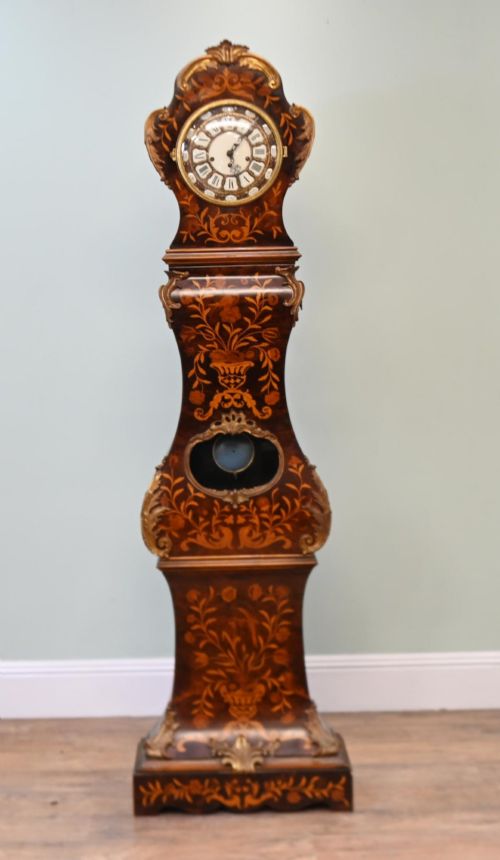
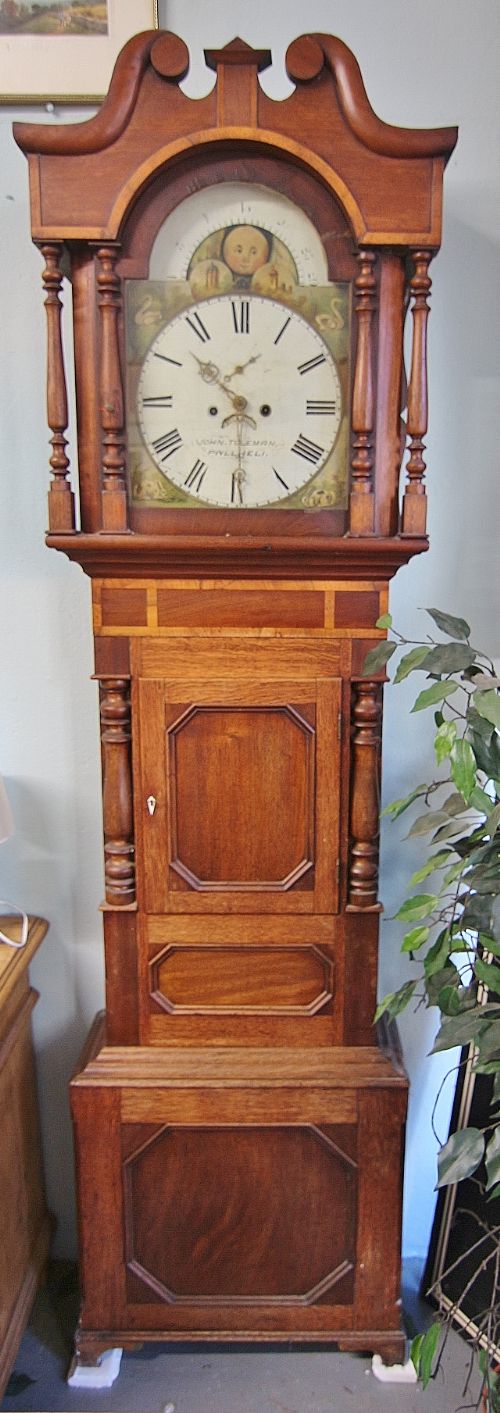
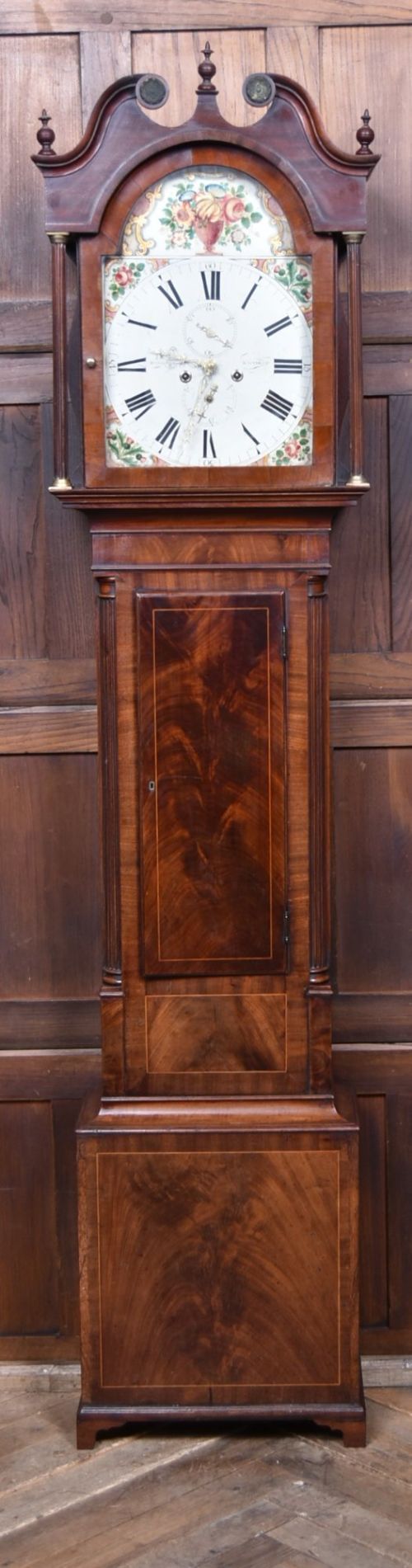
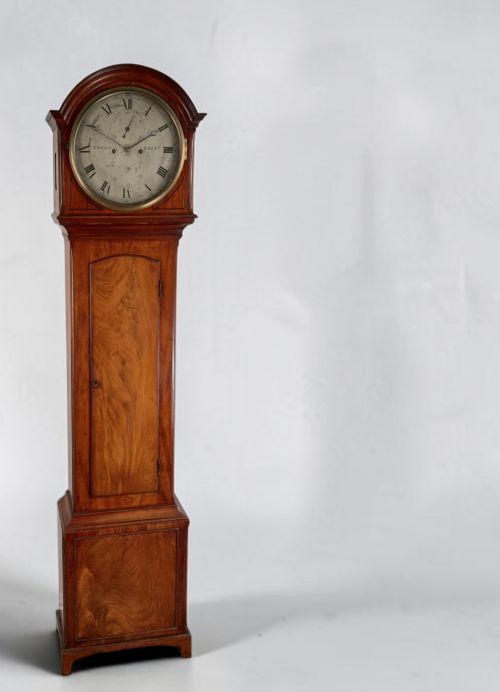




Brown Wooden Standing Clock
These brown wooden standing clock examples, traditionally known as longcase or grandfather clocks, bring tall architectural presence and precise mechanical movement into a room.
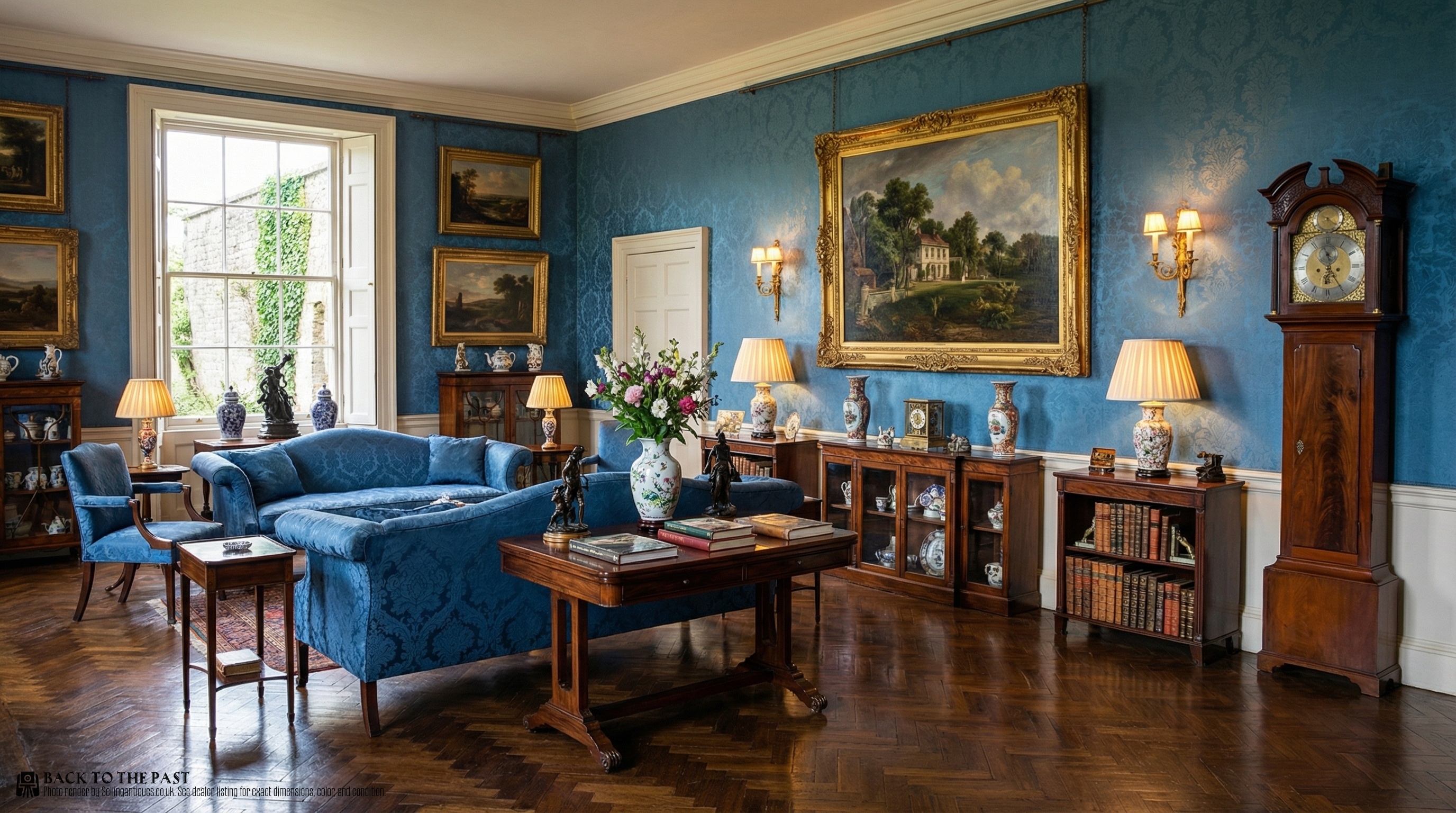
Brown Wooden Standing Clock
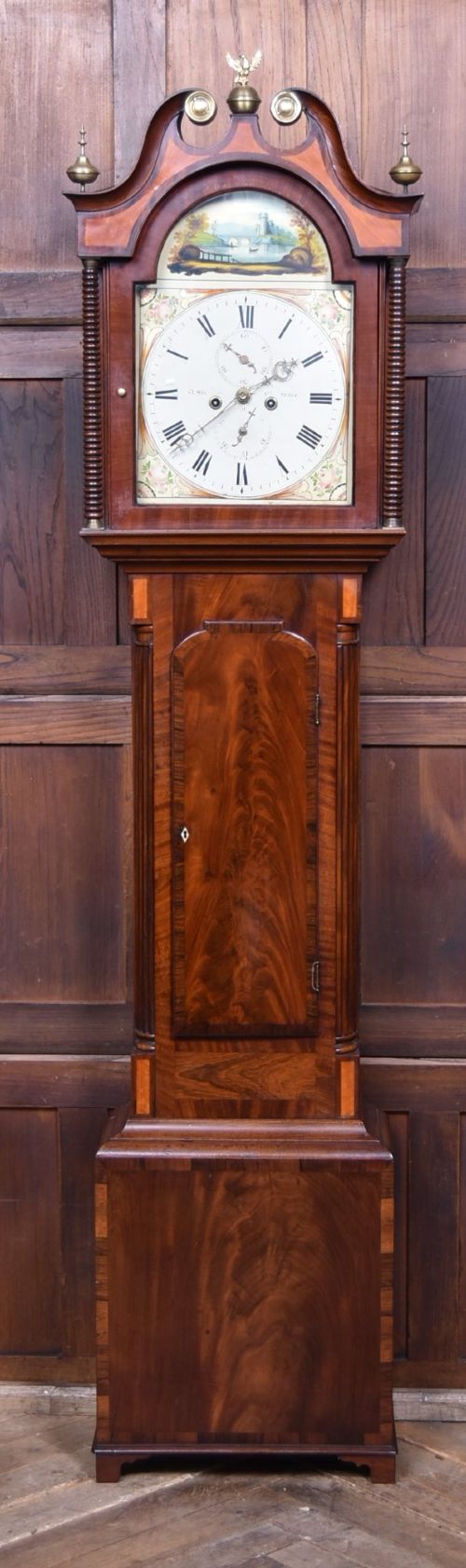
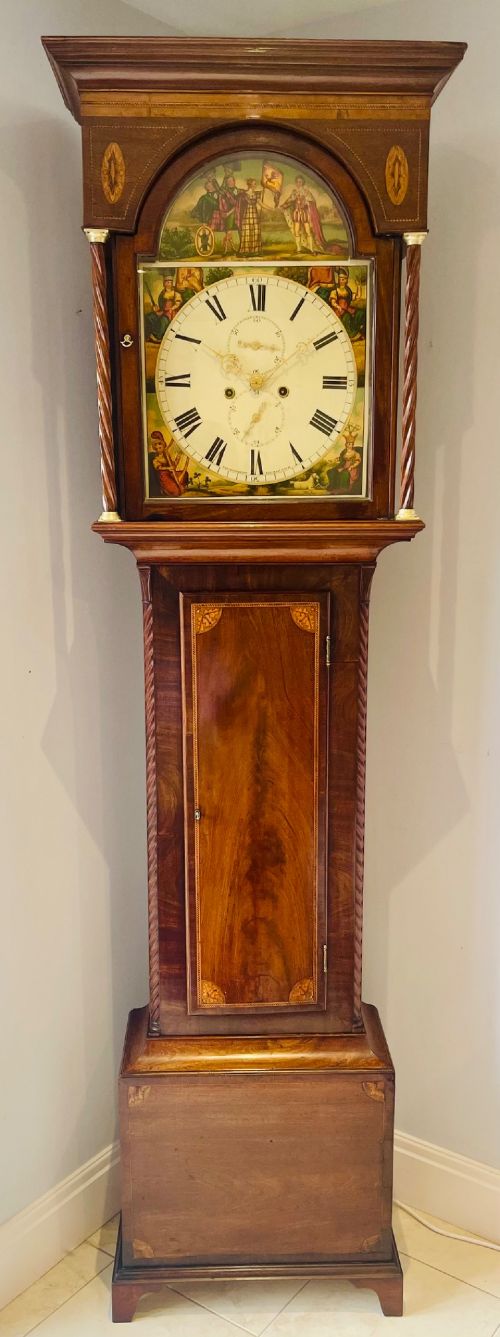
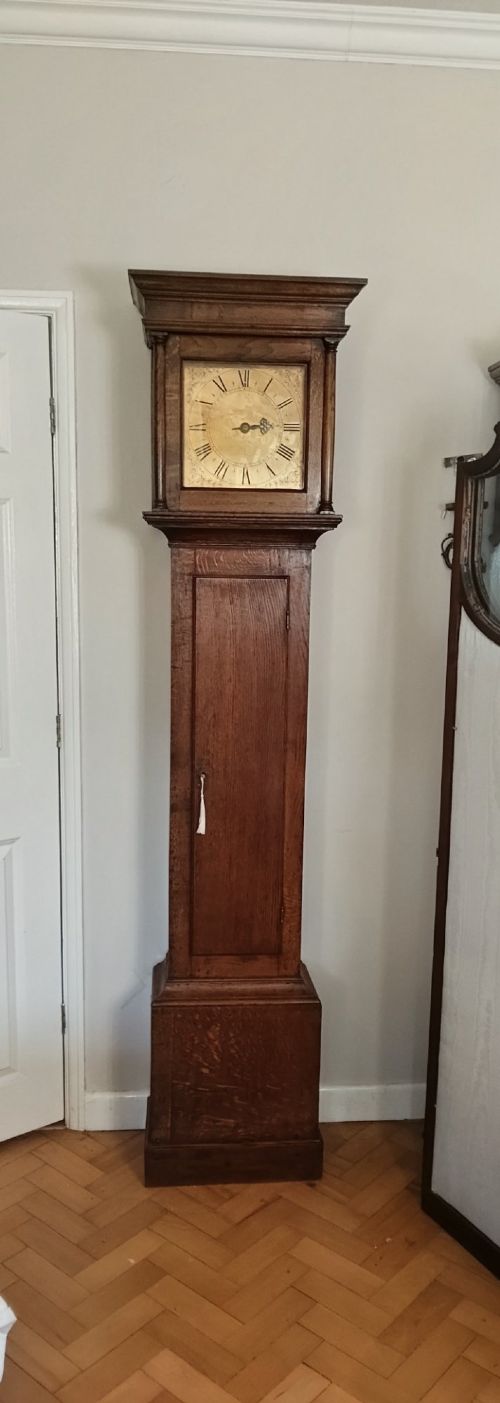
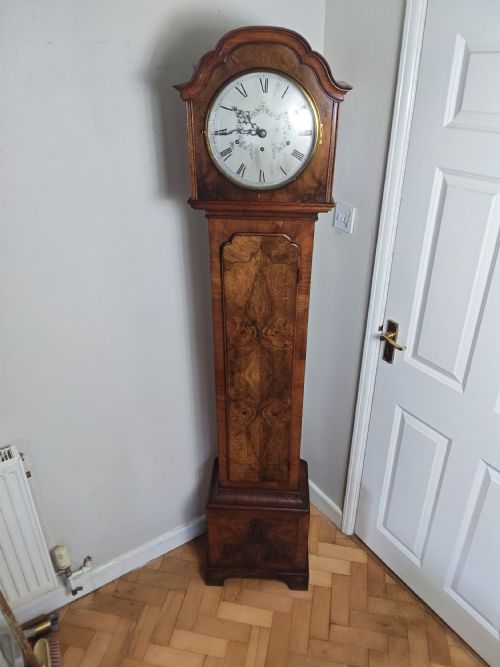
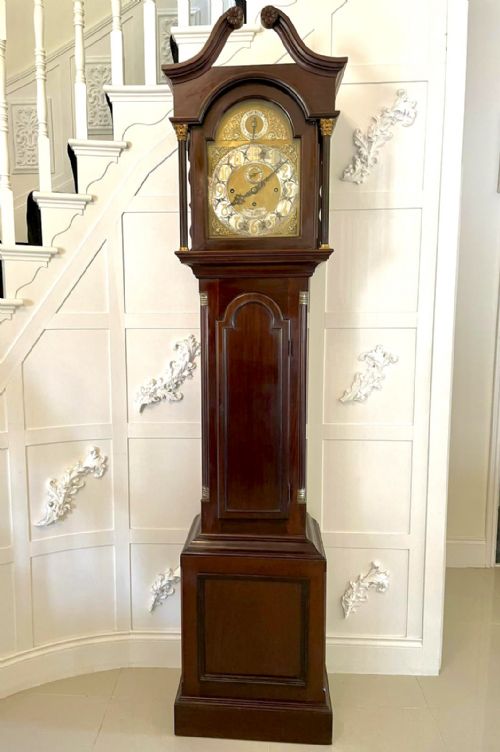
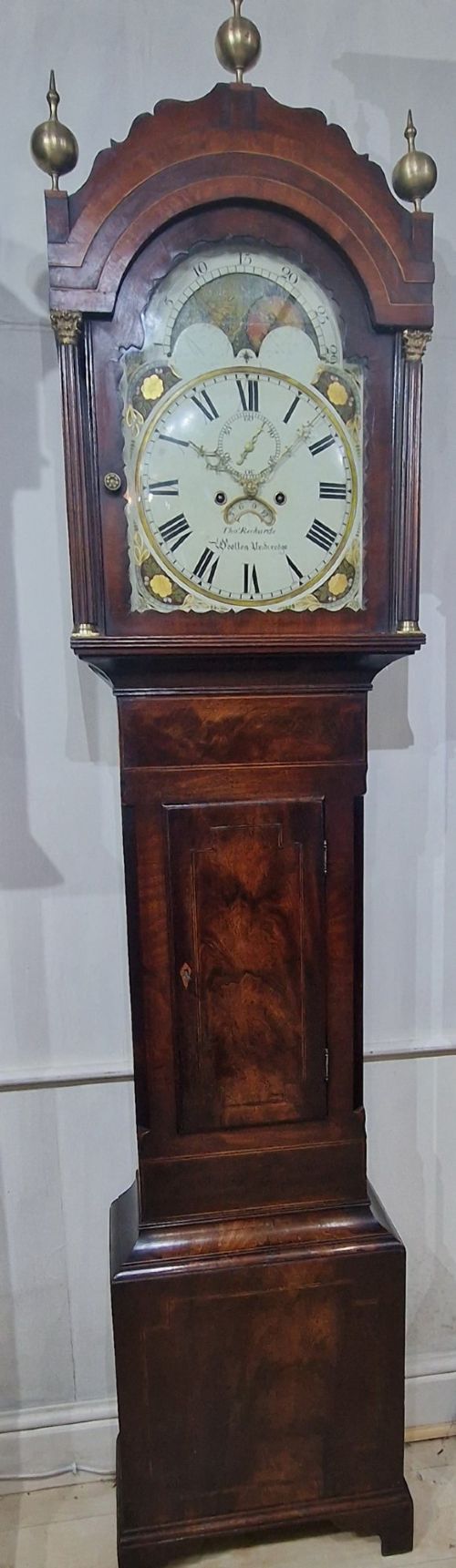
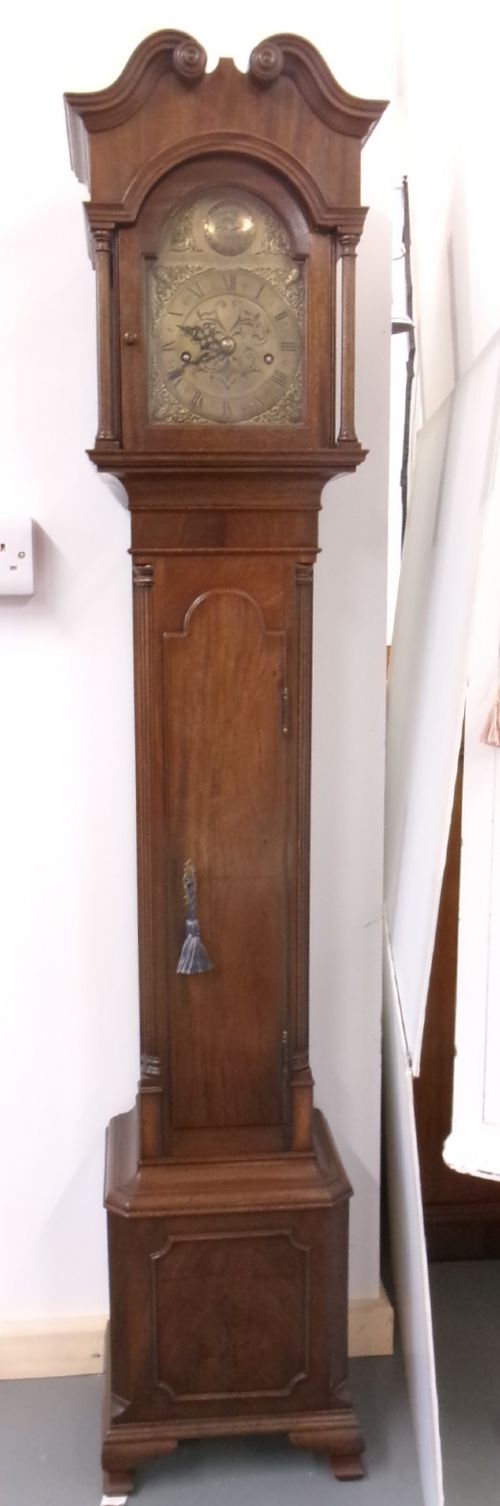
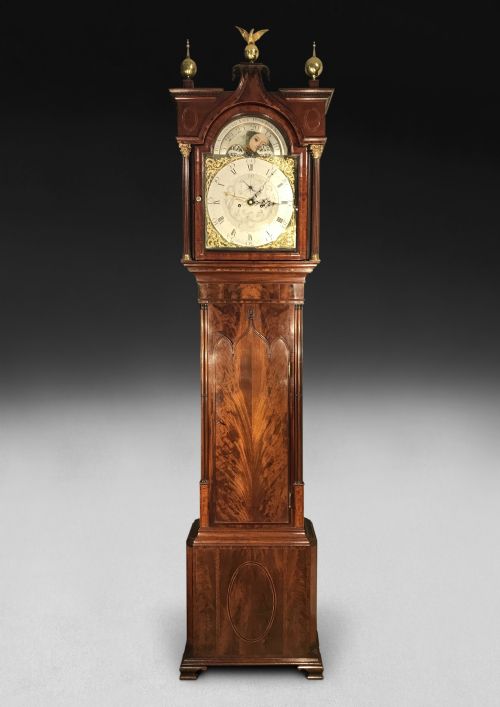
When you search for a brown wooden standing clock, you are looking at tall floor-standing timepieces designed to measure hours through a pendulum and falling weights. The pieces on this page span the seventeenth century through to the 1930s, encompassing grand proportions as well as smaller grandmother and granddaughter variants.
Materials and construction
Cabinetmakers utilised solid native timbers such as oak and walnut during earlier periods, later turning to imported mahogany and figured veneers like flame mahogany. Cases were constructed with sturdy joinery to house the hanging weights and long pendulums securely within the trunk.
The working movements combine brass gears, wheels, and escapements, often paired with engraved brass dials or painted iron faces. Clockmakers fitted these intricate mechanical systems inside tall wooden hoods designed with glass doors for viewing the dial.
Brown Wooden Standing Clock Retail Price Guide 2026
Typical asking prices for brown wooden standing clock among the pieces listed under this phrase on Sellingantiques today, from the lower quarter to the upper quarter. They describe what is for sale here now, not the wider market.
Several clocks possess eight bell musical mechanisms designed to play tunes before striking the hour.
Variations in quality
The distinction between standard and exceptional pieces rests in the sophistication of the movement and the execution of the woodwork. Clocks featuring complex chime mechanisms, musical settings, or moonphase dials demonstrate a higher degree of horological ambition.
Cabinet work separates simpler regional items from finer urban examples through the choice of figured veneers, quarter-veneered panels, and delicate inlay work. Original surfaces, crisp dial engraving, and well-proportioned architectural hood mouldings elevate the standing of a piece.
Hendrie Ogg·Green of Edinburgh·D. Straiton·Winsor Bishop Norwich·Edward Upjohn·Edward East·Joseph Knibb·Wm Stanford·W Prior·John Harrington·Jn Wright Linton·Rob Parry Pwllheli·Anthony Marsh·Edward Renouf·Joyce Ruthin·Foxton Sutton Ashfield·W M Smith Of Leith·Raine of Durham·James Marshall
The Brown Wooden Standing Clock Glossary
- Longcase clock
- A tall pendulum clock enclosed in a wooden case standing directly on the floor. These pieces are frequently referred to as grandfather clocks.
- Grandmother clock
- A smaller, more slender version of the traditional longcase clock produced mainly during the twentieth century. They fit more easily into modern ceiling heights.
- Granddaughter clock
- An even more compact variant of the standing clock family, smaller than a grandmother clock. These miniature timepieces share the proportions of full-sized models.
- Moonphase
- A dial mechanism tracking the phases of the lunar cycle. This complication appears on the arched upper portion of the clock face.
- Flame mahogany
- A distinctive wood veneer cut from the fork of the mahogany tree, creating a flamed flame-like pattern. Cabinetmakers utilised this figure on high-status clock doors.
Brown Wooden Standing Clock: Frequently Asked Questions
How do I wind a longcase clock?
Most eight-day movements require the weights to be pulled up using a crank key inserted into holes on the dial face. Care must be taken not to overwind the mechanism.
Weight-driven clocks depend on gravity to power the gear train, meaning the weights must reach their lowest point before the line runs out entirely.
What is the difference between a grandfather and a grandmother clock?
Grandfather clocks are full-sized floor-standing timepieces dating primarily from the seventeenth through nineteenth centuries. They possess tall proportions and heavy movements.
Grandmother clocks are reduced-scale versions built mostly in the twentieth century, offering a shorter stature suitable for smaller rooms while retaining traditional mechanical operations.
Where should I place a standing clock in my home?
These clocks require a stable, level floor and a secure fixing to a wall to prevent the case from leaning. Keeping them away from direct sunlight and temperature fluctuations protects the wooden veneer.
A solid foundation ensures the pendulum swings evenly and the escapement ticks with a consistent, reliable beat.
How can I tell the period of a wooden clock case?
The style of the hood, the type of wood, and the dial design offer clear clues to the era of manufacture. Early pieces utilise solid oak or walnut with square brass dials, while later nineteenth-century examples often feature mahogany cases and painted iron dials.
Quarter-veneer patterns and specific inlay motifs point toward distinct stylistic revivals and twentieth-century production dates.