

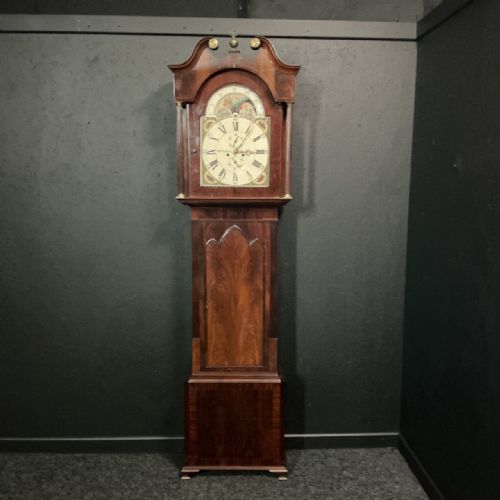


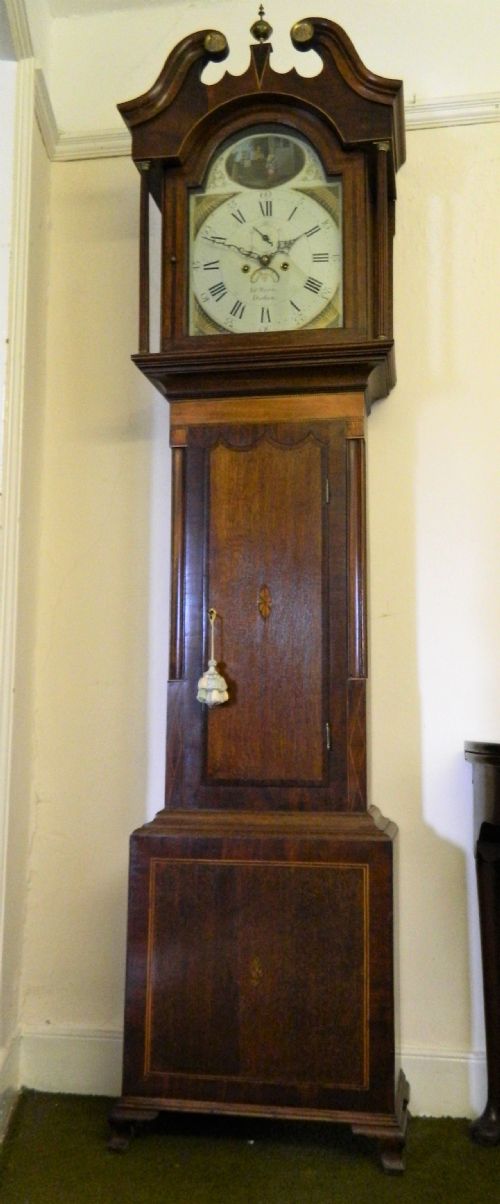

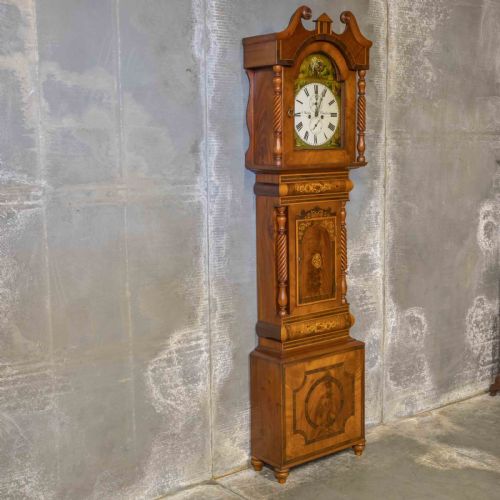

Georgian Period Floor Clock
A georgian period floor clock stands tall in a hallway, bringing time and architectural presence to a room.
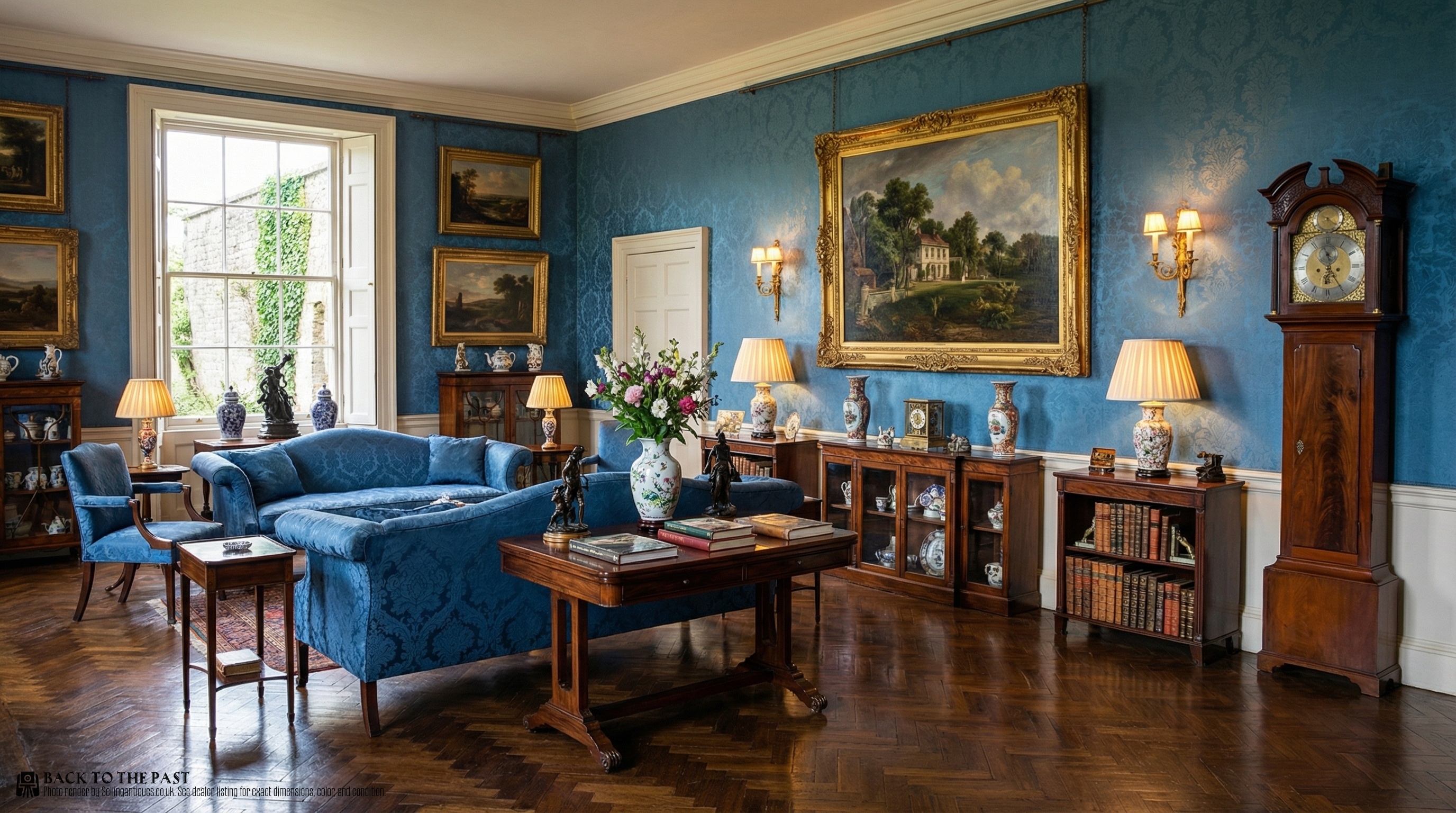
Georgian Period Floor Clock
A georgian period floor clock represents tall horological furniture made during the eighteenth and early nineteenth centuries. These tall pieces combine cabinetmaking with timekeeping mechanics. Buyers searching for a georgian period floor clock encounter tall wooden cases housing weights and pendulums.
The versions most commonly met on this page span the eighteenth century and the early nineteenth century. Oak and mahogany dominate the examples available here. These pieces appear under various names including grandfather clocks and longcase clocks.
How they were made
Cabinetmakers constructed these bodies using timbers like oak, mahogany, and walnut. Some examples incorporate ebonised wood details or painted decoration. Dials frequently feature brass and painted iron components.
Dial faces and hoods often display distinct regional variations, from simple arched designs to lancet tops. Cases utilise local joinery techniques appropriate to the period, housing movements designed to measure hours reliably.
Georgian Period Floor Clock Retail Price Guide 2026
Typical asking prices for georgian period floor clock among the pieces listed under this phrase on Sellingantiques today, from the lower quarter to the upper quarter. They describe what is for sale here now, not the wider market.
Pieces span dates from the mid-eighteenth century through to the early nineteenth century.
What varies in quality
The refinement of the cabinetwork sets examples apart, particularly in the handling of veneers, inlays, and proportions. Timber selection dictates visual depth, with burr mahogany and figured walnut sitting at the upper end of visual complexity.
Dial execution also distinguishes pieces, separating straightforward painted iron faces from intricately detailed brass work. The integrity of the case construction relative to the movement influences overall cohesion.
Williams·Raine of Durham
The Georgian Period Floor Clock Glossary
- Longcase clock
- A tall pendulum clock enclosed in a wooden case designed to stand directly on the floor. This term is often used interchangeably with grandfather clock.
- Grandfather clock
- A popular designation for a tall floor-standing clock. The term emerged later in history but applies to these tall eighteenth-century timepieces.
- Lancet topped
- A pointed, arched architectural shape found on the upper hood of certain clock cases. This design element echoes gothic revival and neoclassical architectural trends.
- Chequered inlaid decoration
- Small alternating squares of contrasting timber fitted into the surface of the wood. This decorative technique adds geometric pattern to plain oak or mahogany panels.
Georgian Period Floor Clock: Frequently Asked Questions
What is a georgian period floor clock?
A georgian period floor clock is a tall timepiece housed in a wooden case made during the eighteenth or early nineteenth century. These clocks combine cabinetmaking with mechanical movements.
They function as both timekeepers and tall decorative furniture pieces designed to stand against a wall in a hallway or principal room.
How do I tell different periods apart?
Distinguishing periods relies on observing timber choices and case shapes. Oak pieces often point towards earlier eighteenth-century examples.
Mahogany and burr walnut typically suggest later eighteenth or early nineteenth-century work, alongside stylistic details like lancet tops or inlaid decoration.
What materials make up the dial?
Dials commonly feature brass or painted iron construction. These materials provide the surface for the numerals and hands.
Makers often signed their work directly onto the dial face, recording their names alongside their working towns.