
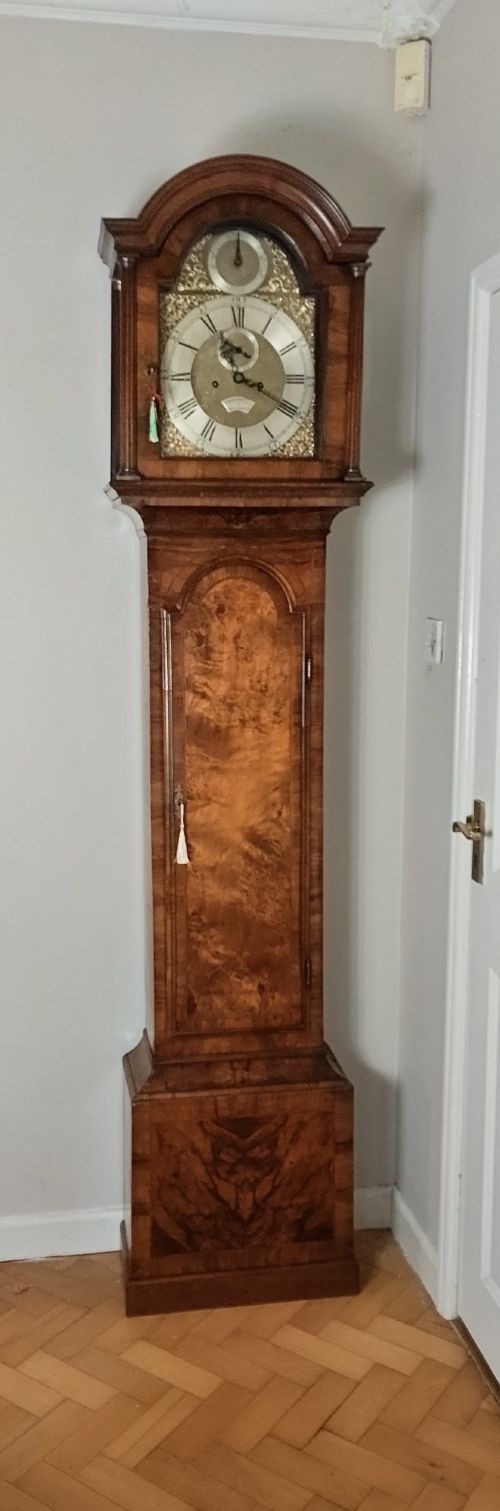
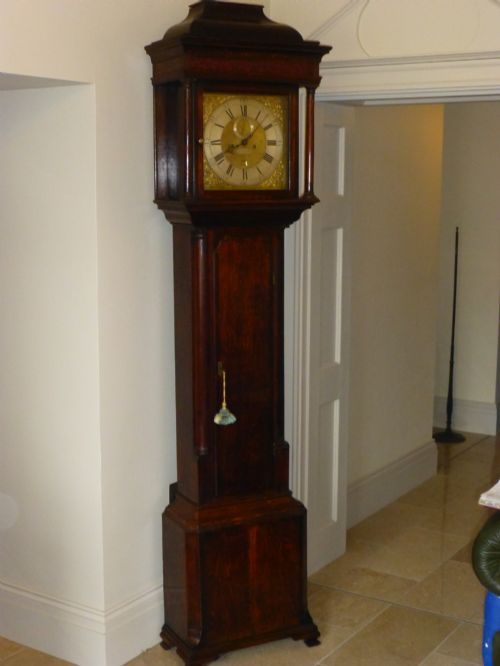
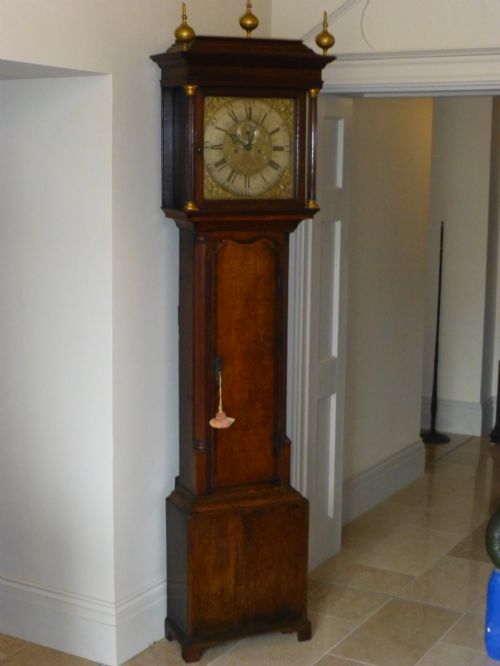
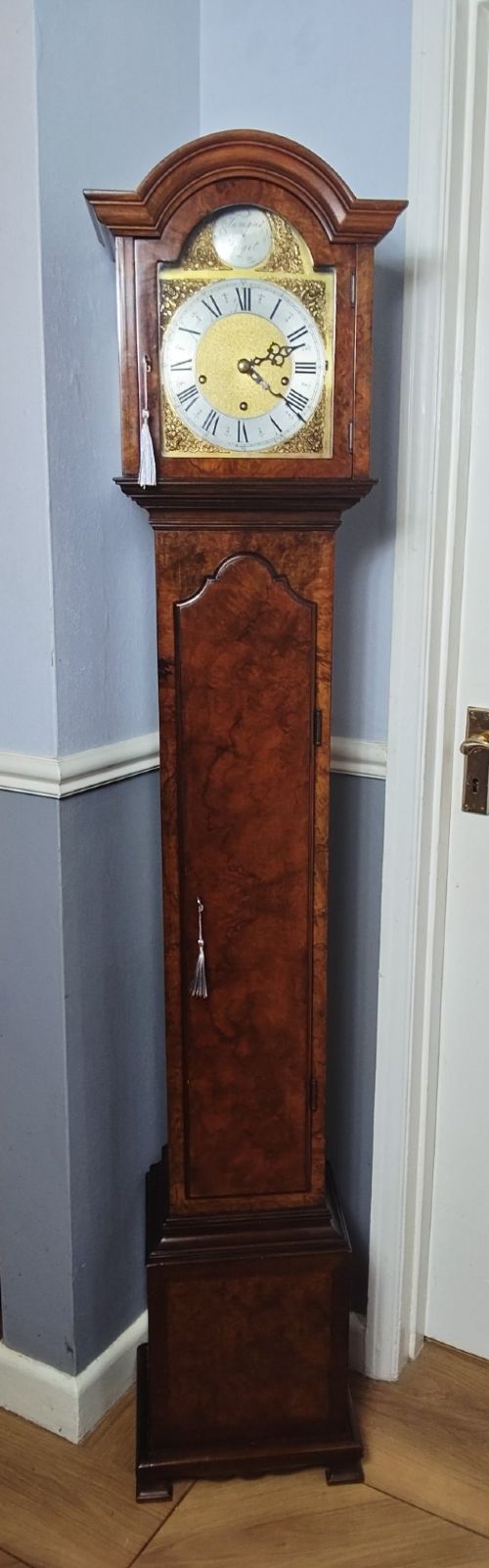


Georgian Walnut Longcase Clock
A georgian walnut longcase clock brings architectural presence and steady mechanical rhythm to a room, offering both fine cabinetwork and reliable timekeeping.
Georgian Walnut Longcase Clock
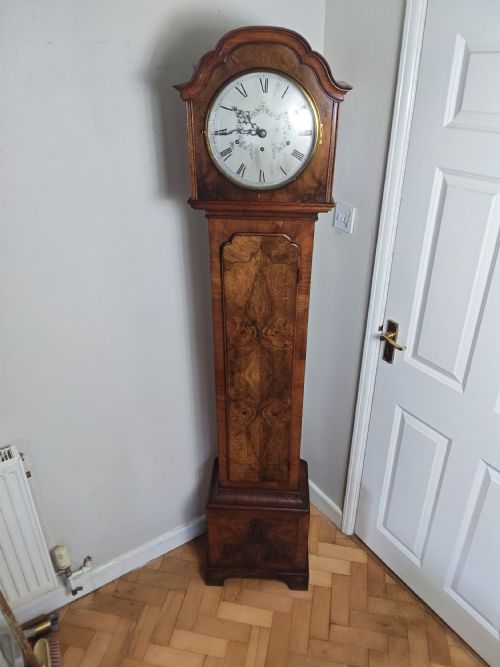
A georgian walnut longcase clock is a tall floor-standing timepiece housing a weight-driven movement within a wooden case. These pieces primarily date from the eighteenth century, alongside later revival interpretations produced in the early twentieth century.
The materials span standard walnut, burr walnut, and red walnut, frequently paired with oak carcasses or inlaid woods. Cases range from grand architectural proportions down to smaller grandmother and granddaughter variants.
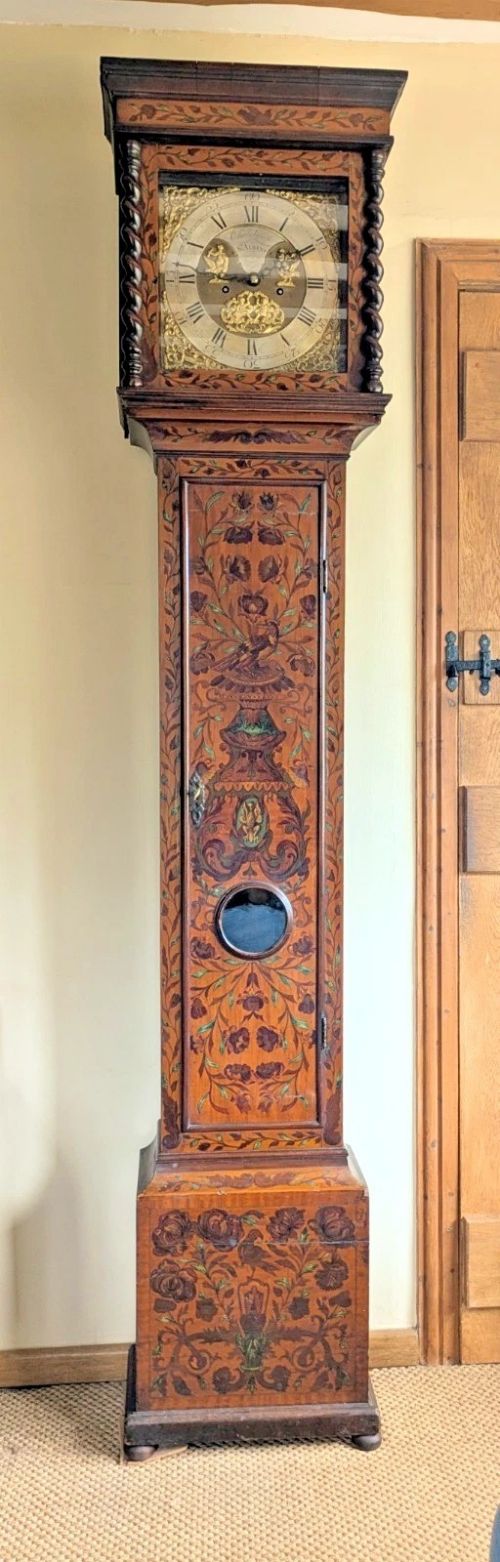
Makers from London and regional centres such as Stockport, Chester, and Norwich signed brass dials set with silvered chapter rings. Buyers encounter everything from austere early Georgian examples to elaborate marquetry and moonphase complications.
Materials and construction
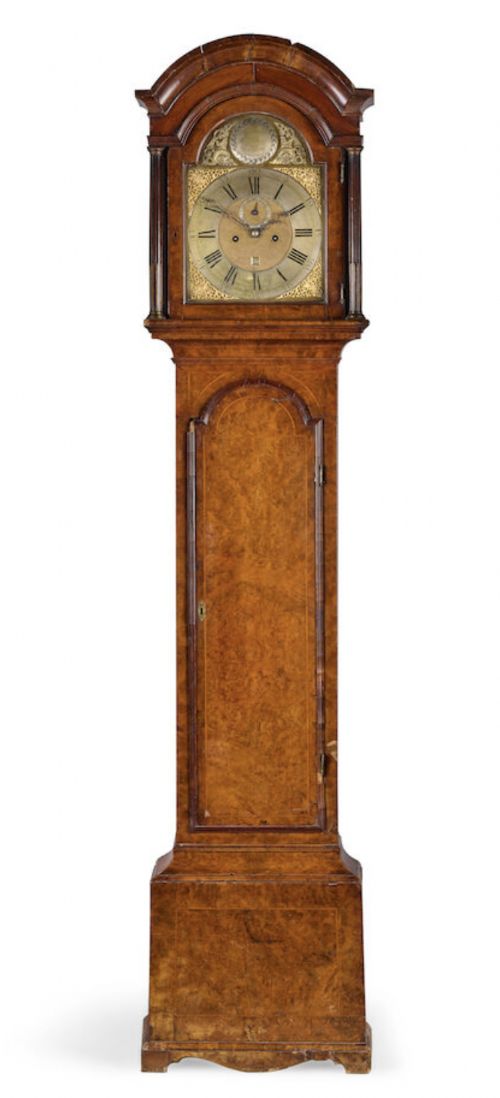
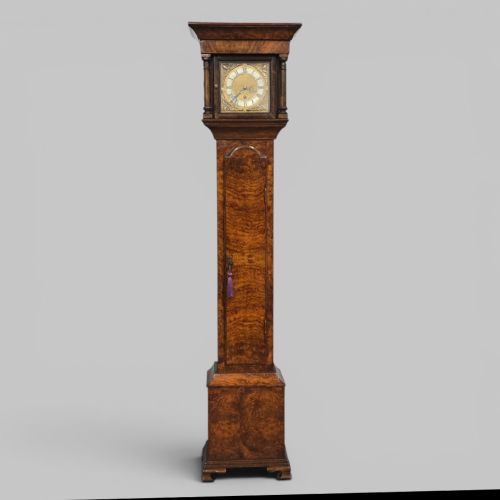
Cabinetmakers utilised figured walnut and burr walnut veneers applied over solid oak or secondary timber frames to create rich, mottled surface patterns. Crossbanding and stringing lines often define the door panels and trunk borders.
Dial faces combine cast brass spandrels, engraved brass chapter rings with steel hands, and occasionally painted moonphase discs behind glass hoods. Movements rely on brass gear trains driven by heavy lead or cast iron weights suspended on cords or chains.
Several makers operated outside London in regional towns such as Nantwich and Stockport, bringing metropolitan clockmaking standards to the provinces.
Assessing quality and proportion
The distinction between ordinary and exceptional examples rests in the choice of veneer and the harmony of the case proportions. Richly figured burr walnut with strong natural colour commands greater attention than plain timber surfaces.
Dial craftsmanship and signature engraving indicate the standing of the original maker. Well-preserved hood mouldings and untouched original feet elevate a clock above pieces with extensive timber replacement.
Richard Corless of Stockport·Smith of Chester·Charles Louch St. Albans·Windmills and Wightman London·Thomas Vernon London·Langley Bradley·Edward Upjohn Exon·Samuel Young Nantwich·John Harrington London·Jonathan Marsh London·Bentley London·James Drury of London·Joseph Oxley Norwich·George Tyler London·Webb Bristol
The Georgian Walnut Longcase Clock Glossary
- Grandfather clock
- A large floor-standing timekeeper standing over six feet tall, typically housing an eight-day movement. This term is often used interchangeably with longcase clock.
- Grandmother clock
- A smaller, more slender version of the longcase clock, usually produced during twentieth-century revival periods. These compact clocks suit rooms with lower ceilings.
- Moonphase
- A dial mechanism tracking the phases of the lunar cycle through a rotating painted disc visible beneath the main chapter ring. Such complications add visual depth to the brass face.
- Burr walnut
- Timber sliced from the warty growths on walnut trees, yielding intricate, swirling grain patterns highly prized by cabinetmakers. It forms the primary decorative surface on luxury eighteenth-century cases.
- Chapter ring
- The metal ring fixed to the dial face that displays the hours and minutes. These are usually silvered brass with engraved numerals.
Georgian Walnut Longcase Clock: Frequently Asked Questions
How do I wind an eight-day longcase clock?
You insert the winding key into the small holes on the dial face and turn it slowly until the weight reaches the top.
Take care not to overwind the movement, as this places excessive tension on the internal springs or cords.
Where should I place a longcase clock?
Position the clock against an interior wall away from direct sunlight, heating vents, and dampness to protect the delicate walnut veneer.
Ensure the floor is level so the pendulum swings with an even beat.
What is the difference between a grandfather and grandmother clock?
Grandfather clocks are tall floor-standing pieces dating mainly from the eighteenth century with substantial eight-day movements.
Grandmother clocks are smaller twentieth-century variants designed for more compact spaces.
How do I tell an 18th-century clock from a revival piece?
Eighteenth-century examples show natural timber ageing, hand-cut joinery marks, and specific regional engraving styles on the brass dial.
Twentieth-century revival pieces often house quarter-chiming or musical movements within cleaner interior softwood carcases.