

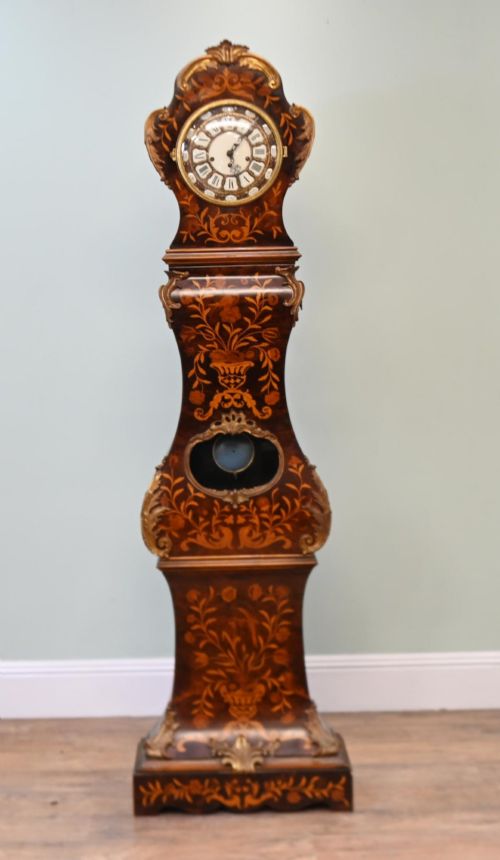
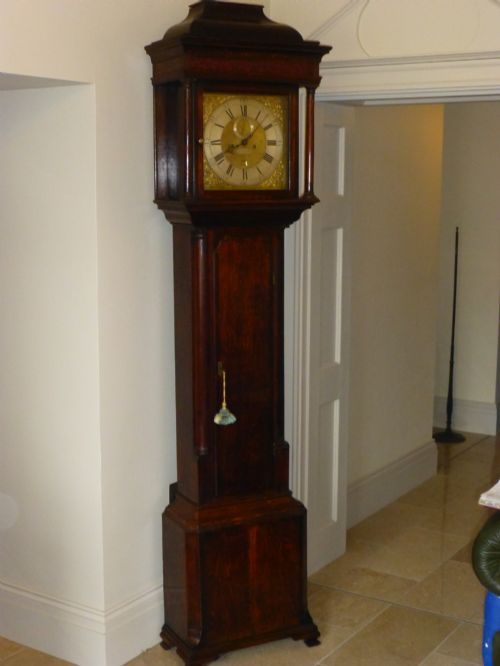


Carved Walnut Standing Clock
These carved walnut standing clock pieces bring timeless mechanical precision and rich timber into a room.
Carved Walnut Standing Clock
A carved walnut standing clock combines a tall wooden case with a weight-driven or spring-driven movement to tell the time in a grand domestic format. Buyers searching for a carved walnut standing clock will encounter longcase clocks and grandfather clocks spanning the seventeenth century through to the nineteenth century, including Georgian and William and Mary styles.
How they were made
Cabinetmakers constructed the tall cases using solid walnut and highly figured burr walnut veneers applied over secondary timbers like oak. Carved details adorned the hoods, friezes and trunk doors, reflecting the prevailing styles of the seventeenth and eighteenth centuries.
Horologists fitted brass dials with engraved silvered chapters and steel hands into the cases, housing eight-day or thirty-hour brass movements driven by suspended weights or springs.
Carved Walnut Standing Clock Retail Price Guide 2026
Typical asking prices for carved walnut standing clock among the pieces listed under this phrase on Sellingantiques today, from the lower quarter to the upper quarter. They describe what is for sale here now, not the wider market.
Clockmakers often signed their engraved brass dial plates so proudly that their names survived centuries of family life.
What varies in quality
The quality of a carved walnut standing clock depends on the depth and crispness of the timber carving and the choice of veneer. Finer examples utilise richly figured burr walnut across the entire front elevation rather than plain grain.
Movement sophistication also separates examples, with established makers signing the brass dial plates to denote high standards of mechanical execution and clockmaking heritage.
Richard Corless of Stockport·Edin Burgis of London·Edward East·Samuel Young Nantwich·Edward Stanton·John Harrington London·Joseph Windmills London·Joseph Oxley Norwich
The Carved Walnut Standing Clock Glossary
- Longcase clock
- A tall pendulum clock enclosed in a wooden case designed to stand directly on the floor. These pieces are frequently called grandfather clocks.
- Burr walnut
- A specialised timber cut from walnut tree growths, yielding intricate swirling grain patterns highly prized for cabinet veneers. It creates a decorative surface on clock door panels.
- Dial
- The face of the clock where hours and minutes are displayed. Brass dials often feature engraved maker signatures and corner spandrels.
- Movement
- The inner mechanical assembly of gears, springs, and weights that drives the hands and strikes the hours. Eight-day movements require weekly winding.
Carved Walnut Standing Clock: Frequently Asked Questions
What is a carved walnut standing clock?
A carved walnut standing clock is a tall floor-standing timepiece housed in a wooden case made from walnut or burr walnut. These pieces combine decorative woodwork with precise mechanical clockwork.
They serve as both functional timekeepers and architectural furniture centerpieces within a domestic interior.
How do I wind an eight day clock?
An eight day clock requires winding approximately once a week using a specialised key inserted into winding holes on the dial face. This action draws the internal weights back up to the top of the trunk.
Care must be taken not to overwind the mechanism to avoid damaging the internal springs or cord systems.
Where were these clocks placed historically?
Historically, tall clocks stood in prominent domestic circulation areas such as hallways, landings, or formal living rooms. Their resonant striking mechanisms could be heard throughout the household.
Their commanding height made them natural focal points for interior decoration in seventeenth and eighteenth century homes.
How do I distinguish 17th century from later styles?
Seventeenth century pieces often display specific structural characteristics and simpler architectural mouldings associated with William and Mary periods. Later nineteenth century examples may incorporate seventeenth century revival motifs.
Examining the internal movement construction alongside the timber ageing helps clarify the actual period of manufacture.