

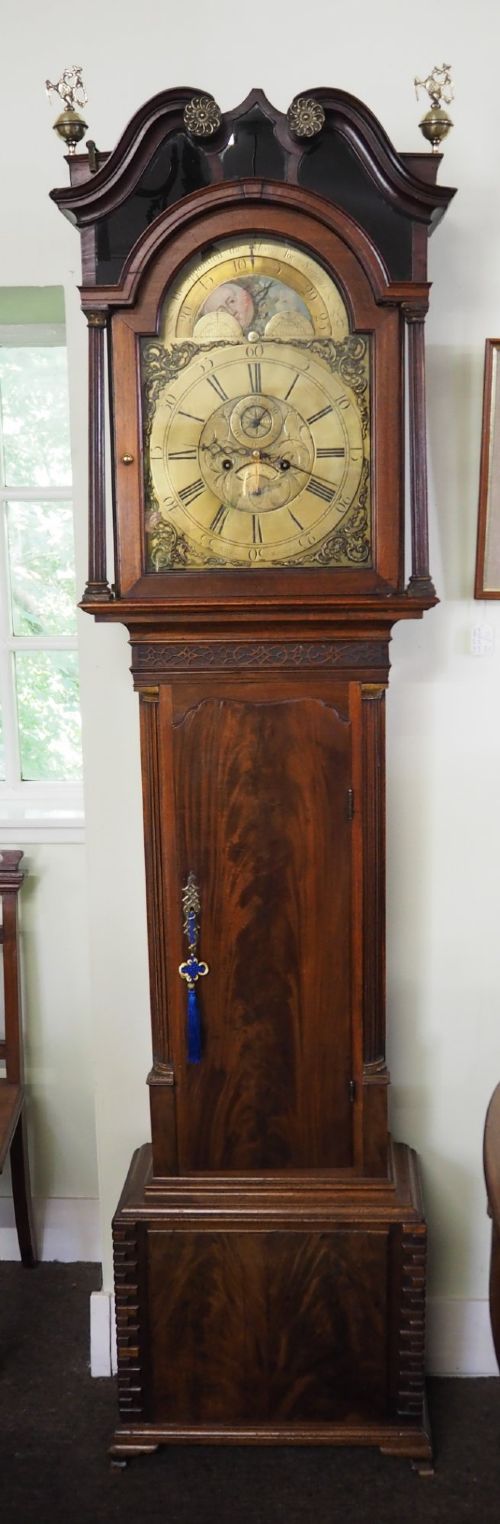
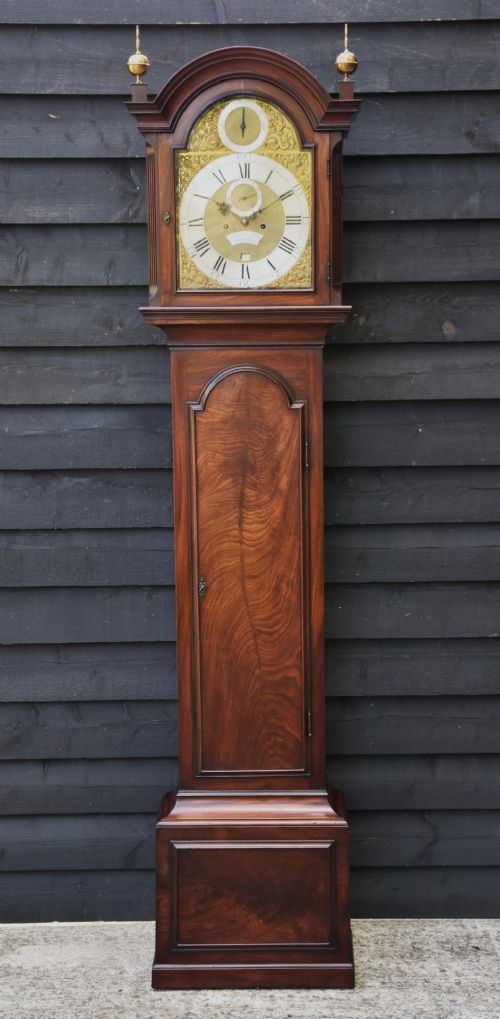
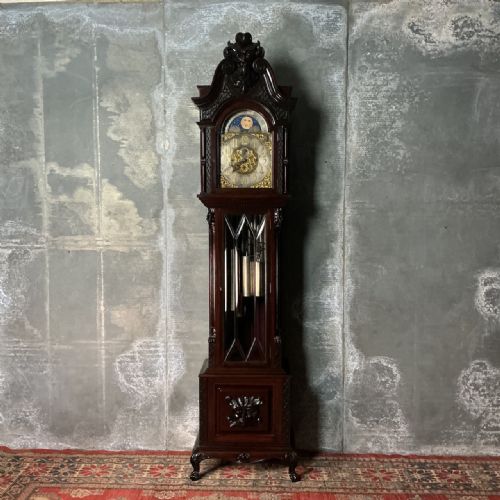
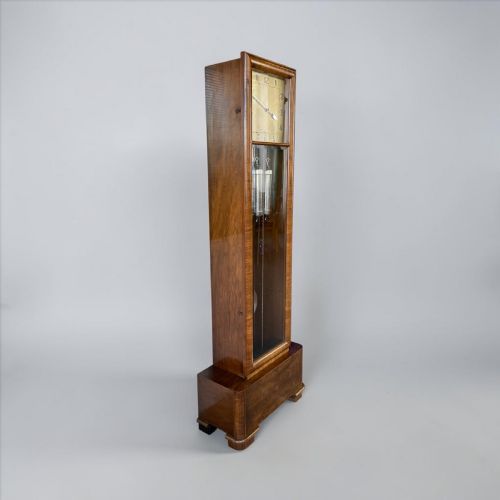
Antique Wood Grandfather Clock
An antique wood grandfather clock anchors a room with its height and steady tick, bringing centuries of cabinet-making and horology together.
Antique Wood Grandfather Clock
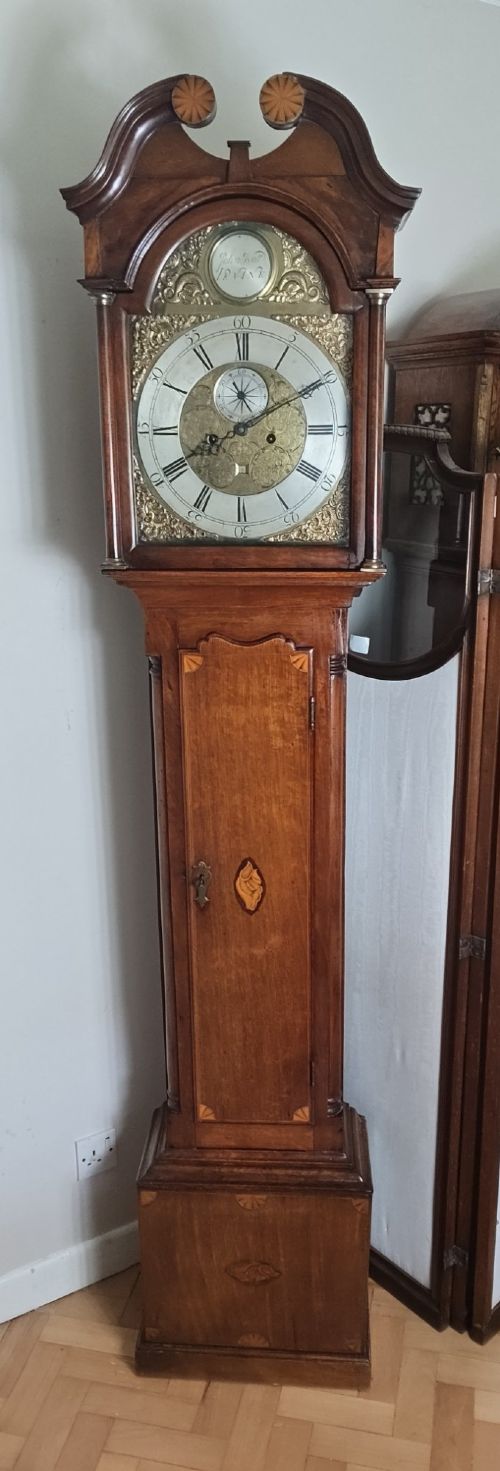
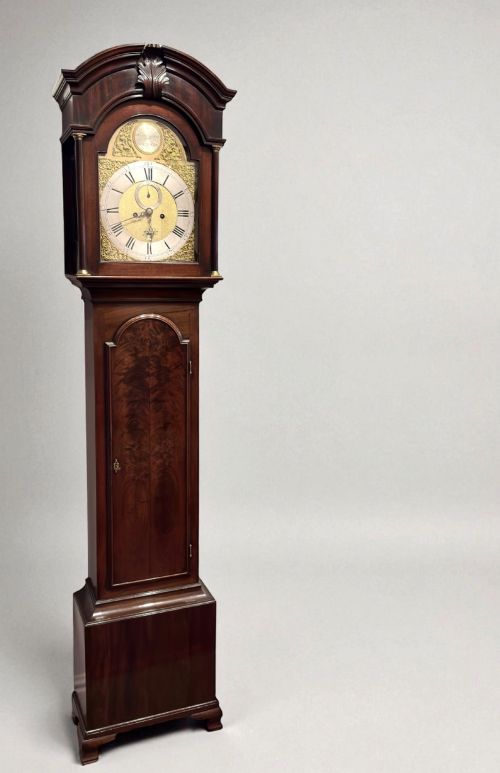
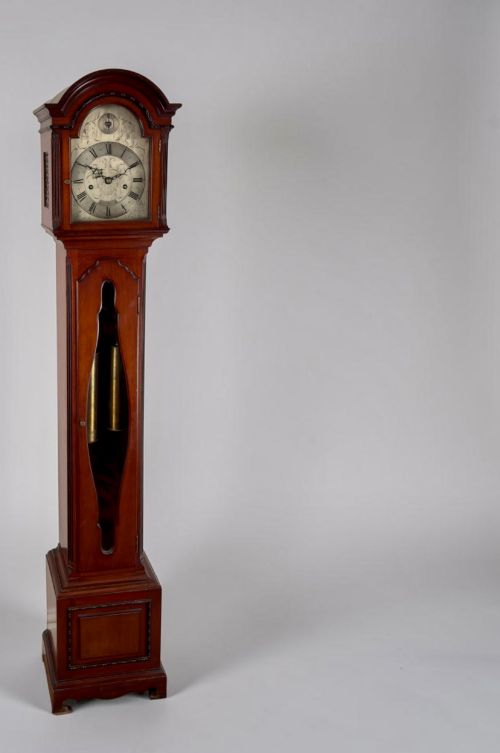
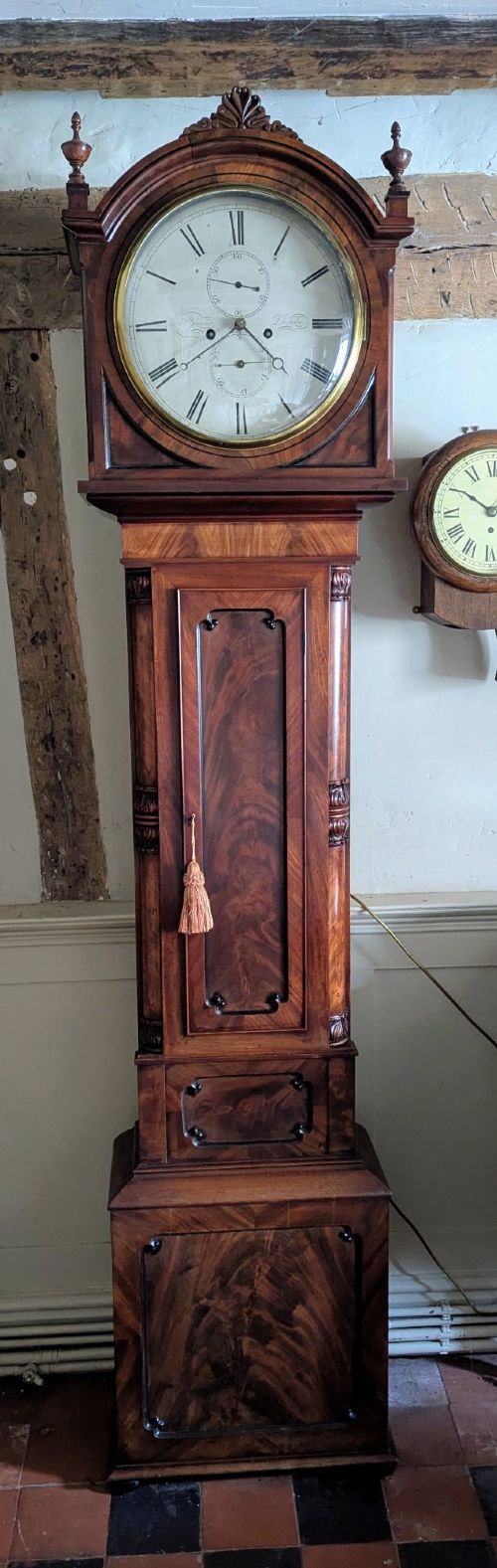
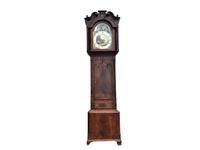
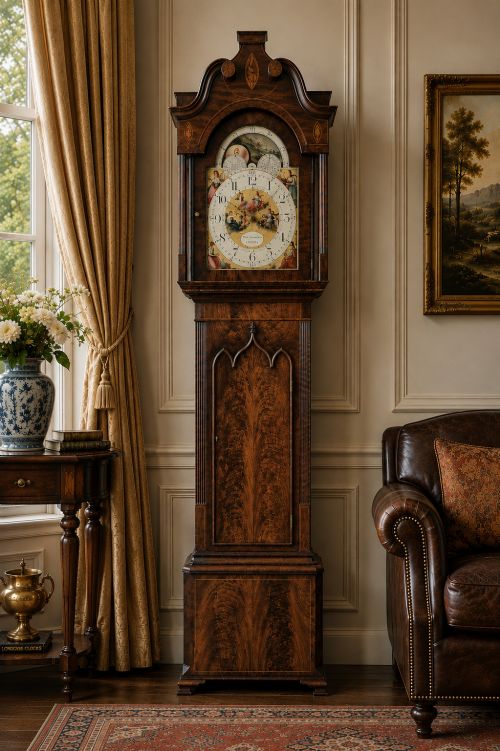
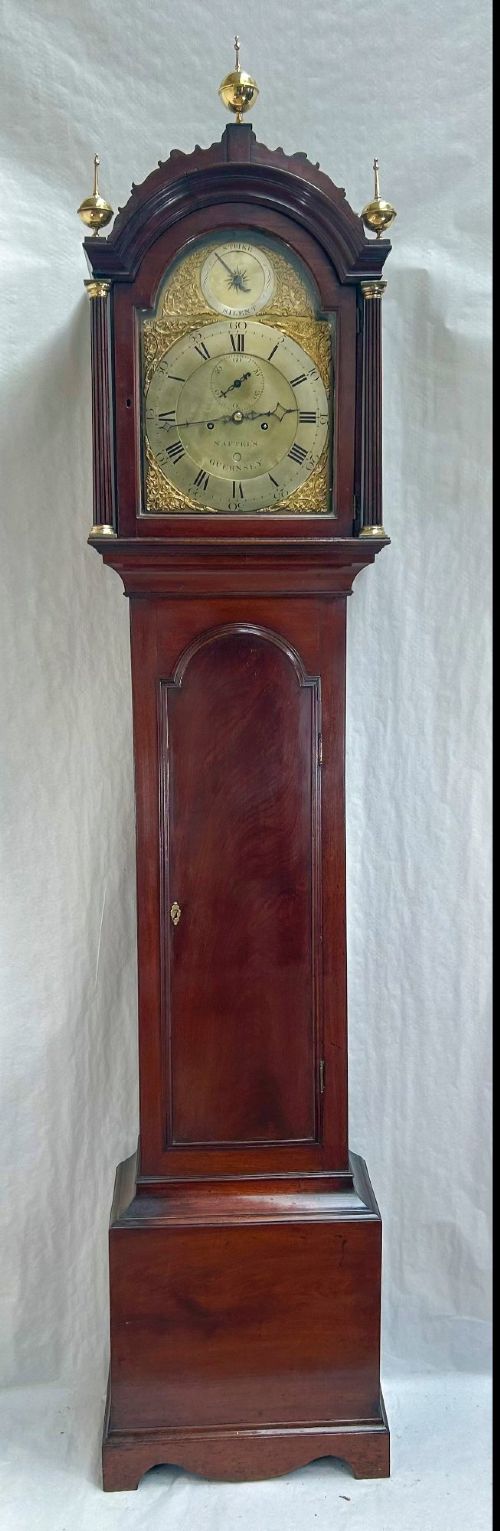
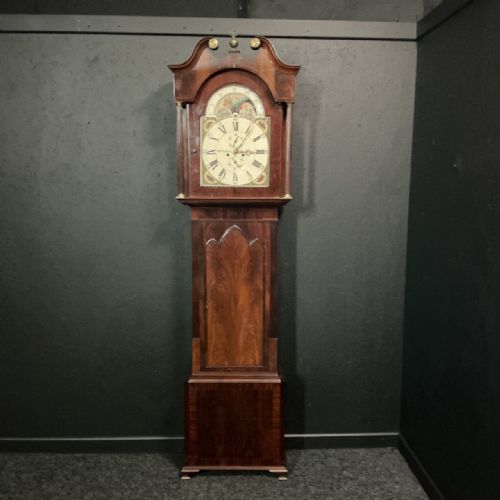
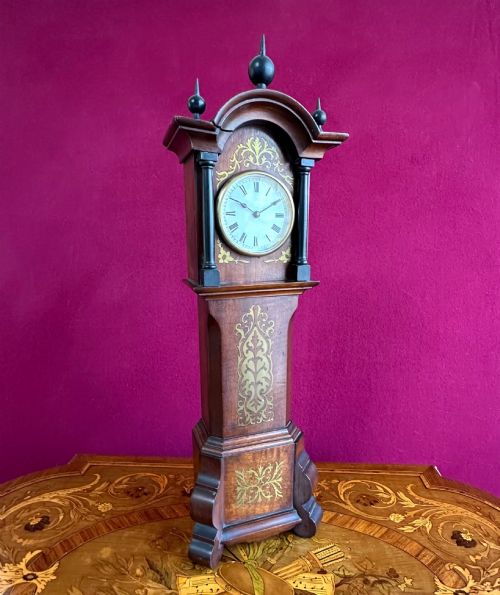
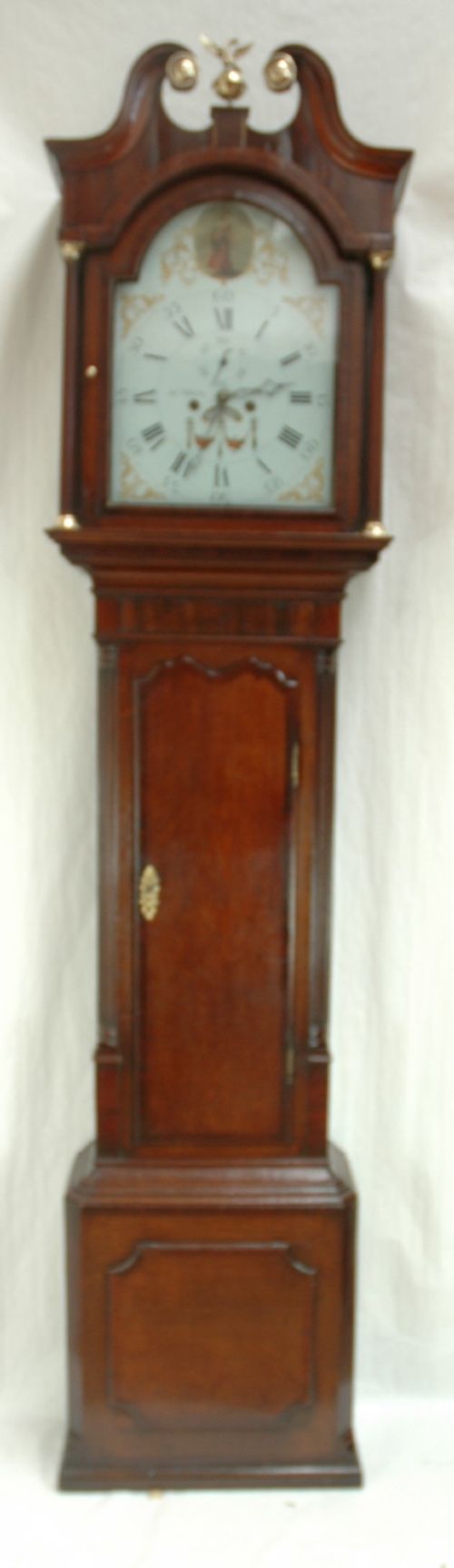
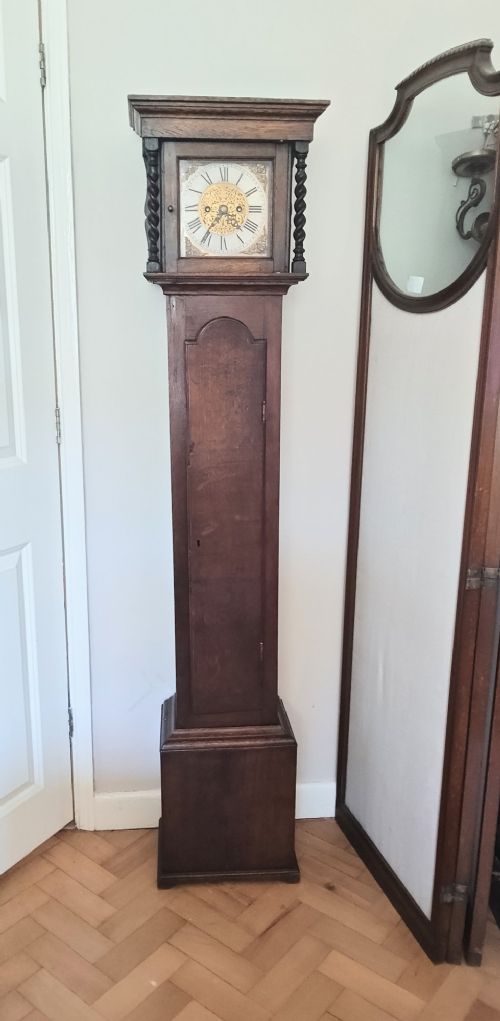
An antique wood grandfather clock, also known as a longcase clock, stands tall to house a pendulum and weight-driven movement within a wooden trunk. These vertical timekeepers span periods from the eighteenth century through the Edwardian era, reflecting shifting domestic tastes.
The mahogany and oak examples dominate the selection, often taking classic Georgian or Victorian forms. Shorter variations, known as grandmother clocks, also appear alongside grander chiming editions.
Makers inscribed their dials across regions from London to Scotland, leaving a record of provincial and metropolitan clockmaking traditions.
What varies in quality
The refinement of the cabinetwork dictates much of the standing, separating simple vernacular cases from elaborately inlaid or carved examples with figured timber veneers. Proportions matter, as better-balanced hoods and waist doors reflect the deliberate eye of the original maker.
Movement complexity also sets pieces apart, moving from standard time-only or eight-day strikes to intricate mechanisms featuring moon phases, musical cylinders, or tubular bells.
Materials span traditional British cabinet woods including oak, walnut, and flame mahogany paired with brass dials and glass hoods.
Gordon of Aberdeen·Gillett and Johnston·James Field·Samuel Kellett·William Jourdain·George Hallifax·Edward Shepley·Charles Dowsett·John Denbigh·Thomas Reynolds
The Antique Wood Grandfather Clock Glossary
- Longcase clock
- The formal term for a tall pendulum clock housed in a wooden case resting on the floor. It protects the weights and pendulum from air currents that might affect timekeeping.
- Grandmother clock
- A smaller, scaled-down version of the traditional longcase clock, popular in the twentieth century. These shorter pieces fit rooms with lower ceilings while retaining weight-driven movements.
- Dial
- The face of the clock where the hours and minutes are read. They frequently display the maker's name and location.
- Moon roller
- A mechanism behind the dial that tracks the lunar cycle through a painted rotating disc. It appeared on better provincial and London clocks.
- Paterae
- Small circular decorative ornaments carved or inlaid into furniture surfaces. They often accent the architectural cornices of eighteenth-century clock hoods.
Antique Wood Grandfather Clock: Frequently Asked Questions
How do I wind an antique grandfather clock?
Most eight-day movements require the weights to be drawn up using a crank key inserted into winding holes on the dial face. Care must be taken not to overwind the springs or pull the weight cords too rapidly.
Pendulum clocks should be set to the correct time by moving the minute hand forward rather than backward to protect the gear train engagement.
Why does the clock need to stand on a level floor?
A plumb and level stance ensures the escapement mechanism trips evenly from side to side, producing the steady tick-tock rhythm. If the case tilts, the pallet stones can bind against the escape wheel and stop the movement.
Securing the upper trunk to a wall bracket also prevents the tall wooden case from tipping forward.
How can I tell a Georgian clock from a Victorian one?
Georgian examples often feature restrained architectural lines, brass dial plates, and rich mahogany or oak grain without heavy ornamentation. Victorian pieces frequently showcase darker finishes, heavier mouldings, and larger drum head dials.
Regional variations in Scottish and English provincial workshops also help narrow down the production era.
What is an eight-day movement?
An eight-day movement requires winding once a week by lifting the heavy brass or iron weights suspended inside the trunk. This system offers greater convenience than thirty-hour clocks that demand daily attention.
Three-train movements add musical chimes or quarter-hour strikes to the standard timekeeping train.