
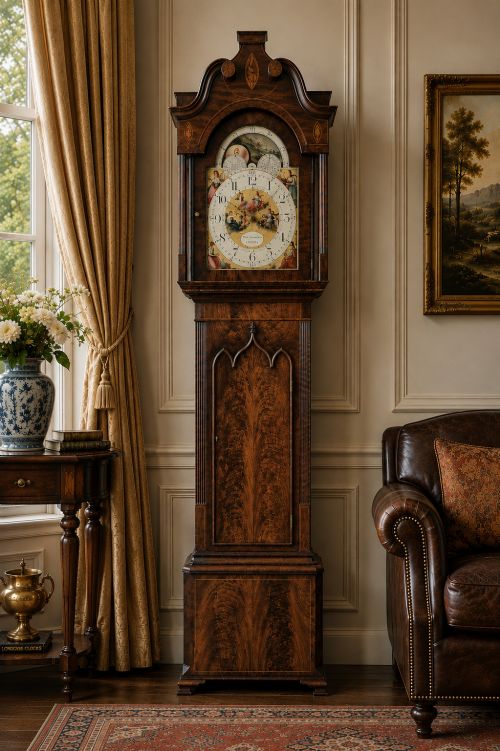
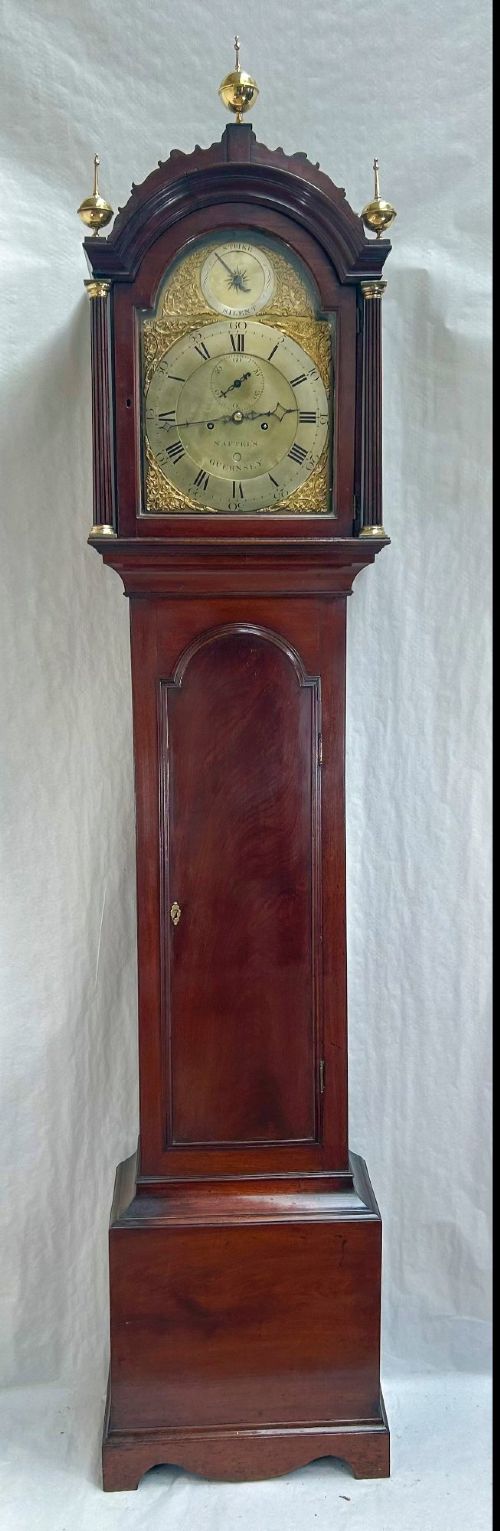
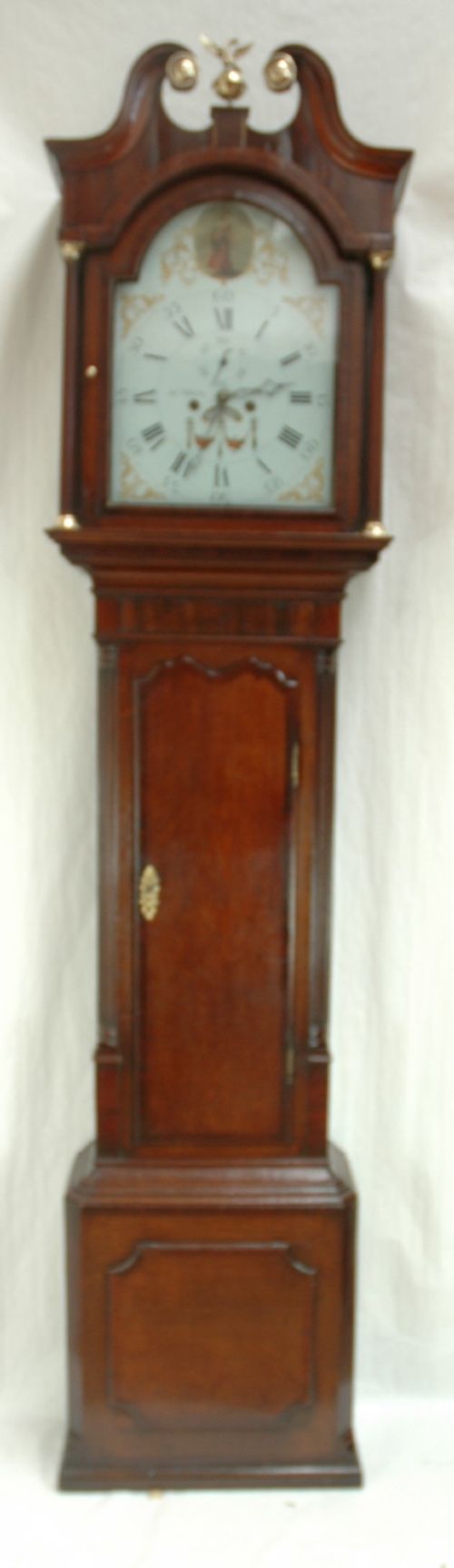
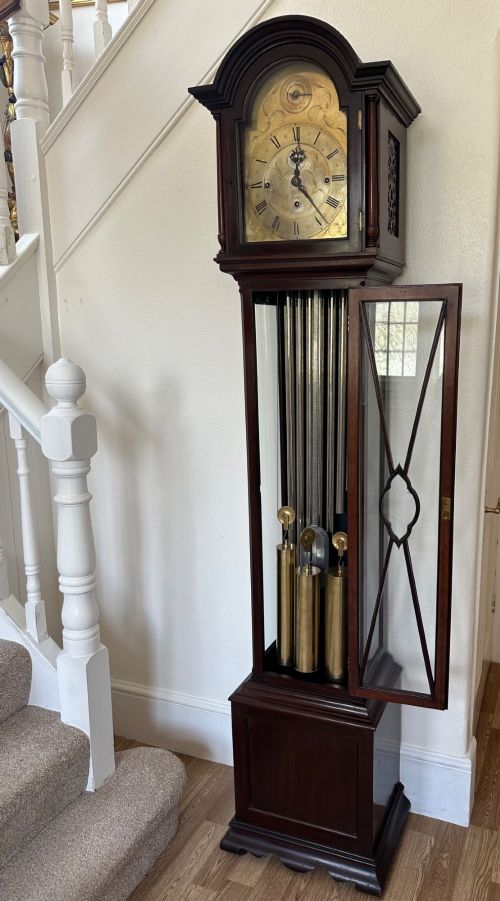
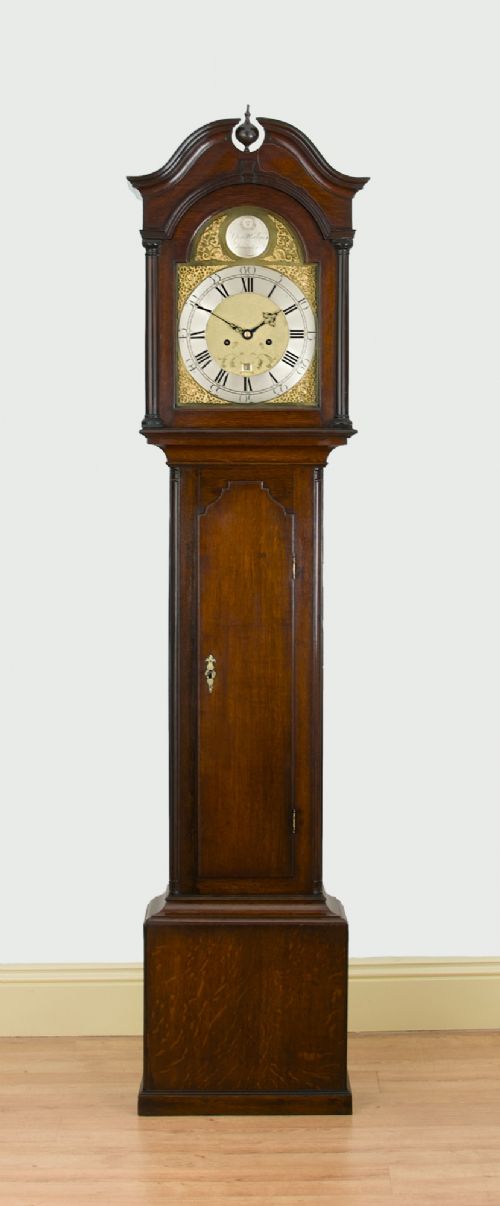


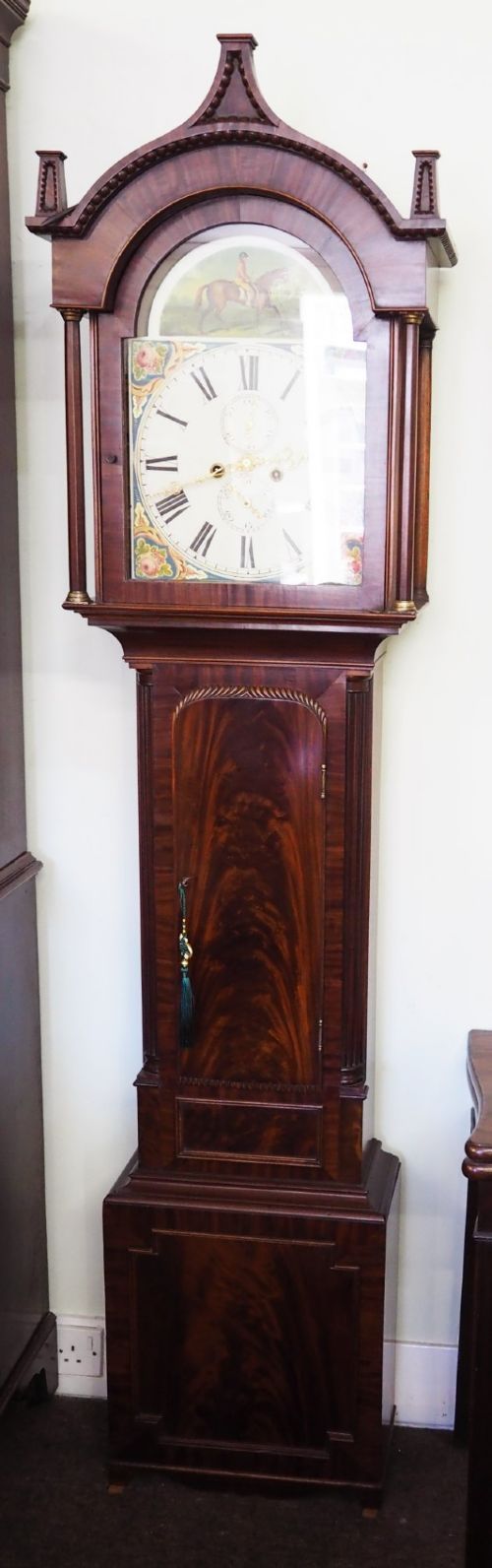


Dark Wood Tallcase Clock
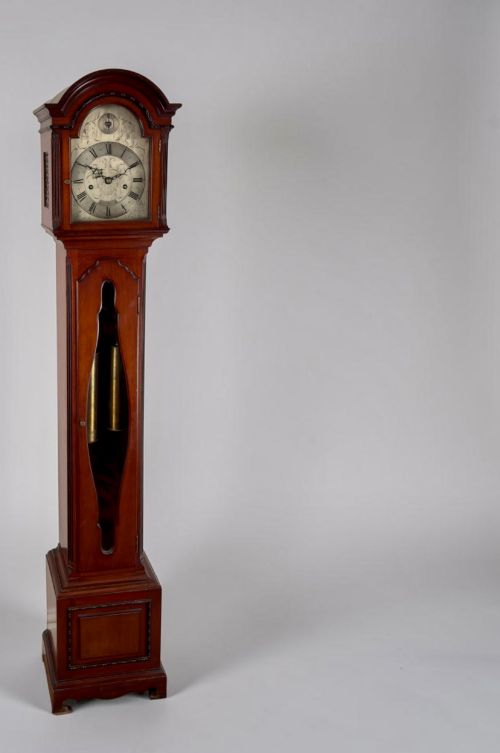
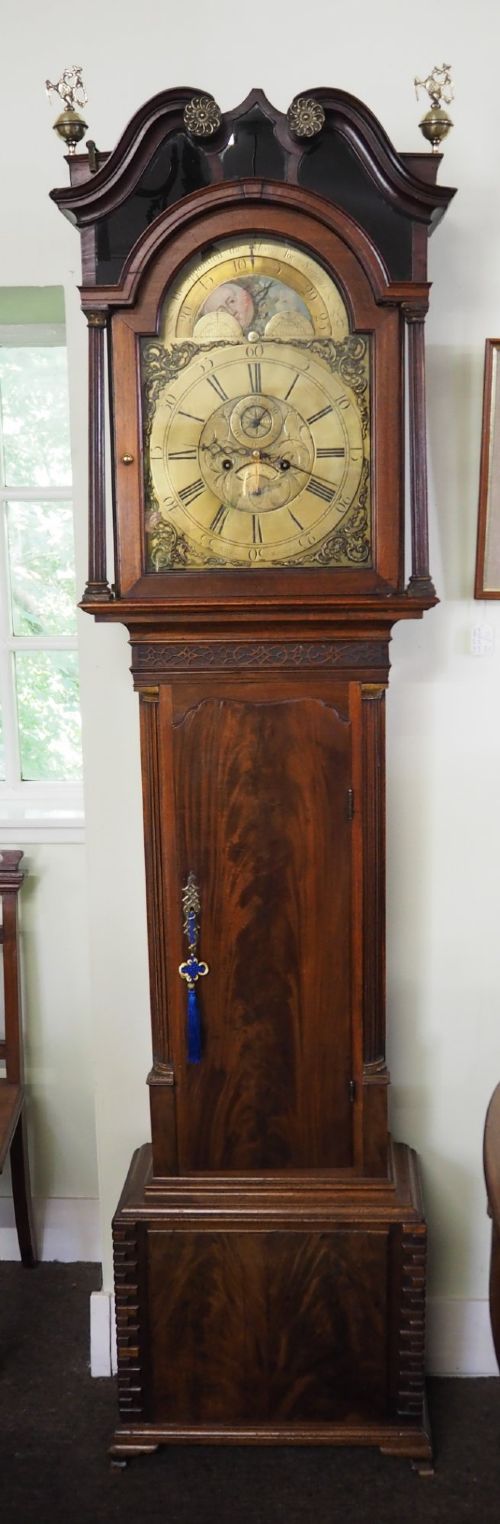
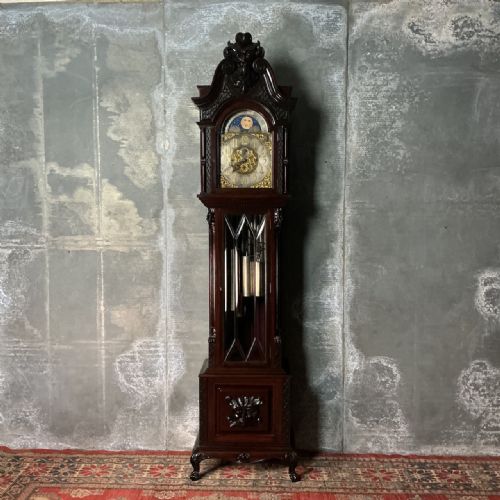
These dark wood tallcase clock pieces bring substantial mahogany presence and precision timekeeping into a room, offering both historical utility and architectural gravitas.
What a dark wood tallcase clock is
A dark wood tallcase clock stands as a commanding floor-standing timekeeper, enclosing weights and a pendulum within a tall wooden housing. These vertical furnishings combine cabinetmaking and horology, serving historically as the principal domestic clock in homes across Britain.
The examples gathered here span the Georgian and 18th century periods, exhibiting regional variations from Manchester, Edinburgh, London, Halifax, and Bristol. Visitors to this page will most frequently encounter mahogany floor-standing clocks featuring brass and painted iron dials.
Tallcase clocks, often termed grandfather clocks in later parlance, range from standard eight-day movements to quarter-striking mechanisms with complex moon dials. Each piece reflects the specific regional preferences of Scottish and English makers working in mahogany during the Georgian era.
What varies in quality
The distinction between standard examples and superior pieces rests in the sophistication of the internal movement and the complexity of the dial. Quarter-striking mechanisms, grid-iron pendulums, and intricate moonphase displays indicate higher technical ambition among makers.
Cabinet quality also dictates standing within the range, visible in the proportion of the mahogany case and the refinement of the hood framing the dial. Regional signatures from notable horologists elevate the historical interest of individual pieces.
Retail Price Guide 2026
Typical UK retail prices for dark wood tallcase clock, calculated from the Sellingantiques database of over a million retail prices indexed since 2003. This retail price guide relies exclusively on Sellingantiques data; no external sources or auction records are used, so the figures do not describe the wider market.
One Edinburgh piece arrives accompanied by a horse, bringing equestrian mystery directly into the Georgian hallway.
Edward Shepley of Manchester·John Shelton London·Thomas Dean of Leigh
The Dark Wood Tallcase Clock Glossary
- Longcase clock
- A tall, floor-standing pendulum clock enclosed in a wooden case. This term serves as the formal designation for pieces often called grandfather clocks.
- Moon dial
- A specialised clock face displaying the lunar phases through a rotating painted disk. This complication tracks the cycle of the moon alongside standard time.
- Grid-iron pendulum
- A temperature-compensated pendulum utilising alternating metal rods to maintain consistent timekeeping accuracy. This mechanical refinement represents advanced horological design.
- Quarter-striking
- A movement mechanism that chimes the time at each quarter-hour interval in addition to the hourly strike. This feature requires complex internal gearing.
- Georgian
- The historical period spanning the reigns of the four King Georges, characterised by distinct architectural and furniture styles. Pieces from this era show characteristic proportion and restraint.
Frequently Asked Questions
How do I wind a tallcase clock?
Winding involves using a specialised key to raise the weights inside the trunk back to the top of the case. Care must be taken not to overwind the movement.
Most eight-day movements require this action weekly, maintaining tension on the driving cords or chains that power the timekeeping and striking trains.
Where should I place a tallcase clock?
Position the piece against a sturdy interior wall on a level floor to ensure the pendulum swings evenly without catching. Avoid areas subject to extreme temperature fluctuations or direct sunlight.
Securing the upper trunk to the wall prevents accidental tipping, protecting both the mahogany housing and the delicate internal mechanics.
Why does the clock have a moon dial?
Historically, tracking lunar phases held practical importance for navigation, tides, and agriculture before widespread electricity. The painted disc rotates behind the dial to show the current phase of the moon.
On these pieces, the moonphase adds visual complexity and indicates a higher grade of movement specification commissioned by the original buyer.
How do I identify Georgian features?
Georgian pieces display classical proportions, restrained architectural mouldings, and the characteristic rich grain of solid mahogany timber. Dial designs often utilise traditional brass spandrels or clean painted iron faces.
Examining the construction methods within the trunk and hood helps confirm the period of manufacture alongside stylistic cues.