
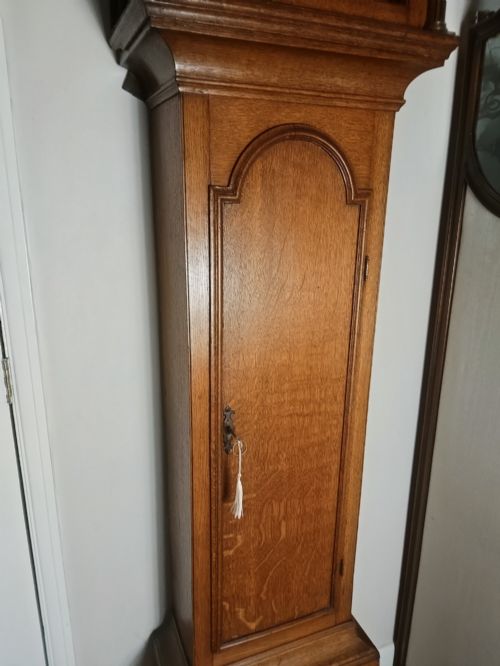
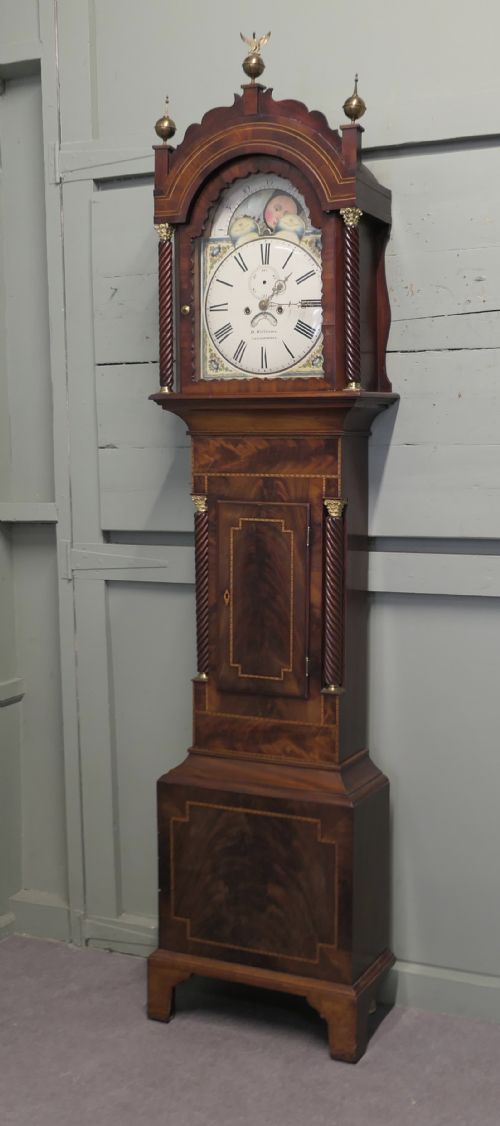
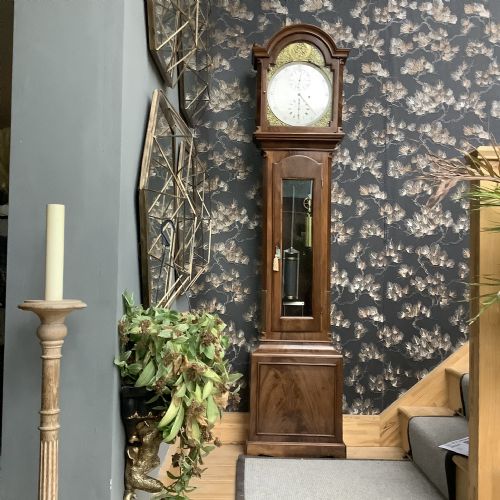

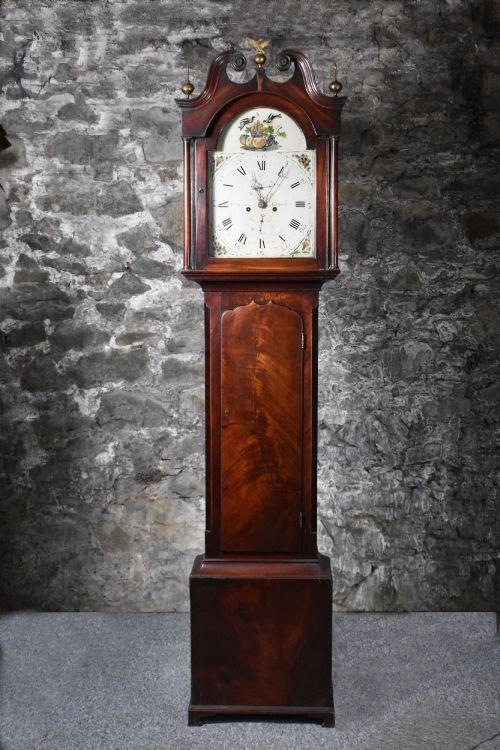


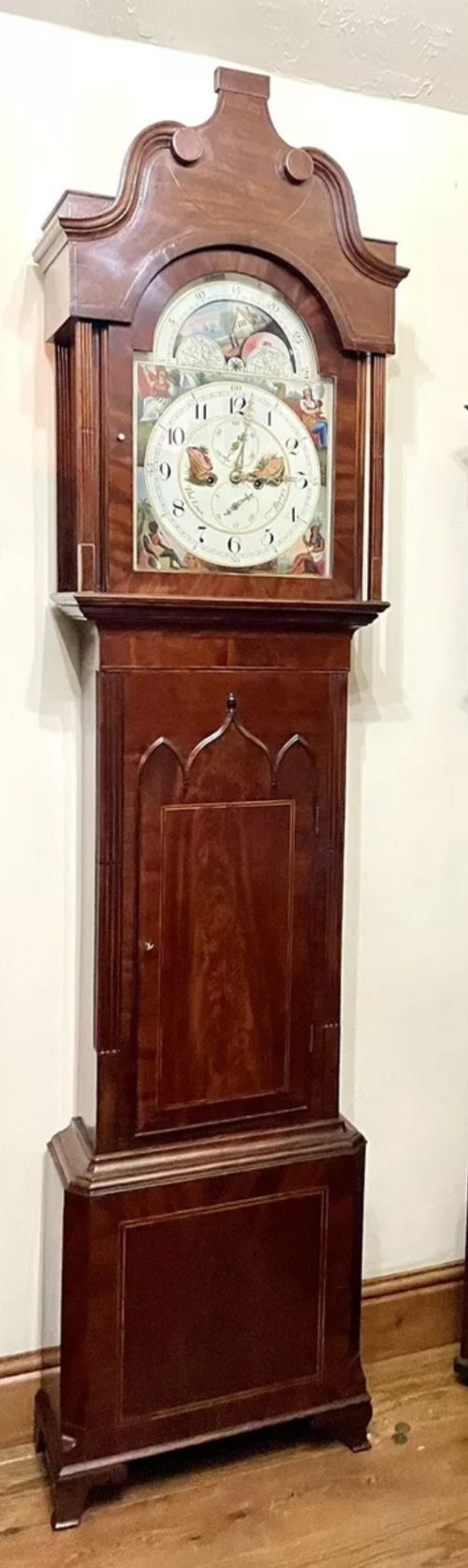
Antique Horology Floor Clock
These antique horology floor clock examples bring tallcase timekeeping to a room, driven by brass movements and housed in timber floor-standing cases.
Antique Horology Floor Clock
When you search for antique horology floor clock, you encounter longcase clocks, grandfather clocks, and granddaughter clocks spanning the 17th, 18th, and 19th centuries. The predominant forms include tall mahogany and oak cases built during the Georgian, George II, and George III periods.
Makers housed these timepieces in woods such as burr walnut, plain walnut, and panelled ebony, alongside simpler oak or mahogany bodies. Dial variations include painted iron, moonphase displays, penny moon dials, and strike-silent mechanisms.
Regional diversity shapes these pieces, with examples originating from London workshops, Scottish makers in Edinburgh and Auchterarder, and provincial towns from Romsey to Crickhowell. Smaller proportions, including miniature grandfather clocks and granddaughter clocks, appear alongside full-sized architectural longcase clocks.
Materials and Construction
Cabinetmakers constructed the tall floor-standing cases using solid and veneered timbers including oak, mahogany, burr walnut, walnut, and panelled ebony. These woods were selected for grain pattern and stability, housing the heavy weight-driven or spring-driven movements securely within trunk and hood structures.
Dial faces incorporate painted iron and brass, often featuring engraved subsidiary seconds, calendar apertures, and rocking ship automata or moonphase mechanisms. Glazed hood doors protect the dial face while allowing clear visibility of the hands and dial artwork.
Listings feature movements spanning the seventeenth, eighteenth, and nineteenth centuries, housed in oak, mahogany, walnut, and ebony.
Judging Quality
Quality rests upon the partnership between the cabinetmaker and the horologist, where figured timbers like burr walnut or rich mahogany meet precision movement engineering by makers such as Joseph Windmills or Henry Massy. The sophistication of the dial work, from strike-silent levers to complex moonphase and rocking ship automata, elevates a piece.
Proportion and architectural integrity dictate visual success, distinguishing diminutive or miniature longcase clocks and well-proportioned granddaughter clocks from heavier, clumsily altered regional pieces. Original surfaces, untouched dial signatures, and crisp cabinetry preservation define the upper tier.
D Williams of Crickhowell·Henry Weedon London·Henry Massy·David Craig Ford Path head·Whitelaw of Edinburgh·Richard Prew Of Tewksbury·Richard Biggs Romsey·Thomas Lees Bury·R Lawson Leigh·Joseph Windmills London·John Drew London·Rowning of Newmarket·Thomas Hall Romsey·Thos Newsom of Tottenham
The Antique Horology Floor Clock Glossary
- Longcase clock
- A tall pendulum clock enclosed in a wooden case standing directly on the floor. These pieces are also commonly referred to as grandfather clocks.
- Moonphase
- A dial mechanism tracking the phases of the lunar cycle through a rotating painted disc. This complication adds visual movement to the clock face.
- Strike-silent
- A mechanism allowing the striking train of the clock to be disengaged at night. It prevents the hour chimes from sounding during sleeping hours.
- Granddaughter clock
- A smaller, scaled-down version of a traditional longcase clock. These compact timepieces suit rooms with lower ceilings while retaining full clockwork functionality.
- Automata
- Mechanical moving figures integrated into the dial face, such as a rocking ship. These animated scenes operate in tandem with the clock movement.
Antique Horology Floor Clock: Frequently Asked Questions
What is a floor clock?
A floor clock is a tall pendulum-driven timekeeper housed in a protective wooden case that stands directly on the floor. These pieces combine cabinetmaking with mechanical horology.
Most examples use heavy weights suspended inside the trunk to power the going and striking trains over thirty-day or eight-day cycles.
How do I tell periods apart?
Cabinet timber and architectural styling provide the clearest indicators of age across 17th, 18th, and 19th-century pieces. Early periods favour panelled ebony, burr walnut, and rich oak with square dial configurations.
Later Georgian and Victorian pieces frequently utilise figured mahogany, painted iron dials, and arched hoods framing complex moonphase mechanisms or rocking ship automata.
Where were these clocks made?
Makers operated in major urban centres like London alongside active provincial workshops across England and Scotland. Regional schools developed distinct preferences for local timbers and dial decoration.
Towns from Romsey to Edinburgh produced specialised movements signed directly on the dial face by the resident horologist.
How do I live with one?
Floor clocks require a stable, plumb vertical position against a wall to ensure the pendulum swings evenly and keeps accurate time. Placing them away from direct heat sources protects the timber case.
Routine care involves winding the movement at regular intervals and ensuring the floor surface beneath the base remains firm and level.