


Antique Chinoiserie Clock
An antique chinoiserie clock brings European lacquerwork and painted Orientalist motifs into domestic spaces, rewarding collectors who appreciate historical timepieces.
Defining Antique Chinoiserie Clocks
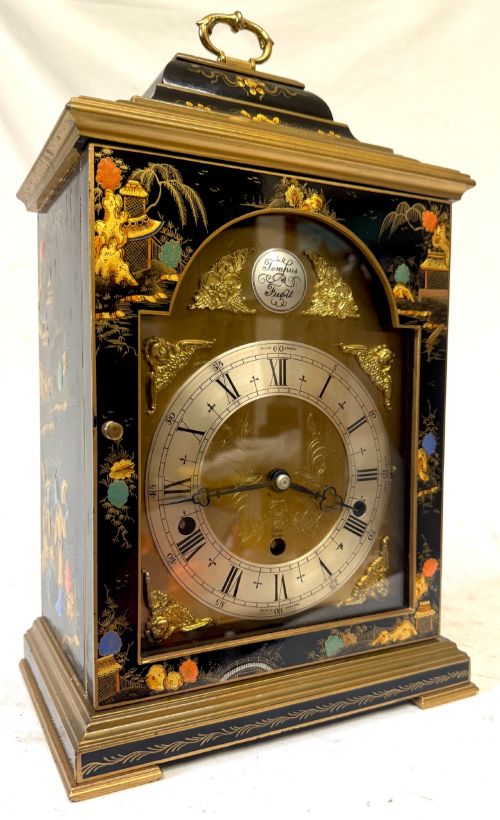
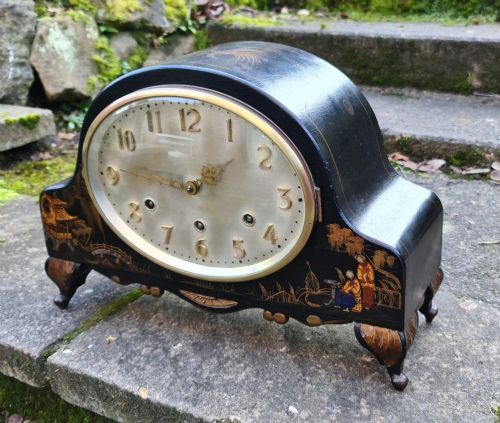
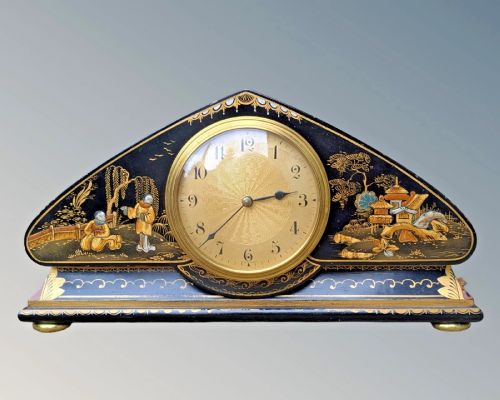
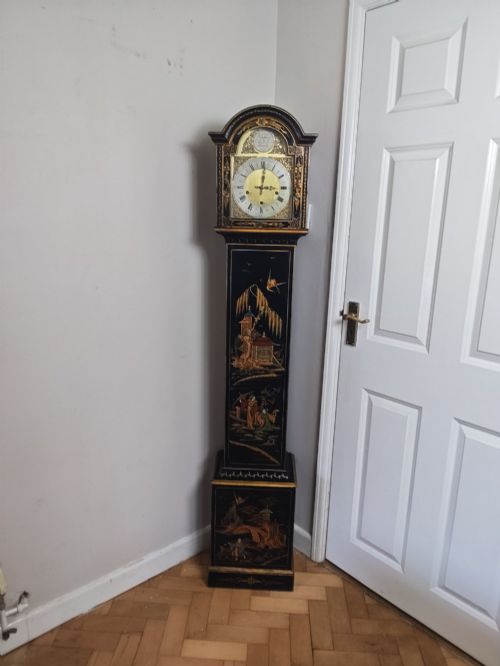
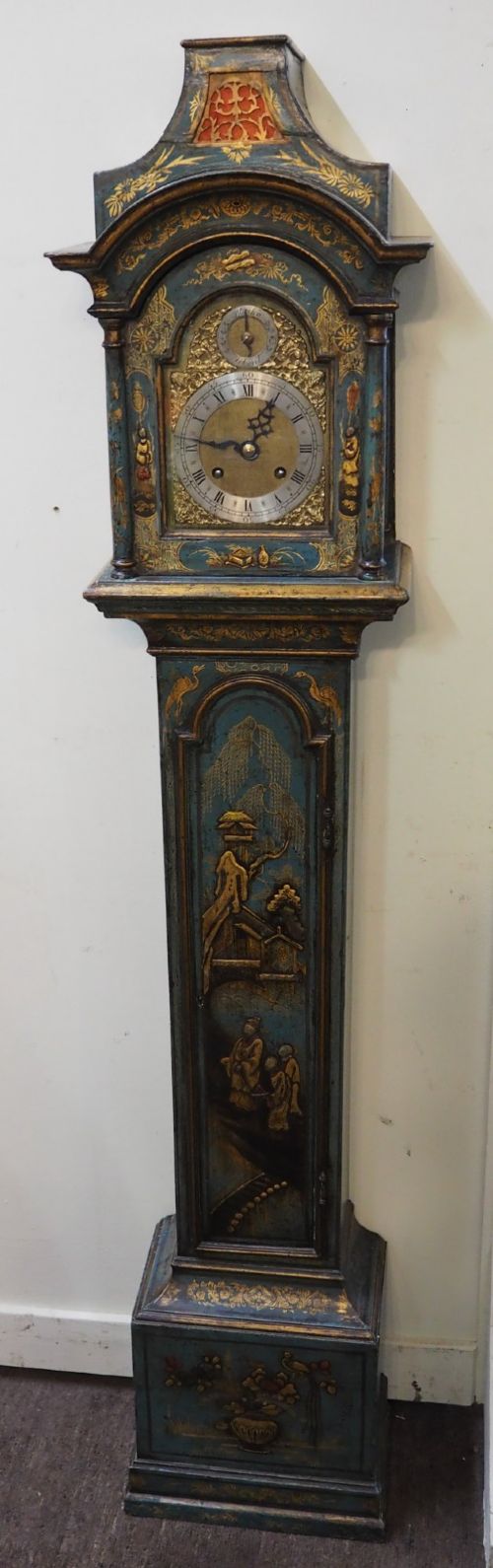
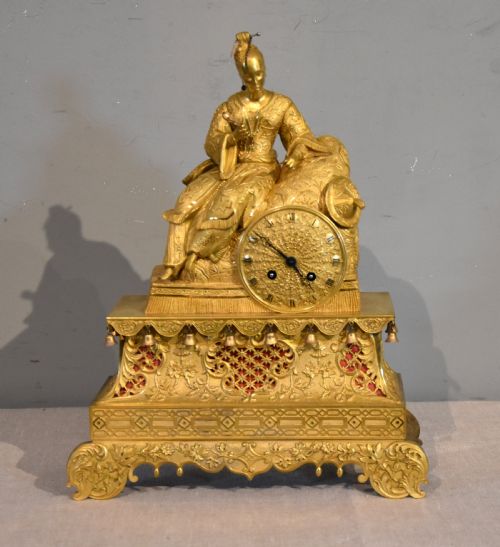
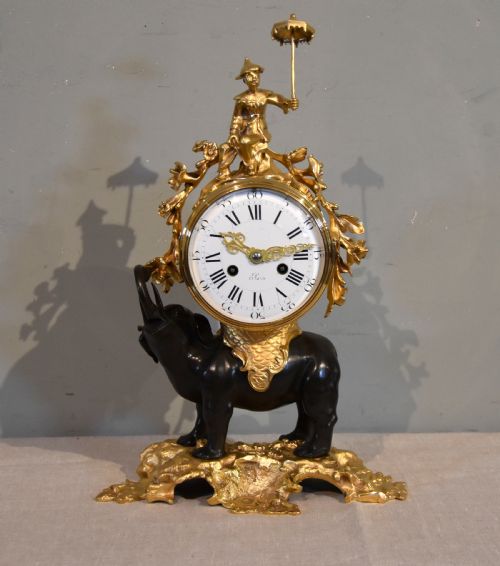
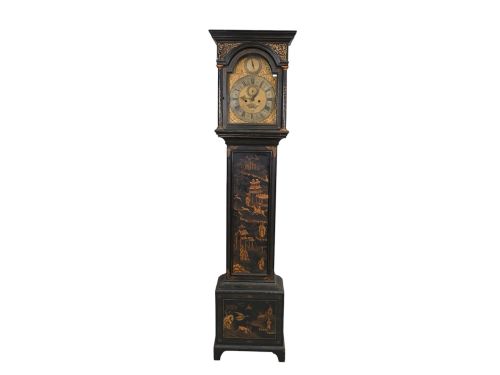
When you search for an antique chinoiserie clock, you encounter timepieces housed in decorated cases that span several distinct periods including Georgian, Edwardian, and Art Deco eras. These pieces take the form of tall longcase clocks, often called grandfather or grandmother clocks, alongside a wide variety of smaller mantel and desk clocks.
The version you are most likely to meet on this page is a lacquered wood mantel clock or a taller grandfather clock featuring traditional Asian-inspired painted scenes. Surviving examples range from early eighteenth-century longcase clocks to twentieth-century mantelpieces produced by makers such as Japy Frères, Lenzkirch, and Asprey of London.
Materials and Construction
The construction of these timepieces relies heavily on wood bases coated in lacquer or japanned finishes, complemented by brass dials, silvered brass chapters, and protective glass panels. Craftsmen applied multiple layers of lacquer to create smooth grounds before executing detailed decorative scenes.
Retail Price Guide 2026
Typical UK retail prices for chinoiserie clock, calculated from the Sellingantiques database of over a million retail prices indexed since 2003. This retail price guide relies exclusively on Sellingantiques data; no external sources or auction records are used, so the figures do not describe the wider market.
Some clocks feature automaton scenes where tiny figures move while the mechanism keeps time.
Judging Quality and Execution
The distinction between ordinary and exceptional pieces rests upon the finesse of the lacquerwork and the sophistication of the internal movement. Superior examples exhibit deep, layered finishes with crisp painted details, while lesser specimens display flat surfaces and faded ornamentation.
Japy Freres·Lenzkirch·Asprey of London
The Antique Chinoiserie Clock Glossary
- Chinoiserie
- European decorative style reflecting Chinese and East Asian artistic influences through painted scenes and motifs. This aesthetic became particularly popular during the Georgian period and resurfaced in later twentieth-century design.
- Japanned Wood
- European furniture finish created to imitate East Asian lacquerwork using resin varnishes and metallic dust. Artisans built up dark glossy grounds before adding raised gilt figures and landscapes.
- Longcase Clock
- Tall pendulum clock housed in a wooden floor-standing case, frequently referred to as a grandfather clock. These grand timepieces often feature arched dials and pagoda tops.
- Automaton Clock
- Mechanical timepiece incorporating moving figures or animated scenes driven by the internal movement. These theatrical additions appear on select eighteenth-century longcase examples.
- Silvered Brass
- Metal dial component treated to achieve a silvery finish, usually engraved with numerals and maker details. This treatment provides high contrast against dark brass bezels and lacquered surrounds.
Frequently Asked Questions
What periods do these clocks cover?
The available selection spans from early eighteenth-century Georgian longcases to Edwardian and Art Deco mantel clocks. This broad timeline reflects shifting interior tastes for Orientalist decoration across successive centuries.
Buyers encounter everything from towering grandfather clocks made around seventeen-fifty to compact twentieth-century desk and mantel timepieces.
How do I care for a lacquered case?
Lacquered and japanned surfaces require stable indoor humidity away from direct sunlight to prevent cracking or fading. Gentle dusting with a soft cloth preserves the delicate painted finishes without abrasive cleaners.
Maintaining the internal mechanical movement requires professional servicing every few years to ensure the gear trains run smoothly.
What is the difference between longcase and mantel clocks?
Longcase clocks are tall floor-standing timepieces designed to anchor a hallway or principal room, housing long pendulums and weights. Mantel clocks are smaller tabletop or shelf models built for domestic rooms with portable spring-driven movements.
Both formats utilise chinoiserie decoration, but their scale and mechanical inner workings differ substantially.
Are these clocks powered by weights or springs?
Longcase clocks typically rely on hanging weights suspended within the tall wooden trunk to drive the timekeeping and striking trains. Mantel and desk clocks generally utilise internal spring barrels wound with a key.
Eight-day movements appear across both categories, requiring winding approximately once a week to maintain accurate time.