
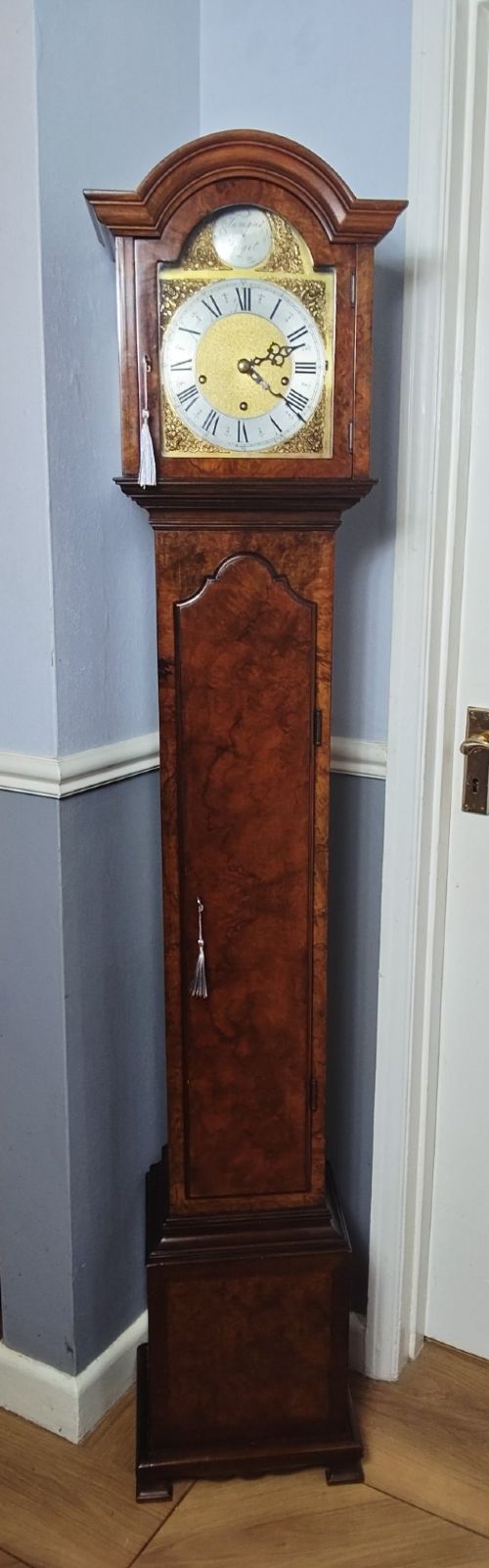
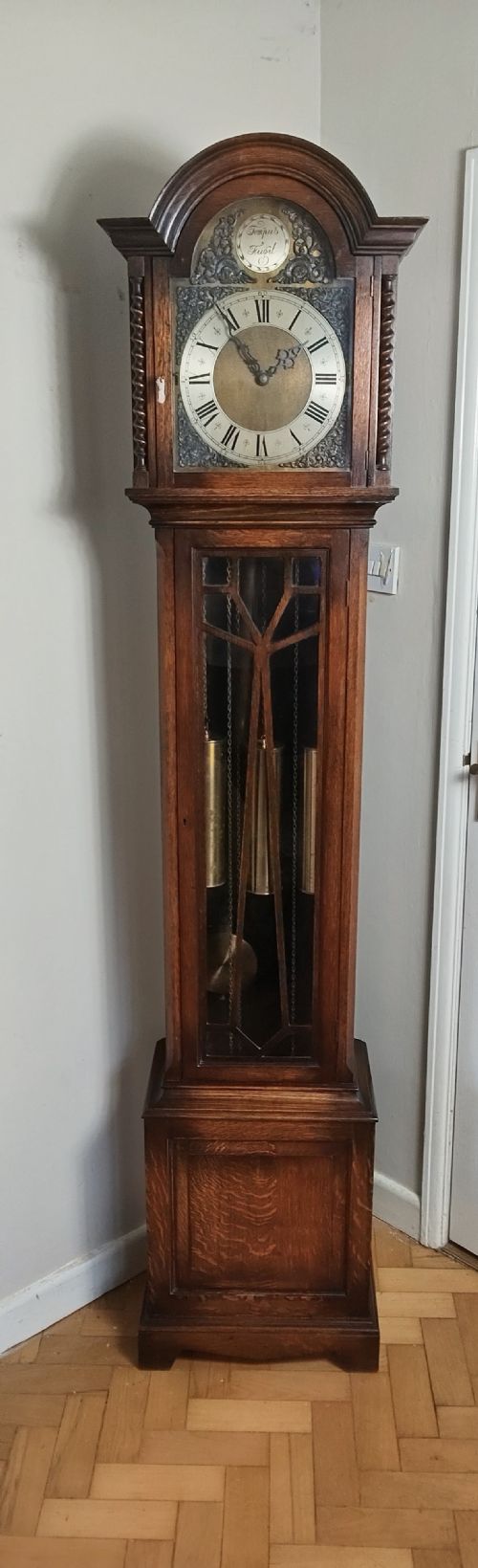
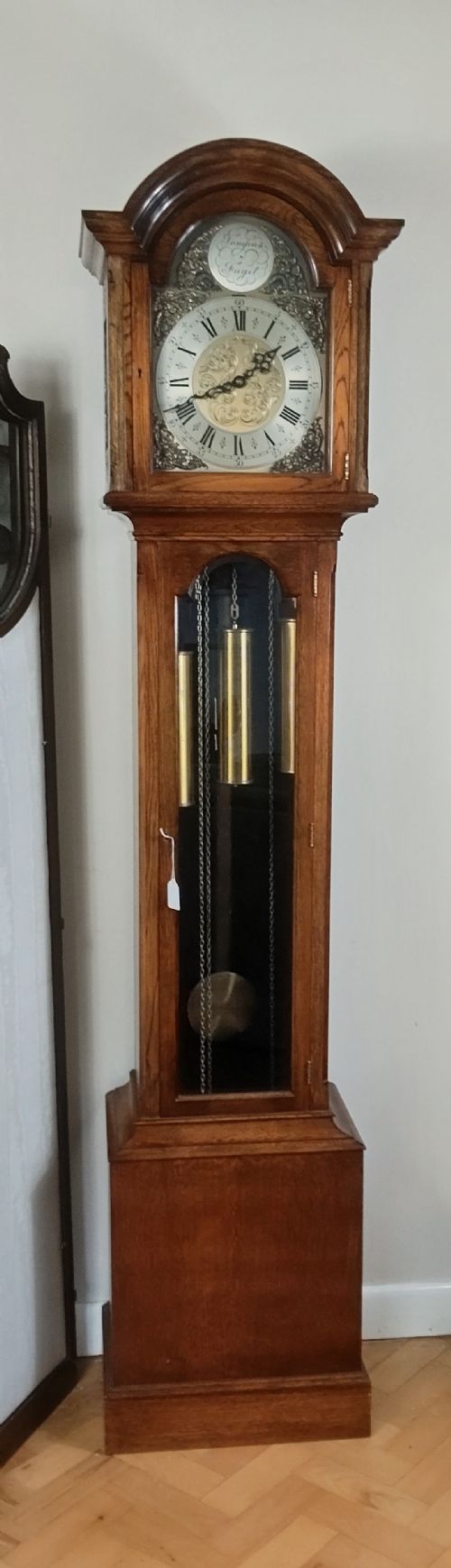


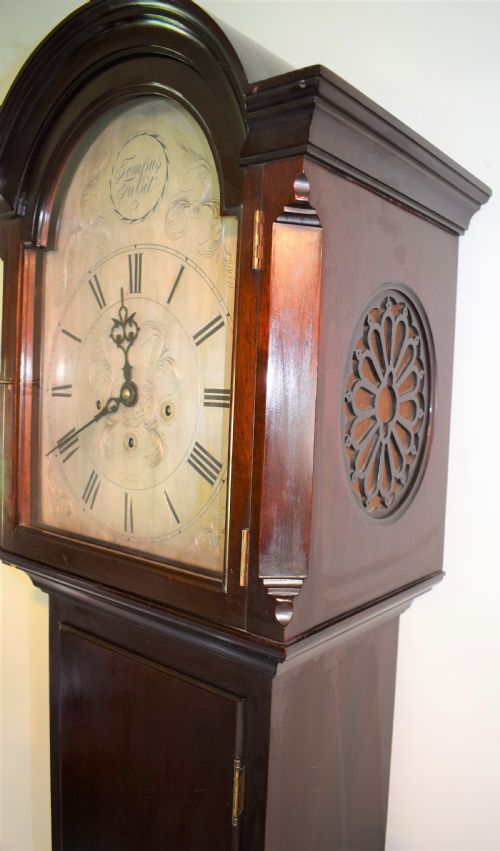

Tempus Fugit Grandfather Clock
A tempus fugit grandfather clock brings the steady rhythm of a mechanical movement and classic dial markings into a room.
Tempus Fugit Grandfather Clock
When you search for a tempus fugit grandfather clock, you are looking at tall floor-standing timepieces that carry the traditional Latin inscription meaning time flees on their dials. These clocks appear in various forms across our listings, ranging from full-sized oak and mahogany models to smaller grandmother clocks and miniature versions.
Most pieces available in this category date from the early twentieth century, particularly the 1920s and 1930s, when musical movements and quarter chiming mechanisms became popular in British homes. These later clocks often combine traditional longcase proportions with modern chiming capabilities, offering the presence of an antique without the extreme age.
How they were made
Cabinet makers built the tall wooden cases using sturdy timbers like oak, mahogany, and walnut, frequently applying figured veneers or burr walnut to create decorative front panels. Some specialist examples received japanned or lacquered finishes in the manner of earlier chinoiserie decoration, adding hand-painted pictorial details to the wood surface.
The mechanical movements inside incorporate brass dials, steel components, and glass panels fitted into the trunk door to protect the swinging pendulum. Weight-driven systems, including triple weight setups, power the timekeeping and the quarter chiming or musical functions.
A cheerful reminder that time flies, etched in brass.
What varies in quality
The distinction between a standard production model and a finer piece often lies in the selection of cabinet timbers and the complexity of the movement. Cases veneered in carefully matched burr walnut or featuring detailed Japanned work sit above simpler solid oak or mahogany enclosures.
Quality also shows in the acoustic performance and engineering of the movement, such as quarter chiming mechanisms and musical plays. Clocks bearing the signatures of known makers or retailers demonstrate higher standards of workshop execution and dial engraving.
Enfield·Geo Tarratt of Leicester
The Tempus Fugit Grandfather Clock Glossary
- Tempus fugit
- Latin for time flees, commonly inscribed on clock dials as a reminder of the fleeting nature of hours. It frequently appears on movements dating from the late nineteenth and early twentieth centuries.
- Grandmother clock
- A smaller version of the traditional longcase clock, typically standing shorter in height. These compact clocks gained popularity during the early twentieth century for rooms with lower ceilings.
- Longcase clock
- The formal term for a tall pendulum clock enclosed in a wooden case standing directly on the floor. They are commonly known by the vernacular name grandfather clock.
- Chinoiserie
- European decorative style imitating Chinese artistic traditions, featuring raised figures and gold motifs on lacquered backgrounds. This technique appears on certain eighteenth-century and revival longcase clocks.
- Quarter chiming
- A mechanical movement feature that sounds the quarters of the hour using multiple gongs or bells. This capability is often paired with Westminster chime melodies.
Tempus Fugit Grandfather Clock: Frequently Asked Questions
What does tempus fugit mean on a clock?
The phrase translates from Latin as time flees, serving as a traditional philosophical motto inscribed across the dial face.
It appears frequently on clock faces from the late nineteenth and early twentieth centuries to remind observers of the passing hours.
How tall is a grandmother clock?
A grandmother clock stands noticeably shorter than a standard full-sized grandfather clock, usually measuring under six feet.
This reduced height makes them suitable for smaller domestic spaces while retaining the classic longcase proportions and pendulum movement.
What is the difference between a grandfather and grandmother clock?
The primary difference lies in overall height and cabinet proportions, with grandmother clocks offering a more compact floor-standing profile.
Both types house similar pendulum movements and dial configurations, but the smaller variant suits tighter interior layouts.
How do you wind a weight-driven longcase clock?
Weights suspended inside the trunk must be pulled upward using a winding key or by drawing the chains attached to the movement.
Careful handling ensures the internal brass gears and escapement remain undisturbed during the process.
Are these clocks mechanically driven?
These timepieces rely on mechanical movements driven by hanging weights and regulated by a swinging pendulum inside the case.
They require periodic manual winding to keep the timekeeping and chiming functions operating correctly.