


Georgian Lacquered Grandfather Clock
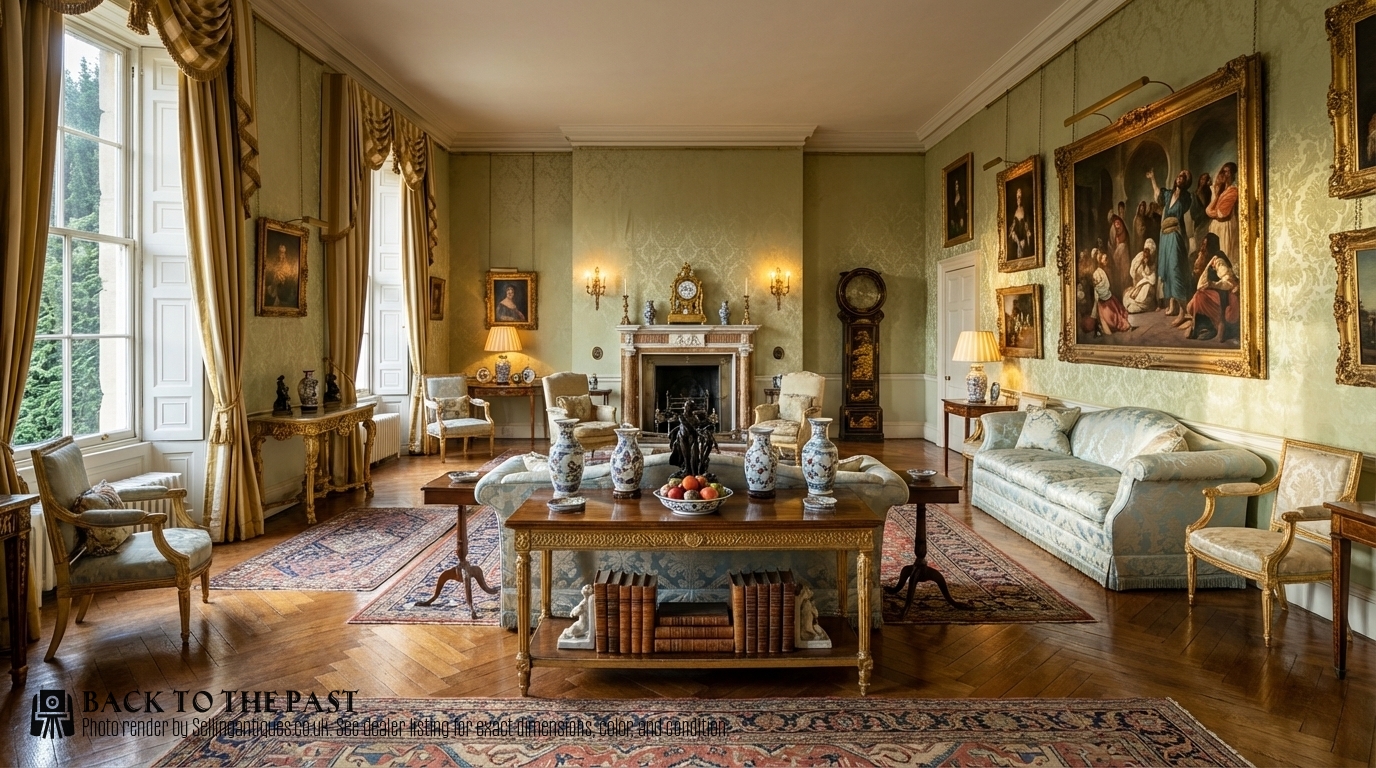
A georgian lacquered grandfather clock brings centuries of hand-painted narrative and dependable brass movement into a hallway.
Georgian Lacquered Grandfather Clock
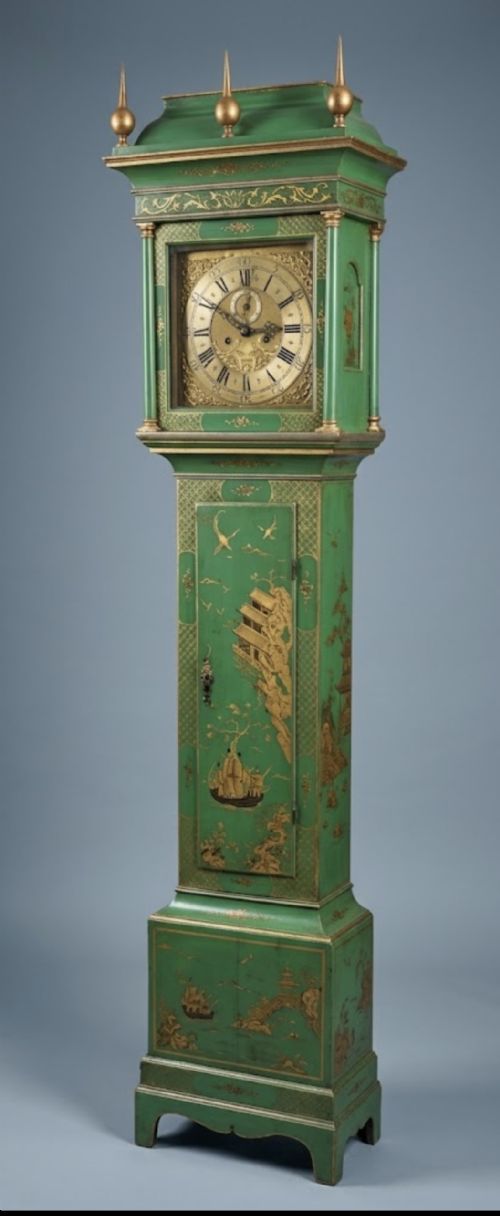
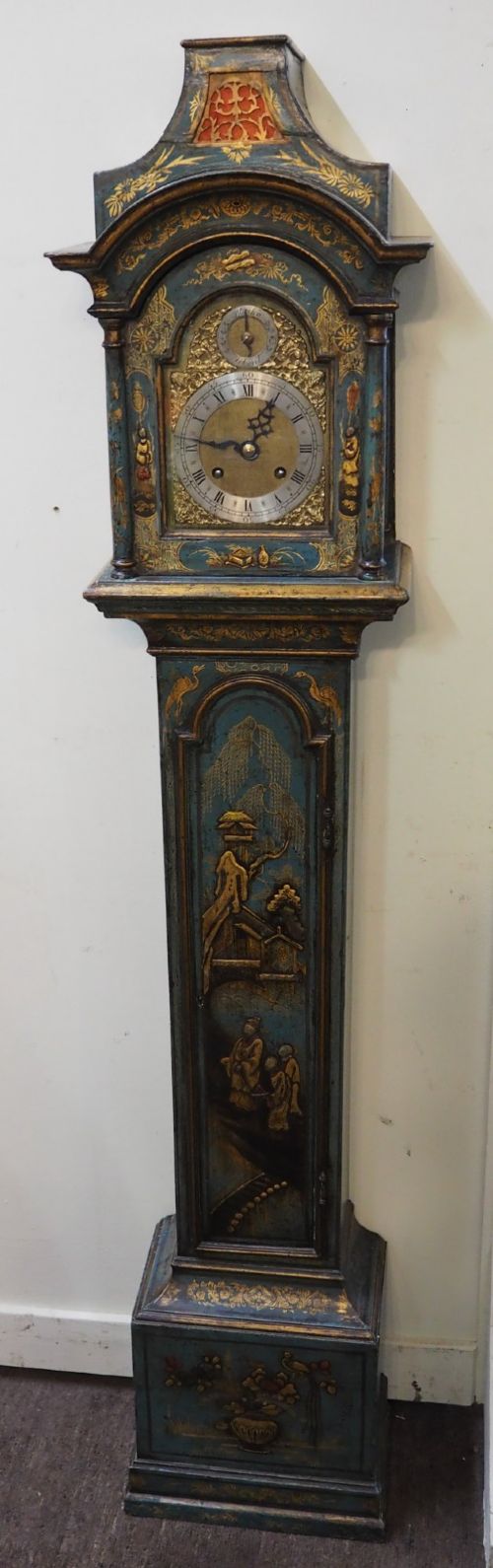
A georgian lacquered grandfather clock stands as a towering piece of horological history, combining tall timber casework with intricate painted decoration. The examples found here span the eighteenth and nineteenth centuries, taking the form of both full-sized longcase clocks and smaller grandmother clocks.
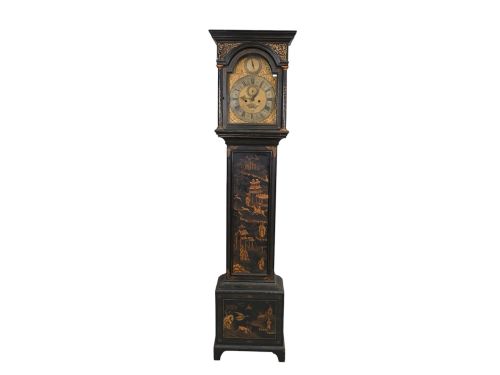
Most pieces on this page lean heavily into the chinoiserie aesthetic, displaying dark green, blue, or gilt lacquer surfaces. Makers from London, Edinburgh, and regional towns such as Alton and Reading signed these dial faces during the Georgian period.
The housing protects delicate brass clockwork movements, sometimes featuring automata or a rocking Father Time above the dial. Buyers encounter everything from early Georgian pieces dating to seventeen-twenty up to nineteenth-century interpretations.

Materials and construction
Craftsmen built the tall wooden cases using local timber before applying layers of lacquer, gold leaf, and pigment. Japanned surfaces were built up gradually, creating the characteristic glossy finish seen on chinoiserie longcase clocks.
The mechanical interiors rely on heavy brass movements driven by weights and controlled by pendulums. Glass protects the dial face, often framed by decorative brass bezels and spandrels.
Makers from London, Edinburgh, and Yarmouth signed the brass movements found inside these lacquered cases.
Judging the work
Quality rests in the depth of the lacquer work and the crispness of the gilt details painted onto the wood. Superior pieces exhibit lively chinoiserie scenes that retain their original colour and pigment saturation across the entire case.
The reputation of the horologist signing the brass dial also elevates a piece, as does the survival of original components like rocking automata or complex eight-day movements.
John Fielder of Alton·William Kipling London·Wise of Reading·Thomas Utting of Yarmouth·Gardner of London·Robert Berry
The Georgian Lacquered Grandfather Clock Glossary
- Longcase clock
- A tall pendulum clock enclosed in a wooden case, commonly known as a grandfather clock. These floor-standing timepieces protect the weights and pendulum behind a secure front door.
- Chinoiserie
- European interpretations of traditional Chinese artistic motifs and decorative styles. This aesthetic defines the painted lacquer scenes on many Georgian clock cases.
- Japanned wood
- European furniture finished with varnishes and lacquers in imitation of Asian lacquerwork. Craftsmen built up multiple layers of finish to achieve a hard, glossy surface.
- Spandrels
- The ornamental corners found on the square or arched face surrounding the clock dial. These brass corners are often cast in relief with decorative scrollwork or cherubs.
- Automaton
- A moving mechanical figure integrated into the clock dial to animate the scene. Examples include rocking figures like Father Time moving in time with the pendulum.
Georgian Lacquered Grandfather Clock: Frequently Asked Questions
How do I wind an eight-day grandfather clock?
Use the winding key provided to gently draw up the weights inside the waist door every week. Take care not to overwind the movement past its natural stop point.
Keep the pendulum locked or secured if you need to move the heavy timber case to a different room in the house.
Where should I place a longcase clock?
Position the tall wooden case against a sturdy interior wall away from direct sunlight and damp draughts. External walls can experience temperature swings that affect the wood and the brass movement.
Ensure the floor is level so the pendulum swings evenly and the clock keeps accurate time throughout the day.
How do I tell an 18th-century clock from a later one?
Examine the construction of the wooden case, the style of the painted chinoiserie decoration, and the signature on the brass dial face. Eighteenth-century examples often bear the names of regional makers or London horologists active during the Georgian era.
Later nineteenth-century pieces may show different pigment wear patterns and variations in the cast brass spandrels surrounding the dial.
Why does my clock lose or gain time?
Changes in household temperature cause the metal pendulum rod to expand or contract slightly. You can adjust the small nut at the bottom of the pendulum to speed up or slow down the beat.
Regular servicing by a professional horologist keeps the brass gears clean and ensures the weight-driven mechanism runs smoothly.