


Gilt Chinoiserie Clock
A gilt chinoiserie clock brings oriental lacquer and gilt decoration together with precision clockwork for a striking interior statement.

Gilt Chinoiserie Clock
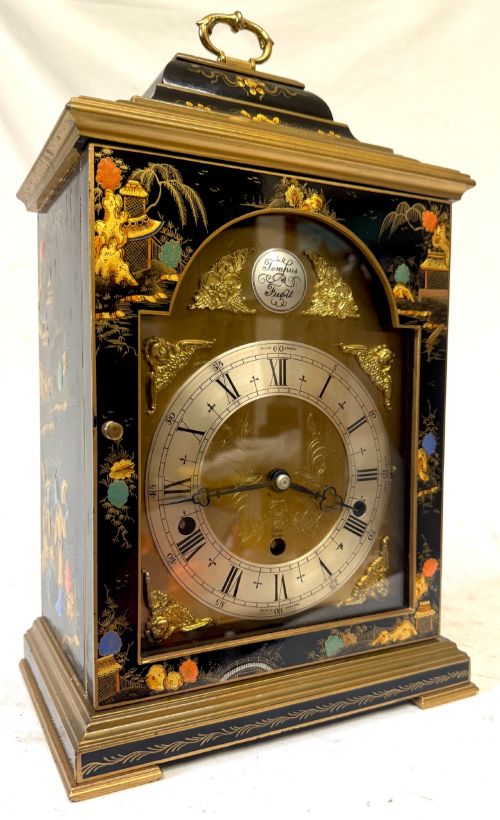
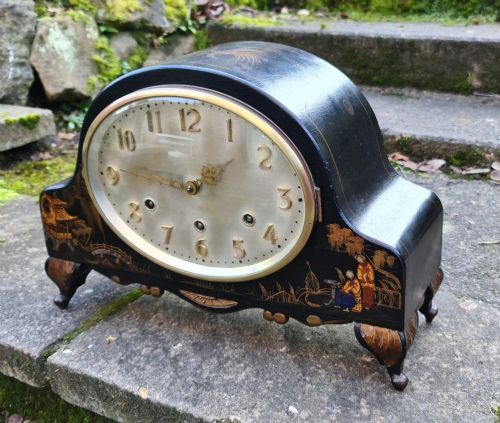
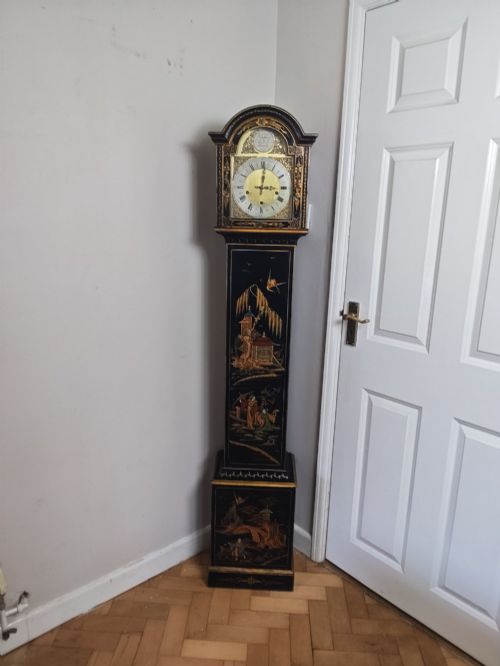
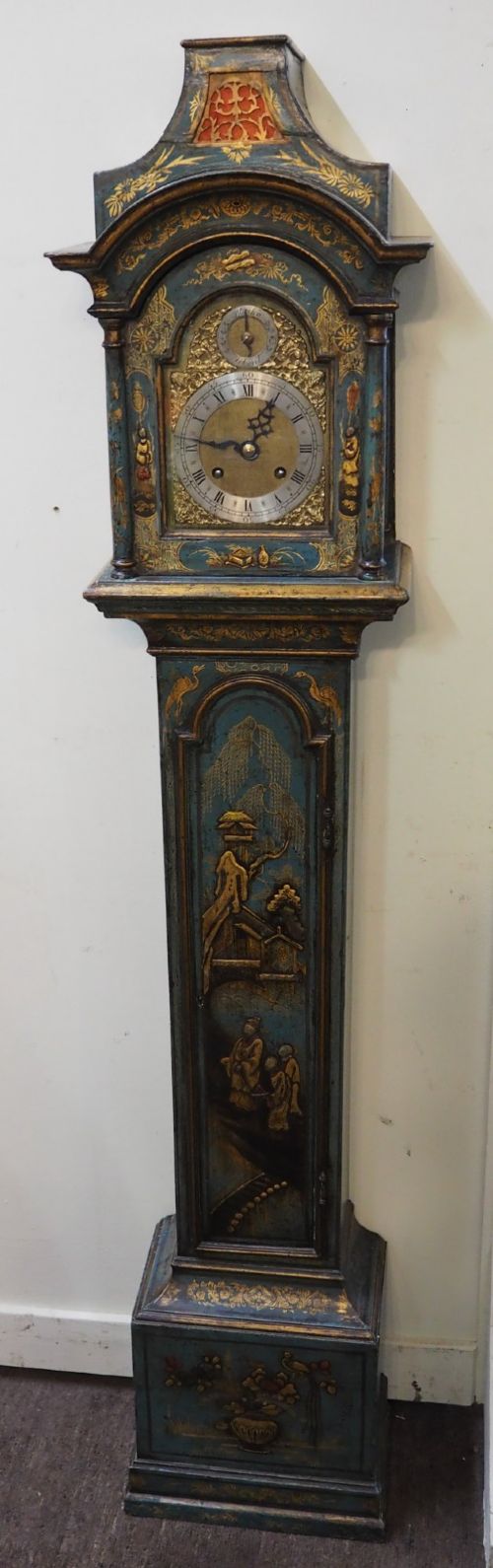
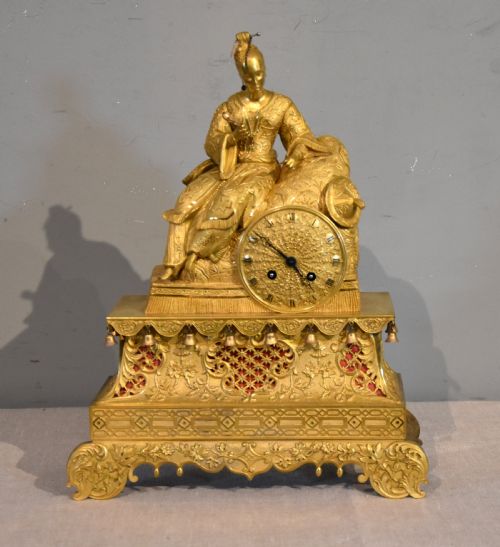
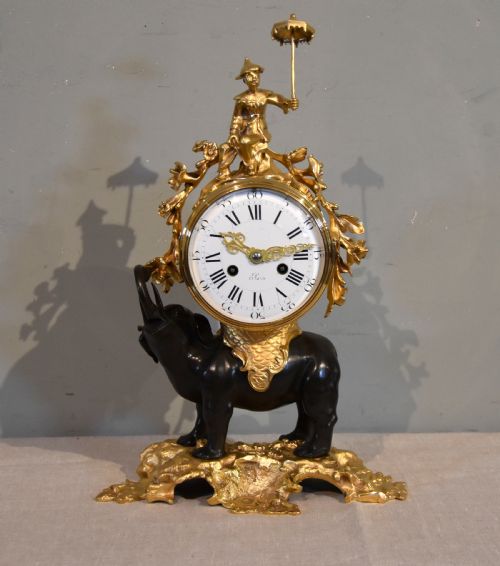
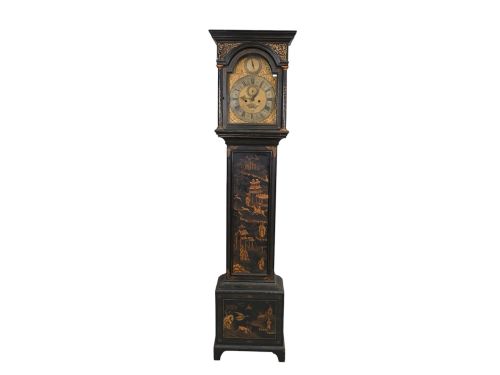
A gilt chinoiserie clock combines structural timber forms with decorative painted motifs and metallic highlights, echoing European fascination with Eastern aesthetics. The most frequent examples appearing here take the form of tall longcase clocks and smaller mantel or bracket clocks.
Makers produced these pieces across several periods, spanning from early Georgian masterworks to Edwardian and later revivals. Buyers encounter various colour grounds, including black, green, blue and red lacquer, enriched with gilt details.
The selection ranges from grand floor-standing grandfather and grandmother clocks to compact desk clocks and bracket pieces. Each variant offers a distinct scale while maintaining the characteristic ornamented surface design.
Materials and construction methods
Craftsmen built the underlying carcases from wood, applying multiple layers of lacquer to achieve a smooth ground before decorating the surface with raised or flat gilt motifs. This traditional japanning technique required patience, with each layer cured and polished.
Movements utilise brass components alongside iron or steel wheels and escapements, frequently powered by weighted cords or spring-driven barrels. Gilt bronze, ormolu, and brass mounts further frame the dial openings and glass panels.
Gilt Chinoiserie Clock Retail Price Guide 2026
Typical asking prices for gilt chinoiserie clock among the pieces listed under this phrase on Sellingantiques today, from the lower quarter to the upper quarter. They describe what is for sale here now, not the wider market.
Some models hide musical trains or moving automata within their painted lacquer doors, bringing silent painted scenes to life.
Assessing craftsmanship and finish
Quality rests in the depth of the lacquer finish, the crispness of the gilt detailing, and the complexity of the clock movement inside. Superior examples display finely rendered figures and landscapes without fading or clumsy repairs to the painted ground.
The sophistication of the mechanical movement, whether featuring musical chimes, multiple trains, or automaton functions, distinguishes standard pieces from exceptional workshop output. Original brass dials and signed backplates elevate the historical integrity of the item.
William Kipling London·Wise of Reading·Gardner of London·James Smith·Chater & Son·Robert Berry·Elliott London·Jaeger Le Coultre
The Gilt Chinoiserie Clock Glossary
- Chinoiserie
- European artistic interpretation of Chinese and East Asian decorative styles, popular in furniture and clockmaking. It relies on motifs of pavilions, figures, and flora.
- Japanning
- European imitation of Asian lacquerwork created by building up resin layers on a wooden base. Artisans then decorate the hardened surface with gold dust or paint.
- Longcase clock
- A tall pendulum clock housed in a wooden case that rests on the floor, often termed a grandfather or grandmother clock. These tall enclosures protect the weighted movement.
- Ormolu
- Gilt bronze ornaments applied to furniture and clock cases to provide bright metallic contrast. The process involves coating metal objects in a mercury and gold amalgam.
- Bracket clock
- A portable table or shelf clock originally designed to sit on a wall bracket. Many feature arched wooden cases with carrying handles on top.
Gilt Chinoiserie Clock: Frequently Asked Questions
What is a chinoiserie clock?
A chinoiserie clock is a timekeeper decorated with European interpretations of East Asian art, typically featuring gold designs on a lacquered wooden background. These pieces range from tall floor-standing models to compact mantel clocks.
They serve both a practical timekeeping function and a decorative role, bringing colour and pattern into a room through traditional lacquer techniques.
How do I date a lacquer clock?
Dating relies on examining the construction of the wooden case, the style of the dial, and the signature of the maker if one is present. Earlier examples from the eighteenth century show distinct dial proportions and movement mounting methods compared to later revivals.
Materials and hinge types also provide clues, as cabinetmaking standards shifted between the Georgian era and the twentieth-century revival periods.
Where should I place a longcase clock?
Longcase clocks require a stable, dry interior wall with a firm floor surface to keep the pendulum swinging evenly. Hallways, living rooms, and landings offer suitable spaces where the height and visual weight of the case can anchor the room.
Avoid placing mechanical clocks near direct heat sources, damp areas, or locations exposed to strong sunlight that might affect the lacquer finish.
What maintenance do these clocks need?
Mechanical clocks require regular winding according to their train design, whether eight-day or thirty-hour movements. Professional servicing every few years ensures the brass gears, pivots, and escapements remain clean and properly lubricated.
The lacquered wooden case benefits from gentle dusting with a soft cloth, avoiding harsh modern chemical polishes that can damage the delicate gilt surface.