


Black Chinoiserie Clock
A black chinoiserie clock brings orientalist narrative scenes and rich dark lacquer to any room.
Black Chinoiserie Clock
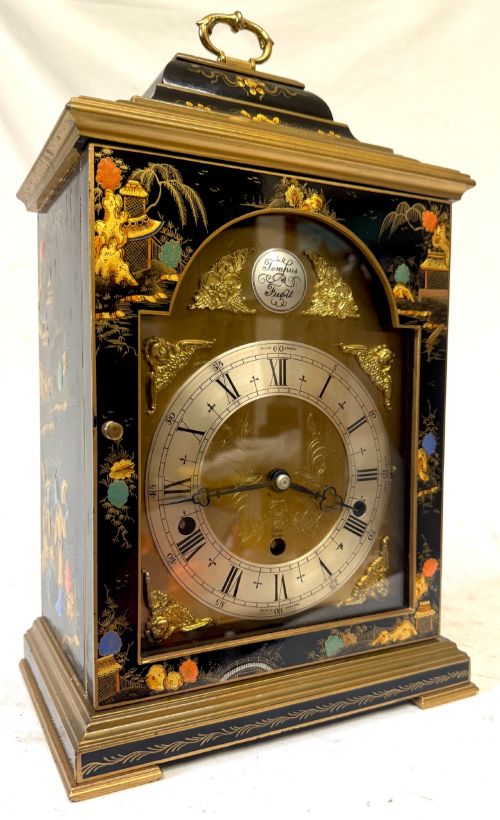
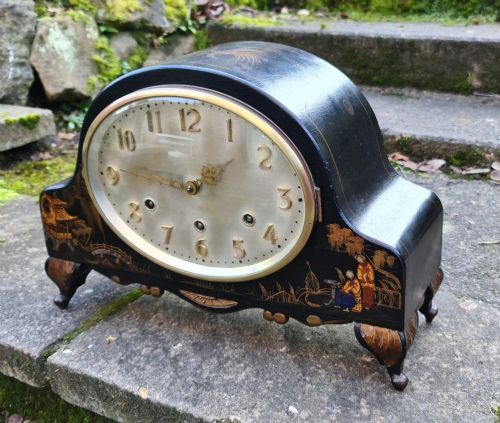
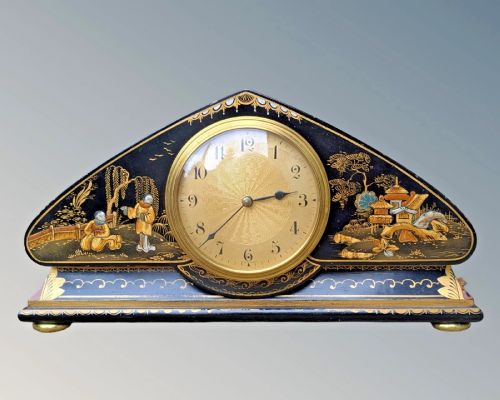
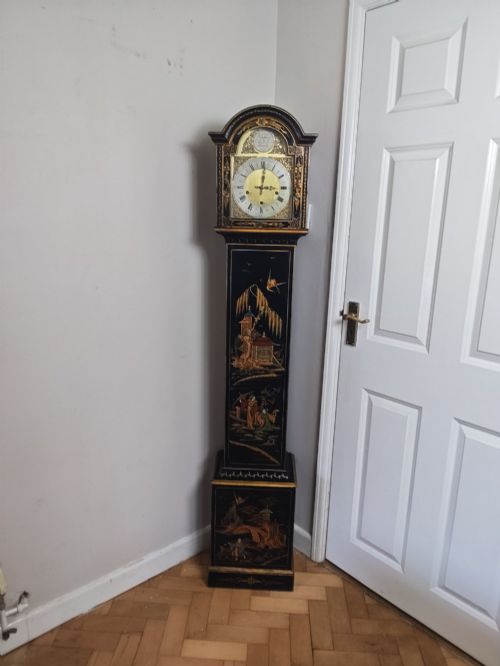
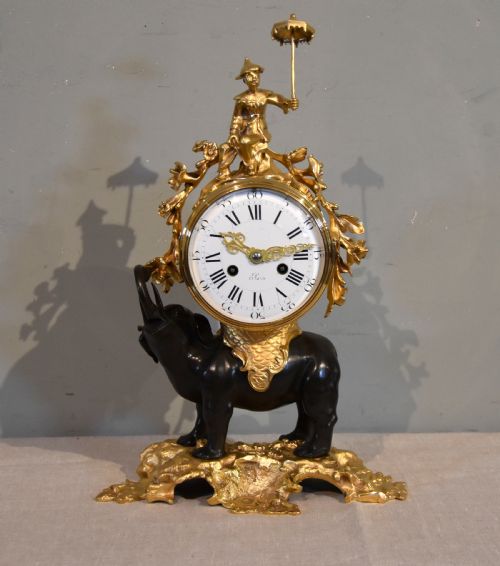
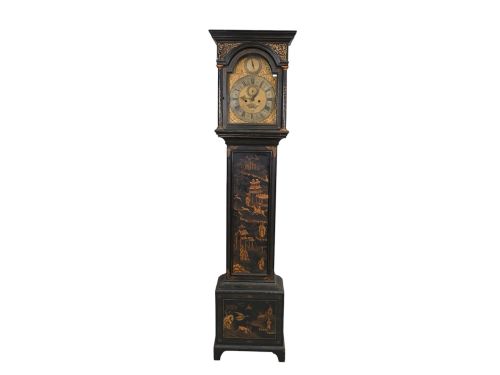
A black chinoiserie clock is a timekeeper featuring decorative scenes inspired by East Asian art rendered on a dark lacquered or japanned surface. These pieces range from grand floor-standing longcase clocks to compact mantel and desk models designed for domestic use.
Buyers encounter grandfathers and grandmothers alongside twentieth-century mantelpieces bearing distinct gilt motifs. The selection includes works spanning the eighteenth century through the mid-twentieth century.
Longcase clocks dominate the taller forms, while bracket and mantel variants offer smaller proportions for tabletops. Each version provides the characteristic dark background adorned with raised figures, pavilions, and floral flourishes.
How they were made
Wood serves as the primary foundation for the cases, layered with lacquer or japanned finishes to achieve the characteristic dark sheen. Gilt details and enamel accents are applied to highlight the figurative scenes and dial faces.
Brass components feature heavily in the interior movements, dials, and occasional mounts, working alongside glass viewing panels. Artisans combined traditional cabinetmaking with specialised surface decoration techniques to build these durable housings.
Listings feature longcase, mantel, and desk clocks spanning the eighteenth century to the mid-twentieth century.
What varies in quality
The depth and preservation of the lacquer finish distinguish finer examples from simpler production. Crispness in the gilt decoration and the complexity of the painted orientalist scenes indicate the level of craftsmanship invested in the case.
Movement sophistication ranges from standard time-only mechanisms to complex musical movements with multiple trains. The integration between the precision of the clockwork and the artistic execution of the decorated housing determines the standing of the piece.
Elliott London·Wise of Reading·Gardner of London·Moser·Robert Berry·Jaeger Le Coultre
The Black Chinoiserie Clock Glossary
- Chinoiserie
- European decorative style reflecting Chinese and East Asian artistic influences. It appears on furniture and clock cases through painted or raised motifs of figures and landscapes.
- Japanned wood
- European imitation of East Asian lacquerwork achieved through layered varnishes and metallic dust. This finish provides the dark, glossy surface found on many period clock cases.
- Longcase clock
- Tall weight-driven timekeeper housed in a wooden tower case, commonly known as a grandfather or grandmother clock. These tall pieces display the most extensive painted decorative schemes.
- Bracket clock
- Portable table or shelf clock originally designed to sit on a wall bracket. They often feature detailed lacquered wooden cases with brass carrying handles.
- Movement
- The internal mechanical workings that drive the clock hands and strike the hours. These mechanisms incorporate brass gears, escapements, and sometimes musical trains.
Black Chinoiserie Clock: Frequently Asked Questions
Where should I place a longcase clock?
Floor-standing longcases require a stable, level surface away from direct heat sources to protect the wooden case and internal movement. Hallways and principal rooms offer suitable dry environments where the height of the piece fits comfortably.
A clear space allows the pendulum to swing freely without obstruction. Positioning the clock away from damp exterior walls preserves the lacquer and gilt decoration over time.
How do I wind a mechanical clock?
Mechanical timekeepers use a key or crank inserted into holes on the dial face to tension the internal springs or lift the driving weights. Care must be taken not to over-wind the mechanism, stopping as soon as resistance is felt.
Different models require different intervals, ranging from daily running to eight-day cycles. Consulting the specific movement type ensures the correct handling of the train.
What is the difference between a grandfather and grandmother clock?
Grandfather clocks refer to full-sized longcase timekeepers, typically standing over six feet tall with substantial weight-driven movements. Grandmother clocks are smaller, scaled-down versions produced in more compact proportions.
Both styles utilise similar tall wooden cases and lacquered finishes. The distinction lies entirely in the height and overall physical scale of the furniture.
How do I identify the period of a lacquered case?
Dating relies on examining the construction methods of the wooden housing, the style of the painted chinoiserie motifs, and the design of the clock face. Eighteenth-century examples display hand-formed timber framing and distinct regional painting styles.
Later twentieth-century revivals exhibit different joinery and cleaner internal movement components. Comparing the brass dial elements alongside the cabinetwork clarifies the era of manufacture.