
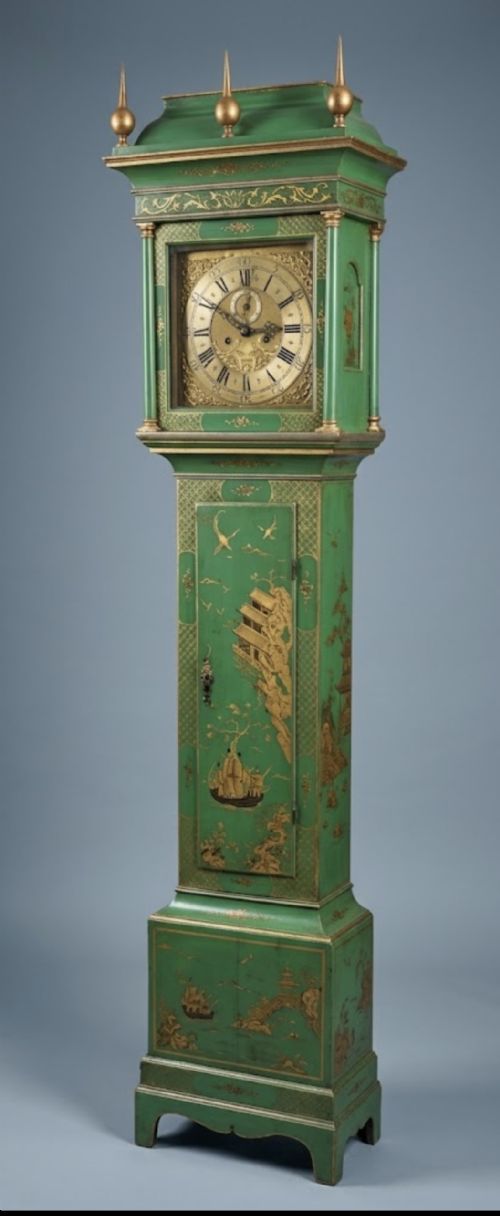
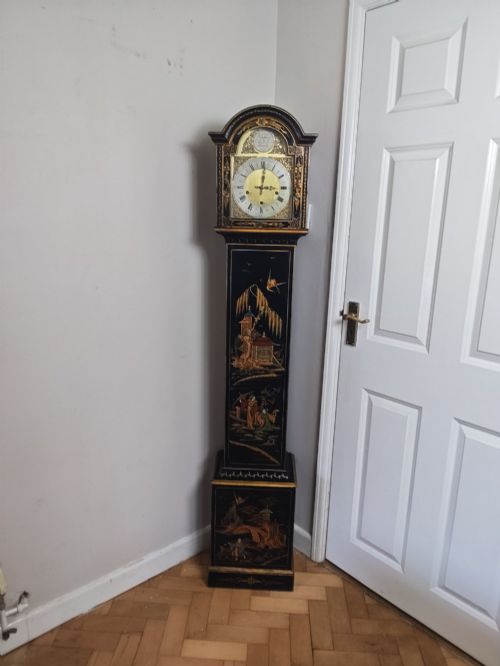
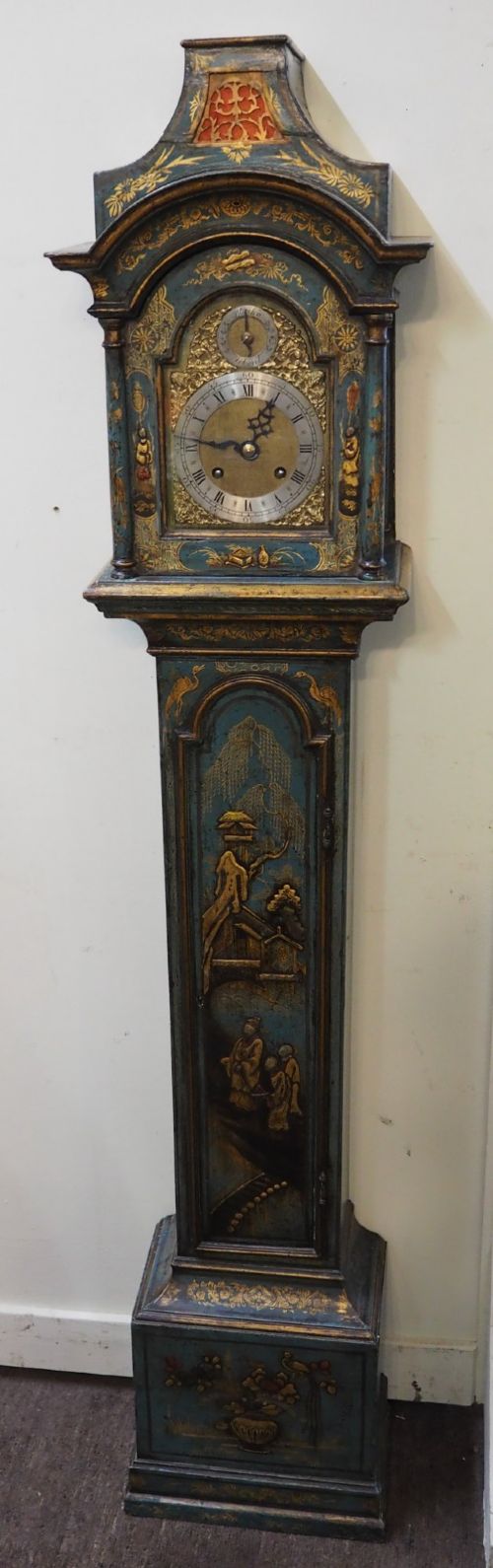
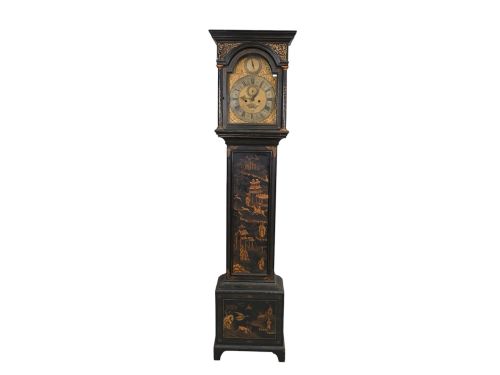


Lacquered Tall Case Clock
A lacquered tall case clock brings striking chinoiserie decoration and substantial height to a room, offering both traditional timekeeping and ornate painted surfaces.
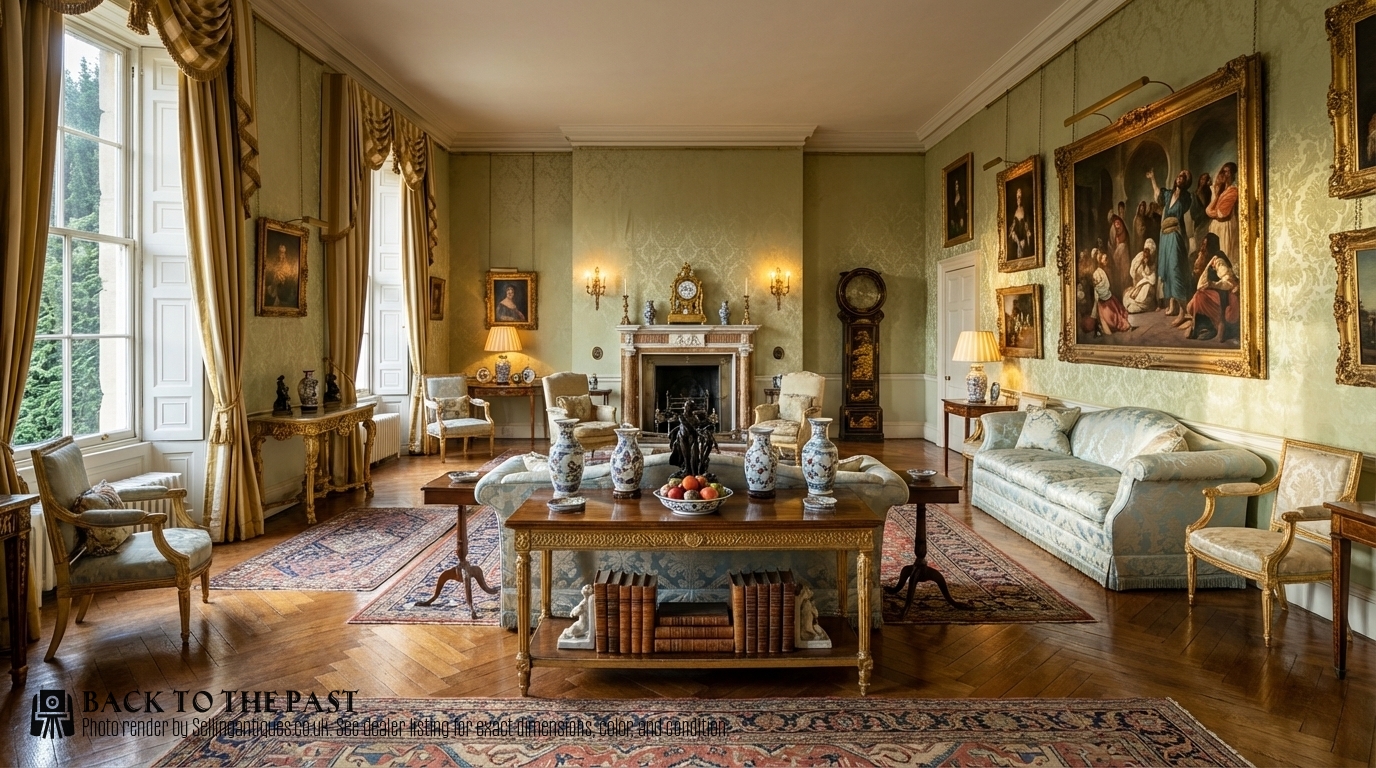
Lacquered Tall Case Clock
A lacquered tall case clock combines a tall wooden housing with intricate painted decoration, often following chinoiserie or George I and George III styles. These timepieces stand as commanding vertical furniture pieces designed to house a mechanical movement.
Most examples encountered on this page date from the Georgian and 18th century periods, alongside later twentieth-century iterations such as grandmother clocks from 1920 and 1930. The typical form incorporates a bonnet top above a long trunk and a weighted base.
Origins span London workshops and regional makers from Edinburgh to Alton and Yarmouth, showing diverse local interpretations of fashionable orientalist motifs. Buyers encounter both full-size grandfather clocks and smaller grandmother clock variations.
What varies in quality
Quality rests upon the depth and preservation of the lacquer work, with superior pieces showing intricate, well-preserved hand-painted details and minimal surface degradation over the centuries. The finesse of the original gilt and japanned decorations distinguishes finer examples.
The sophistication of the internal movement also dictates worth, ranging from standard eight-day brass mechanisms to specialised automaton or musical movements. Maker attribution to notable horologists adds significant distinction to individual pieces.
Some clocks feature mechanical automatons that secretly bring painted riverside scenes to life as the hours tick away.
John Fielder of Alton·William Kipling London·Thomas Utting of Yarmouth
The Lacquered Tall Case Clock Glossary
- Japanned wood
- European wood finished with resin-based varnishes designed to imitate East Asian lacquerware. This technique produced glossy dark surfaces decorated with raised gilt motifs.
- Chinoiserie
- European decorative style reflecting Chinese artistic influences through whimsical motifs. Artisans applied these designs extensively to furniture and clock cases during the Georgian period.
- Longcase clock
- Tall weight-driven pendulum clock enclosed in a protective wooden case. These freestanding items are also commonly referred to as grandfather clocks.
- Grandmother clock
- Smaller, more compact version of the traditional longcase clock produced during the twentieth century. They retain similar proportions on a reduced scale.
- Automaton
- Mechanical moving figures integrated into a clock dial to animate scenes as time passes. These devices represent higher complexity in clockwork engineering.
Lacquered Tall Case Clock: Frequently Asked Questions
How do I care for a lacquered tall case clock?
Keep the clock away from direct sunlight and sudden temperature changes to protect the delicate lacquer surface from cracking.
Dust the wooden case gently with a dry cloth and have a professional horologist service the mechanical movement regularly.
What is the difference between a grandfather and grandmother clock?
Grandfather clocks are full-sized tall case clocks dating primarily from the eighteenth century with grand proportions.
Grandmother clocks are smaller twentieth-century iterations designed to fit into lower-ceilinged rooms while keeping similar styling.
Where should I place a tall case clock?
Position the clock against a sturdy interior wall on a level floor to ensure the pendulum swings accurately.
Avoid exterior walls where dampness or temperature fluctuations might affect both the timber case and the brass movement.
How can I tell an eighteenth-century clock from a later one?
Eighteenth-century examples typically feature hand-carved timber construction and authentic period brass movements signed by regional makers.
Later twentieth-century versions, such as those from 1920 or 1930, often incorporate modern chime systems like Westminster chimes.