


Gold Chinoiserie Clock
These gold chinoiserie clock pieces bring painted lacquer and gilt ornament into rooms through mantel, bracket and longcase forms spanning multiple centuries.
Gold Chinoiserie Clock
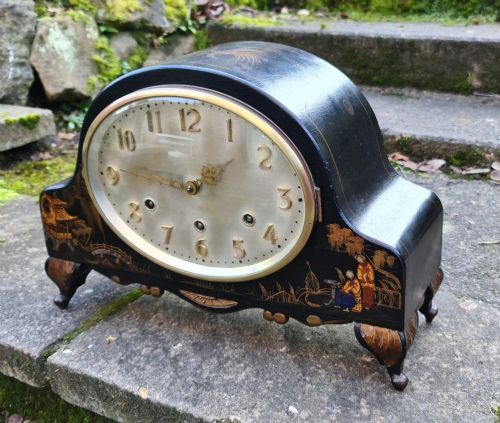
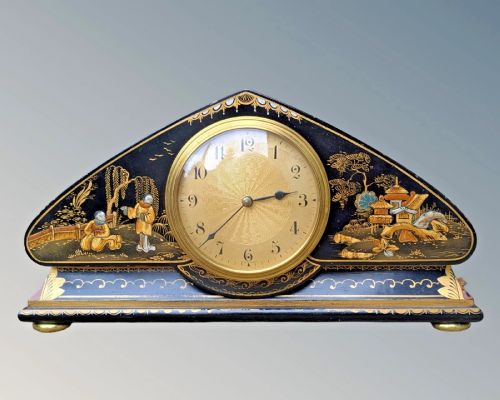
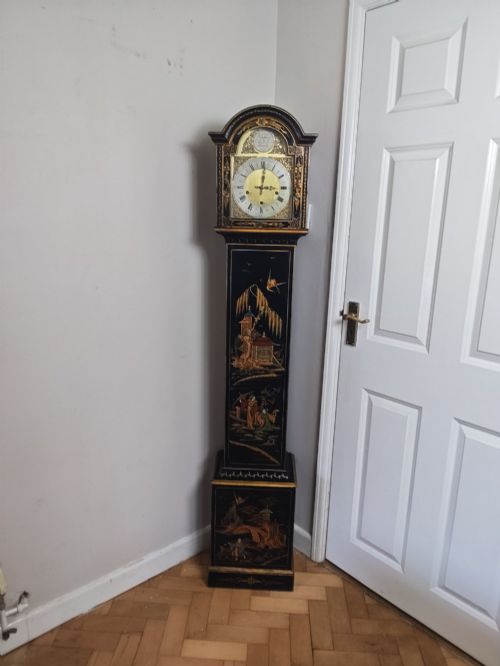
A gold chinoiserie clock combines decorative lacquerwork with timekeeping, offering buyers distinct forms such as large longcase clocks, smaller grandmother clocks, and compact mantel pieces. These objects bring together orientalist motifs and traditional European horology across various centuries.
The selections available here range from eighteenth-century Georgian examples to early twentieth-century interpretations in the chinoiserie style. Buyers frequently encounter mantel and bracket clocks finished in decorated lacquer alongside taller floor-standing variations.
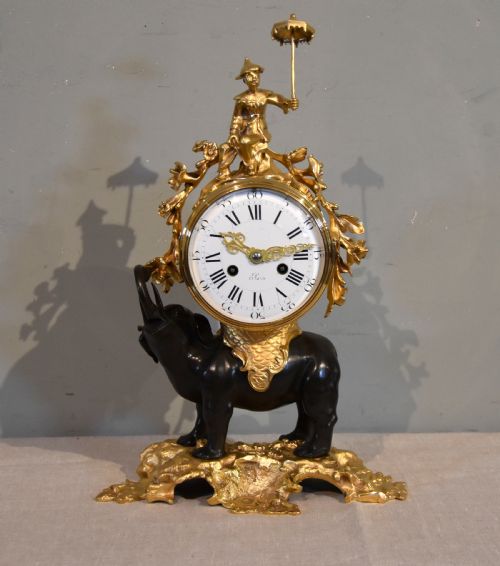
The category encompasses both English makers housed in architectural wooden cases and French pieces utilising figural or crystal regulator formats with gilt bronze mounts. Each variation presents a different scale and decorative density suited to diverse interior settings.
Materials and construction methods
Cases are constructed from wood and finished with layers of lacquer, often incorporating red or green grounds beneath gold painted decorative scenes. Brass and ormolu mounts provide structural framing and ornamental detail to both mantel and bracket formats.
Mechanical movements sit behind glass panels and enamel dials, bringing together metalworking and cabinetry. French movements frequently appear within English-styled or Continental housings, demonstrating cross-channel collaboration among horologists.
Listings span the eighteenth century through to the 1930s, featuring wood, glass, brass, lacquer, enamel, and ormolu materials.
Determining quality across examples
Quality reveals itself in the depth and preservation of the lacquer decoration, where finer pieces display intricate hand-painted gold detailing without excessive wear. The crispness of ormolu mounts and the integration of the movement within the case further distinguish superior items.
Case proportions and the harmony between dial design and exterior ornamentation dictate the visual success of each piece. Well-executed longcase and bracket clocks maintain structural integrity alongside sophisticated mechanical execution.
James Smith London·Chater And Son London·Robert Berry
The Gold Chinoiserie Clock Glossary
- Chinoiserie
- European decorative style reflecting Chinese artistic influences, characterised by painted or lacquered figural scenes and landscapes.
- Ormolu
- Gilt bronze ornamentation applied to furniture and clock cases, providing metallic contrast to wood and lacquer surfaces.
- Bracket clock
- A portable table or shelf clock, originally designed to sit upon a wall bracket.
- Longcase clock
- A tall freestanding weight-driven clock enclosed in a wooden case, commonly known as a grandfather or grandmother clock.
- Crystal regulator
- A clock encased in glass panels allowing views of the internal mechanical movement.
Gold Chinoiserie Clock: Frequently Asked Questions
Where should a bracket clock be placed?
Bracket clocks suit sturdy mantelpieces, sideboards, or dedicated wall shelves where their painted lacquer and brass details remain visible.
Ensure the surface is level to maintain accurate operation of the mechanical movement.
How do I wind an eight day movement?
Use the appropriate key on the dial winding holes, turning gently until resistance indicates the mainspring is fully tensioned.
Avoid over-winding to prevent strain on the internal gears.
What is the difference between a grandmother and longcase clock?
Grandmother clocks are scaled-down versions of traditional longcase clocks, offering a shorter overall height suitable for smaller rooms.
Both types utilise weight-driven mechanisms housed within tall wooden trunks.
How do I care for lacquered clock cases?
Dust surfaces regularly with a soft, dry cloth and keep the clock away from direct sunlight and radiators.
Stable indoor temperatures protect the wood and lacquer from cracking or fading over time.