
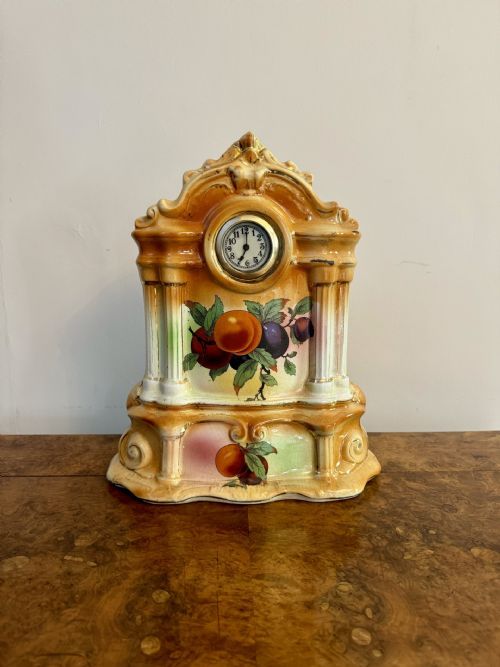


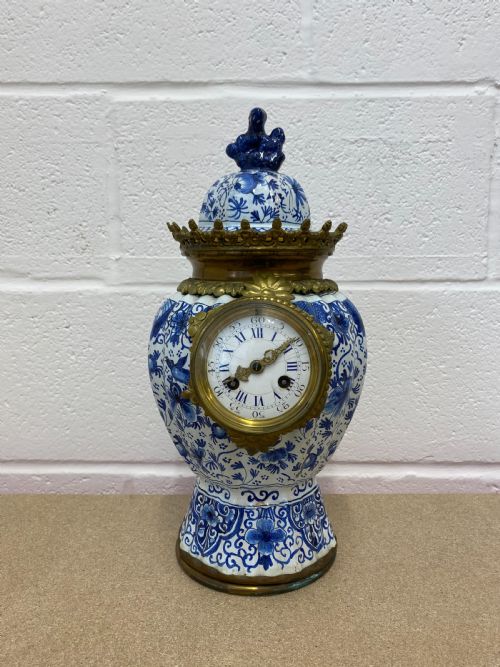


Antique Ceramic Mantel Clock
These antique ceramic mantel clock pieces bring domestic timekeeping into the parlour through glazed earthenware, porcelain figures, and gilt bronze mounts.
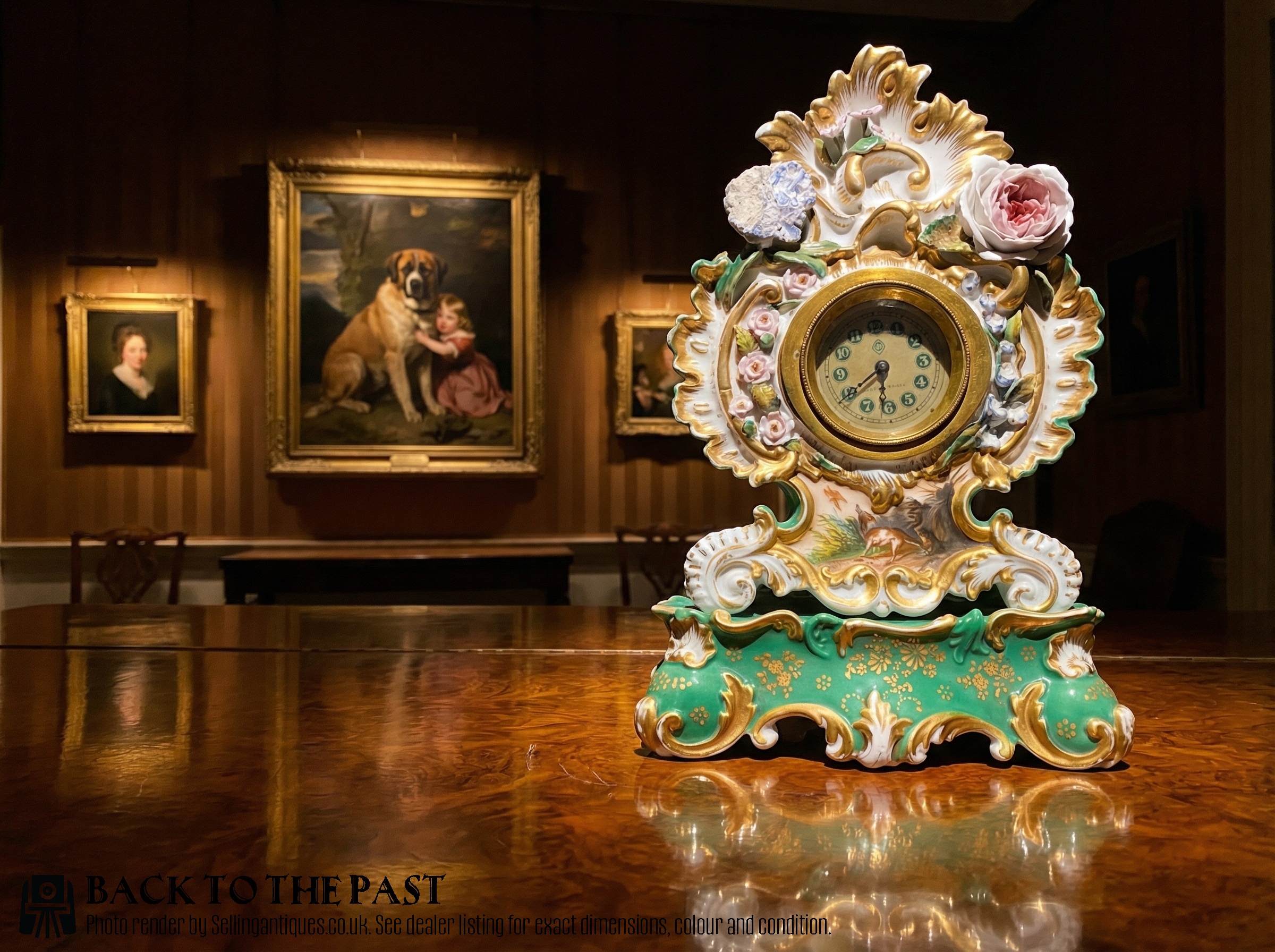
Antique Ceramic Mantel Clock
An antique ceramic mantel clock combines functional horology with decorative pottery, taking forms from Victorian Staffordshire figures to French Rococo garniture sets. These pieces sit upon a shelf or mantel, framing a dial within modelled clay or fired porcelain.
Buyers searching for an antique ceramic mantel clock encounter objects originating from English potteries, French workshops, and Dutch kilns across the nineteenth century. Staffordshire figures and French porcelain clock sets dominate the selections available here.
The materials range from earthenware and Delftware to Paris porcelain, often paired with brass, ormolu, or gilt bronze mountings. Many examples incorporate hand-painted details, enamel dials, and matching side vases to form complete garnitures.
How they were made
Potters shaped these bodies using earthenware, porcelain, and stoneware, frequently employing moulds for figures before hand-finishing details. Glazes and enamel colours were applied to the ceramic surface and fired in kilns to achieve permanent decoration.
Metal components such as brass, gilt bronze, and ormolu were cast and mounted to frame the ceramic cases and support clock movements. Enamel dials were typically painted with numerals and fitted behind glass bezels.
Listings feature periods spanning from eighteen fifty to nineteen hundred, encompassing Victorian, Aesthetic Movement, and Rococo Revival styles.
What varies in quality
The integration of the ceramic case with its metal mounts and mechanical movement dictates the overall standard. Superior examples balance substantial porcelain or pottery bodies with robust gilt bronze or brass fittings.
The Antique Ceramic Mantel Clock Glossary
- Garniture set
- A central clock flanked by matching decorative objects such as vases or figures designed to display together on a mantelpiece.
- Ormolu
- Finely ground high-carat gold applied to a bronze base, commonly used for mounts on French porcelain clock cases.
- Staffordshire figure
- Pottery modelled and painted in English kilns, frequently incorporated into nineteenth-century domestic clock groups.
- Boudoir clock
- A smaller timepiece intended for private rooms, often housed in delicate porcelain or gilt metal cases.
- Earthenware
- Porous pottery fired at lower temperatures than porcelain, forming the substantial body of many English mantel clocks.
Antique Ceramic Mantel Clock: Frequently Asked Questions
How do I clean an antique ceramic mantel clock?
Dust the ceramic body gently with a dry, soft brush to protect fragile hand-painted glazes and enamel details. Avoid using water or liquid cleaners near the dial and mechanical movement.
Consult a professional horologist for servicing the internal clockwork rather than attempting disassembly at home.
Where were these clocks usually placed?
These timepieces sat principally on the mantelpiece above a fireplace, serving as both timekeepers and decorative ornaments in the nineteenth-century home. Parlours, drawing rooms, and private boudoirs all housed such pieces.
Larger garniture sets required deeper mantel shelves or console tables to accommodate the flanking vases or figures.
How do I tell French and English clocks apart?
French examples often utilise fine Paris porcelain or Sevres-style bodies combined with elaborate ormolu mounts and Rococo revival styling. English pieces frequently rely on Staffordshire earthenware figures and simpler domestic forms.
The character of the painting and the style of the ceramic paste generally point clearly to the country of origin.
What is a clock garniture?
A clock garniture consists of a central mantel clock accompanied by two matching side pieces, such as vases or decorative figurines. These matched sets created a balanced arrangement for display on a mantelpiece.
Each component shared the same ceramic material, glaze style, and decorative motifs.