


Ornate Desktop Clock
An ornate desktop clock brings French revival grandeur and intricate detail to any room, combining decorative brass, porcelain, and bronze.

What They Are
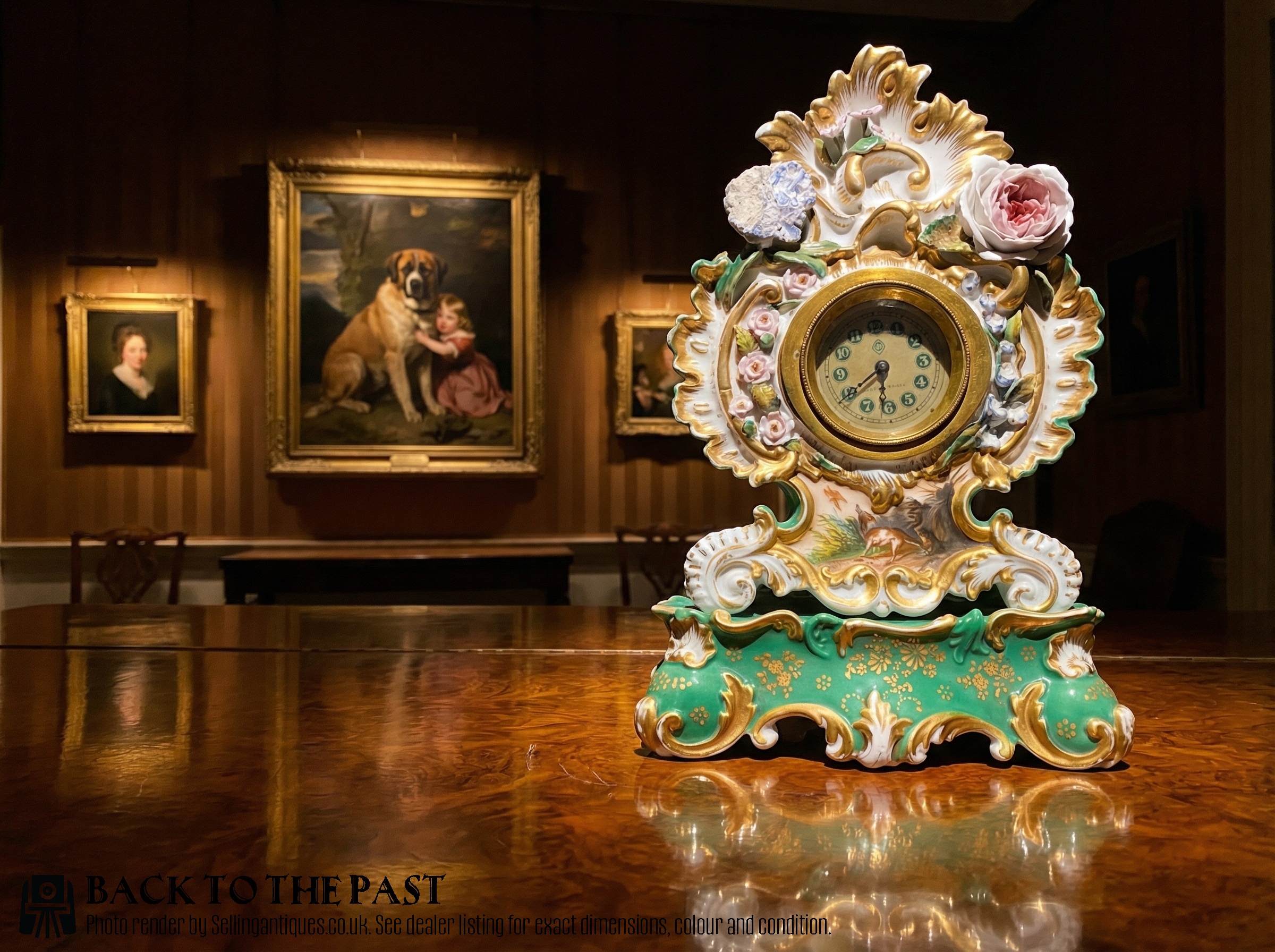
An ornate desktop clock takes the form of a mantel clock, drawing on French Louis XVI Revival and Rococo Revival styles from the nineteenth century. These pieces combine sculptural metalwork with hand-painted porcelain panels to create striking decorative objects for a mantel or desk.
The versions most commonly met on this page originate from French workshops of the eighteen-hundreds and nineteen-hundreds. They frequently feature figures, floral enamel dials, and elaborate gilt bronze or spelter mounts.
How They Were Made
Maker workshops utilised materials such as gilt bronze, ormolu, brass, and spelter to build sculptural frames and mounts. These metallic structures often surround painted porcelain panels and glass dial covers.
Makers incorporated enamel for clock dials and applied hand-painted designs to porcelain elements. Onyx served as a solid stone base material for several pieces.
Retail Price Guide 2026
Typical UK retail prices for ornate desktop clock, calculated from the Sellingantiques database of over a million retail prices indexed since 2003. This retail price guide relies exclusively on Sellingantiques data; no external sources or auction records are used, so the figures do not describe the wider market.
What Varies in Quality
The refinement of the casting and chiselling in the gilt bronze or spelter mounts distinguishes finer examples from simpler ones. Artisans who invested greater time in finishing metal surfaces produced crisper foliage and more expressive figural details.
The sophistication of the painted porcelain panels and the clarity of the enamel dials also set standards apart. Pieces bearing named French foundry marks or artist references reflect higher workshop standing.
Japy Freres·Auguste Moreau
The Ornate Desktop Clock Glossary
- Ormolu
- A technique of applying finely ground high-carat gold to a bronze object using a mercury amalgamation process. This finish provides a rich golden lustre that resists tarnishing.
- Spelter
- A zinc alloy commonly used as a less expensive alternative to bronze for sculptural castings. It takes patination and gilding well to simulate more costly metals.
- Enamel
- A glassy substance fused to metal surfaces under high heat to create smooth, durable dials. It provides a crisp white background for painted numerals.
- Rococo Revival
- A nineteenth-century design movement favouring asymmetrical scrollwork, C-scrolls, and naturalistic plant motifs. This style heavily influences French mantel clock ornamentation.
Frequently Asked Questions
Where were these clocks made?
These clocks originate predominantly from French workshops and foundries active during the eighteen-hundreds and early nineteen-hundreds. French makers set the standard for the revival styles seen in these pieces.
Regional artisans and established Paris foundries produced the decorative metal mounts, painted porcelain panels, and clock movements that define this category.
How do I style a mantel clock?
A mantel clock suits prominent display surfaces such as a living room mantelpiece, a library desk, or a grand sideboard. Its detailed metalwork and painted porcelain work best against a clean backdrop.
Ensure the placement protects the clock from direct sunlight and sudden temperature shifts, which can affect the delicate enamel dials and gilt finishes.
How do I identify the period?
Identifying the period involves examining the stylistic revival cues, such as Louis XVI or Rococo motifs, alongside the construction materials. The presence of spelter, gilt bronze, or Sevres style porcelain points toward nineteenth-century manufacturing.
Foundry stamps, maker signatures on the movement, and backstamp details on porcelain panels offer direct evidence of the exact workshop and era.