
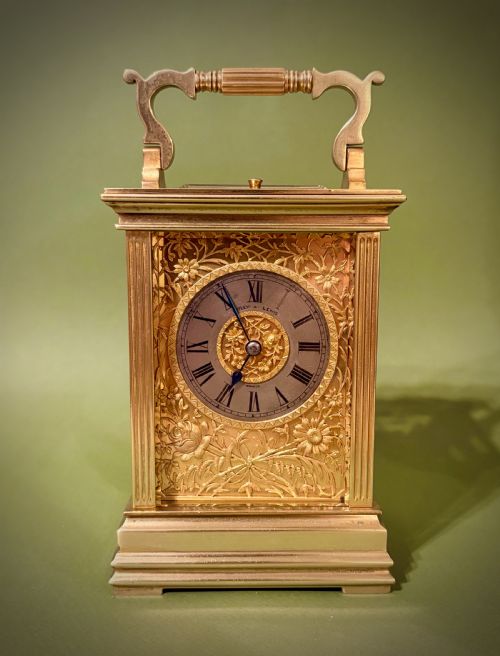
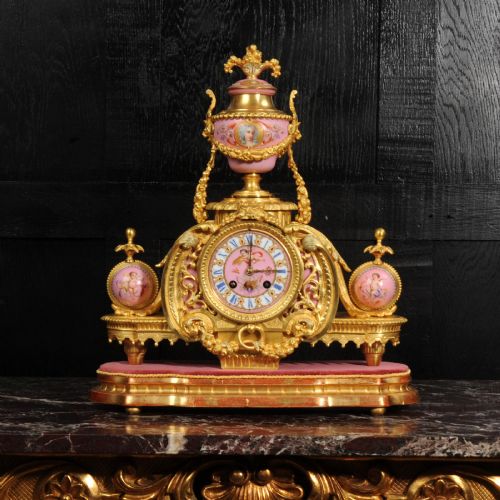
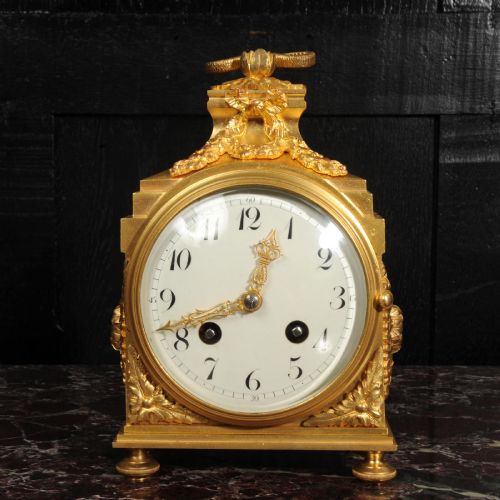
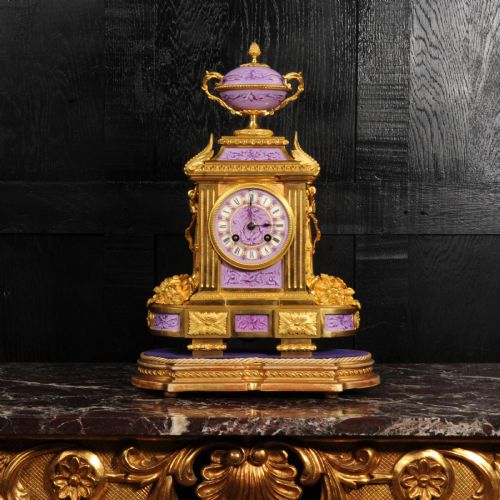
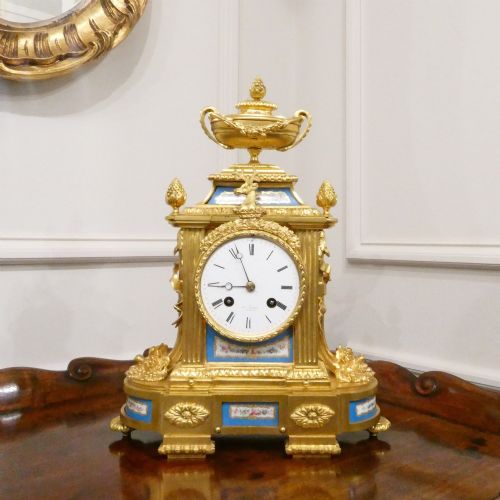
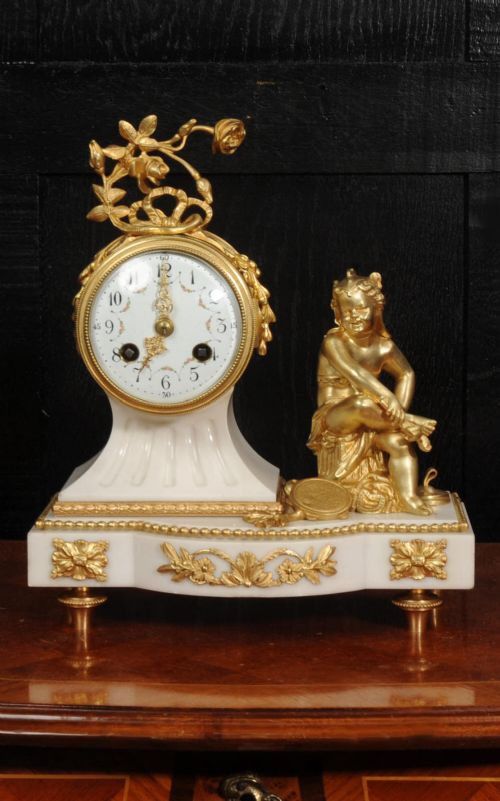
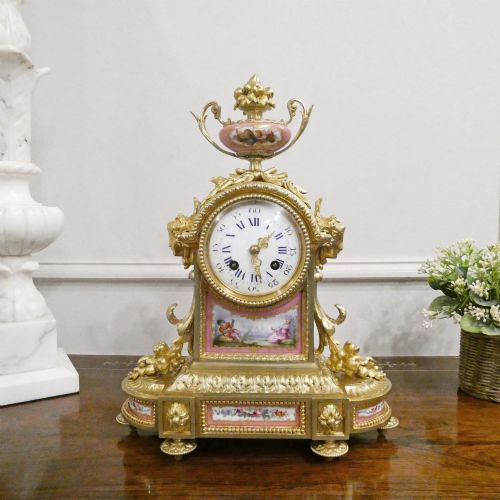
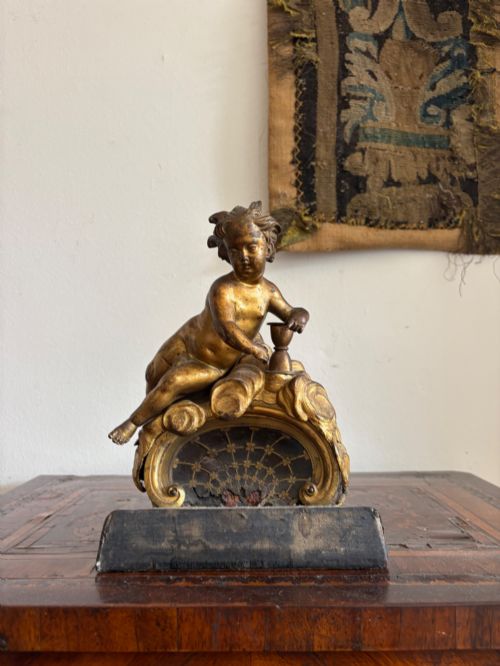
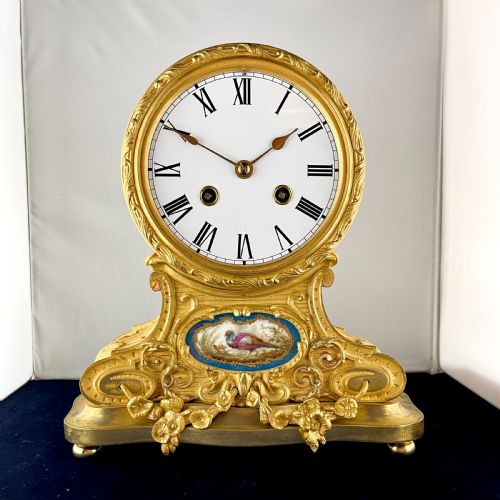
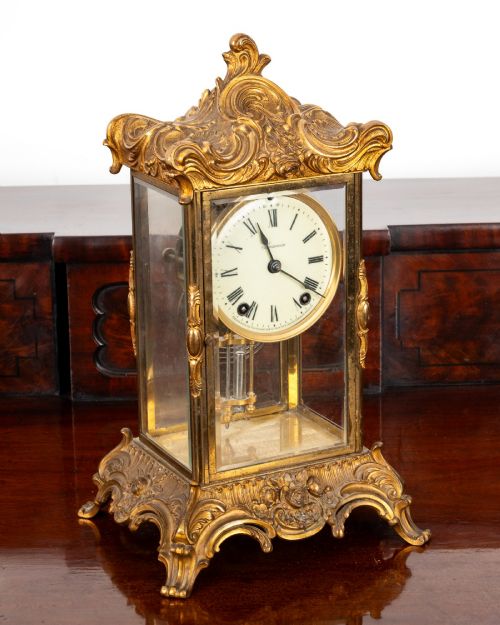
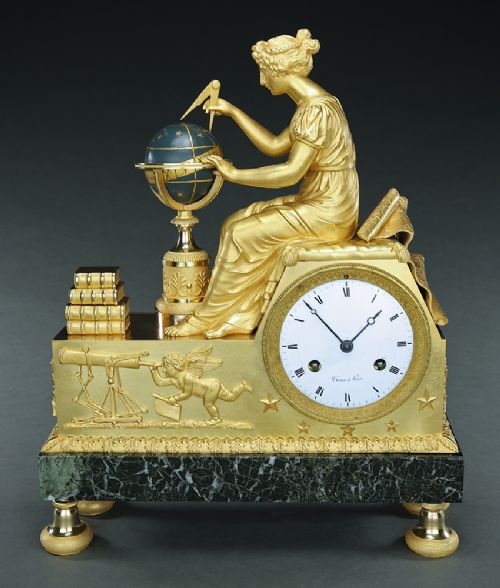
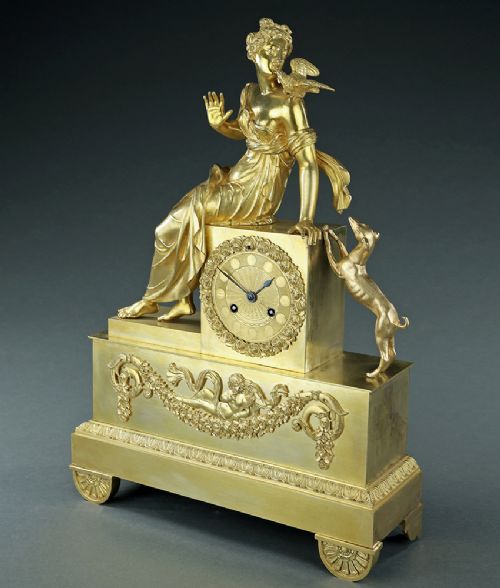
Gold Ormolu Mantel Clock
A gold ormolu mantel clock brings grand French and Victorian presence to a room, valued for its ornate gilt metal and intricate dial work.

What these pieces are
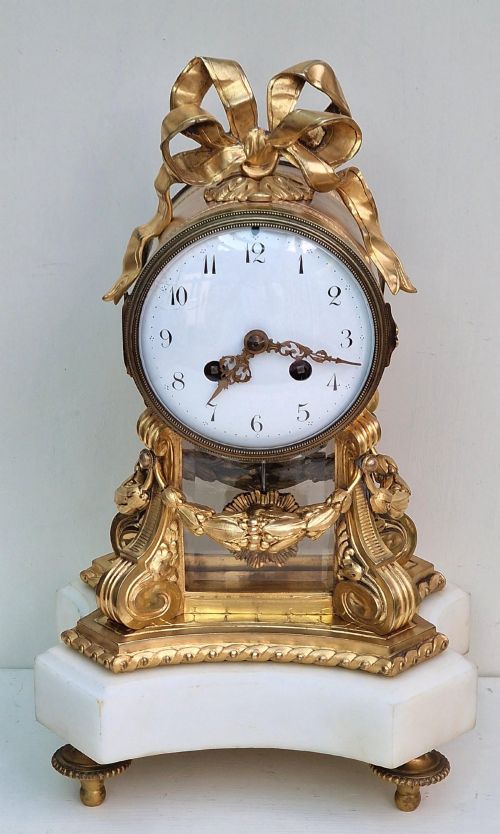
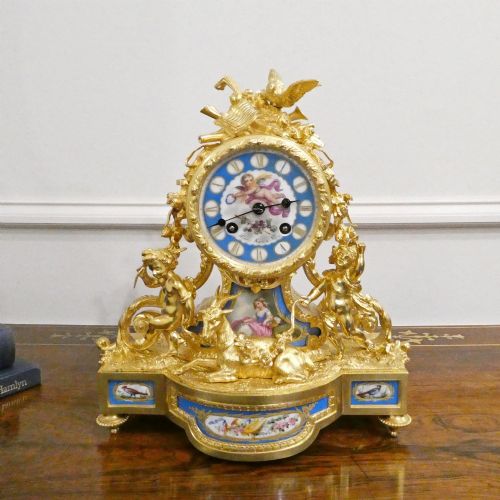
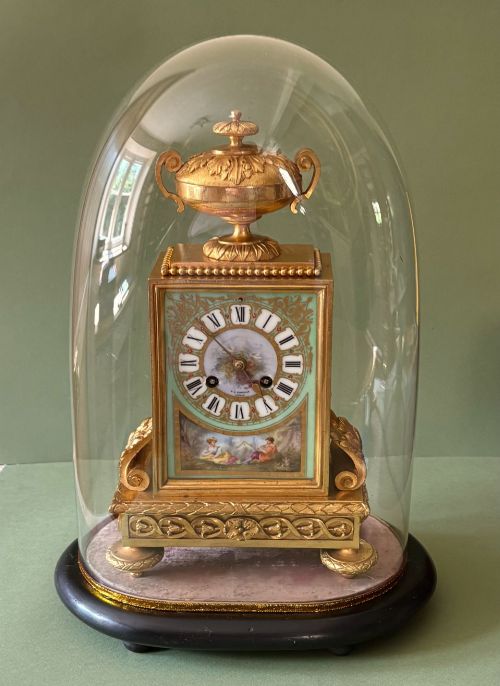
When you search for a gold ormolu mantel clock, you encounter decorative timepieces designed to sit on a mantelpiece or shelf. The selection spans French and Victorian examples, featuring periods from the Regency era through to the late nineteenth century.
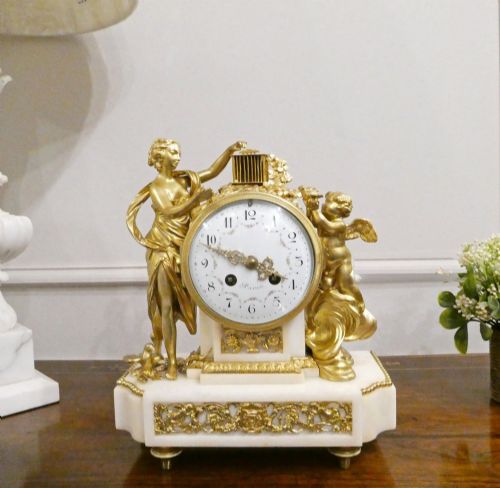
You meet mantel clocks, boudoir clocks, and porcelain clock forms reflecting styles such as Louis XVI, French Empire, and Rococo Revival. These pieces combine timekeeping with sculptural metalwork, often incorporating decorative marble or enamel dials.
The most common versions on this page are French Louis XVI style clocks and gilt bronze mantel clocks created by established makers. They range from small boudoir pieces to large decorative mantel clocks framed in ormolu and patinated bronze.
How they were made
The construction of these clocks relies on metalwork techniques using ormolu, gilt bronze, brass, and patinated bronze. Craftsmen cast the metal frameworks into elaborate ornamental shapes typical of the period.
Dials and decorative panels frequently incorporate enamel and porcelain, paired with glass protective covers. Structural elements utilise white marble or Carrera marble to anchor the heavy metal bodies.
Retail Price Guide 2026
Typical UK retail prices for gold ormolu mantel clock, calculated from the Sellingantiques database of over a million retail prices indexed since 2003. This retail price guide relies exclusively on Sellingantiques data; no external sources or auction records are used, so the figures do not describe the wider market.
One petite boudoir clock carries a sporting provenance, having been presented by Sporting Sketches in the late nineteenth century.
What varies in quality
The upper tier of these clocks is defined by the precision of the cast bronze work and the depth of the gilding. Maker attribution, such as signed movements by Japy Freres or Achille Brocot, separates standard decorative pieces from finer horological examples.
Material combination also dictates quality, where integration of painted porcelain panels, fine enamel dials, and solid marble bases elevates the piece. Smaller boudoir clocks and advertising variants show different tiers of domestic utility versus formal reception room display.
Japy Freres·Achille Brocot
The Gold Ormolu Mantel Clock Glossary
- Ormolu
- A technique of applying finely ground high-carat gold to a bronze object, creating a rich golden finish. It provides the distinctive bright surface seen on classical revival mantel clocks.
- Fusee
- A conical pulley used in clock movements to maintain even power as the mainspring unwinds. This mechanism is associated with better timekeeping accuracy in older clocks.
- Patinated bronze
- Bronze that has been treated to produce a dark, aged surface contrast against the bright gold ormolu mounts. It highlights sculptural details in figural clock cases.
- Enamel dial
- A clock face made by fusing powdered glass to a metal substrate at high temperatures. These dials offer a smooth, durable surface for painted numerals.
- Louis XVI Style
- A neoclassical design movement characterised by symmetry, straight lines, and classical motifs like urns and swags. It heavily influences many French mantel clock cases.
Frequently Asked Questions
Where should I place a mantel clock?
These clocks sit comfortably on a sturdy fireplace mantel, a chest of drawers, or a dedicated console table where their weight and height are supported.
Ensure the surface is level so the pendulum swings evenly and the clock keeps accurate time without straining the movement.
How do I wind an antique clock?
Use the appropriate winding key to turn the arbors in the dial face gently until resistance is felt, taking care not to overwind the mainspring.
Consult the specific movement type, as fusee clocks and spring-driven clocks require different handling during maintenance.
What periods do these clocks represent?
The pieces span the Regency period and the Victorian era, reaching into the late nineteenth century with French revival styles.
Dates range from around eighteen hundred through to eighteen ninety, reflecting changing tastes in interior ornament.
How do I distinguish Louis XVI style?
Look for architectural symmetry, classical columns, urn motifs, and restrained proportions rather than the sweeping asymmetry of earlier Rococo designs.
This aesthetic appears frequently in the gilt bronze and white marble cases listed here.