


Antique Boudoir Clock
An antique boudoir clock brings intimate elegance to a dressing room or desk, offering precise timekeeping wrapped in ornamental metal and porcelain.
Understanding the selection
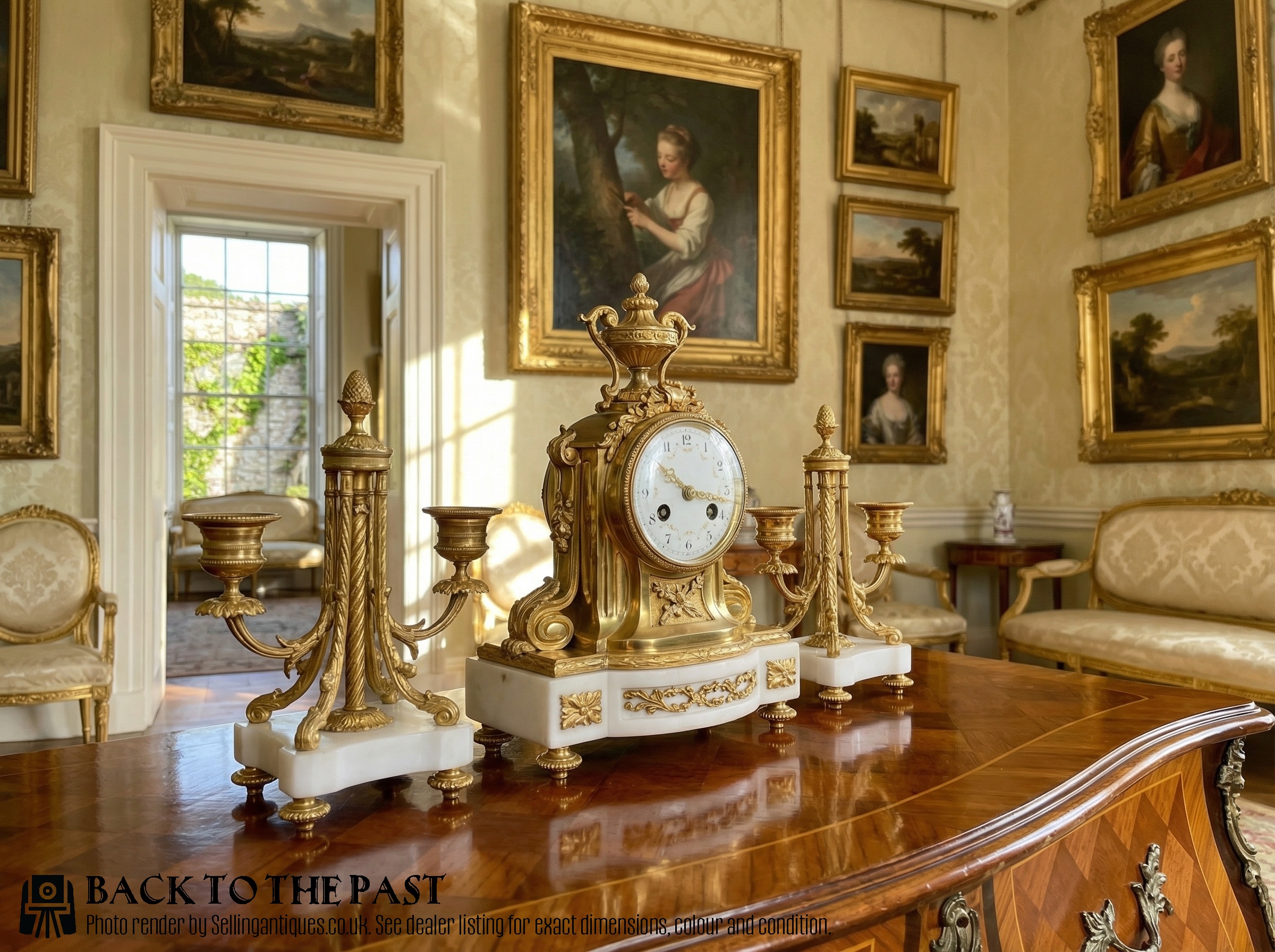
An antique boudoir clock is a small timepiece designed for private chambers, dressing rooms, and bedside tables. When searching this phrase, a buyer encounters diverse domestic timepieces originating primarily from French and English makers during the nineteenth and early twentieth centuries.
The versions most frequently met on this page include miniature bedside travel clocks, sterling silver timepieces, and elaborate clock sets incorporating garnitures. Forms span simple small table clocks to swinging figural pieces and architectural marble cases.
Makers housed these movements in decorative housings styled after the Louis XVI period, Rococo Revival, and Belle Epoque aesthetics. Materials range from glass and enamel to tortoiseshell, leather, and gilt bronze.
Materials and construction
Craftsmen utilised metals such as gilt bronze, ormolu, and sterling silver to form the structural cases of these timepieces. Many incorporate white marble bases or ebonised wood to provide substantial weight and contrast against polished metallic surfaces.
Surface decoration frequently involves hand-painted Sevres porcelain panels, guilloche enamel, and intricate glasswork. Movement construction relied upon skilled horologists who housed precision gears inside compact housings suited for domestic bedroom use.
Retail Price Guide 2026
Typical UK retail prices for boudoir clock, calculated from the Sellingantiques database of over a million retail prices indexed since 2003. This retail price guide relies exclusively on Sellingantiques data; no external sources or auction records are used, so the figures do not describe the wider market.
Some playful nineteenth-century models feature cherubs or maidens swinging on tiny ropes while the clock ticks silently away.
Assessing craftsmanship
The distinction between standard examples and superior pieces rests upon the execution of the decorative arts applied to the case. High-grade models feature finely chased gilt bronze, detailed enamel work, and signed movements by known makers.
Integration of sculptural elements, such as swinging figures or matched garniture sets, elevates the artistic ambition of the object. The crispness of the casting and the preservation of original gilding determine the visual presence of the clock.
William Comyns·Vincenti·Eugene Farcot·Japy Freres·A D Mougin·Louis Boname·Hippolyte Francois Moreau·Louis Auguste Moreau·Samuel Marti
The Antique Boudoir Clock Glossary
- Ormolu
- A technique of applying finely ground high-carat gold to bronze objects. This process creates a rich, enduring golden finish characteristic of luxury French metalwork.
- Garniture
- A set of matching decorative objects, typically comprising a clock flanked by matching vases or candelabra. These sets created a balanced display on mantelpieces and tabletops.
- Guilloche enamel
- A decorative engraving technique covered with translucent enamel layers. This method produces repetitive geometric patterns that catch the light.
- Timepiece
- A clock that indicates the time without striking hours or quarters. These simpler movements were preferred in quiet private rooms where bells might disturb.
- Escapement
- The mechanical linkage that regulates the speed of the gear train. Visible escapements allow the owner to watch the rhythmic motion of the balance wheel.
Frequently Asked Questions
Where were boudoir clocks placed?
These small timepieces sat upon bedside tables, dressing chests, and writing desks in private chambers. Their compact dimensions allowed them to fit easily into intimate domestic spaces.
Unlike large grandfather clocks meant for public halls, boudoir clocks served personal daily routines and provided quiet companionship in private rooms.
How do I wind an antique clock?
Winding requires a dedicated key matched to the square arbors on the dial or back plate. Turn the key gently until resistance indicates the mainspring is fully tensioned.
Care should be taken not to overwind the movement, as this can strain the internal spring mechanism and disrupt accurate timekeeping.
What is the difference between a clock and a timepiece?
A timepiece refers specifically to a clock that tells the time without incorporating a striking mechanism. This design made them ideal for bedrooms where chiming bells were unwanted.
Clocks with striking or musical functions required more complex gear trains and additional barrels within the case to drive the sound.
How do I identify a French boudoir clock?
French examples often feature cast gilt bronze or ormolu cases decorated in Rococo or Louis XVI styles. Many incorporate Sevres porcelain panels or signatures from prominent makers on the movement backplate.
English pieces from the same era frequently utilise sterling silver cases bearing hallmarks from assay offices like Birmingham.