

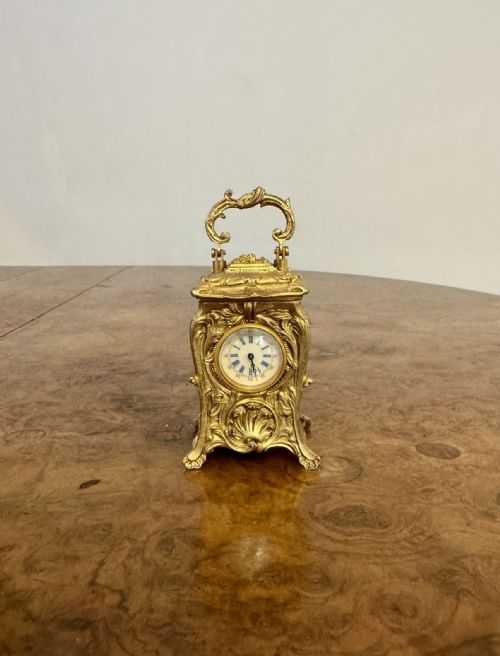


Miniature Desk Clock
Miniature desk clock pieces concentrate domestic timekeeping into small compass, bringing brass, silver, and enamel cases to tables and bureaus.
Miniature Desk Clock
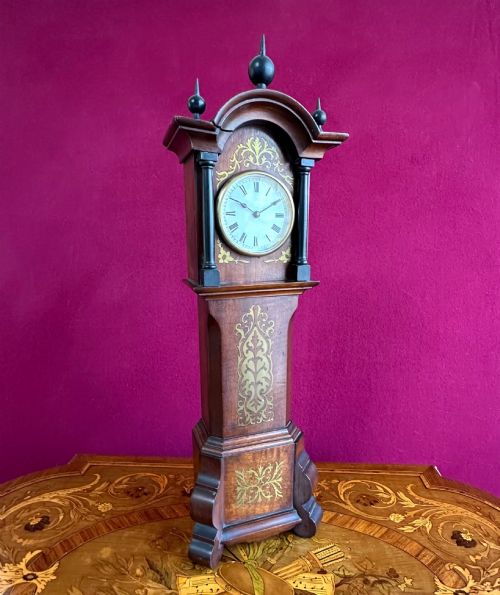
A miniature desk clock sits compactly on tables, desks, and travelling cases, providing portable timekeeping in small formats. These objects include pocket-sized carriage clocks, bracket clocks, portico clocks, and longcase models adapted to reduced proportions.
Carriage clocks and silver boudoir timepieces appear most frequently among these listings, spanning the Victorian, Edwardian, and Art Deco periods. French and English workshops dominate the origins, alongside Austrian and Swiss makers producing intricate travel and desk pieces.
The materials range from simple brass and metal cases to elaborate gilt bronze, silver, and leather housings. Many examples incorporate glass panels, enamel work, porcelain, and champlevé decoration to enhance their visual weight despite small dimensions.
Materials and construction
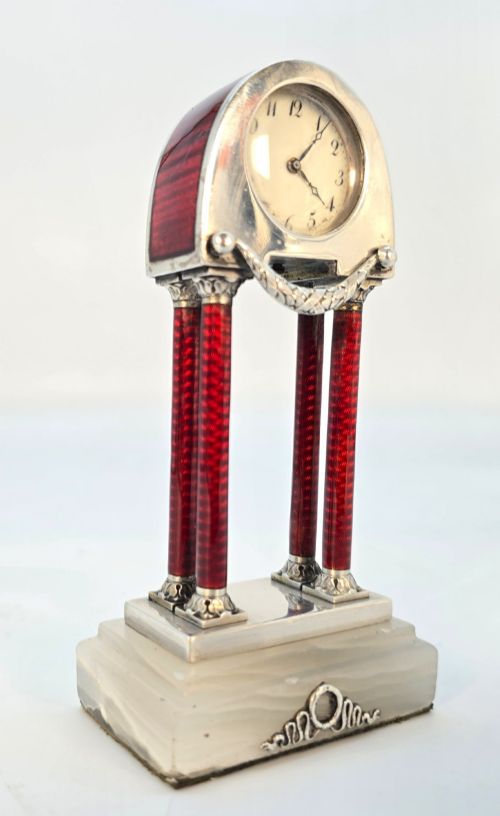
Brass and gilt brass form the structural skeletons for the majority of carriage clocks and bracket styles, often paired with bevelled glass to display the internal movement. Silver and sterling silver casings receive hand-hammered, chased, or guilloche enamel decoration for boudoir and dressing table pieces.
Enamel work, including blue guilloche, champlevé, and Limoges panels, provides rich surface colour on dials and bezels. Movements utilise mechanical gear trains, spring barrels, and escapements, occasionally housing striking mechanisms, alarms, or repeating complications.
Listings feature miniature desk clocks across Victorian, Edwardian, and Art Deco periods, utilising brass, silver, leather, and enamel.
Distinctions in quality
The refinement of the case engraving and the depth of the gilding separate standard production pieces from finer examples. Fully engraved gilt brass frames and crisply cast ormolu bronze show superior workshop handwork.
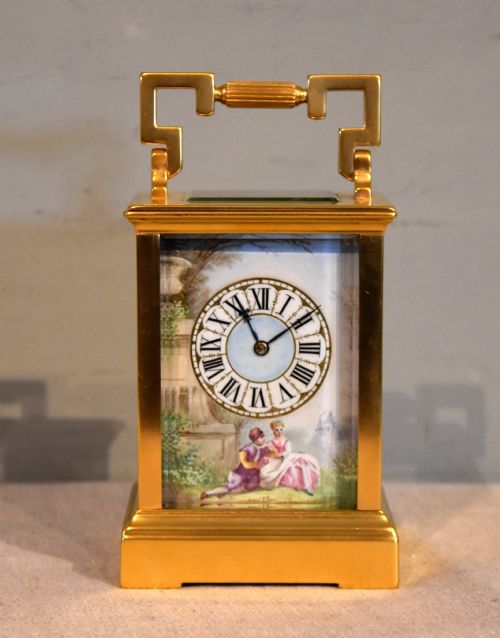
Dial execution dictates upper tiers, where hand-painted porcelain panels, multi-coloured champlevé enamel, and delicate silver chasing replace plain white enamel faces. Complicated movements featuring alarms, striking trains, or eight-day duration demand greater horological skill than simple timepieces.
Mappin & Webb·Georg Adam Scheid·J Batson & Son·Richard co·Henry Matthews·J C Vickery
The Miniature Desk Clock Glossary
- Carriage clock
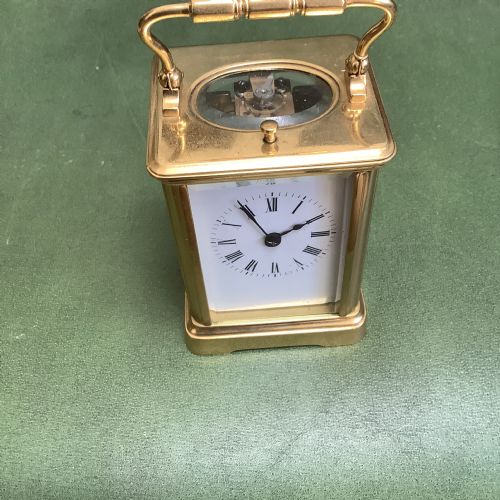
- A small, spring-driven timekeeper originally designed for travel, featuring a glazed brass case and a carrying handle on top. They frequently sit in leather travelling cases.
- Champlevé
- An enamel technique where troughs are dug into a metal surface, filled with enamel powder, and fired. This creates colourful decorative patterns across brass and gilt bronze cases.
- Guilloche
- A mechanical engraving technique that etches precise, intricate geometric patterns into metal. Enamel is often layered over this pattern to produce a shimmering translucent effect.
- Portico clock
- A decorative clock styled after classical architecture with supporting pillars. Miniature versions adapt this architectural form for desk placement.
- Timepiece
- A clock that measures and indicates time without any striking mechanism or musical complication. Most simple desk clocks operate as timepieces.
Miniature Desk Clock: Frequently Asked Questions
How do I wind a mechanical miniature desk clock?
Most mechanical pieces use a dedicated winding key inserted into arbors located on the rear backplate or underneath the movement. Turn the key gently until resistance signals the spring is fully wound.
Avoid overwinding, as this strains the internal spring mechanism and can damage the gear train over time.
What is the difference between a carriage clock and a timepiece?
A carriage clock generally refers to a spring-driven clock with a glazed brass case and a swinging handle, originally built for travel. Many include striking or alarm functions.
A timepiece specifically indicates a clock that tells time without any striking mechanism, chimes, or musical complications.
How do I date a Victorian or Edwardian desk clock?
Examine the style of the case, hallmarks on silver components, and signatures inscribed on the dial or movement backplate. Victorian pieces often lean towards heavy brass ornamentation, Rococo revival, or Gothic forms.
Edwardian and later 1910 pieces frequently display lighter silver cases, guilloche enamel, and cleaner classical proportions influenced by evolving tastes.