



Swiss Travel Clock
A swiss travel clock is a portable timepiece designed for the road, offering precision timekeeping in a compact, robust housing.
Swiss Travel Clock
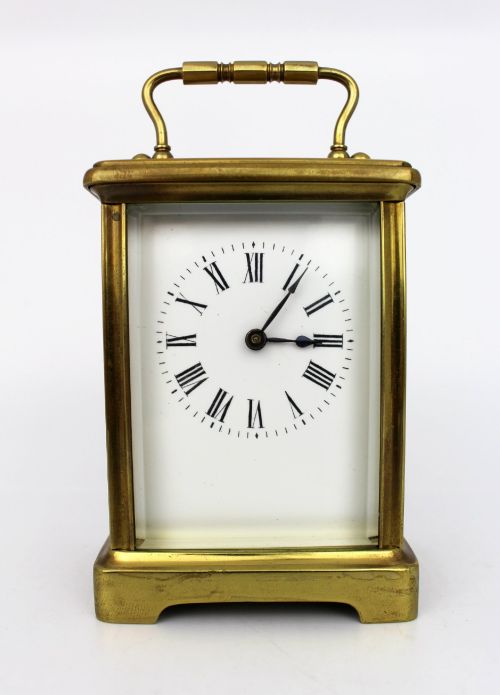
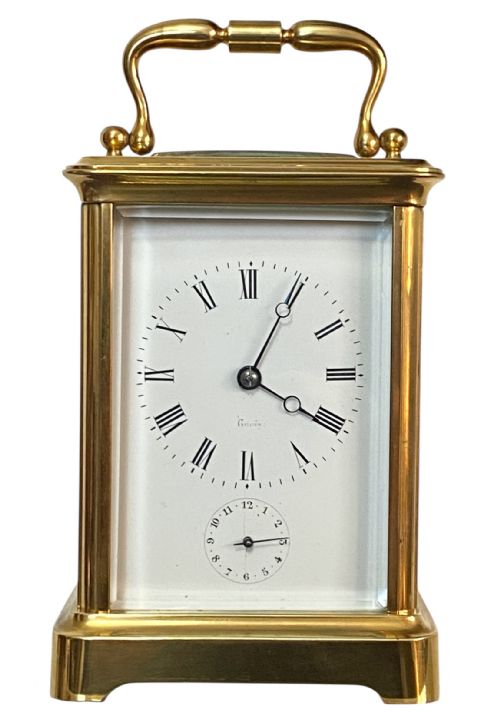
A swiss travel clock brings together reliable mechanical movements and portable design, spanning the Victorian, Edwardian, Art Deco, and Mid-Century periods. When searching for a swiss travel clock, buyers encounter robust carriage clocks, pocket-sized purse watches, and folding designs housed in protective cases.
The pieces listed here showcase forms ranging from miniature carriage clocks made for the export market to elegant desk alarms signed by notable retailers. Brass, gilt bronze, chrome-plated metal, and nine-carat gold form the primary bodies, often paired with glass panels or leather travel cases.
Origins trace back through the nineteenth and twentieth centuries, capturing shifts from heavy brass carriage clocks to sleek Art Deco chrome and mid-century luxury. Each format serves the practical requirement of keeping time while away from home without sacrificing mechanical complexity.
How they were made
Makers constructed these timepieces using heavy brass, gilt bronze, and chrome-plated metal to protect the delicate mechanical movements inside. Glass panels frequently encase the gear trains, allowing the movement to be admired from multiple angles while shielding the escapement from dust.
Protective outer elements include original leather travel cases and folding metal covers that secure the dial during transit. Movements feature high jewel counts, alarm complications, and eight-day power reserves, reflecting precision engineering within a confined space.
Materials span heavy brass, gilt bronze, chrome-plated metal, and nine-carat gold, paired with protective glass and leather.
What varies in quality
The standard of a timepiece rests upon the complexity of its movement and the prestige of its maker or retailer. Complications such as alarm mechanisms and grande sonnerie striking trains elevate the mechanical ambition of the piece significantly.
Casing materials also dictate the tier of the object, moving from standard brass and chrome to solid nine-carat gold and signed luxury housings. The presence of original fitted leather cases and intact glass panels preserves the completeness of the survivor.
Harrods of London·Van Cleef and Arpels Paris·J. F. Bautte Et Cie·Mappin and Webb·Vogel
The Swiss Travel Clock Glossary
- Carriage clock
- A portable spring-driven clock designed for travellers, typically featuring a rectangular brass case with glass sides and a carrying handle on top. They often incorporate alarm functions for use on journeys.
- Grande sonnerie
- A complex striking mechanism that chimes the hours and the quarters automatically on every quarter hour. It represents a high level of watchmaking skill.
- Fob purse watch
- A small timepiece fitted into a leather or metal purse that folds shut to protect the dial. These pieces were designed to be carried in a pocket or handbag.
- Escapement
- The internal mechanism that controls the release of power from the mainspring to the gear train. It gives the clock its regular ticking motion.
Swiss Travel Clock: Frequently Asked Questions
How do I wind a travel clock?
Most mechanical travel clocks require a dedicated key or a built-in winder turned clockwise until slight resistance is felt. Care must be taken not to overwind the mainspring.
Eight-day movements need attention less frequently than standard daily winders, but all require steady handling to protect the internal escapement.
Are these clocks suitable for daily use?
These pieces were built for portability and can function reliably in a modern home when properly serviced. Placing them on a stable surface away from direct vibration ensures the mechanical movement stays regulated.
Using the alarm function requires a separate wind for the striking train, distinct from the timekeeping barrel.
Why do some clocks have leather cases?
Travel clocks were originally supplied with bespoke leather outer cases to absorb the knocks and bumps of transit by carriage or train. Surviving cases add context and protection to the metal housing inside.
Clocks intended strictly for desk use often omitted these protective outer shells in favour of exposed gilt bronze or brass frames.
How do I identify the period of a piece?
Stylistic cues such as heavy cast brass frames indicate nineteenth-century work, whereas streamlined chrome points towards Art Deco design of the nineteen-thirties. Signed dials and movement stamps often provide direct attribution to specific decades.
Material choices, from early gilt bronze to mid-century gold and chrome, help narrow down the decade of manufacture.