
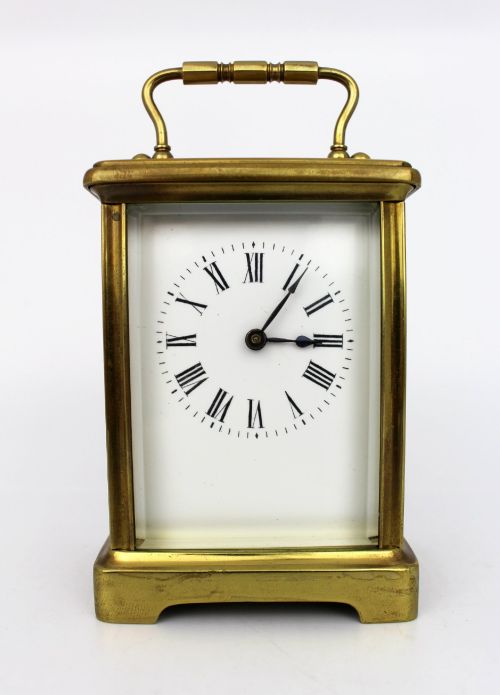


Swiss Movement Clock
A swiss movement clock combines precision engineering with enduring decorative appeal, offering mechanical reliability housed in fine period metalwork.
Swiss Movement Clock
When searching for a swiss movement clock, a buyer encounters a diverse selection of timepieces spanning from the late nineteenth century through to the mid twentieth century. These instruments take forms such as traditional carriage clocks, miniature designs, desk clocks, and table clocks.
The pieces on offer include Edwardian and Victorian specimens alongside Art Deco and Mid-Century Modern creations. Brass, gilt bronze, gilt brass, and glass predominate, frequently accompanied by travel cases or specialised dials.
Many examples originate from notable makers such as Jaeger LeCoultre and Mappin and Webb. Buyers frequently meet carriage clocks with travel cases or inline skeleton timepieces reflecting specific stylistic periods.
Materials and construction
These timepieces are constructed primarily using brass, gilt brass, and gilt bronze, often complemented by glass panels and enamel dials. Structural components also incorporate steel, gold plate, and rhodium plating.
Advanced models utilise eight-day movements, alarm mechanisms, or complex striking trains like grande sonnerie. Miniature formats and folding silver cases demonstrate the adaptability of Swiss engineering across different decorative styles.
Some miniature carriage clocks were made specifically for export to the Chinese market, fitted with complex movements to captivate foreign buyers.
Factors of quality
The choice of exterior material and housing, from standard brass to gilt bronze, rhodium plating, and silver folding cases, dictates the overall refinement. Original travel cases and specialised regional markets, such as pieces made for the Chinese market, also influence distinction.
Jaeger LeCoultre·Mappin and Webb
The Swiss Movement Clock Glossary
- Carriage clock
- A portable spring-driven timepiece originally designed for travelling officers during the nineteenth century. They typically feature glass panels that reveal the internal movement.
- Grande Sonnerie
- A complex striking mechanism that chimes the hours and quarters automatically on every quarter hour. This complication represents a high standard of clockmaking expertise.
- Inline skeleton
- A movement design where the gear train is arranged in a linear horizontal or vertical line with the plates skeletonized to expose the mechanics. This style is frequently found in mid-century designs.
- Rhodium plating
- A precious metal coating applied to brass or other base metals to provide a bright, durable, and tarnish-resistant finish. It appears on mid-century models to achieve a sleek metallic appearance.
Swiss Movement Clock: Frequently Asked Questions
What is a swiss movement clock?
A swiss movement clock is a timekeeping device driven by mechanical components manufactured in Switzerland. These range from nineteenth-century brass carriage clocks to mid-century desk and table models.
They encompass various decorative styles including Victorian, Edwardian, Art Deco, and Mid-Century Modern. The housing often utilises gilt brass, bronze, glass, and silver.
How do I date a carriage clock?
Dating involves examining the style of the case, the materials used, and any inscriptions or hallmarks. Victorian and Edwardian examples often feature heavy brass frames and enamel dials.
Mid-century pieces shift toward minimalist designs like skeleton timepieces or lamp post configurations. Makers' marks and accompanying travel cases also provide historical context.
What does an eight-day movement mean?
An eight-day movement is a clock mechanism designed to run for eight full days on a single winding. This reduced the frequency required for manual intervention by the owner.
Such movements are frequently found in quality table and desk clocks from the mid-twentieth century. They require robust gear trains to maintain tension over the extended period.
How were folding travel clocks used?
Folding travel clocks were designed for portability by affluent travellers during the late nineteenth and early twentieth centuries. The movement was protected within a silver or leather-bound folding case.
Owners could place them on bedside tables while away from home. The folding mechanism protected the glass panels and dial during transit.