


Miniature Travel Clock
Miniature travel clock examples offer precision timekeeping in diminutive brass and leather cases designed for portability.
What miniature travel clock pieces are
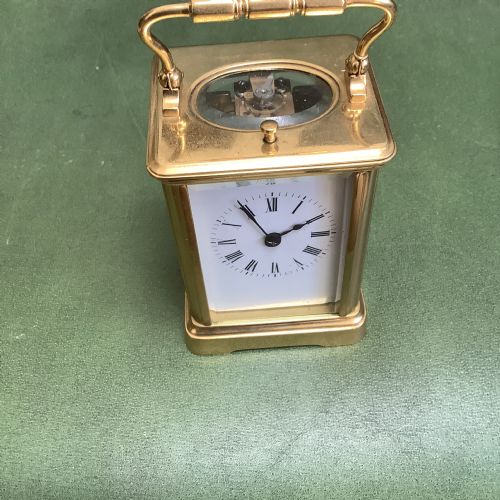
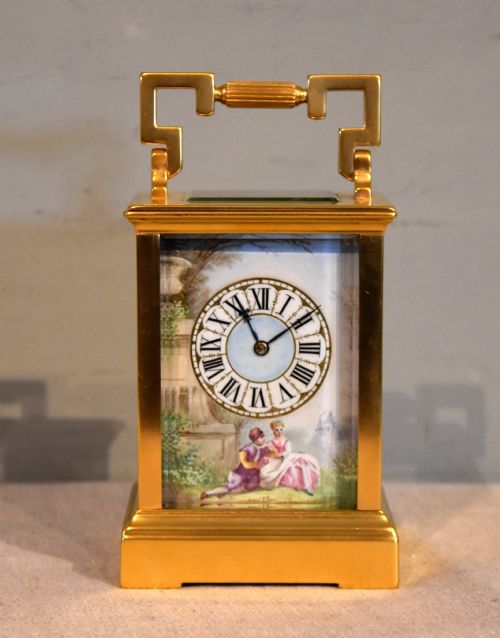
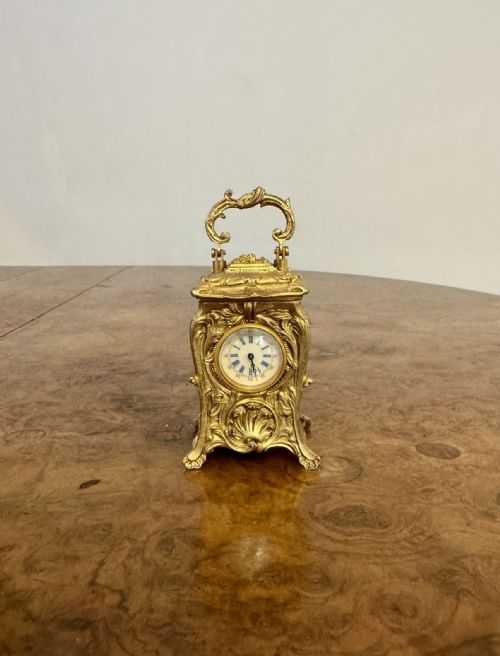
When you search for miniature travel clock, you encounter charming timepieces produced primarily during the Victorian and Edwardian eras. These portable instruments take the form of miniature carriage clocks housed in brass, gilt brass, or silver frames.
How miniature travel clock items were made
The construction of a miniature travel clock relies on durable metals, specifically brass and gilt brass, often paired with glass panels to reveal the intricate internal movement. Selected pieces incorporate silver frames, leather outer cases, or decorative enamel work.
Makers utilised specialised machining techniques to reduce standard carriage clock mechanisms into compact formats while maintaining eight-day movements or specialised striking functions like 'Grande Sonnerie'.
Retail Price Guide 2026
Typical UK retail prices for miniature travel clock, calculated from the Sellingantiques database of over a million retail prices indexed since 2003. This retail price guide relies exclusively on Sellingantiques data; no external sources or auction records are used, so the figures do not describe the wider market.
Some miniature travel clocks are so tiny they fit entirely in the palm of a hand.
What varies in quality
Quality in a miniature travel clock is defined by the crispness of the exterior metal engraving and the complexity of the internal mechanism. Fully engraved gilt brass cases and signed movements represent the superior end of the manufacturing scale.
The presence of original protective leather carrying cases and specialised complications further distinguishes finer examples from standard production pieces.
J Batson & Son·Rotary
The Miniature Travel Clock Glossary
- Carriage clock
- A small, spring-driven clock originally designed for travel by horse-drawn carriage or train during the nineteenth century.
- Gilt brass
- Base brass metal treated with a thin layer of gold to create a bright, protective metallic finish.
- Grande Sonnerie
- A complex striking mechanism that chimes both the hours and the quarters automatically.
- Mignonette
- A term used to describe a particularly small or miniature carriage clock.
Frequently Asked Questions
What is a miniature travel clock?
A miniature travel clock is a portable timepiece, typically housed in a brass or silver case with glass panels, designed for use on journeys during the Victorian and Edwardian periods.
These pieces combine functional timekeeping with compact proportions, often featuring folding handles and dedicated leather outer cases for protection during transit.
How do I wind these clocks?
Most period examples utilise a dedicated winding key that fits onto arbors located on the underside or backplate of the movement. Care must be taken not to overwind the mainspring.
Eighty-day movements require regular, measured attention to maintain accurate timekeeping, whilst ensuring the delicate escapement remains undisturbed.
Are travel clocks different from carriage clocks?
Whilst sharing similar mechanical roots, travel clocks are specifically scaled down for portability and frequently include fitted leather outer cases. Standard carriage clocks are generally larger and intended for domestic mantel or table placement.
Both forms utilise spring-driven movements rather than traditional pendulums, allowing them to function reliably whilst moving.
What materials were used?
Manufacturers primarily employed brass, gilt brass, and solid silver for the structural cases, complemented by glass viewing panels. Enamel dials and leather protective outer cases are also frequently encountered.
Interior components incorporate steel and brass gears, with some high-end pieces featuring tortoiseshell or detailed hand engraving.